
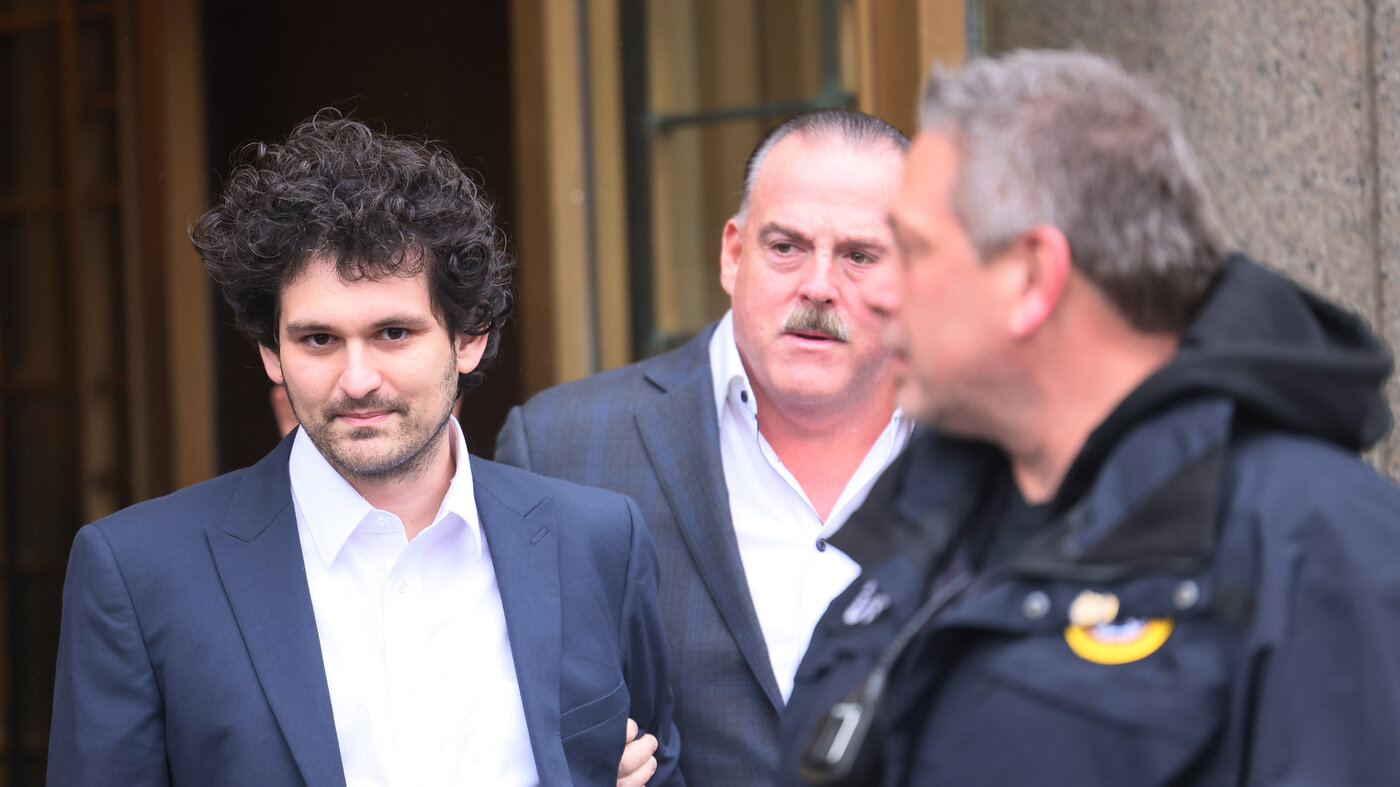
Sam Bankman-Fried, founder of FTX, departs from Manhattan Federal Court after his initial appearance. He faces serious charges of criminal fraud from federal prosecutors.
Michael M. Santiago/Getty Images
hide caption
Michael M. Santiago/Getty Images

Sam Bankman-Fried, founder of FTX, leaves Manhattan Federal Court after his first court appearance in New York. Federal prosecutors have charged him with criminal fraud.
Michael M. Santiago/Getty Images
Crypto enthusiasts often say, with a glimmer of hope, “To the moon!” wishing for a surge in a specific digital currency’s value.
In early 2022, many cryptocurrencies did soar high, fueled by overwhelming enthusiasm, but shortly thereafter, the market faced a harsh downturn.
Bitcoin’s price has plummeted to approximately one-fourth of its value from the previous year, and the crypto sector is only beginning to comprehend the consequences of the staggering downfall of the FTX exchange.
Looking back, 2022 might be perceived as a pivotal moment for virtual currencies, where their sparkle faded and they were perceived as a niche investment, approached with much skepticism by the general public. Alternatively, it may simply be viewed as a taxing growth phase for an industry still in its infancy.
Nevertheless, 2022 undoubtedly left its mark on the history of cryptocurrency.
Beginning of the Era
Advertisements for cryptocurrency proliferated — on television, bus stops, and even in fortune cookies, as firms invested millions into marketing campaigns, flooding the Super Bowl with commercials. While the currencies themselves were digital, crypto became much more tangible for numerous Americans during the early months of the year.
Molly White, a Harvard fellow and noted crypto skeptic, remarked that the industry reached an all-time high in January and February. She runs the website Web3 is Going Just Great.
“Asset values peaked,” she recalls. “Individuals were garnering irrational profits.”
The value of Bitcoin had just hit a record high, and the industry was making substantial efforts to gain mainstream acceptance, attempting to engage more customers.
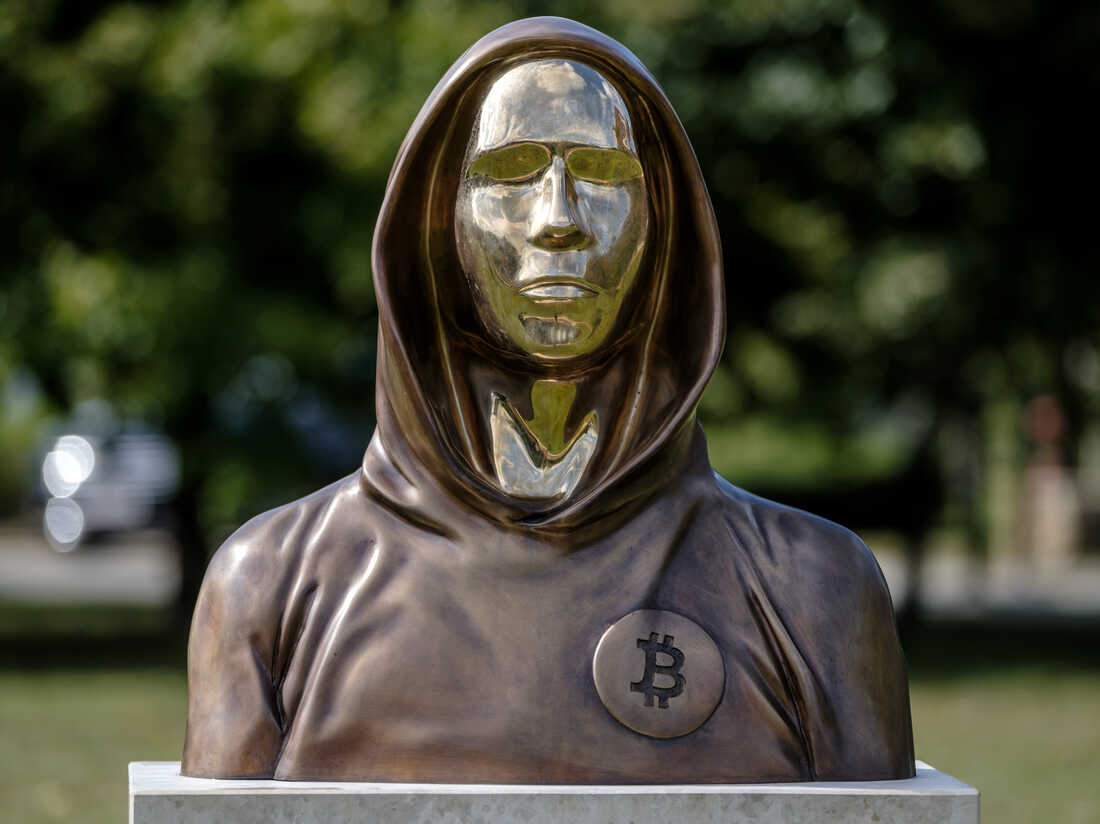
A statue representing Satoshi Nakamoto, believed to be the pseudonymous creator of Bitcoin, stands in Graphisoft Park in Budapest, Hungary. The creators, Reka Gergely and Tamas Gilly, opted for anonymized features since Nakamoto’s true identity remains unverified.
Janos Kummer/Getty Images
hide caption
Janos Kummer/Getty Images
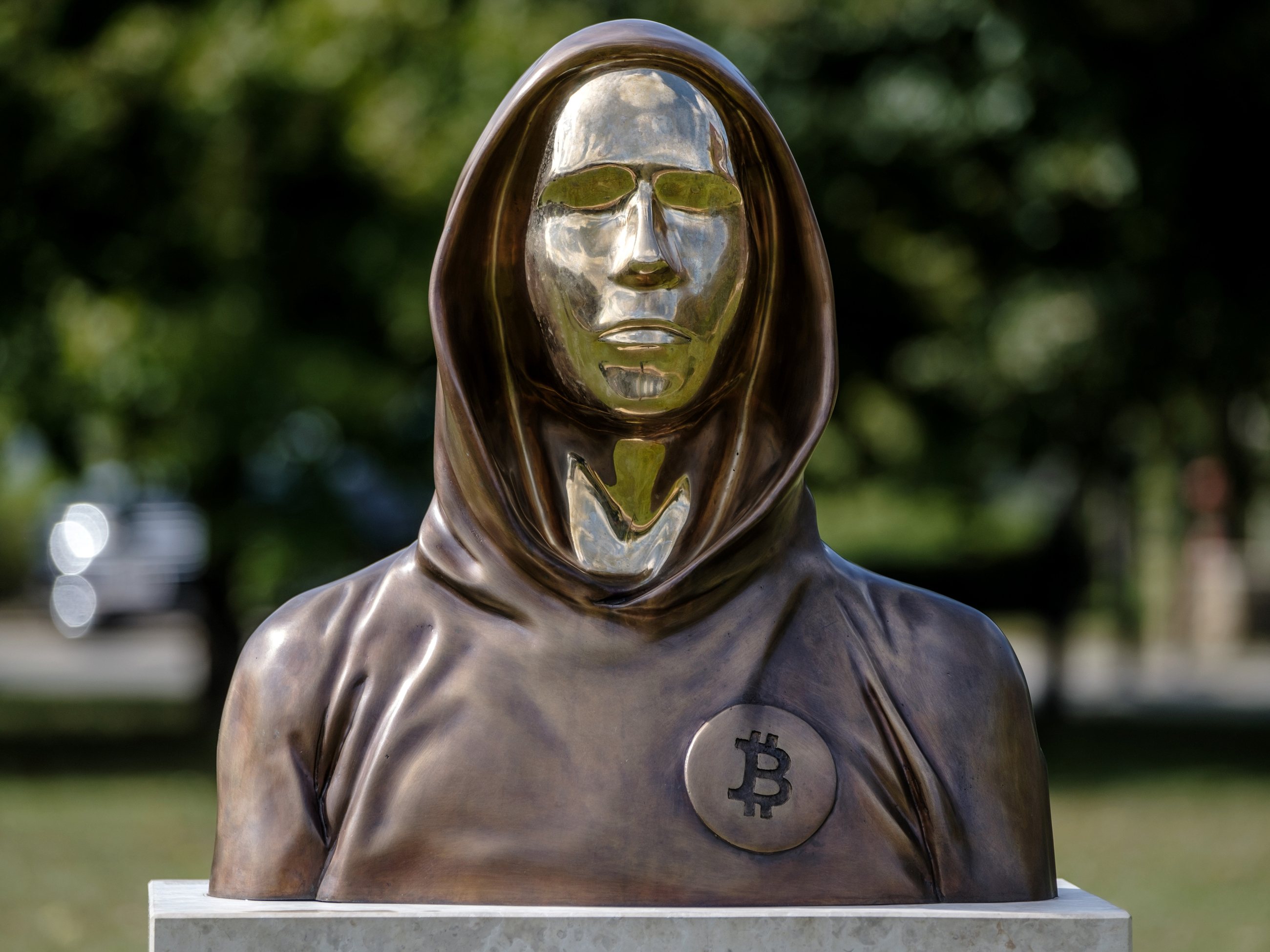
A statue representing Satoshi Nakamoto stands in Graphisoft Park in Budapest, Hungary. The creators used anonymized features, as Nakamoto’s true identity is yet to be confirmed.
Janos Kummer/Getty Images
In January, Paris Hilton, more recognized for her fashion statements, made a notable appearance on The Tonight Show Starring Jimmy Fallon. After discussing her recent nuptials and experiences at Burning Man, she delved into her promotion of NFTs, or non-fungible tokens.
The audience displayed some confusion when she, in a style reminiscent of Oprah, offered everyone an NFT — a distinct type of digital collectible resembling quirky cryptographic art. However, when Fallon, himself an NFT enthusiast, appeared impressed, they responded with applause.
However, this “peak hype” was short-lived.
Current State of Affairs
Following the Federal Reserve’s decision to increase interest rates in a battle against soaring inflation, the values of cryptocurrencies plummeted, similar to other financial assets.
This surprised many high-profile supporters of Bitcoin, who believed that the virtual currency would weather inflation similar to gold. Rather than witnessing a rise, they saw its value decline.
What is now being termed a “crypto winter” — an extended downturn — began even before the midpoint of 2022.
“We’ve practically been experiencing this ‘crypto winter’ for nearly a year,” stated Lee Reiners, a cryptocurrency law instructor at Duke University.

Many individual investors faced losses, particularly those who invested around the market peaks. Reiners asserts that the crypto winter also laid bare broader, systemic issues within the industry.
“It highlighted numerous crypto firms that were over-leveraged, had inadequate risk management, or were partaking in deceptive practices,” he explained.
A series of failures began in May, involving the cryptocurrencies Terra and Luna, the trading platform Voyager, the crypto hedge fund Three Arrows Capital, BlockFi, and Celsius…
This list continues to expand, underscoring concerning trends about the interconnectedness of the crypto industry, according to Reiners.
“These firms are deeply tied to one another; thus, problems in one segment can rapidly cascade throughout the entire sector,” he notes.

Regulators have intensified their scrutiny as well. They targeted high-profile celebrities for promoting tokens without proper disclosure, including Kim Kardashian, who settled with the SEC in October for over a million dollars.
The Future Ahead
This brings us to the FTX case.
At the beginning of 2022, FTX’s valuation was at $32 billion. Today, it is in bankruptcy, leaving over a million investors anxious about their lost funds, while its founder, Sam Bankman-Fried, faces criminal fraud charges.
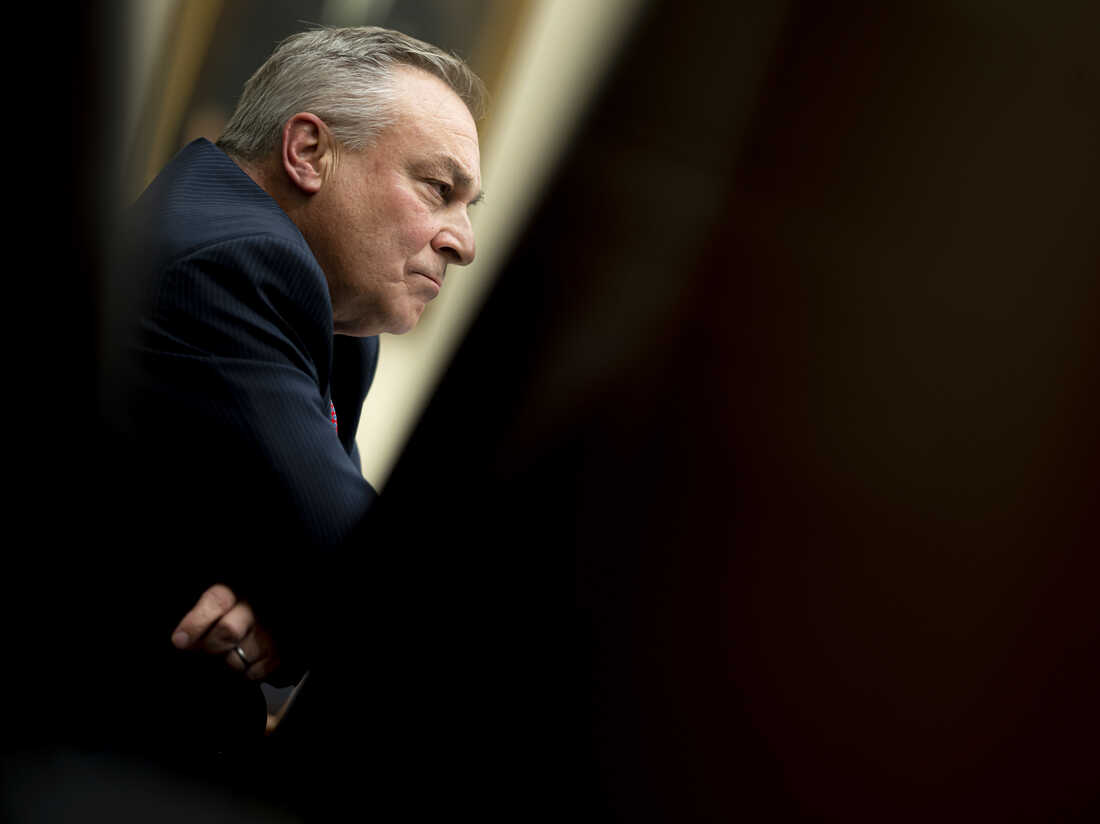
John J. Ray III, the newly appointed CEO of FTX, testifies at the House Financial Services Committee hearing regarding the company’s collapse.
Nathan Howard/Getty Images
hide caption
Nathan Howard/Getty Images

John J. Ray III, the new CEO of FTX, provided testimony during the House Financial Services Committee hearing on the collapse of the company.
Nathan Howard/Getty Images
Bankman-Fried crafted a persona that made him memorable and approachable, known for his wild hair and casual attire of shorts and t-shirts. He aimed to attract more everyday individuals into the crypto space and entice traditional Wall Street firms to invest.
This 30-year-old was so effective in making cryptocurrency accessible that many viewed him as the informal spokesperson for the industry. Presently, he remains under house arrest at his parents’ residence in Palo Alto, California.

Reiners characterizes the rapid and complete downfall of FTX as “the most significant incident in the cryptocurrency world,” noting the industry’s history is marred by numerous failures, scams, and frauds.
Currently, people are questioning which entity could falter next.
Binance, the largest cryptocurrency exchange globally, witnessed considerable withdrawals driven by panic and now faces scrutiny regarding its stability, making it appear as though it could be the next to topple.
However, the company is actively working to dispel anxieties associated with the surrounding skepticism about crypto. According to White, this is crucial.


White points out, “If the public begins to lose faith in the crypto industry or the asset class overall, it would be catastrophic for Binance.” Thus, the company is striving to avert this.
For many, the abrupt reversal in crypto fortunes has been unsettling, leaving them to assess the level of damage inflicted by FTX.
“Crypto might consider itself fortunate if the setback only amounts to a couple of years,” White suggests.
Devotees of crypto maintain hope that Bitcoin will rebound and that this “crypto winter” will eventually pass.
However, for those who were only peripherally involved — who may have merely seen an advertisement or felt compelled by the fear of missing out to explore buying tokens — the narrative has shifted dramatically, especially with ongoing reports from Bankman-Fried’s previous collaborators regarding how customer funds were allegedly redirected from FTX for personal gain.
“A growing number of people are categorizing crypto as a massive scam they wish to avoid,” White asserts.
This presents a crucial challenge for the crypto sector; it depends on a continuous influx of new buyers to sustain itself.