

Despite a slight dip on Thursday, cryptocurrency mining stocks experienced substantial gains throughout the week. This surge was driven by indications that a robust economic climate could bolster the Federal Reserve’s aim for a gentle economic slowdown.
Over the past four trading days, leading up to an early market closure on Thursday for the Independence Day holiday, shares of several prominent companies saw significant increases. Riot Platforms (RIOT), Hive Digital (HIVE), Hut 8 (HUT8), MARA Holdings (MARA), and Bitfarms (BITF) all enjoyed rises ranging from 13% to 28%.
Thursday’s trading activity saw investors reacting to a US nonfarm payrolls report that exceeded expectations. However, a number of publicly traded mining firms saw some of their gains erased later in the day.
Concurrently, VanEck’s Digital Transformation ETF, which tracks an index of 24 publicly traded digital asset companies – including Coinbase (COIN), Circle (CRCL), Strategy (MSTR), and various mining operations – experienced a rise of up to 3.2% on Thursday.
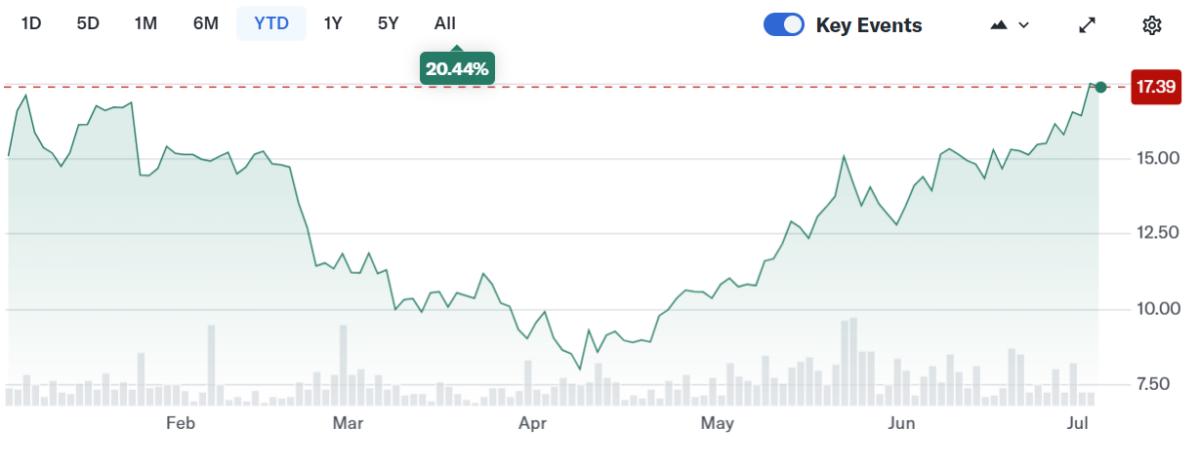
Bitcoin Mining Stocks Track General Market Increase
The positive trend observed in Bitcoin mining stocks mirrored a broader upturn in the overall market. This general market climb propelled both the S&P 500 Index and the Nasdaq Composite Index to reach new record highs during Thursday’s abbreviated trading session.
These advances were triggered by the Bureau of Labor Statistics’ report indicating that the US economy gained 147,000 jobs in June. The unemployment rate also declined, dropping from 4.3% to 4.1%, surpassing forecasts made by Wall Street analysts.
Although labor force participation decreased to its lowest point since 2022, economic experts attributed this decline to stricter immigration enforcement, which may be restricting the available labor supply.
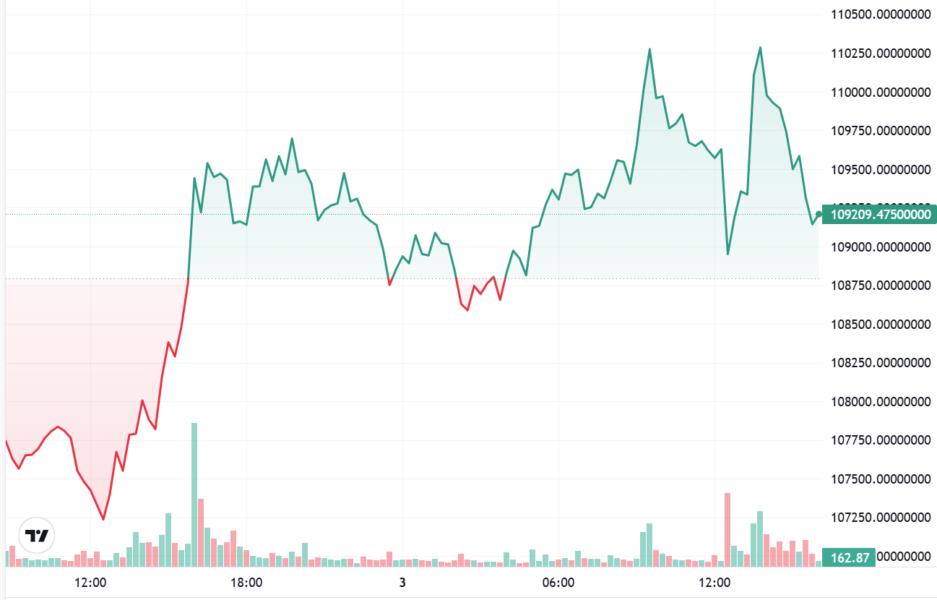
While the surprisingly strong jobs report makes immediate interest rate reductions this summer less likely, Matt Mena, a cryptocurrency research strategist at 21Shares, suggests that the “larger macroeconomic landscape continues to favor rate cuts.”
Mena explained that the current macroeconomic environment is one in which “digital assets tend to perform well,” highlighting the potential benefits from lower interest rates, improved market confidence, and greater regulatory certainty through the proposed market structure bill and the GENIUS Act.