

According to Sygnum’s Q3 2025 Investment Outlook, the crypto market may be witnessing a shift towards alternative cryptocurrencies, spurred by clearer regulations, increased availability of funds, and growing activity on blockchain networks.
Earlier in the year, geopolitical instability and uncertainty surrounding U.S. fiscal policy triggered a downturn in the altcoin market. However, Sygnum, the digital bank, suggests that evolving market conditions “could be the catalyst for the widely anticipated altseason” in their report, which was shared with Cointelegraph.
Sygnum stated, “As regulatory frameworks become more defined for altcoins, investment may gravitate towards projects demonstrating practical economic applications and robust tokenomics. This trend might already be emerging, as indicated by the performance of certain sectors.”
The report also highlighted a decrease in Bitcoin’s market dominance. Bitcoin’s dominance had reached its peak since 2021 due to macroeconomic pressures related to geopolitics and trade, but it has recently fallen by over 6% as capital flows back into altcoins.
Related: GENIUS Act to spark wave of ‘killer apps’ and new payment services: Sygnum
Bitcoin Achieves New Highs Due to Supply Constraints
According to the report, the liquidity situation for Bitcoin (BTC) remains “very promising,” with a consistent mismatch between supply and demand pushing the leading cryptocurrency to unprecedented levels. BTC reached an all-time high of over $123,000 on July 14.
“Bitcoin Spot ETFs now hold over USD 160 billion in managed assets, accumulating more than 110,000 BTC in the last quarter alone,” Sygnum noted. Ether (ETH) also saw positive trends, including declining exchange reserves, ETF inflows, and nearly 30% of its circulating supply being staked.
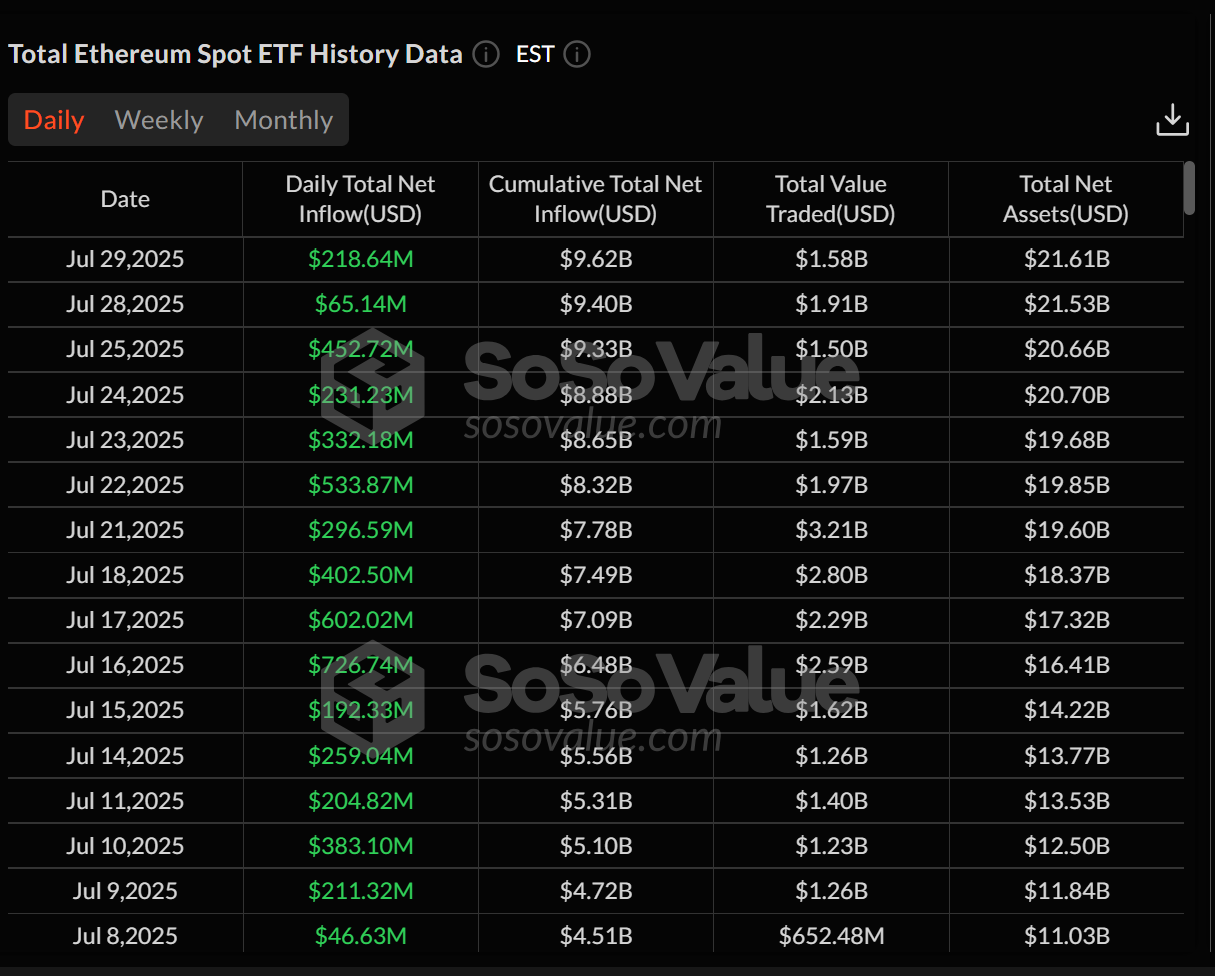
The narrative surrounding Ethereum shifted following a successful Pectra upgrade, which “increased the staking limit and introduced a range of protocol improvements.” Further bolstering this trend, the U.S. Securities and Exchange Commission has clarified that protocol staking “does not fall under securities law.”
Sygnum argues that Ether has “decisively broken its long-term downward trend,” citing a surge in institutional interest. Sharplink is planning to allocate $1 billion to ETH, and major Wall Street institutions like BNY Mellon, Société Générale, and a Trump-supported USD1 stablecoin are initiating new tokenization and stablecoin projects on the Ethereum network.
Related: BitMine’s $1B repurchase plan favors shares over more ETH — for now
Decentralized Exchange Market Share Reaches 30%
Decentralized exchanges achieved a record high last quarter, accounting for 30% of all cryptocurrency spot trading after the launch of memecoins drove DEX volumes to $530 billion. The surge was primarily driven by PancakeSwap on the BNB Chain, while Solana’s PumpSwap quickly surpassed Raydium, the report stated.
DeFi lending also reached an all-time high of $70 billion locked, and liquid staking now represents over 30% of Ether’s total supply. Sygnum wrote, “The DeFi lending sector is among the top beneficiaries of market rallies, with active loans on Ethereum soaring to new all-time highs as investors embrace greater risk and leveraged positions.”
However, the bank cautioned that the current momentum in altcoins could potentially lead to another memecoin frenzy, which, based on past experience, could result in a significant market correction if left unchecked.
Magazine: Crypto traders ‘fool themselves’ with price predictions — Peter Brandt