
Back in September of 2024, my initial experience with Tales of the Shire left me with mixed feelings – disappointment tempered by a sliver of hope. While the game clearly had its flaws, it also hinted at a deeper potential. The developers’ passion for both the Lord of the Rings universe and the life-simulation genre was evident. Given that the game’s release had been pushed back to the following year, I assumed the development team shared my feeling that the game needed more polish. Therefore, it was quite a surprise when the launch version of Tales of the Shire felt largely unchanged from that earlier build.
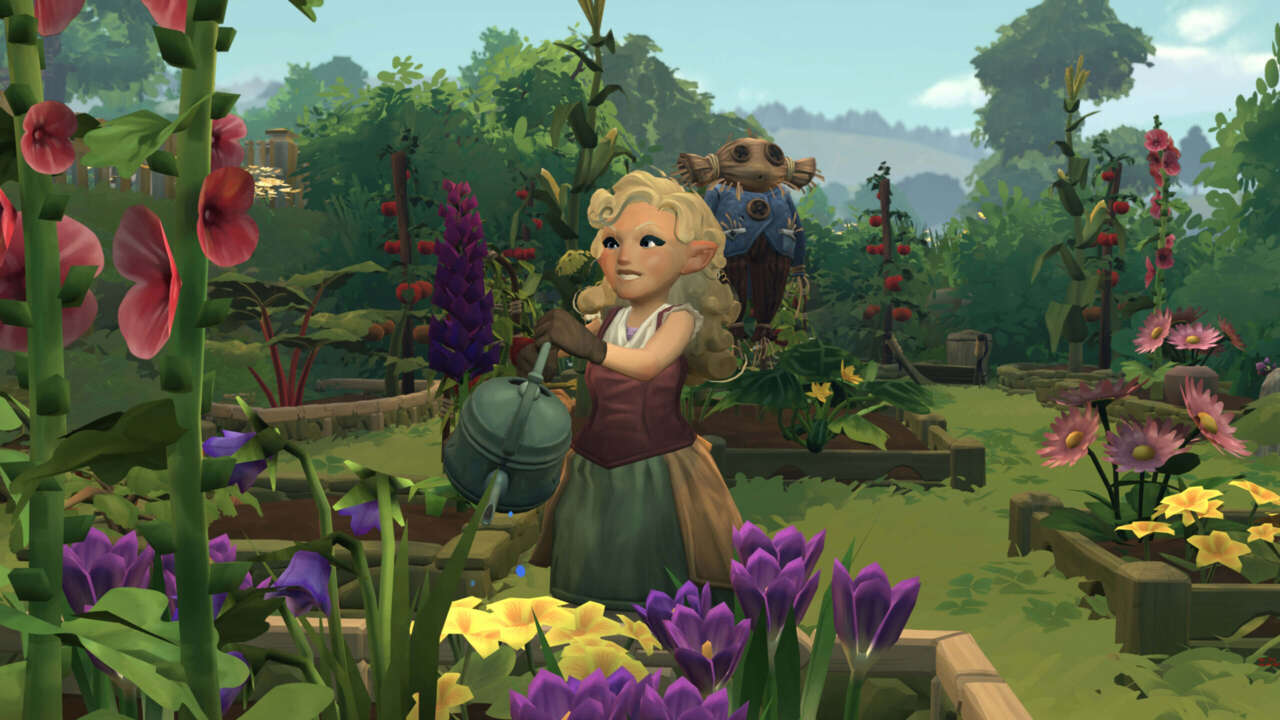
Wētā Workshop’s offering, Tales of the Shire, unfortunately feels unfinished. The gameplay comes across as restricted and repetitive, the narrative and characters fail to make a lasting impression, and the performance is notably subpar. While the game’s somewhat clunky world and its hobbit inhabitants possess a certain charm, the visuals often appear dated and low-quality rather than intentionally whimsical. Testing across both the Nintendo Switch and Steam Deck platforms revealed numerous glitches and visual imperfections. While the core mechanics are adequate and some innovative concepts are present, Tales of the Shire is regrettably unpolished and fails to truly engage. Given the abundance of high-quality choices within the cozy game category, it’s hard to recommend this title in its current state.
The game takes place in the village of Bywater – though the residents are keen to emphasize that it barely qualifies as such, a point central to the storyline. In Tales of the Shire, you play as a hobbit who leaves the town of Bree seeking a quieter, more pastoral life. The character customization options are decent enough, allowing me to create a suitably round hobbit with dark, curly hair, long eyelashes, and moderately hairy feet. I named her Jessamine, using one of the suggested hobbit names– a subtle nod to my own moniker. She then embarked on a carriage ride with a tall, bearded wizard who bore a striking resemblance to someone *not* named Gandalf, wink wink. This ride proved to be the first of many extended periods of awkward silence during the journey to Bywater.
To its credit, Tales of the Shire does an effective job of introducing players to its world. Upon arrival, I quickly learned that the way to a hobbit’s heart, unsurprisingly, is through their stomach. Therefore, a significant part of the gameplay revolves around acquiring ingredients – whether by foraging, fishing, gardening, or trading – preparing dishes, and hosting gatherings for the neighbors. The initial quests, designed to familiarize players with these mechanics, are admittedly a series of glorified fetch quests. However, the minigames associated with each activity, while simple, are enjoyable, even if the game’s instructions aren’t always crystal clear. Thankfully, the activities are straightforward; foraging involves collecting plants and fungi with a button press, fishing is neither overly complex nor boring, and cooking – a core aspect of the game – is surprisingly fun. The cooking mechanic involves arranging ingredients on a grid based on texture qualities, such as smooth versus chunky and crisp versus tender. This innovative approach makes the cooking experience more engaging than in many other life-simulation games. It’s a welcomed change considering cooking is the primary way of establishing relationships in the game – it *should* feel like an act, not just a means to an end.

The game’s central idea possesses a definite charm. Many life-sim games typically focus on either finding romance and establishing a home (as seen in titles like Stardew Valley, Harvest Moon, and Fields of Mistria) or encouraging characters to populate a newly formed town (examples include Animal Crossing, Disney Dreamlight Valley, and Hello Kitty Island Adventure). In Tales of the Shire, you are a newcomer and, as the grumpy Old Noakes constantly reminds you, not the town’s central priority. You won’t receive the special treatment, and that focus on authenticity is appreciated. Moreover, without the option to give gifts or pursue romantic relationships with other hobbits, becoming a respected member of Bywater feels like a genuine and meaningful accomplishment.
However, the execution of this concept falters for several reasons. The lack of clearly defined long-term objectives leads to a diminished sense of progression. While some may argue that the pursuit of constant advancement is uncharacteristic of hobbits, and the absence of such systems is thematically appropriate, this is an overly charitable interpretation. A game needs an engaging core to be compelling. Though there are quests, relationships to nurture, and upgrades to acquire, the game’s weak narrative, reliance on fetch quests, shallow characters, and general apathy toward the player make it challenging to care about anything. I felt no external motivation to integrate into Bywater, nor could I muster enough intrinsic interest to make it feel worthwhile.
The issue is compounded by the fact that the residents of Bywater, despite having dialogue that ranges from cleverly dry to adequately functional, feel largely lifeless. This is partly due to their lack of depth, which makes them feel one-dimensional, indistinguishable, and inaccessible. Another factor is the absence of voice acting, prominent music, or even dynamic sound effects, which makes interactions feel awkward and stilted.
This sense of lifelessness extends beyond the characters and permeates Bywater as a whole. Despite the changing seasons, the game lacks overall dynamism. This lack of life is reflected in the limited dialogue options, which often feel detached from your prior actions. While Bywater is reasonably sized, there’s not much to do beyond the repetitive core gameplay loop. Much of the town is populated with non-interactive hobbits, whose sole purpose is to create a sense of community. While I understand the logic behind this decision, especially since there are only 15 actual characters, it only serves to emphasize the superficiality of the village. As time went on, I grew increasingly grateful that decorating my hobbit hole was a simple, time-consuming activity; I had little interest in interacting with much else.

It’s likely that the presence of these non-interactive NPCs contributes to another significant issue: the game’s performance. During my review of Tales of the Shire, I played it on both my Nintendo Switch and my Steam Deck. Initially, I used my Nintendo Switch and attributed the performance issues to the possibility that I needed a Switch 2. Items and characters would clip, the screen would turn black during interactions, and the game frequently froze or crashed altogether. The visuals were also disappointing. I remember walking through Bywater and thinking that I’d played better-looking games on the GameCube two decades ago, and this was due to how everything was rendered rather than the game’s art style.
Therefore, despite investing several hours into a game that I was finding dull and frustrating, I decided to start over on my Steam Deck, which has consistently handled even graphically demanding games without issue. While the visuals were improved, the bugs, glitches, freezes, and crashes persisted, adding to the overall lack of enjoyment.
As someone who loves Lord of the Rings, life-simulation games, and cozy games in general, Tales of the Shire is a heartbreaking disappointment – one that makes me wonder what exactly went wrong during the development. Given the appealing premise, the talented team behind it, and the apparent commitment to polishing the game before release, the final product is confusing. While Tales of the Shire offers some intriguing ideas, the tedious gameplay, abundant bugs, and general emptiness ultimately relegate this once-promising life-simulation to the depths of Moria.