

The digital asset space is constantly innovating, presenting a dynamic range of investment possibilities. Amidst the diverse array of blockchain platforms competing for attention, Sui has distinguished itself as a noteworthy project, emphasizing superior performance, scalability, and a distinctive method for managing digital assets.
Understanding Sui Blockchain
Developed by Mysten Labs, a team comprised of former Meta engineers renowned for their work on the Diem and Move projects, Sui is a Layer 1 blockchain protocol. Launched with the explicit purpose of overcoming the existing blockchain limitations, Sui boasts a design that enables parallel transaction processing and incorporates object-based programming principles. These advancements position Sui as a strong solution for applications demanding high speeds, such as interactive games, dynamic NFTs, and real-time financial ecosystems.
In the competitive Layer 1 market of 2025, Sui’s objective is to establish itself not only through speed but also through user-friendly developer tools, facilitated by its concurrent transaction handling capabilities. Traditional blockchains typically process transactions in sequence, which can lead to delays, especially during times of high network activity. Sui addresses this issue by identifying and processing independent, non-conflicting transactions simultaneously, significantly enhancing efficiency.
Dive Deeper: In-Depth Analysis of Sui
Source: Artemis
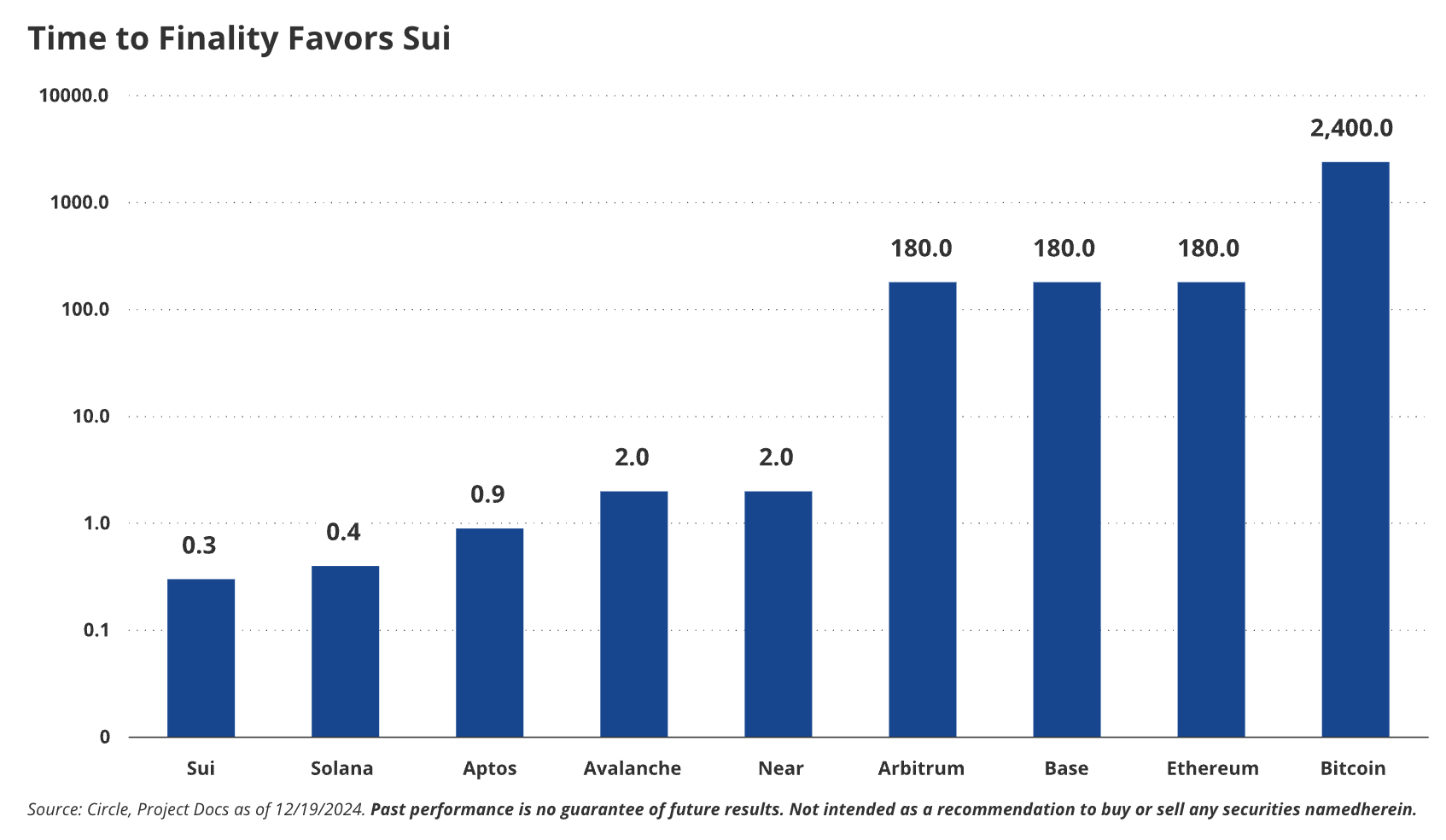
Parallel execution is a key feature of Sui, enabled by its object-centric model. This model allows the system to determine the relationships between transactions based on the specific digital objects they interact with. For instance, direct asset transfers can achieve near-instant finality. This significantly improves user experiences and fosters the development of high-performance applications.
Data from the Sui blockchain suggests a theoretical peak TPS (transactions per second) of up to 297,000. However, like other blockchains, the actual observed TPS can vary. Some reports indicate an average of around 55 TPS, with a theoretical initial capacity of up to 120,000 TPS.
Source: Artemis
Analyzing Sui Network Growth and Ecosystem Development
Over the past year, the Sui network has demonstrated significant progress, evolving from a relatively new Layer 1 blockchain into an increasingly dynamic and active platform. Since its mainnet launch in 2023, user adoption and decentralized application (dApp) deployment have increased, primarily driven by the Sui Labs Foundation’s efforts to incentivize user participation and promote dApp integration.
Key Metrics for Sui Blockchain
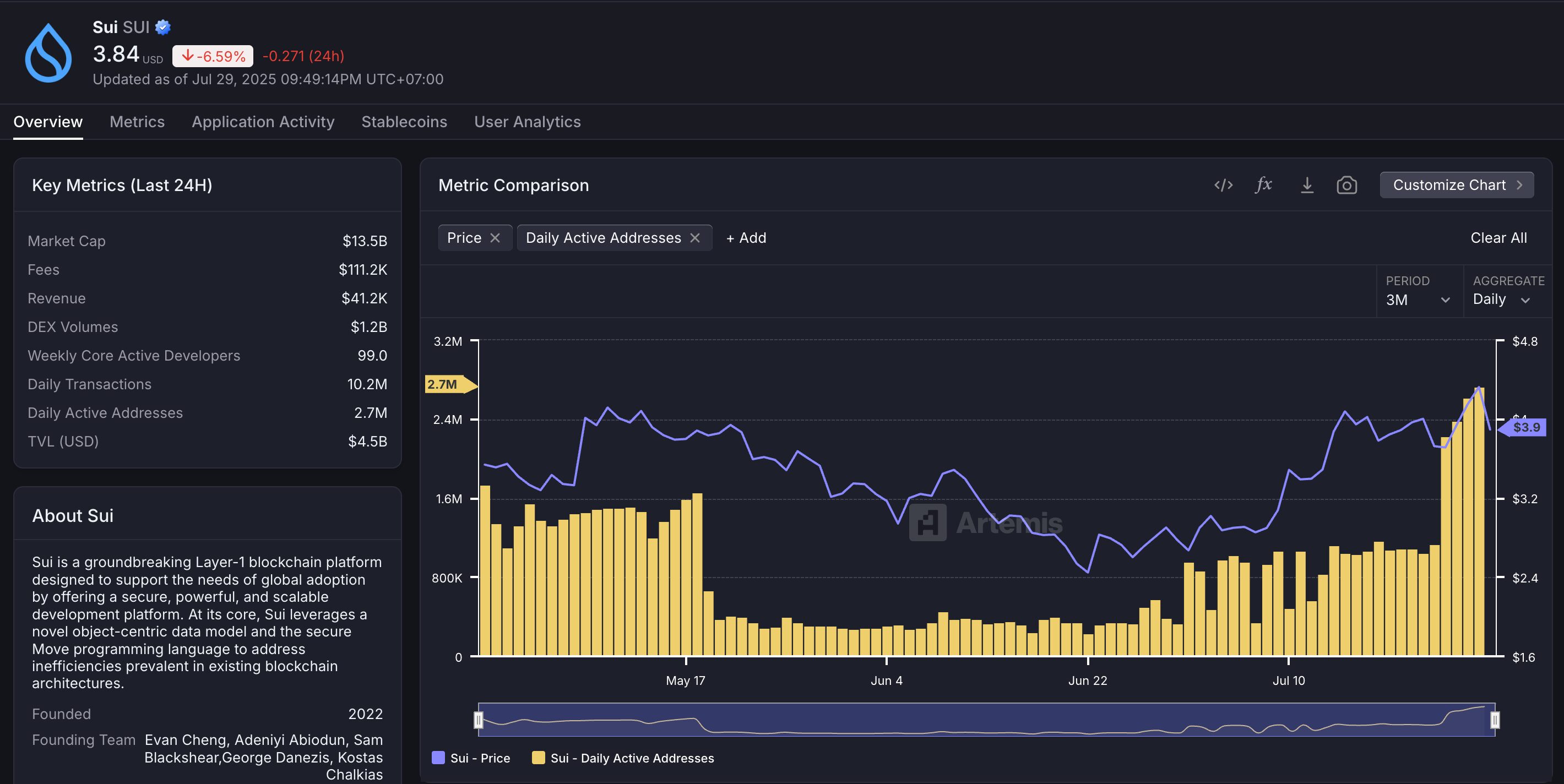
In July 2025, the Sui network displayed impressive activity levels. According to data from Artemis, daily active addresses surpassed 1.2 million on July 14th. Notably, there was an increase of nearly two-fold by the end of the month, indicating a strong growth trend over the preceding two months.
Source: Artemis
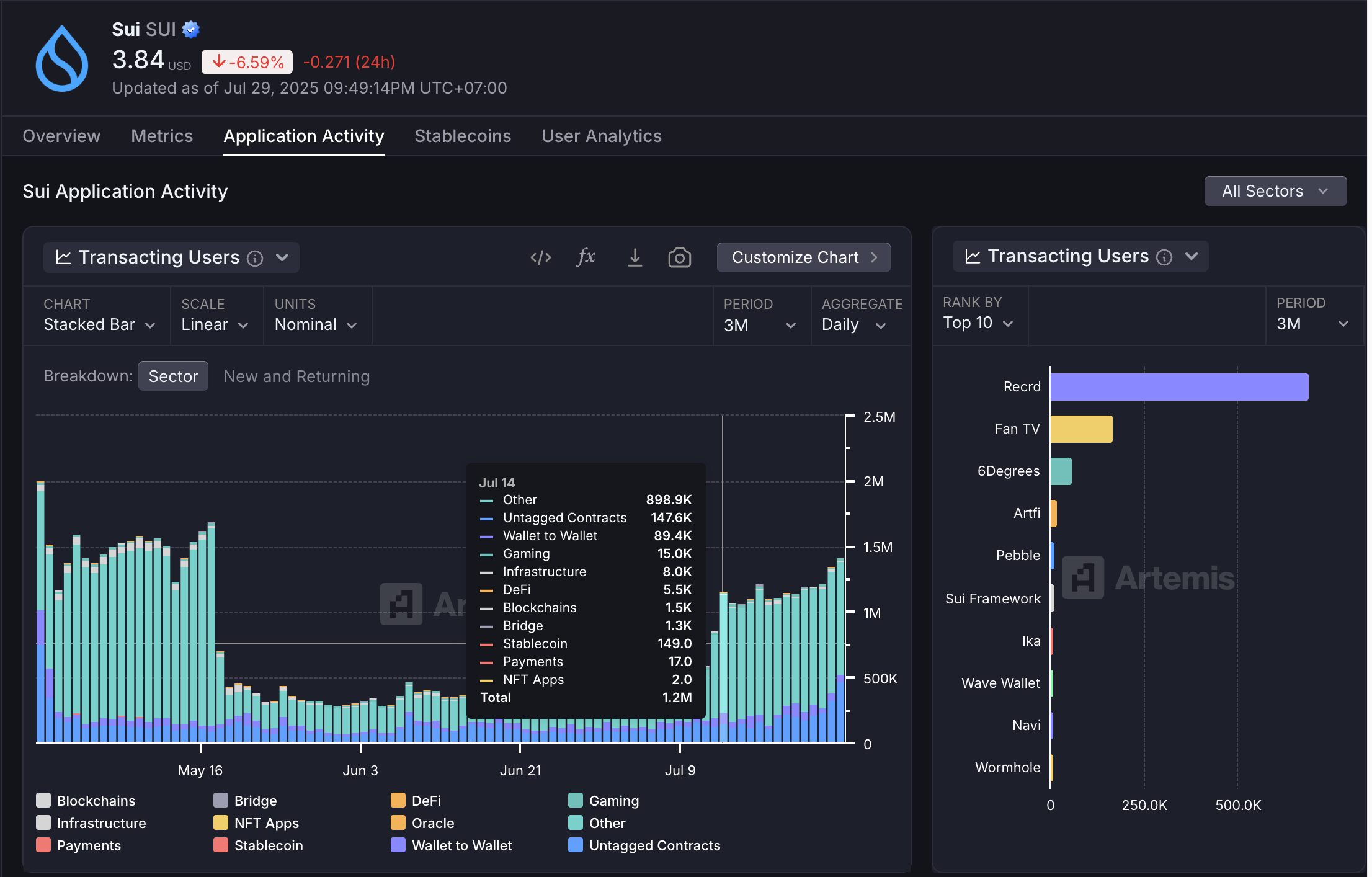
A detailed analysis of active user numbers reveals that nearly 900,000 transactions originated from various “Other” activities, likely including developer testing, bots, protocol testing, and experimental dApps. However, wallet-to-wallet transactions exceeded 89,000, and gaming dApps contributed over 15,000 daily users, highlighting the increasing popularity of interactive applications built on Sui.
Source: Artemis
Decentralized Finance (DeFi) on Sui
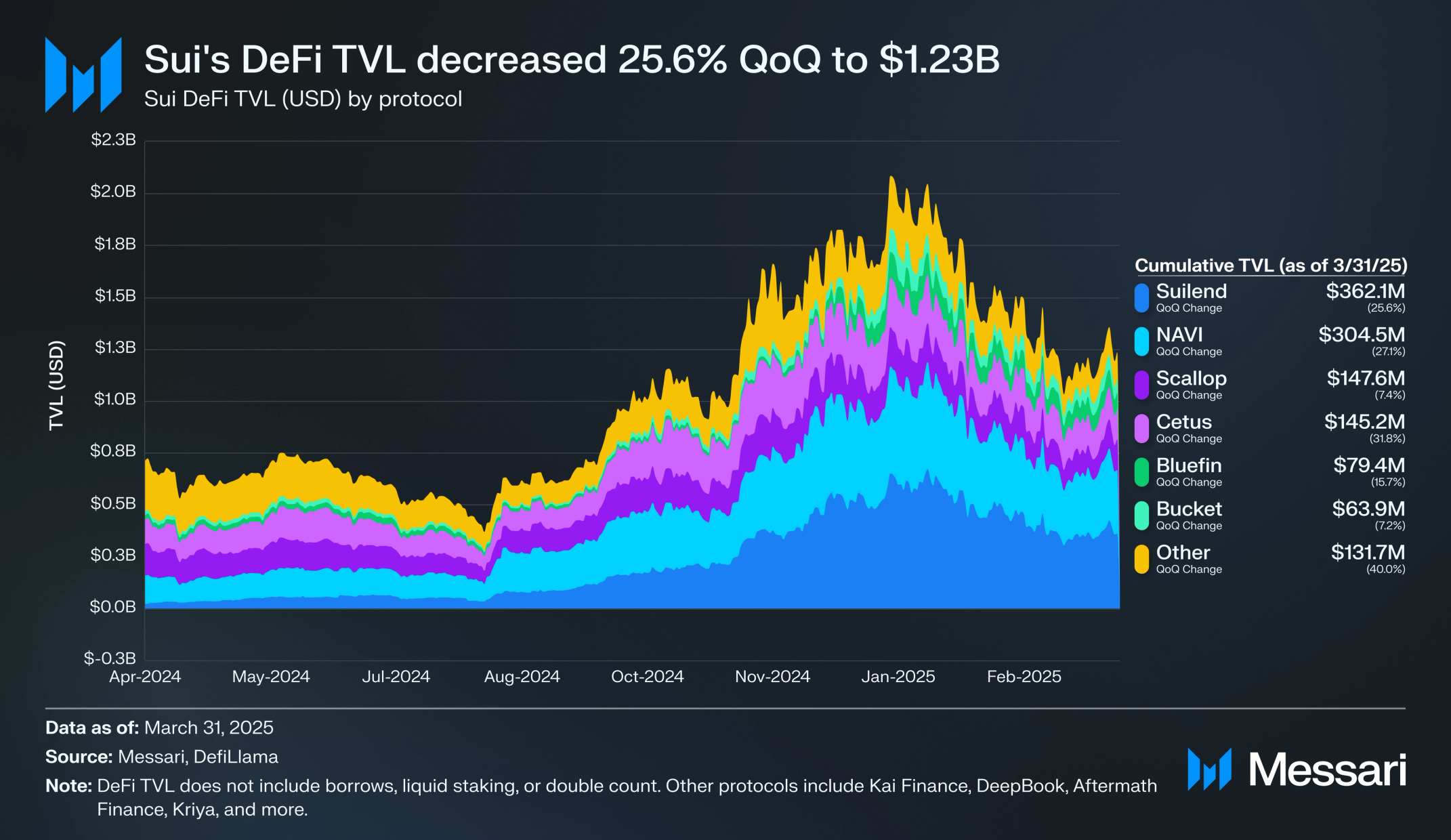
Sui’s infrastructure activities, including DeFi protocols and stablecoin usage, have maintained a consistent presence, demonstrating a diverse range of use cases across different sectors. Stablecoin-based transactions exceeded 149,000, indicating growing demand for on-chain liquidity and value transfer mechanisms.
Source: Messari
Among the various applications on the platform, the social app Recrd emerged as the leading contributor to user activity, with over 500,000 transacting users in the last three months. Other notable platforms include Fan TV, 6Degrees, and Artfi, each reflecting a combination of entertainment, communication, and tools for the creator economy.
Explore Further: Sui’s DeFi Ecosystem Overview
Stablecoin Growth and Payments on Sui
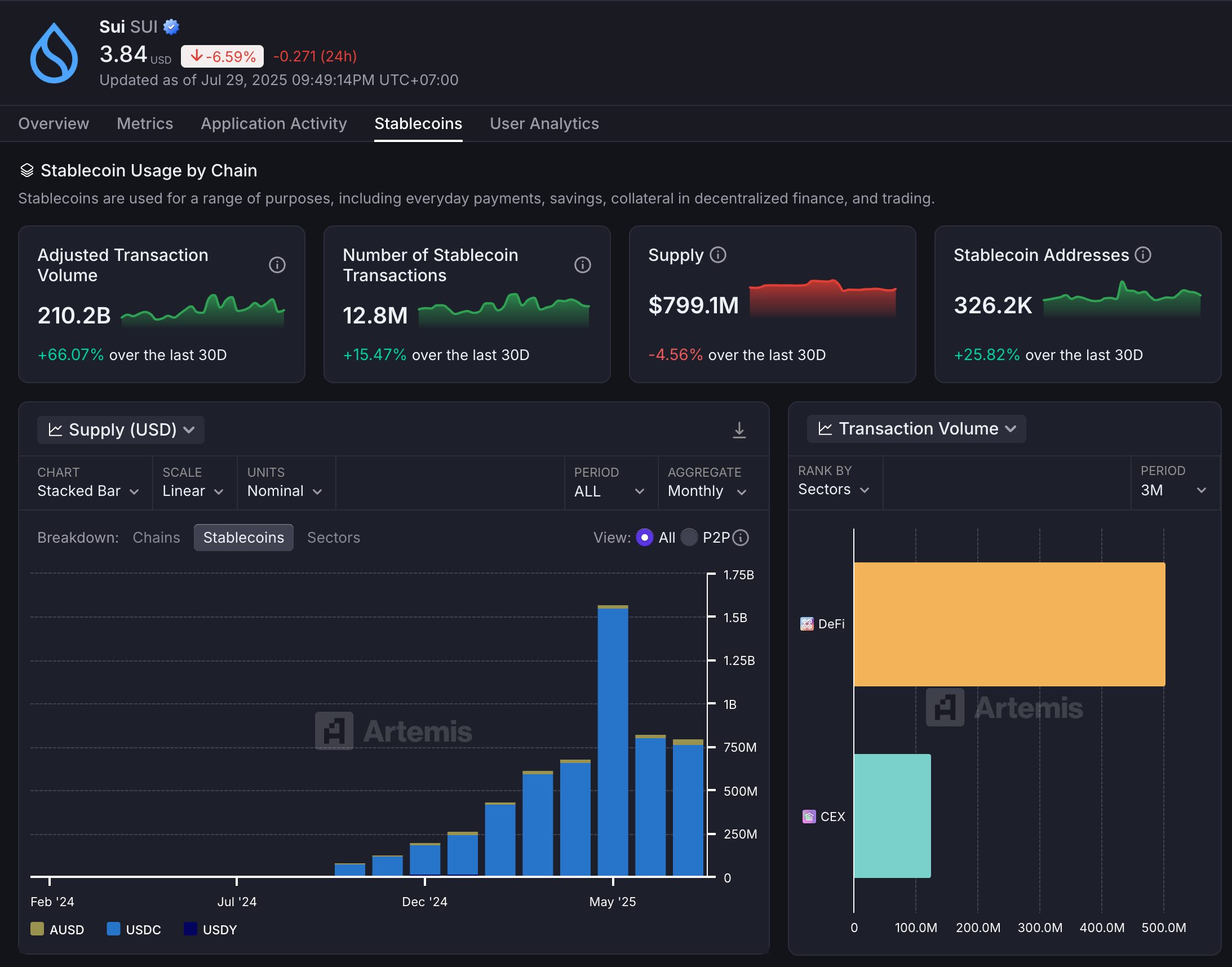
The increasing use of stablecoins within the Sui network highlights its growing importance in both DeFi and peer-to-peer payments. Data from Artemis as of July 29, 2025, shows that adjusted stablecoin transaction volume surged to $210.2 billion, representing a 66.07% increase over the previous 30 days. Additionally, the number of stablecoin transactions reached 12.8 million (+15.47%), while the number of unique stablecoin addresses increased by 25.82% to 326,200.
Source: Artemis
Although the total supply of stablecoins slightly decreased to $799.1 million (-4.56%), monthly transaction volumes are primarily driven by DeFi applications, with centralized exchanges following behind. USDC and USDY are the leading stablecoins by volume, experiencing significant growth between May and July 2025. This stablecoin layer provides liquidity and enhances Sui’s appeal to developers focused on building payment, lending, and synthetic asset protocols.
NFTs and Gaming on Sui
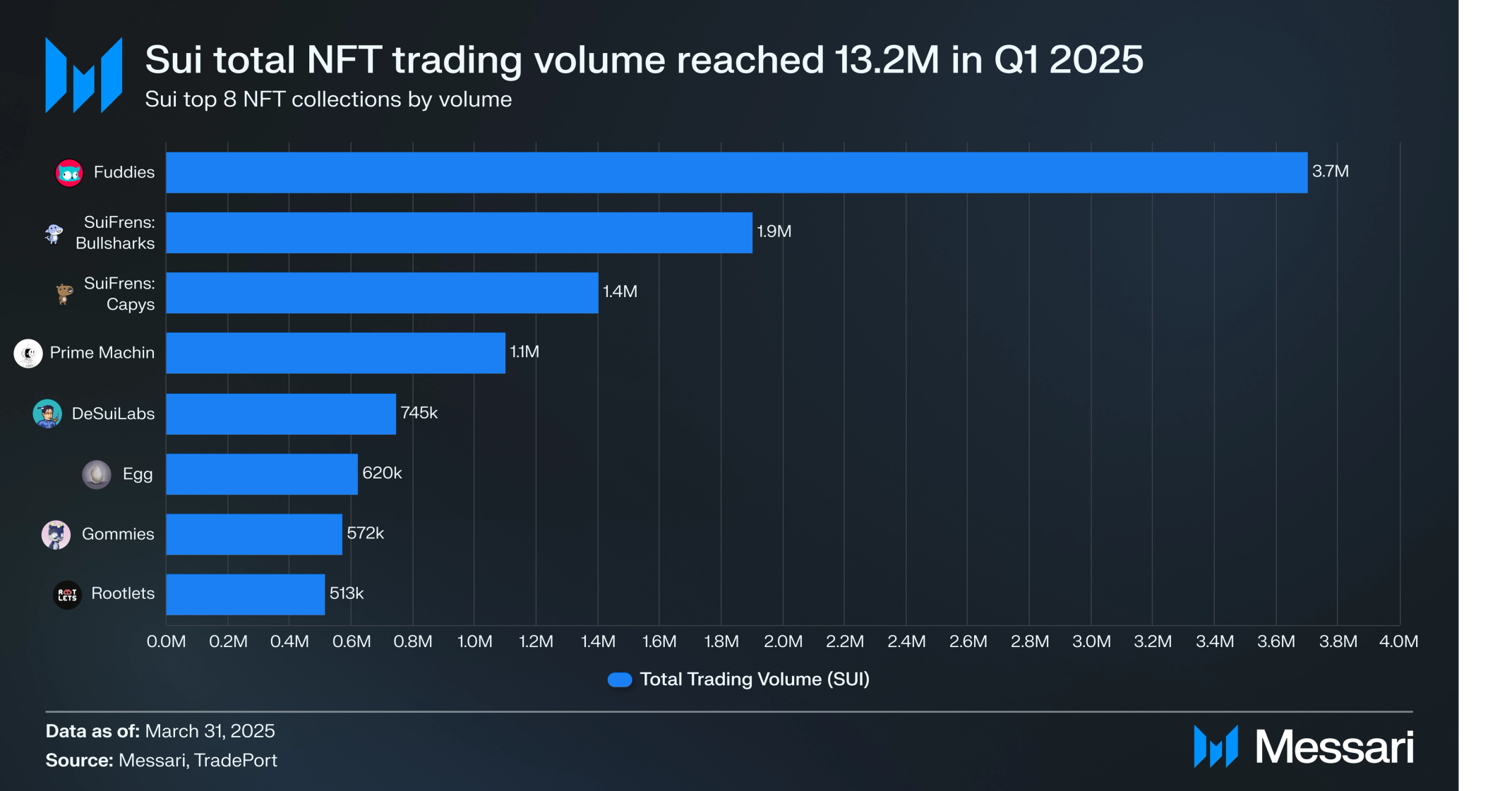
Data from Messari and TradePort suggests a positive trend in the NFT sector on Sui. Trading activity on the Sui blockchain for Q1 2025 shows a total trading volume of 13.2 million SUI among the top 8 collections.
Source: Messari
Leading the market is Fuddies, with a trading volume of 3.7 million SUI, significantly outperforming other collections. SuiFrens: Bullsharks follows with 1.9 million SUI, and SuiFrens: Capys ranks third with 1.4 million SUI. These top three collections account for over half of the total NFT volume on the network.
Explore More: Sui’s Gaming and NFT Landscape
Sui Ecosystem Recovery
Network usage saw a significant rebound following the recovery from the Cetus DEX exploit in late 2024. The Cetus event was a crucial moment for the Sui ecosystem. While the hack initially impacted DeFi confidence in Sui’s security and temporarily disrupted user growth and liquidity, Sui’s ecosystem recovered rapidly, thanks to the efforts of the Sui Foundation during this period.
Source: Messari
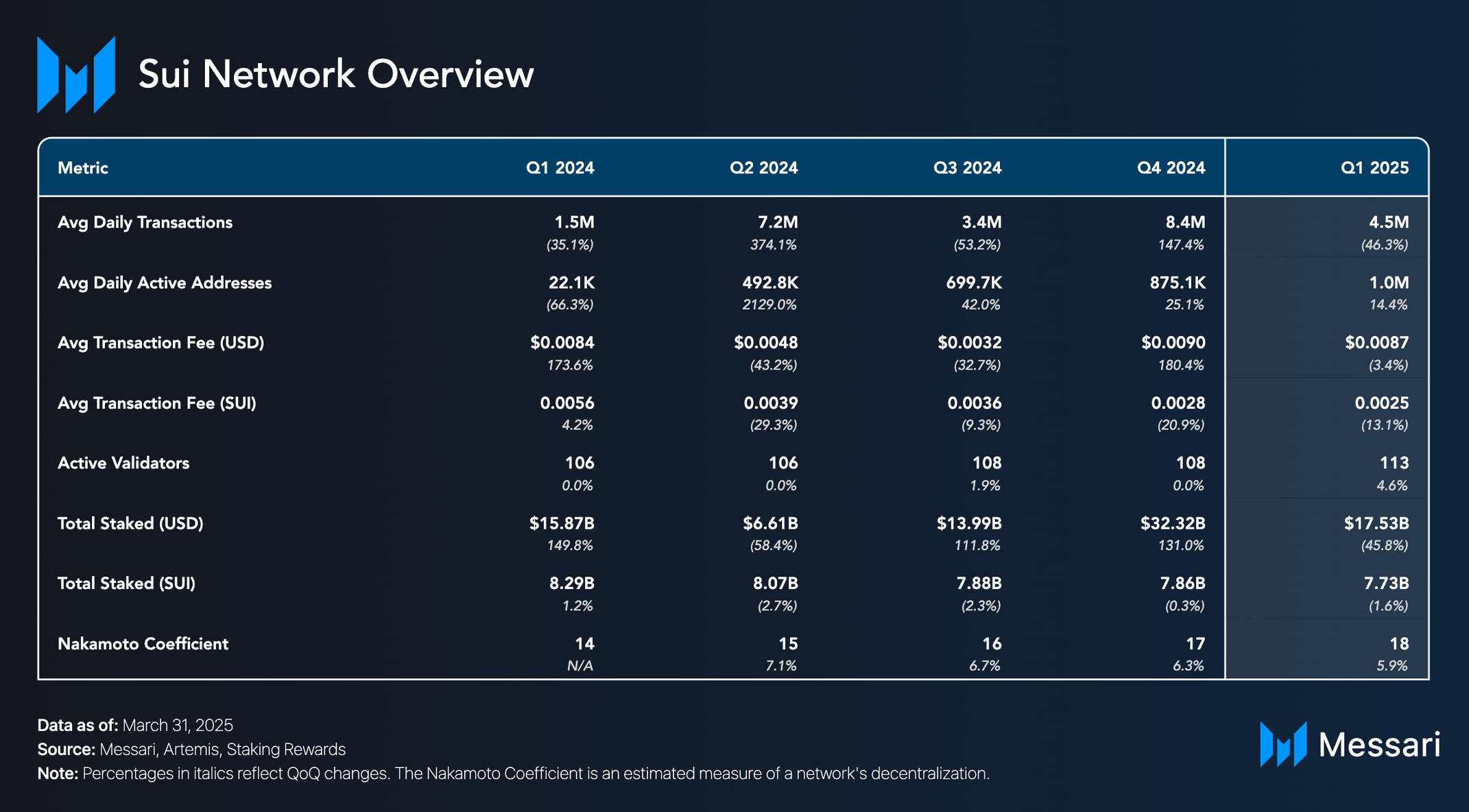
Despite the recovery, protocol revenue from transaction fees has decreased, reaching $3.6 million, a 33.3% decrease compared to the previous quarter. However, the network’s average transaction fee remains low at $0.0087, which is beneficial for user onboarding and dApp deployment, though it impacts protocol revenue.
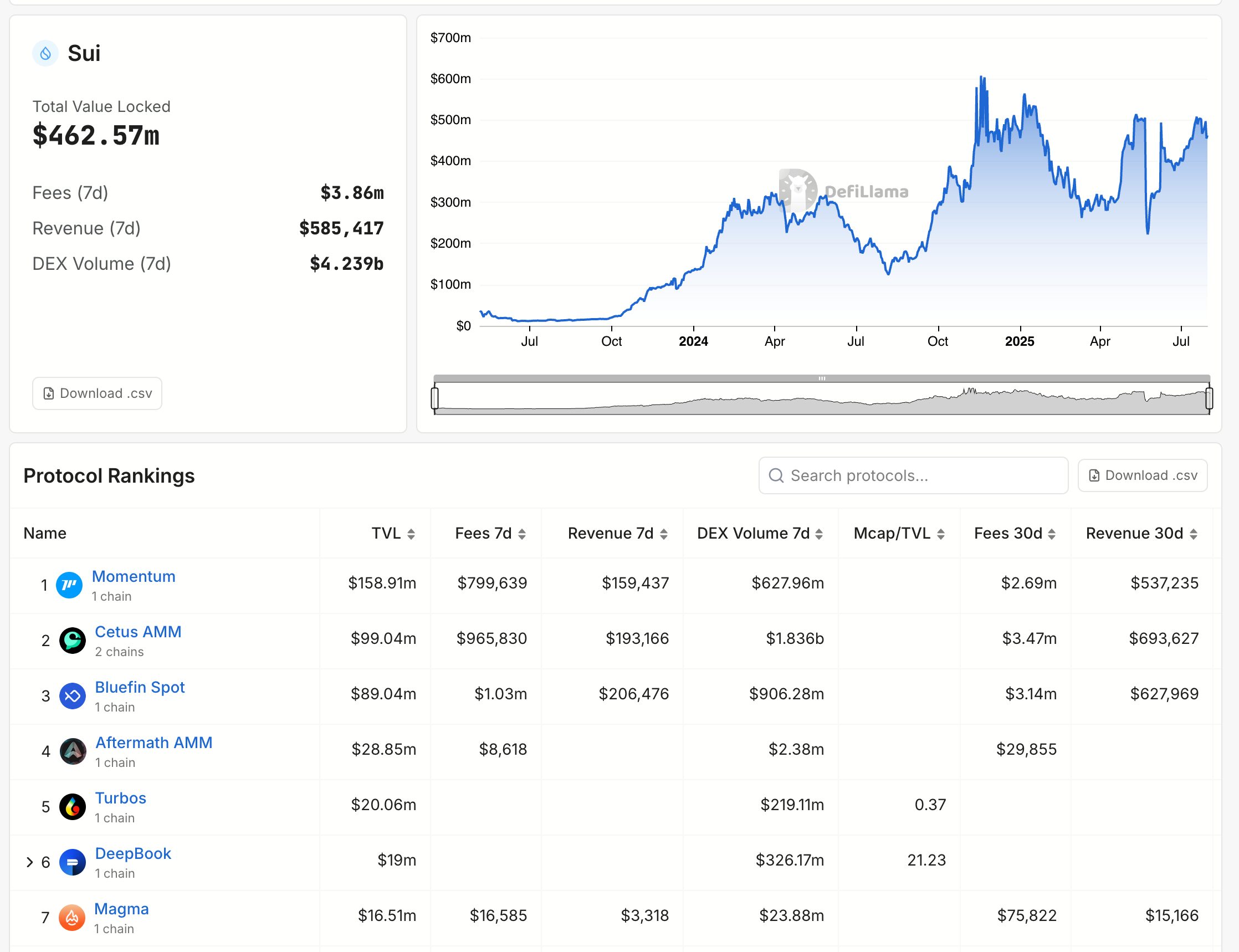
By Q1 2025, Sui’s Total Value Locked (TVL) returned to over $460 million, and DEX trading volumes reached $4.3 billion in 7 days. Cetus regained its leading position with $193 million in 7-day trading volume, followed by Bluefin and Kriya, indicating renewed confidence in decentralized exchanges on the network.
Developer activity remains a key factor in Sui’s ecosystem growth. With over 1,400 monthly active developers as of mid-2025, a 219% increase compared to early 2024, Sui stands out as one of the fastest-growing chains in terms of developer engagement. This interest is essential for long-term innovation and for creating a strong pipeline of decentralized applications.
Funding for Sui Projects
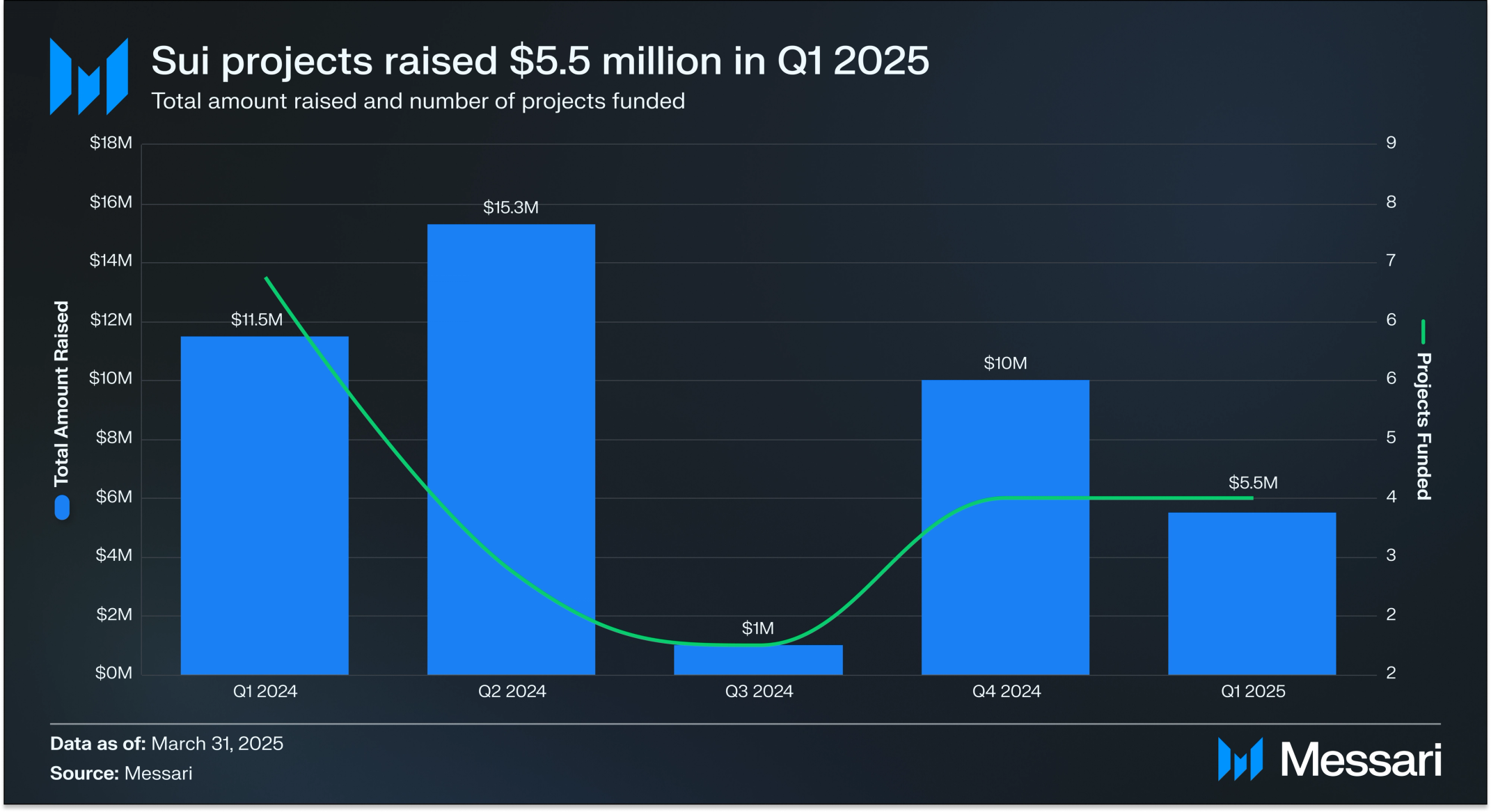
Ecosystem funding slowed down in Q1 2025 compared to previous quarters. According to Messari, projects on Sui raised a total of $5.5 million in Q1, spread across four funded ventures. This represents a temporary decrease in VC sentiment, compared to the $10 million raised in Q4 2024 and the peak of $15.3 million in Q2 2024.
Source: Messari
SUI Token Distribution and Market Position
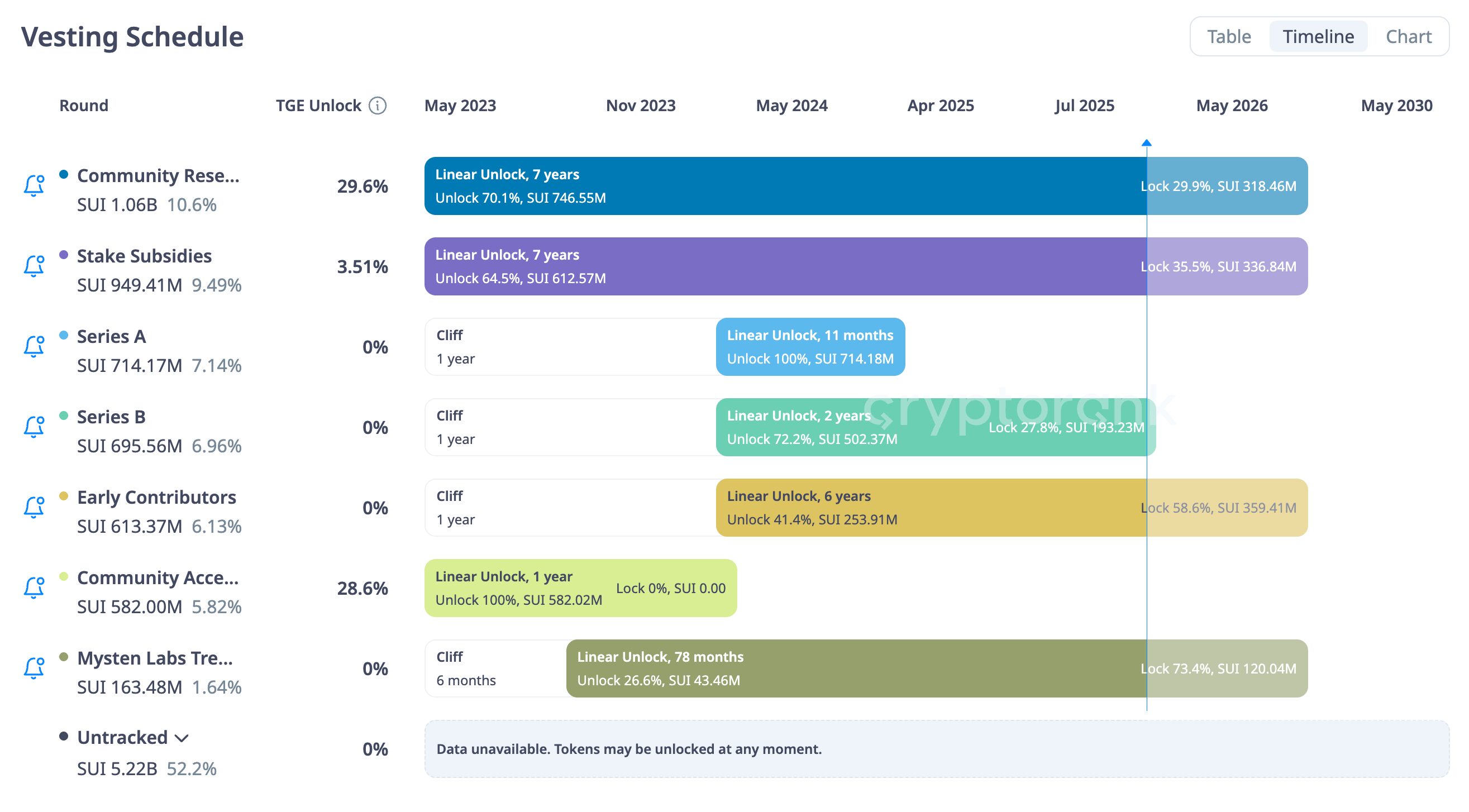
The tokenomics of SUI is designed with both potential and controversy in mind. The total supply is capped at 10 billion, but only 3.17 billion tokens were in active circulation as of Q1 2025. During that quarter, 242 million SUI tokens (2.42% of the total supply) were unlocked and distributed to private investors, team members, and the community. Consequently, the market capitalization declined by 40.3% to $7.19 billion in Q1, ranking SUI 13th among crypto assets, and the token’s price fell from $4.11 in Q4 2024 to $2.27.
Source: CryptoData
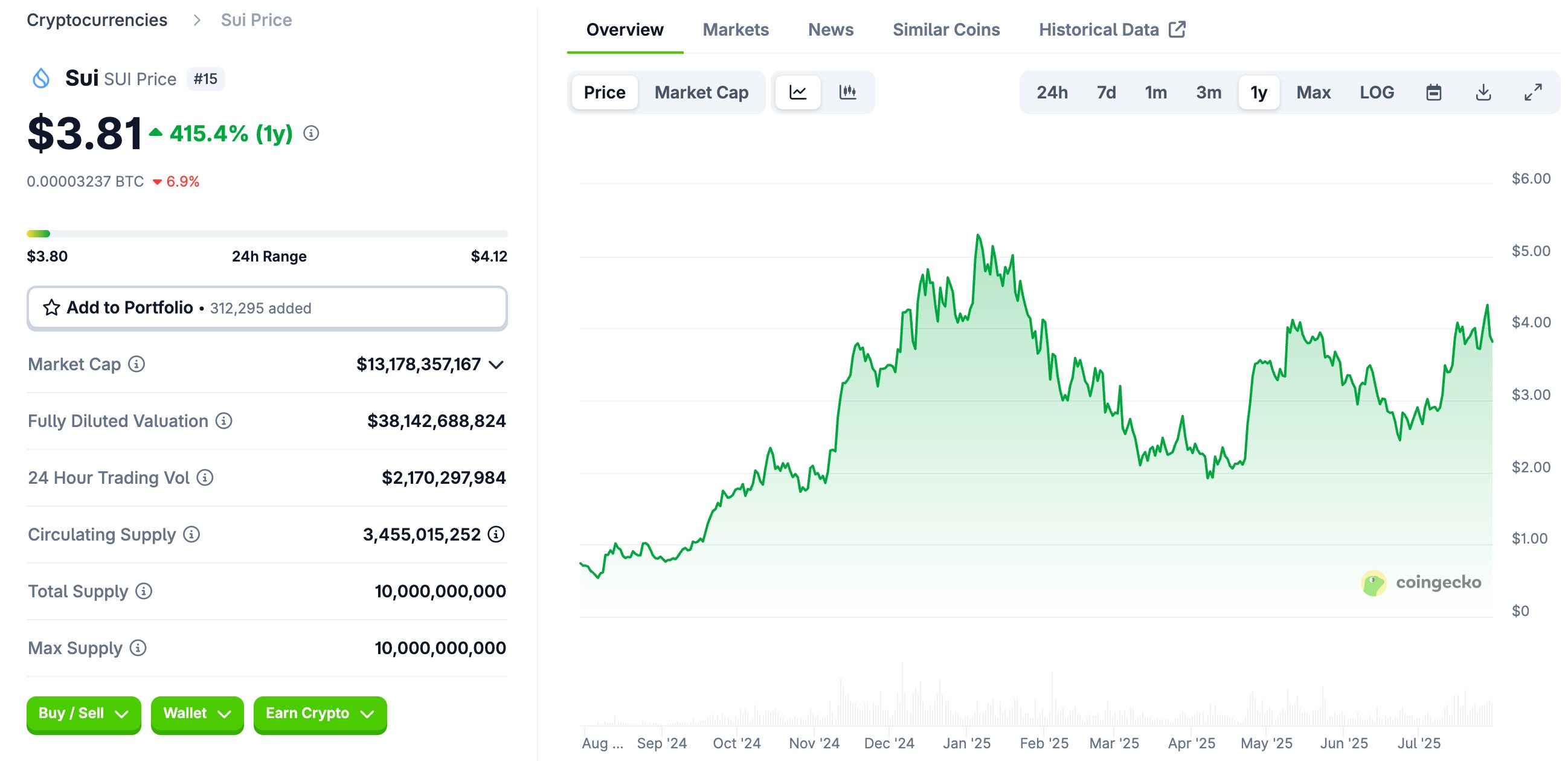
In July 2025, SUI trades between $3 and $4.5, experiencing occasional surges driven by network updates or incentive programs. Its yearly performance has been inconsistent, showing resilience in downturns but lagging behind leading Layer 1 platforms like Solana or Avalanche.

Market analysts forecast various outcomes for SUI in the coming year. A bullish scenario, supported by wider interest in altcoins and continuous adoption, could push prices toward $5–$6. A neutral path might see it stabilize around $3, while a bearish trend, influenced by oversupply or macro corrections, could bring it down to the $1–$2 range.
Source: Coingecko
Competitive Landscape in the Layer 1 Sector
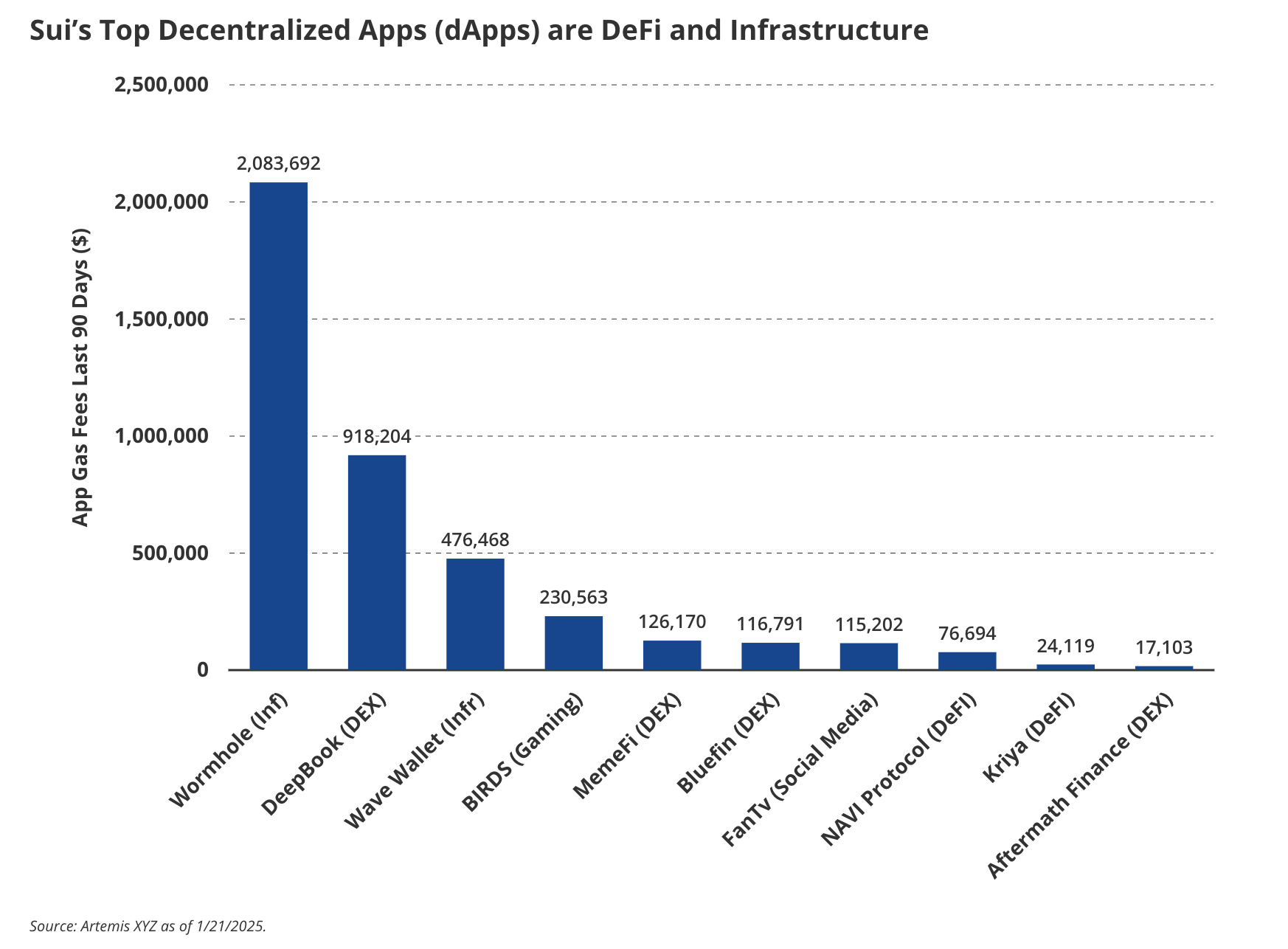
As of 2025, Sui operates within a crowded Layer 1 market dominated by Ethereum, Solana, and emerging platforms like Aptos. Ethereum maintains its position as the largest Layer 1, but its scalability challenges and high gas fees have created opportunities for competitors like Solana. Solana has gained significant traction due to its high transaction speeds and low costs, though it faces criticism regarding network stability and centralization issues. Sui aims to provide a more reliable and scalable alternative, particularly through its parallel execution and object-centric model, allowing for potentially higher throughput than Solana in specific use cases.
Compared to Aptos, Sui’s object-centric model is a key differentiator. While Aptos also utilizes Move, it employs an address-centric model. Sui’s approach is designed to more intuitively represent real-world assets and facilitate more complex applications. However, both chains are relatively new and are actively developing their ecosystems, making a definitive long-term comparison difficult at this stage.
Related Reading: A Comparative Look at Monad, Sui, Solana, and Ethereum
Here’s a comparison of key metrics:
| Metric | Sui | Solana | Aptos |
| Theoretical Peak TPS | Up to 297,000 | Up to 65,000 | Up to 160,000 |
| Observed Average TPS | ~55-120,000 | ~2,000-3,000 (non-vote) | Varies, typically lower than theoretical |
| Total Value Locked (TVL) | ~$2.1 Billion | ~$4.5 Billion | ~$200 Million |
| Daily Active Addresses | ~1.1 Million | ~4 Million | Varies, generally fewer than Sui/Solana |
| Monthly Active Developers | ~1,400 (219% increase in H1 2024) | Significant, but growth rate fluctuates | Growing, but smaller than Sui/Solana |
Note: TPS metrics can vary based on factors like methodology and network status. TVL and DAA are dynamic.
Sui’s focus on the developer experience and unique technical structure position it as a viable competitor in the Layer 1 space. Its capability to handle high transaction volumes and low latency is critical for widespread adoption, especially for applications like gaming and social media. Ultimately, its success will depend on its ability to attract and retain developers, users, and capital, which will be an ongoing challenge against established competitors.
Evaluating Sui as a Potential Investment
Sui represents a potentially attractive, though speculative, investment opportunity. Its technical architecture is innovative, and long-term scalability advantages could be beneficial if the chain attracts high-frequency applications. For investors with a high-risk tolerance and a belief in emerging infrastructure, SUI could be a worthwhile addition to a diversified portfolio. Investors should be prepared for near-term volatility due to token unlocks and the developing ecosystem. The token’s fundamentals do not currently justify a large allocation when compared to more established Layer 1 platforms or Ethereum-based protocols. However, Sui represents a high-growth option for investors looking to gain exposure to the next generation of smart contract platforms.