

Since their introduction in January 2024, crypto ETFs have captured the attention of investors, becoming a significant component of many portfolios. While experienced investors see them as another tool, those new to the market are asking: “What exactly is a crypto ETF?”
This guide provides a clear explanation, exploring the benefits, workings, and challenges of these instruments within the evolving world of digital currencies.
What Are Crypto ETFs?
Crypto ETFs, which stand for cryptocurrency exchange-traded funds, represent a new approach to investing that combines elements of both the crypto and traditional ETF markets. They provide a way for investors to participate in the price movements of cryptocurrencies without needing to directly own them. This means avoiding the complexities of dealing with cryptocurrency exchanges, digital wallets, and private keys.
Unlike conventional ETFs that track things like commodities, market indexes, or diverse asset collections, crypto ETFs focus specifically on digital currencies like Bitcoin. By creating a simpler, regulated investment route into cryptocurrencies, ETFs have drawn interest from institutions and individual investors alike. Their initial approval in January 2024 is opening up new sources of funding and promoting greater acceptance of cryptocurrencies within mainstream financial systems.
How a Cryptocurrency ETF Operates

A crypto ETF operates by mirroring the price of a cryptocurrency, like Bitcoin (in the case of a Bitcoin ETF), reflecting its ups and downs. Just like regular stocks, cryptocurrency ETFs are traded on established stock exchanges. This familiarity with established platforms makes crypto ETFs appealing to traditional investors already comfortable with stock market trading. They can now enter the crypto market without the complexities of directly handling digital currency transactions.
Bitcoin ETFs track the price of Bitcoin either by purchasing actual Bitcoin or using Bitcoin-based derivative products. The ETF then issues shares to investors that represent the value of those digital assets. These shares function just like any other stock or ETF. ETFs offer a convenient way for investors to include exposure to Bitcoin in their investment strategies without having to actually buy or manage the Bitcoin themselves.
Different Types of Cryptocurrency ETFs
Basically, there are two main kinds of crypto ETFs: spot Bitcoin ETFs and Bitcoin futures ETFs.
Spot Crypto ETFs: These ETFs directly track the price of the underlying digital currency by holding actual units of that coin.
- They give investors direct price exposure to a cryptocurrency like Bitcoin or Ethereum.
- They’re a user-friendly choice for those wanting to get into crypto without owning the assets directly.
- The ETF provider buys the underlying cryptocurrency on behalf of investors and stores it in their reserves.
Crypto Futures ETFs: These ETFs don’t hold the actual digital currency within the fund.
- Instead, they track the price through futures contracts, speculating on the future value of the asset.
- A futures contract is an agreement to buy or sell the cryptocurrency at a set price on a future date.
- This lets traders speculate on where the price of a cryptocurrency might go without actually owning it.
Spot Crypto ETFs
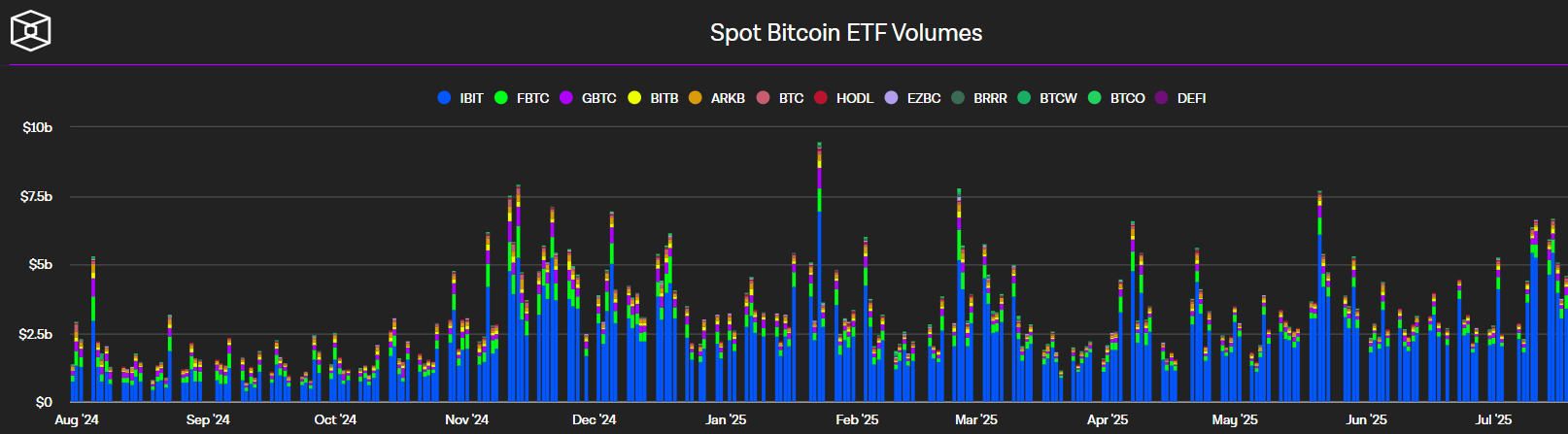
Source: Yahoo Finance
The US Securities and Exchange Commission (SEC) gave the green light to the first spot Bitcoin ETFs on January 10, 2024, marking a pivotal point for exchange-traded funds. Some well-known spot Bitcoin ETFs include:
1. iShares Bitcoin Trust ETF (IBIT)
The IShares Bitcoin Trust ETF (IBIT) lets investors engage with Bitcoin indirectly through an ETF structure. This avoids the tax, operational, and custodial complexities of holding Bitcoin directly. IBIT has become one of the most actively traded Bitcoin ETFs globally since its inception. It’s managed by a leading global asset manager, leveraging technology developed by Coinbase Prime.
2. Grayscale Bitcoin Mini Trust ETF (BTC)
The Grayscale Bitcoin Mini Trust ETF invests only in Bitcoin, aiming to track the price of the Bitcoin held by the Trust. BTC is considered one of the most cost-effective Bitcoin ETF options, making Bitcoin ownership accessible to investors. This ETF, sponsored by Grayscale, is available as a direct investment fund through brokerage accounts.
3. Fidelity Wise Origin Bitcoin Fund (FBTC)
FBTC holds Bitcoin and tracks its daily price using the Fidelity Bitcoin Reference Rate. This rate is calculated from pricing information coming from different Bitcoin spot markets that meet certain standards. The fund may occasionally sell Bitcoin to cover operational expenses, which is then treated as a return on investment for shareholders.
4. iShares Ethereum Trust ETF (ETHA)
ETHA offers a simple point of entry for investors interested in adding Ethereum to their investment portfolio. Investors avoid the complexities of crypto wallets and exchanges, gaining access to the digital asset within the established ETF structure. Backed by asset manager BlackRock, this product has the potential to increase institutional adoption of cryptocurrencies.
Futures Crypto ETFs
Futures crypto ETFs, like Bitcoin futures ETFs, have been around since 2021. These ETFs hold futures contracts instead of the actual underlying asset. In a futures contract, the seller commits to selling the asset on a specific date at a pre-agreed price. The ETF provider handles all the work on behalf of investors, and the profits or losses are reflected in the fund’s net asset value (NAV). Examples of futures crypto ETFs include:
1. ProShares Short Bitcoin ETF (BITI)
The ProShares Short Bitcoin ETF (BITI) is a financial product managed by ProShares Advisors LLC. This fund aims to profit from daily declines in Bitcoin futures contract values. BITI invests in currency markets, using short positions in derivatives like futures contracts to gain exposure to Bitcoin. Launched in 2022, the fund tracks one times the inverse of the daily performance of the Bloomberg Bitcoin Index.
2. ProShares Bitcoin ETF (BITO)
The launch of the ProShares Bitcoin ETF (BITO) was a significant event, marking the debut of the first US-based Bitcoin ETF. This product, traded like stocks on major exchanges, brought a new level of accessibility and legitimacy to Bitcoin investment. BITO is now included in many retirement accounts and follows the regulations of financial institutions. The fund provides a more traditional investment option that’s less complicated than owning Bitcoin directly.
3. ProShares Ether ETF (EETH)
ProShares Ether ETF (EETH) actively seeks to track the price of Ether (ETH). The fund invests in front-month Ether futures contracts that are USD-cash settled. EETH does not invest directly in Ether or any other cryptocurrencies and is primarily managed using Ether futures contracts. Stakeholders oversee the operation and ownership of ETH through a peer-to-peer network called the Ethereum Network.
Bitcoin ETF vs Futures ETF: Key Differences
| Feature | Spot Bitcoin ETF | Futures ETF |
| Asset | Real Bitcoin | Futures contracts |
| Risk profile | Directly relates to real-time volatility | Highly speculative |
| Exposure | Direct exposure to crypto market | Indirect exposure to market conditions |
| Accessibility | Fewer countries | More widely accessible |
| Duration | Ideal for long-term investors | Best for short-term traders |
| Volatility | Low | High because of leverage |
Advantages of Investing in Crypto ETFs
Crypto ETFs provide several benefits to investors, including diversification, potential tax efficiency, and lower costs. Key advantages include:
Exposure Without Direct Ownership
Investing in the best cryptocurrency ETFs simplifies navigating the complex cryptocurrency investment landscape. Choosing ETFs allows you to avoid the daunting aspects of direct crypto dealings. You don’t need to set up or manage a digital wallet, deal with security risks, or understand the technical aspects of blockchain. ETFs bring the dynamism of crypto into the regulated structure of traditional stock trading.
Simplified Learning Curve
Crypto ETF investment simplifies learning about and entering the crypto market. Investors can use the growth potential of crypto investments to diversify their portfolios. This makes it easier for those unfamiliar with digital assets to invest in Bitcoin and other cryptocurrencies.
Improved Security for Investors
Cryptocurrency ETF providers are licensed and regulated, trading on established platforms. This gives you confidence, knowing the participants are verified and overseen by regulatory bodies. This minimizes the chance of illegal activities or market manipulation. Additionally, ETF providers’ investments are usually backed physically and held in custody or on regulated platforms, reducing risks of fraud or failure.
Lower Investment Costs
Compared to retail cryptocurrency investments, crypto ETFs buy, sell, and trade large volumes of digital assets every day. This allows investors to benefit from economies of scale and competitive rates when the ETF purchases crypto. In contrast, individual investments typically involve transactions subject to higher fees, often ranging from 1.5% to 3% on retail crypto exchanges. This translates to lower costs for investors buying shares in Bitcoin ETFs.
Disadvantages of Investing in Crypto ETFs
Despite the advantages, investors should approach crypto ETFs with caution. Valuing crypto assets can be complex. Some disadvantages include:
Volatility
While the best cryptocurrency ETFs may offer greater liquidity compared to direct crypto investment, they’re still subject to volatility. Market sentiment can change rapidly in the crypto space, influencing the prices of the underlying cryptocurrency. Due to the inherent price volatility of cryptocurrencies, the value of ETFs can fluctuate significantly.
Higher Management Fees
Like mutual funds or other ETFs, cryptocurrency ETFs have associated fees. A portion of your potential earnings is used to manage the fund and purchase Bitcoin.
No Direct Asset Control
Unlike direct cryptocurrency trading where you own the coins, ETF investors lack direct ownership or control. Although this isn’t always a primary concern, some investors dislike the lack of flexibility.
Potential Tracking Issues
While offering a regulated way to invest in cryptocurrencies, Bitcoin or Ether ETFs carry the risk of tracking error. This is the difference between the ETF’s actual performance and the performance of the underlying cryptocurrency market. This can lead to a discrepancy between the expected and actual investment returns.
How To Get Involved with Cryptocurrency ETFs
Investing in ETFs is quite simple, and involves a few basic steps:
- Step 1: Select a Brokerage: Choose a brokerage platform that offers crypto ETFs. Research to find one matching your investment goals.
- Step 2: Open an Account: You can open an account easily, either with a physical or online brokerage firm.
- Step 3: Deposit Funds: Transfer money to your new account to buy crypto ETFs, using methods like wire transfers, bank transfers, or debit/credit cards.
- Step 4: Find and Purchase: Find the crypto ETF you want on the brokerage platform. Once you decide the number of shares, place your order.
- Step 5: Watch Your Investment: Monitor your ETF’s performance, and set alerts for significant price changes.
Tax Rules and Regulations for Crypto ETFs
Crypto ETFs are subject to taxation, with rates and implications varying based on laws and holding times. Profits are taxable, with different rates for long-term and short-term capital gains. Crypto ETFs can offer tax advantages compared to direct investment in digital assets. As regulations vary, consult a tax expert to understand the specific tax implications of Bitcoin ETF investments.
Countries have individual rules on the creation, trading, and storage of cryptocurrencies and related products. These rules may differ significantly and are evolving with emerging risks. Some countries have limited rules, while others have extensive frameworks for various crypto activities, including ETFs.
Crypto ETF investments are subject to rules aimed at protecting investors from fraud and market manipulation. These rules promote accurate disclosures and transparency, including clarifying how these products are taxed. Additionally, regulations aim to reduce systemic risk by overseeing ETF providers.
Alternative Investment Options
Since the approval of spot bitcoin ETFs, several companies have created alternative products to meet the growing demand, including the following:
1. Crypto Trusts
Crypto trusts hold cryptocurrencies, allowing investors to include digital assets in their portfolios. Investors buy a basket containing Bitcoin and other cryptocurrencies through a brokerage or retirement account. Unlike standard crypto ETFs, crypto trusts can periodically sell shares to accredited investors. These accredited investors, who must meet specific income requirements, can sell their shares publicly. Prices might differ from the underlying cryptocurrency, leading to premiums or discounts.
2. Crypto ETPs
Crypto ETPs, or cryptocurrency exchange-traded products, are alternative tools bridging traditional and blockchain finance. The three main types of ETPs have different structures, holding crypto or tracking its value using debt or contracts. These products include Exchange-traded funds (ETFs), exchange-traded commodities (ETCs), and exchange-traded notes (ETNs).
3. Companies Holding Cryptocurrency
Another investment option involves Bitcoin treasury companies that buy and hold crypto. These firms have invested heavily in Bitcoin and are among its largest holders. Their business model involves raising capital from investors and purchasing Bitcoin. One leading example is Strategy, which held 607,770 bitcoins as of July 2025, representing 3% of all BTC in circulation. Others include Japan’s Metaplanet, Galaxy Digital, and Twenty One Capital.
4. Crypto-Related ETFs
Different crypto-related ETFs are available for investors:
- Bitcoin ETFs: These are designed to track the price of Bitcoin by directly holding the asset or via Bitcoin futures contracts.
- Ethereum ETFs: Like Bitcoin ETFs, Ethereum ETFs track Ethereum’s price for spot ETH ETFs or Futures ETFs.
- Mixed Cryptocurrency ETFs: Other ETFs provide a mix of crypto assets, mostly through futures contracts.
Are Crypto ETFs a Good Investment for 2025?
Crypto ETFs are a promising avenue for investors aiming to participate in the dynamic cryptocurrency market. The ETF market is expected to undergo significant innovation and expansion in 2025, following positive changes in crypto regulation. While regulatory frameworks might tighten, there will be increased technological advancement and institutional adoption. Investors should stay informed and approach this with a balanced perspective, keeping up with key trends and developments. Being informed helps navigate the complexities of crypto ETFs effectively.
Frequently Asked Questions
What is the difference between ETFs, ETPs, and ETNs?
Exchange-traded products (ETPs) are a broad category of investment instruments, including Exchange-traded Funds (ETFs) and Exchange-traded Notes (ETNs), and possibly other investment types like exchange-traded commodities (ETCs). ETFs hold actual assets like stocks, bonds, and crypto, while ETNs are unsecured debt securities tied to a performance index. ETCs are ETPs linked to currencies and commodities.
What would an XRP ETF mean?
An approved XRP ETF would allow investors to gain exposure to XRP’s price movements without directly owning the cryptocurrency. As a regulated investment vehicle, it would enhance institutional adoption of XRP.
What is a crypto ETF in the S&P 500?
Crypto ETFs track cryptocurrencies like Bitcoin in the S&P 500. Investors can buy or sell ETFs like stocks using traditional brokerage accounts.
Is a Bitcoin Spot ETF approved in the US?
The US SEC approved the first 11 Bitcoin spot ETFs on January 10, 2024.
Can I short crypto ETFs?
Directly shorting Bitcoin is generally unavailable. However, ETFs facilitate this through inverse funds, like the ProShares Short Bitcoin Strategy ETF (BITI).
Which crypto ETF is the best?
The iShares Bitcoin Trust ETF (IBIT) is one of the most popular crypto ETFs. It tracks the New York Variant Index of the CME CF Bitcoin Reference Rate, increasing its appeal.