

Massive Bitcoin Transfer: 80,000 BTC in Motion – What’s the Story?
A noteworthy event occurred on July 4, 2025: a collection of eight Bitcoin wallets, dating back to the early days of the cryptocurrency’s creation by Satoshi Nakamoto, collectively moved 80,000 BTC. Each wallet held a substantial 10,000 BTC, igniting discussion and speculation throughout the crypto community.
The “Satoshi era,” typically defined as 2009-2011, saw Bitcoin (BTC) mined or transacted using standard computer hardware. Recently, eight previously inactive Bitcoin addresses initiated transactions, each involving approximately 10,000 BTC. This activity has fueled theories, including the possibility that concerns about the potential impact of quantum computing prompted these transfers.
Intriguingly, the coins weren’t directly sent to cryptocurrency exchanges. Instead, they were moved to new SegWit addresses, suggesting a deliberate security enhancement. SegWit addresses are considered more resistant to potential quantum computing threats compared to older address types. The legacy addresses employed pay-to-public-key (P2PK) or reused P2PK hash (P2PKH) schemes, which are now recognized as more vulnerable.
While some social media posts suggested a possible security breach or heightened quantum threat awareness, these claims remain unsubstantiated and appear to be based on speculation.
Between July 14 and July 15, 2025, a mere ten days after the significant movement, the wallet owner transferred a substantial 28,600 BTC, currently valued at over $3 billion, to Galaxy Digital. Reports indicate that 9,000 BTC have already been sold, potentially contributing to a market dip around July 15, when Bitcoin experienced a roughly 5% decline from its recent peak of $123,000.
Interesting Fact: Back in 2011, when these Bitcoin holdings were initially acquired, the price of Bitcoin ranged from $0.78 to $3.37. Assuming an average purchase price of $2.45 per BTC, the initial investment for 80,000 BTC would have been approximately $197,200. Based on today’s price of roughly $118,000 per Bitcoin, the whale’s holdings are now worth $9.44 billion, representing an astonishing increase of around 4,800,000%!
The Quantum Computing Threat to Bitcoin: Explained
Quantum technology presents a potential vulnerability to Bitcoin by potentially compromising the private keys that secure your wallet, thereby jeopardizing all Bitcoin held within that wallet.
Many experts believe that quantum computers possess the potential to disrupt the Bitcoin network, posing a substantial threat to its long-term viability. Bitcoin developers are actively working on system upgrades to mitigate future risks, although the real threat remains several years away. Their efforts are particularly focused on dormant Bitcoin wallets, which are considered more susceptible to quantum attacks.
Quantum computers could exploit weaknesses within the asymmetric cryptography that safeguards Bitcoin wallets, particularly the Elliptic Curve Digital Signature Algorithm (ECDSA), which Bitcoin uses for security.
Bitcoin wallets utilize ECDSA to create private-public key pairs for security. If the ECDSA algorithm were to be compromised, your Bitcoin holdings would be at risk. Analysts predict that practical quantum attacks could materialize within the next five to twenty years, with the period between 2030 and 2048 being cited as a possible timeframe.
Older wallets are particularly vulnerable to quantum attacks because they use P2PK or reused P2PKH addresses, which expose public keys. It’s estimated that around 5.9 million BTC (approximately 25% of the total supply) reside in P2PK or reused P2PKH addresses, making them susceptible to potential quantum attacks in the future.
The recent movement of 80,000 BTC originated from P2PK addresses. Although their public keys were not yet exposed (due to these being first-spend outputs from old Bitcoin transactions), they were, in a sense, initially quantum-safe. Transferring them to SegWit addresses further strengthens their security.
Bitcoin developers, led by Casa founder and chief technology officer Jameson Lopp, have introduced a Bitcoin Improvement Proposal (BIP) designed to address the potential threat of quantum computing to Bitcoin’s security. The proposal seeks to protect the network by freezing and ultimately phasing out wallets vulnerable to quantum attacks, which could impact as much as 25% of Bitcoin’s supply, including the estimated 1 million BTC held by Satoshi Nakamoto.
Bitcoin Whale Awakens: 14 Years of Inactivity Ends
Arkham’s Bitcoin whale analysis has determined that the eight wallets in question belong to a single entity. This has spurred speculation about the identity of this newly active Bitcoin whale.
A crypto whale refers to an individual or organization that possesses a considerable amount of a specific cryptocurrency – often enough to potentially influence market prices. The sudden movement of 80,000 BTC by a Bitcoin whale after 14 years of dormancy was sure to attract attention. Bitcoin whale trackers constantly analyze blockchain data and transactions, and the transparency inherent in the open blockchain ledger means these movements are visible to everyone.
Suspicious activity was detected the day prior to the main BTC transfer. A transaction involving 10,000 Bitcoin Cash (BCH) was executed from a related wallet cluster, potentially as a test to verify private key access. This raised concerns about a possible hack, as noted by Coinbase director Conor Grogan, although no conclusive evidence has been found.
One prominent theory suggests that the Bitcoin movement is linked to Roger Ver, based on his early involvement with Bitcoin dating back to 2011. Ver, often referred to as “Bitcoin Jesus,” was arrested in Spain on US tax evasion charges in April 2024. He is accused of failing to pay $48 million in taxes related to the sale of $240 million worth of Bitcoin.
He was released on bail in June 2025, shortly before the wallet activity occurred, further fueling speculation about his potential connection to the transactions.
Did You Know? Each of these 10,000-BTC movements represents a record-breaking Bitcoin transaction. The previous record for the largest single transaction in Bitcoin history was a comparatively modest 3,700 BTC.
Understanding OP_RETURN Messages
OP_RETURN messages are a function within the Bitcoin blockchain that enables users to embed limited amounts of data, capped at 80 bytes, directly into a transaction. These messages designate the transaction output as unspendable.
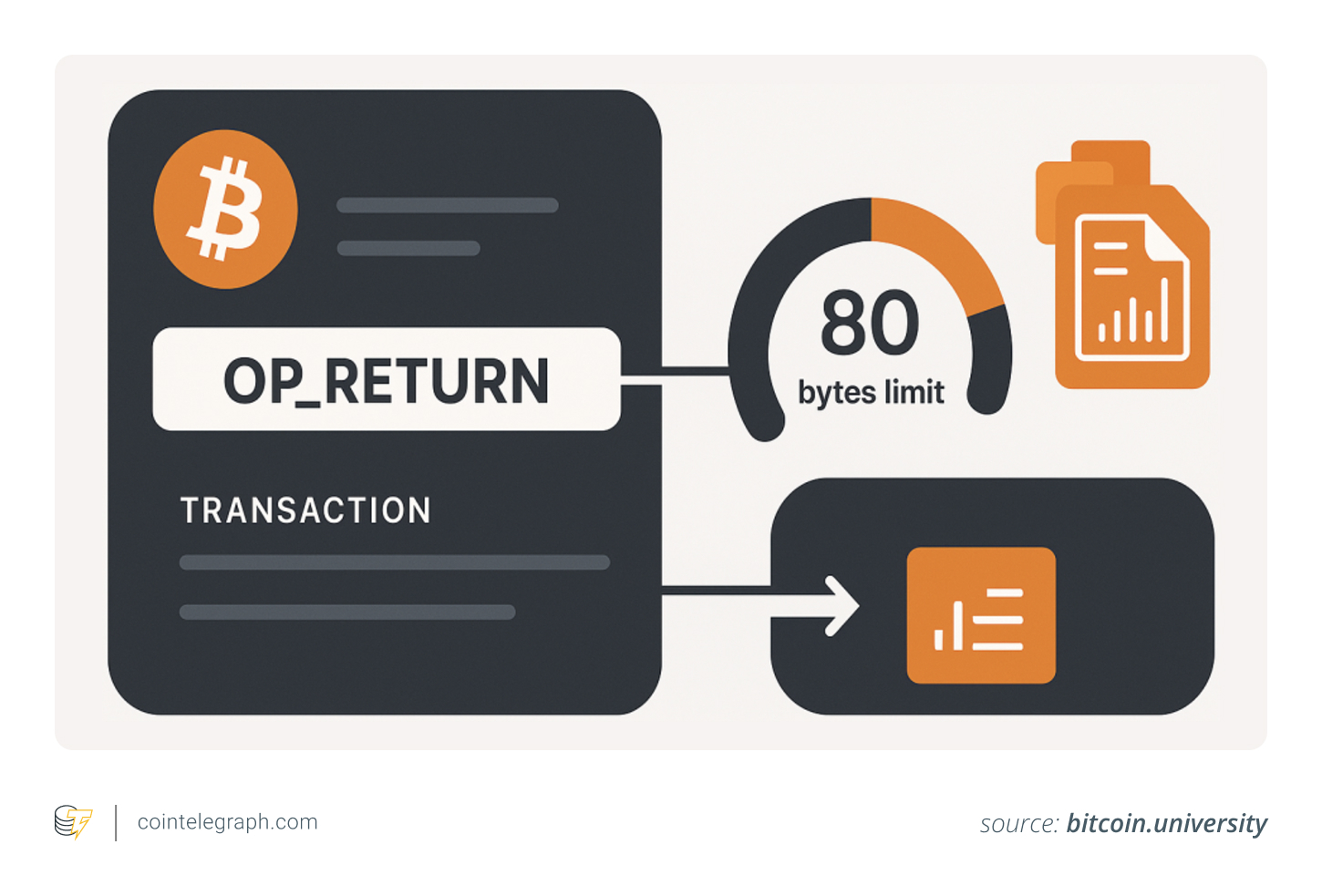
Between July 1 and July 4, 2025, four OP-RETURN messages were embedded into the Bitcoin blockchain, sent simultaneously to multiple wallets.
The first message, recorded on July 1, 2025, at 00:30, stated:
“LEGAL NOTICE: We have taken possession of this wallet and its contents.” (Transaction ID: 4f7c80c05fd77a9c9b180f7f6400560d1ab6cf3a4ba1b6bf7429eeeefa500a05).
Three subsequent messages followed over the next several days, concluding on July 4, 2025. One of the messages issued an ultimatum to the wallet owner, demanding proof of ownership via an on-chain transaction using their private keys by September 30, 2025.
While there’s no concrete evidence of a hack, a planned spam campaign is a more plausible explanation. The objective may be to trick the wallet owner into moving funds to demonstrate control. Scammers frequently target dormant wallets with claims of abandonment.
This spam campaign has generated considerable speculation across various online platforms. Some suggested the OP_RETURN messages represented a “legal stunt” or a scam intended to pressure the whale into revealing their identity.
Others have labeled the messages as “blockchain graffiti,” a method of filling the chain with unsolicited data. However, their specific focus and timing suggest a deliberate and targeted intent.