
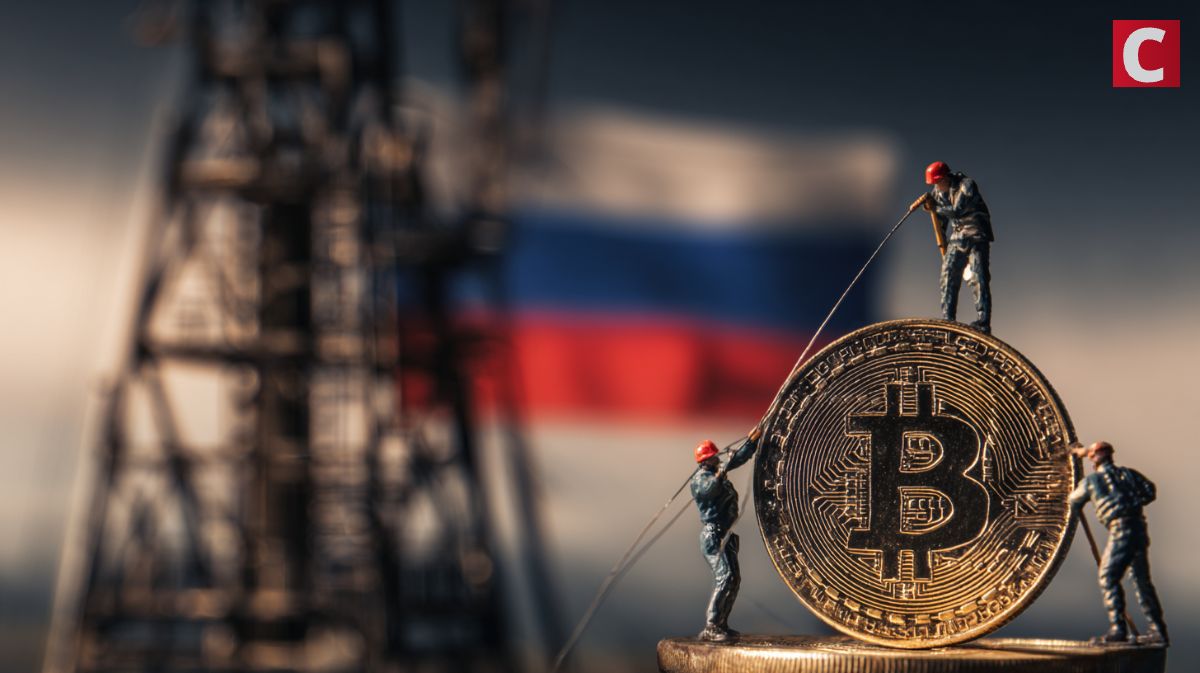
Key Notes
- To curb illicit activities, Russia establishes a crypto mining registry.
- Operational now, the registry targets regions known for substantial mining operations.
- The goal is to ensure accurate tax payments from miners, calculated according to their electricity consumption.
The Russian government is stepping up its monitoring of digital currency mining, specifically aiming to control unauthorized mining farms that consume large quantities of power.
To tackle illegal operations, the country has launched a national registration system for mining equipment, designed to track down and identify miners who are operating without proper authorization.
According to various news sources, the registry is up and running and has been distributed to areas where crypto mining is prevalent.
The Ministry of Digital Development and the Ministry of Energy are jointly administering this registry to formalize the crypto mining industry within Russia and to stop illegal miners from tapping into unauthorized power sources.
Deputy Energy Minister Petr Konyushenko announced that this national registry will enable authorities to pinpoint individuals who are using electricity for digital currency mining purposes.
He further clarified that this program is designed to identify crypto miners and make sure they follow the rules. Once identified, these miners will be subject to taxation based on how much electricity they use.
The registry is also designed to prevent mining in regions where the practice is restricted because of limited electrical capacity. Russia has already banned crypto mining in ten regions until 2031 to avert potential power outages.
The Energy Ministry first proposed the registry idea in February 2025, and subsequently received approval from the Ministry of Industry and Trade.
Crypto Activities in Russia
Cryptocurrency mining was officially legalized in Russia back in 2024, enabling individuals, self-employed people, and businesses to engage in the activity.
However, companies and independent contractors must register with the Federal Tax Service before commencing mining operations. Private citizens are allowed to mine without registering, provided their electricity usage remains within established limits.
All miners are obligated to declare the digital currencies they earn from mining to the Federal Tax Service.
Recently, the Central Bank of Russia has stated that it will permit a select number of financial organizations to provide crypto-related products, like derivatives and digital financial assets (DFAs), to a restricted clientele.
These investment options will be exclusively available to institutional investors and those with accredited status. This action reflects a recent drive by the government to adopt cryptocurrency within the nation.
In other news, the price of Bitcoin has increased following some positive remarks from Tesla’s CEO, Elon Musk. Dennis Porter, head of the Satoshi Action Fund, has described this event as a “significant” boost for the Bitcoin network, while Robert Kiyosaki hopes for a price decrease to increase his holdings.
Disclaimer: Coinspeaker is dedicated to offering objective and clear information. This article aims to present reliable and up-to-date information, but it’s not intended as financial or investment guidance. Due to the dynamic nature of market conditions, we recommend verifying information independently and seeking advice from a professional before making decisions based on this content.
Rose is a content creator specializing in cryptocurrency, bringing a strong background in finance and technology. She breaks down intricate blockchain and cryptocurrency subjects into understandable content, providing insightful pieces and market research to help readers navigate the evolving digital currency space.