
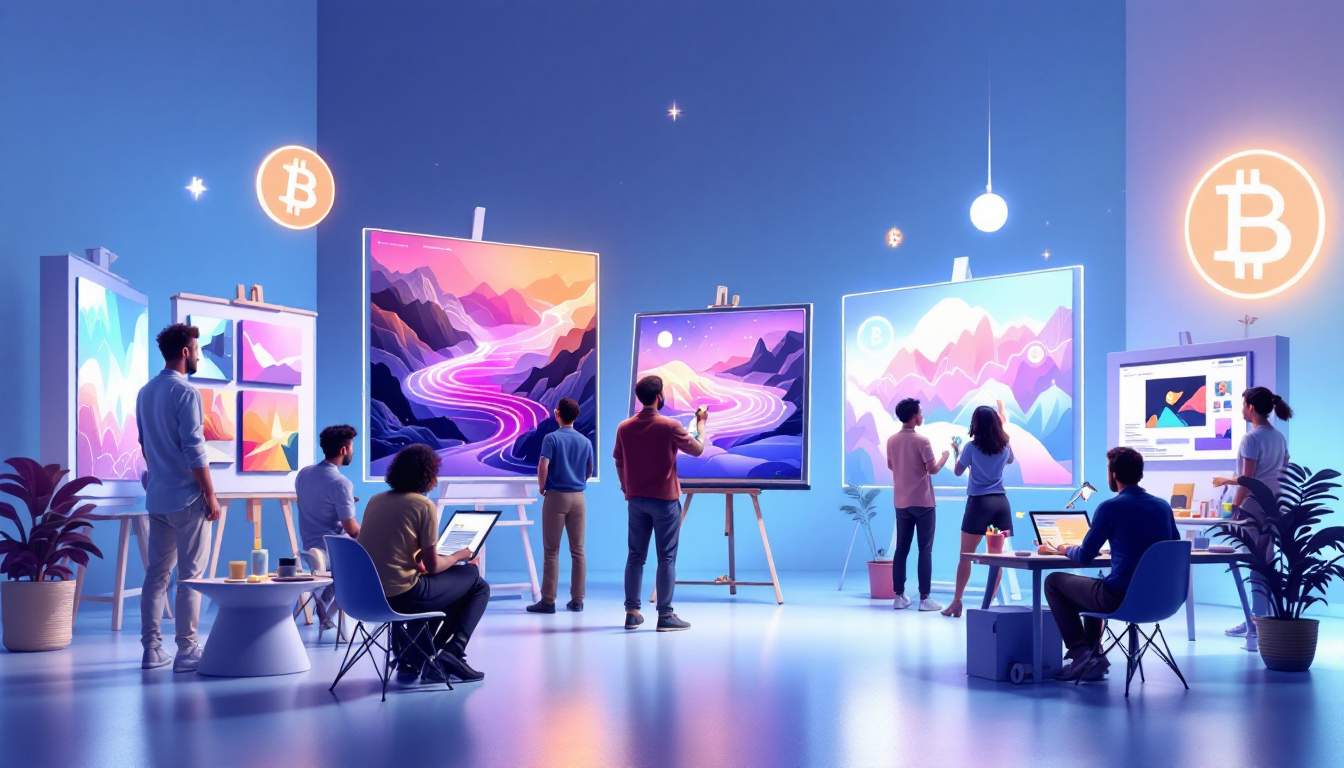
In an era where the conventional system of owning art is often perceived as exclusive, blockchain presents an alternative route. This article explores how Non-Fungible Tokens (NFTs) extend beyond mere digital objects of interest; they represent a mechanism for artists, particularly those from historically disadvantaged groups, to reclaim their stories and engage with a global viewership. The artistic landscape is transforming, and the role of blockchain in this evolution warrants closer examination.
A Revolution in Digital Art
Blockchain has dramatically reshaped the digital art sector, providing essential opportunities for creators and enthusiasts alike. This technology allows artists to verify the originality and possession of their creations without the need for traditional authorities. For many, this is a transformative moment. Artists can enhance their visibility and secure financial backing directly from their audiences.
The Value Proposition of NFTs
NFTs (Non-Fungible Tokens) tackle a persistent problem in digital art: proving authenticity and uniqueness in a realm where copying is incredibly simple. Blockchain provides immutable and verifiable records of ownership, effectively resolving concerns about counterfeiting. When artists design their own smart contracts, they can foster a direct connection with their audience, sidestepping traditional middlemen. This relationship is further strengthened by clear proof of ownership that functions across various marketplaces and virtual environments.
Introducing the Digital-Native Collector
A new type of art collector has surprisingly emerged: the digital-native. These individuals were introduced to art through blockchain rather than conventional galleries, and their preferences differ accordingly. They often explore aspects beyond typical collecting focuses, such as historical relevance and technological advancements. Their inclusion in the established art market is not just a minor change; it’s a completely new phase, ushering in a fresh category of collectors with significant spending potential. This is fundamentally altering how art is imagined and appreciated.
Empowering Cultural Heritage to Flourish
Blockchain’s potential is especially promising for artists and creators from less represented regions. They can document their cultural narratives and practices while directly connecting with audiences globally. For an extended period, geographical and institutional barriers prevented many from fully participating in the art community. Now, these artists can profit from their cultural work while maintaining control over how it is shared and displayed. This signifies a major advance toward greater inclusivity and artistic success, unburdened by the restrictions of traditional hierarchies.
Supporting Art in the Digital Age
Recently, innovative support frameworks have emerged, surpassing simple collecting. Organizations are developing on-chain curation and educational models, linking artists with institutional resources. Museums are establishing advisory boards that merge traditional and blockchain art worlds. Specialized Decentralized Autonomous Organizations (DAOs) are situating digital art within broader cultural contexts. Community support is essential in this evolving setting, as established artists share their insights and resources with up-and-coming talent.
The Democratization of Art Ownership
The entrance of blockchain into the art ecosystem presents a challenge to established cultural norms and hierarchies. It redirects control away from a privileged few, granting artists greater independence. This democratization of cultural production and ownership is apparent in blockchain-based DAOs. Blockchain ensures secure and transparent ownership and provenance records, addressing issues like copyright and authenticity. This empowerment is vital in reducing the marginalization of original creators and the dominance of traditional intermediaries.
Summary: The Future of Art in a Blockchain World
The impact of blockchain on the art sphere is becoming progressively evident. By establishing new collector communities and empowering underserved artists, blockchain is reshaping the dynamics of art ownership. What is the outlook for the future? It’s likely to be a more inclusive, transparent, and accessible landscape, cultivating a diverse range of creative expression. As these transformations unfold, the art world will continue to redefine itself, presenting novel opportunities for expression and interaction.