
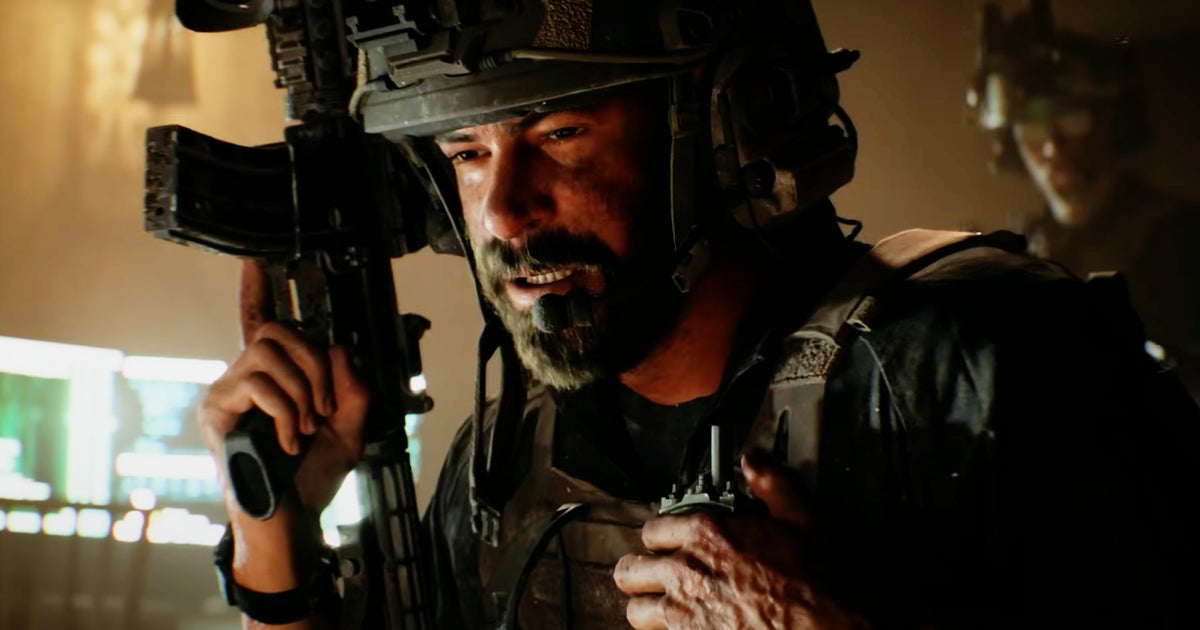
It’s not a novel observation to suggest that the upcoming
Battlefield 6
might be out of step with the current global climate. The game’s
narrative
presents a near future where NATO has disintegrated, a shadowy private military corporation has assumed power, and the weakened US military must rally former allies under the American flag. The storyline features an invasion of New York City, with intense street battles against the masked forces of “Pax Armata” unfolding beneath the Brooklyn Bridge. Many helicopters are destroyed in this conflict, and something special is in the air.
Moises Taveras, writing for
Endless Mode,
criticizes the absurdity of this narrative at a time when the US government is openly discussing potentially
withdrawing from NATO.
Autumn Wright, a freelance commentator,
argues
that Battlefield 6 simply perpetuates a long-standing “victimized power fantasy” seen in games like Modern Warfare 2, a xenophobic vision of external threats fueling fear and desire among certain individuals. Yussef Cole, co-editor of Bullet Points Monthly,
implies
that the very notion of a US invasion might stem from underlying anxieties about America’s numerous foreign interventions. Building upon this idea of desire and culpability, imagine a major shooter, with the financial backing of the Battlefield franchise, explicitly depicting the United States as the antagonist.
Arguably, the present moment is ripe for a game focusing on international collaboration to initiate a war for liberation. Consider this hypothetical scenario: suppose an erratic and power-hungry leader seizes control of the White House through manipulation of the US electoral system. They then proceed to enact oppressive laws, enrich their allies, deploy the military against peaceful protestors, and support atrocities abroad. A courageous alliance – perhaps involving Mauritius, Ireland, and Switzerland – lands in Washington State to overthrow the tyrant, securing freedom for all Americans. This climactic event would, of course, be preceded by navigating numerous overseas airbases.
Objectively, the US military, with its immense trillion-dollar budget, presents an ideal adversary for a large-scale, real-world first-person shooter like Battlefield. The Pentagon possesses an arsenal of formidable hardware. Missile silos are seemingly omnipresent; submarines and aircraft carriers patrol distant coastlines, monitoring maritime traffic. Bunker-buster bombs have the power to penetrate deep into the Earth’s crust. The most cinematic tactical headgear, complete with padding, antennas, and wraparound sunglasses. Countless helicopters. And the world’s second-largest army in terms of personnel.
The irony of Battlefield 6 portraying a PMC as the villain is that many real-world PMCs are staffed by former US military personnel. Hopefully, the developers will explore this connection, but the trailers primarily convey outrage at this latest manifestation of uncontrolled capitalism.
EA
As Battlefield 6’s trailers clearly demonstrate, the United States is filled with iconic locations suitable for FPS levels. It’s a nation boasting landmarks like the Grand Canyon and Disneyland – a whole continent of storied settings extensively showcased in countless films and explored in numerous big-budget FPS campaigns, typically from the perspective of the defending side.
The idea of a blockbuster military FPS featuring the US armed forces as the enemy is strangely unsettling, highlighting how much these games depend on the concept of a global war machine. The rapid shifts in time and location common in Call of Duty and Battlefield campaigns rely on an infrastructure capable of coordinating activities across vast distances. Only a superpower can sustain the gritty realism of shootouts where players acquire new weapons or gadgets every few minutes and
call in airstrikes with ease.
This entire argument might seem provocative and unproductive, even hypocritical given my British nationality and the UK’s own history of abuse, from its colonial past to the Iraq War. However, it’s not intended as a shallow, inflammatory critique. Rather, it expresses a growing weariness on behalf of my American colleagues, who must reconcile Battlefield 6’s invasion fantasies with their government’s harsh treatment of immigrants, coupled with a personal anxiety about my own country’s
increasingly hostile stance towards migrants.
EA
I’m also intrigued by the potential commercial benefits. I genuinely believe that Call of Duty could generate significant revenue with a sequel unambiguously portraying the US as the enemy. Specifically, within the
Black Ops
subseries. From its Vietnam era to its cyberpunk phase, Black Ops has been bolder than its competitors in suggesting the US army might be run by sociopaths. This is partly due to Black Ops’s focus on the nihilism that arises in covert operations outside the bounds of military law, where oversight is absent and, as Assassin’s Creed often says, everything is permitted. In such environments, nothing makes sense, least of all one’s superiors.
An anti-American blockbuster shooter could be marketed to American audiences as a
Spec Ops: The Line-style interactive critique of military interventions. However, to truly dominate the charts, the best strategy might be to capitalize on the inevitable controversy, drawing inspiration from figures like Black Sabbath and embracing a role as a notorious figure.