

- Bitcoin, frequently presented as a purely digital entity by its proponents, is increasingly under scrutiny for its real-world environmental repercussions, including rising carbon emissions and environmental justice issues.
- The energy-intensive process of Bitcoin mining, requiring significant computing power and entire data centers, relies heavily on fossil fuels, contributing to climate change through substantial carbon releases.
- Bitcoin mining operations also demand extensive water for cooling, and the production of necessary semiconductors involves the use of toxic PFAS chemicals. The disposal of outdated Bitcoin hardware further exacerbates global electronic waste problems.
- Despite the significant environmental impact, high-profile figures like former U.S. President Donald Trump continue to advocate for Bitcoin, with Trump expressing ambitions for the U.S. to become a leading Bitcoin mining nation. Neither Trump nor his son, Eric, have publicly addressed Bitcoin’s extensive environmental costs.
Bitcoin’s complexities often elude the average person, despite endorsements from figures like
former U.S. President Donald Trump, who champions it as a groundbreaking digital currency poised to supplant traditional money.
However, unlike conventional currencies, Bitcoin lacks the backing, insurance, and regulatory oversight of a central bank or government, leaving small investors vulnerable to market fluctuations, according to critics who view it as an instrument for speculation rather than savings.
Bitcoin currently dominates the cryptocurrency landscape, a realm of digital “money” secured by cryptography, a complex mathematical system employing secret codes that require decryption to establish value. Ultimately, Bitcoin’s worth hinges on a form of speculative faith, existing as a series of digital bits “mined” by those with the financial resources and technological capabilities to do so.
Consequently, Bitcoin thrives in a speculative cryptocurrency market, carrying a substantial risk of booms and busts. Unlike historical bubbles like Holland’s 17th-century
tulipmania market bubble, which at least left investors with beautiful flowers, a Bitcoin crash leaves holders with nothing more than digital data.
Despite its intangible nature, Bitcoin has a tangible environmental footprint. As its perceived value increases, its mining process becomes more environmentally damaging, requiring escalating amounts of energy and producing greater carbon emissions to decipher its increasingly complex cryptographic code.

Bitcoin: Designed to Burn Energy
The very core of Bitcoin’s design includes a cost-increasing factor tied to energy consumption, meaning that the computing power needed to break the code rises annually. In 2010, an ordinary desktop computer could mine Bitcoin. By 2025, mining requires vast supercomputers housed within sizable data centers.
While industry transparency remains a challenge, a 2022 report identified Bitcoin mining activity at over 6,000 locations across 139 countries. However, the largest data centers with the greatest computing power show a “spatial concentration and association with energy production locations.”
These major Bitcoin data centers, predominantly located in the United States, continuously process complex numerical strings in a kind of digital lottery. By throwing enough processing power at it, individuals can gain an edge. The more intensely they compute, the better their chances of hitting a jackpot.
Analysts argue that mining has become a game for the wealthy, consuming vast amounts of electricity for power and water for cooling, while quickly burning through computer chips containing valuable rare metals and toxins. This is an unaffordable venture during a global energy and environmental crisis.
Critics warn that Bitcoin is evolving into a multitrillion-dollar market driven by greed, speculation, and
criminality. Whether this is true is beyond the scope of this story, which focuses on Bitcoin’s rapidly growing global environmental footprint.
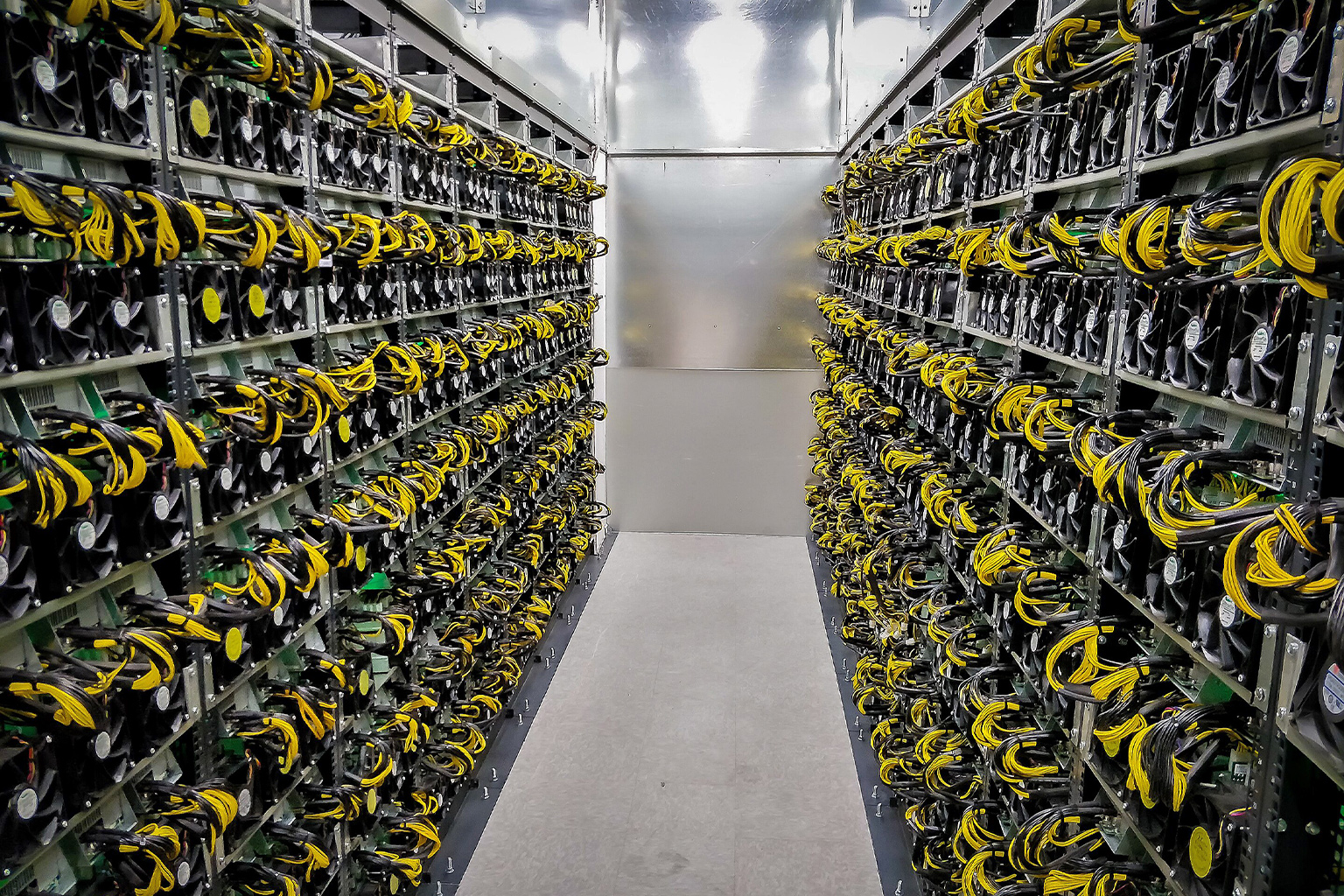
Wikimedia Commons (
CC BY-SA 4.0).
Exponential Environmental Footprint
Why the focus on Bitcoin? According to Alex de Vries from Digiconomist, an online platform dedicated to highlighting the unintended consequences of digital trends, “It’s safe to say that Bitcoin represents 95%+ of the environmental impact” of all cryptocurrencies.
Digiconomist estimates the 2025 global carbon footprint of Bitcoin mining at 98 million metric tons (MT) of CO2, a figure comparable to that of Qatar, the world’s most carbon-intensive nation. Bitcoin mining presently is estimated to consume
as much electrical energy as Poland and
water equivalent to Switzerland’s total use.
The environmental burden of Bitcoin extends beyond individual mining operations. It is based on blockchain technology, a database system during which every transaction undergoes a complex verification process involving multiple computers across a broad network, demanding additional energy, water, and materials.
In 2025, a single Bitcoin-based transaction released 712 kilograms of CO2, “equivalent to the carbon footprint of 1,578,956 VISA transactions,”
according to Digiconomist. Each transaction consumed enough electricity to power an average U.S. household for over 44 days and required enough water to fill a backyard swimming pool.
Yet, Bitcoin remains largely impractical for everyday transactions, like paying for groceries or coffee, due to
high transaction fees. It remains an insider’s game for criminals trading secrets and speculators betting, while small holders risk heavy losses.
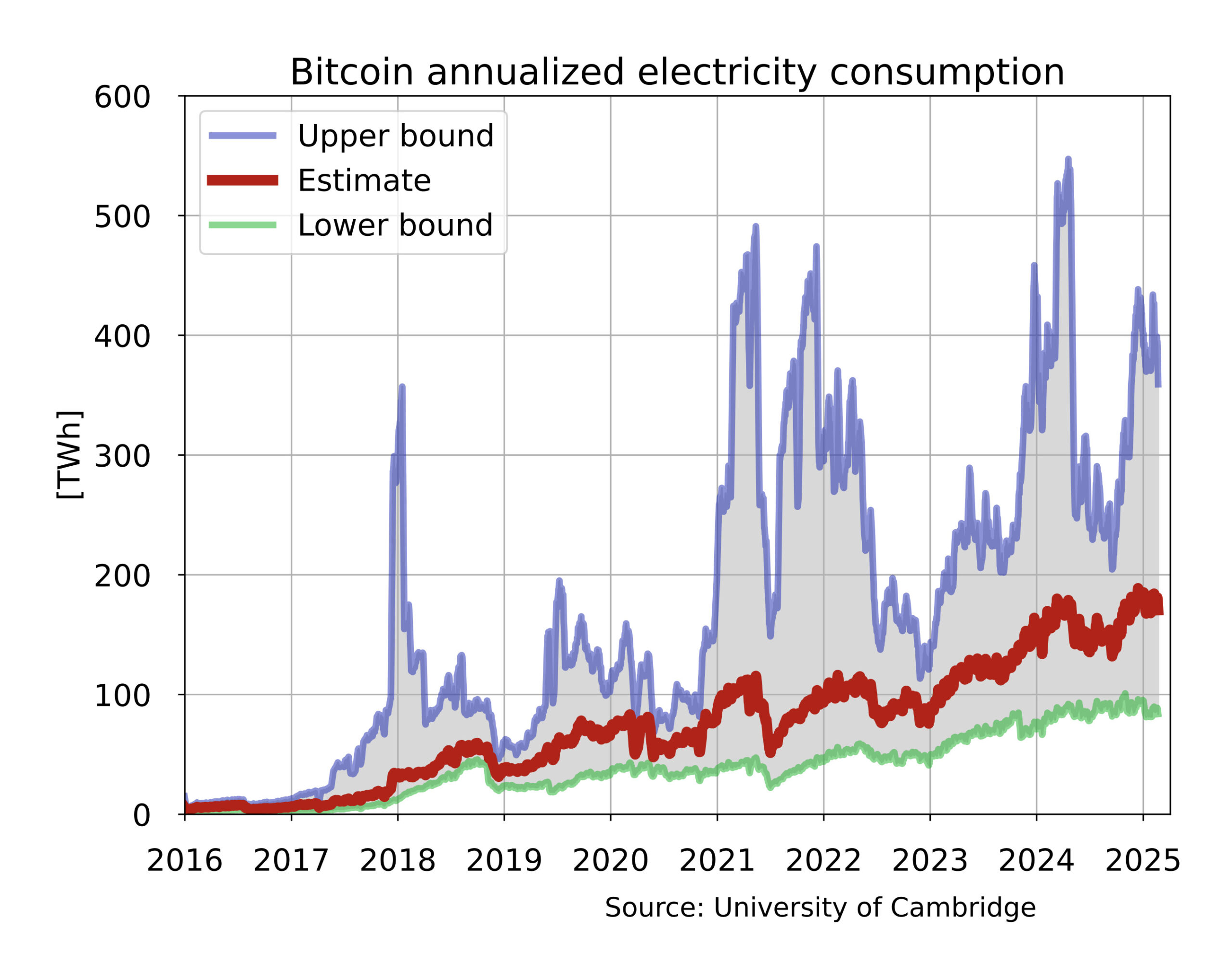
Image courtesy of the
Cambridge Bitcoin Electricity Consumption Index (Public domain).
A Brief History of Bitcoin’s Energy Footprint
When the Bitcoin network was launched on
January 3, 2009, Bitcoin and blockchain technology were met with great enthusiasm by the tech industry.
According to venture capitalist Marc Andreesen, “The consequences of this breakthrough are hard to overstate.” Tyler Winklevoss, a co-creator of Facebook,
said: “We have elected to put our money and faith in a mathematical framework that is free of politics and human error.”
In its early years, China was the industry’s epicenter, accounting for roughly 70% of the global network. However, in 2019, the country banned cryptocurrency mines, considering mining as “unsafe, wasted resources, and harmful to the environment.” Even though mining still goes on there, under the radar, many Bitcoin mining companies relocated to the United States. According to a study published in
Nature in 2025, the U.S. share of Bitcoin mining operations rapidly increased from 4.5% in 2020 to 37.8% by January 2022.
As a result, U.S. Bitcoin mining by the early 2020s was causing “as much carbon pollution [annually] as adding 3.5 million gas-powered cars to America’s roads,”
The New York Times reported.
According to the Nature study, “from mid-2022 to mid-2023, the 34 largest mines in the USA consumed 32.3 terawatt-hours of electricity — 33% more than Los Angeles — 85% of which came from fossil fuels.” The Cambridge Bitcoin Electricity Consumer Index (CBECI)
calculated that Bitcoin mining accounted for 0.6%-2.3% of U.S. electricity demand in 2023, equivalent to the energy consumption of at least 3 million homes.
The Noncircular Economy
When asked about Bitcoin’s energy use, crypto advocates argue that it is temporary and that
new approaches are in development to drastically reduce Bitcoin’s electricity consumption.
Among these potential innovations is a shift away from Bitcoin’s traditional
proof of work (PoW) – a consensus verification mechanism that requires extensive computing power to verify transactions and add them to the blockchain – to a
proof of stake (PoS) system, which uses far less energy.
However, many experts are skeptical that this energy-saving approach will ever be implemented. “Bitcoin will never move to proof of stake,” crypto researcher and critic Molly White stated. Nicholas Weaver, a researcher at the University of California, Berkeley,
agrees that industry consensus for PoS will never be achieved.
Chris Bendiksen, a Bitcoin researcher at CoinShares, further
explains, “I’d put the chance of Bitcoin ever moving to PoS at exactly 0%.” That’s because, “There is no appetite among Bitcoiners to destroy the security of the protocol by making such a move.”
Another sustainability claim made by Bitcoin enthusiasts is that the cryptocurrency will soon transition to using renewable energy, and crypto companies position themselves as “pioneering completely green Bitcoin mining facilities.”
Some leading advocates have even gone so far as to claim that “Bitcoin miners have no emissions whatsoever,” while others have touted their green credentials even
as they signed coal deals. In the U.S., 85% of Bitcoin energy still comes from fossil fuels.
Even if Bitcoin mining were to transform to use 100% renewable energy, it would remain environmentally damaging due to its sheer electricity, water, and material consumption. “Using renewables for Bitcoin mining is primarily greenwashing,” says White.
Some advocates claim Bitcoin facilitates a
circular economy — a closed-loop system designed to eliminate waste, recirculate materials, and regenerate nature.
Critics argue that Bitcoin relies on a linear and extractive supply chain, leaving waste. Bitcoin’s main energy source continues to be fossil fuels, with electricity from coal, natural gas, and oil plants emitting harmful
sulfate, volatile organic compounds (VOCs), and particulate pollution. In addition, massive water consumption is required to cool Bitcoin data centers, often located in drought-prone states like Texas and Arizona. Creating semiconductors also requires
PFAS, toxic “forever chemicals” that degrade slowly.
Mining also requires computers with hardwired chips, lasting
as little as 18 months before being discarded, mainly in landfills, due to recycling difficulties.
In 2021, Bitcoin mining was already producing as much e-waste as the Netherlands, with each transaction generating the equivalent e-waste of two iPhones.
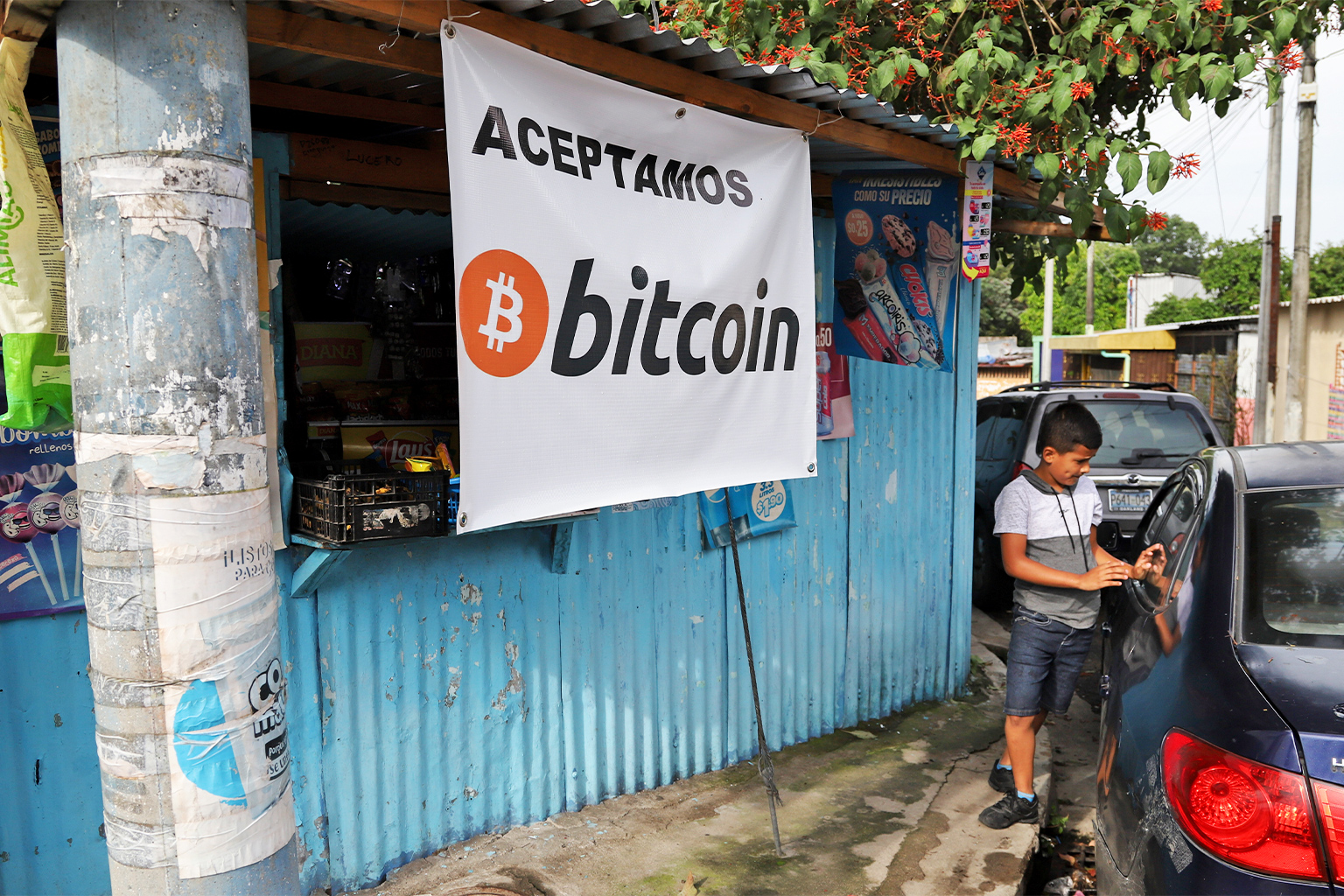
definition says nothing about Bitcoin investment risks to small holders or the environmental costs of the technology. Image by AP Photo/Salvador Melendez.
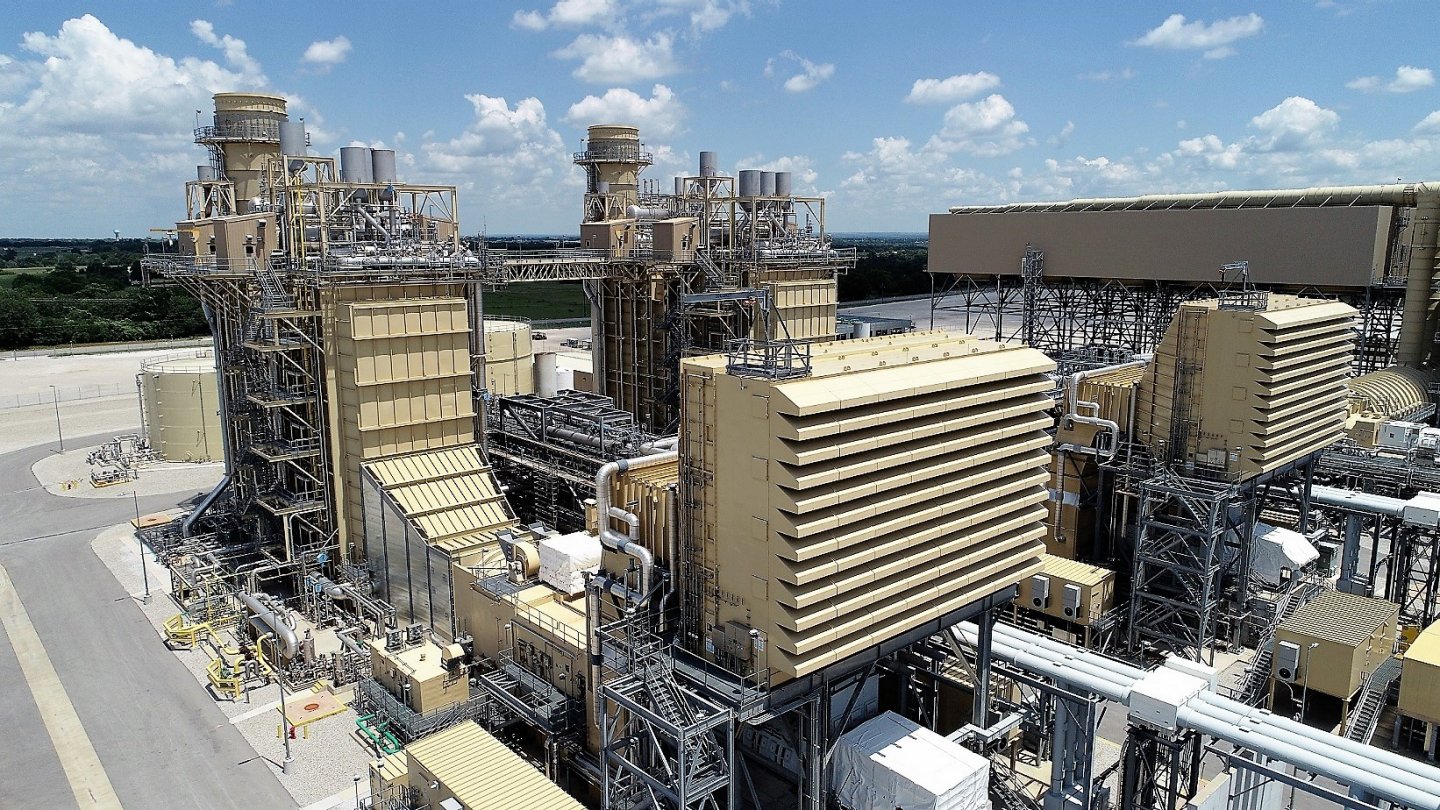
residents have complained of constant noise emanating from thousands of fans cooling Marathon’s computers running round-the-clock to bitcoin transaction processing. They say low-frequency sound waves stop them sleeping and believe the mine may be responsible for a host of unexplained health problems arising since the bitcoin mine opened in 2022. Image courtesy of Constellation Energy.
Bitcoin and Environmental Justice
As with intensive resource extraction, the environmental and social impacts of Bitcoin mining often remain hidden within poor and Indigenous communities. Starting in 2018, for example, U.S. Bitcoin data centers were
established on Navajo Nation reservations to exploit cheap energy, despite many homes nearby lacking electricity.
Diné Navajo Tyler Puenté told Vice that Bitcoin mining is “financial colonialism … I think Bitcoin companies prey on communities like my own.”
Texas is a hub for Bitcoin mines, where Texans are paying nearly
5% extra on their electricity bills. Residents also complain about noise from the cooling fans needed to prevent overheating. Residents “tell me they can’t sleep,” Hood County commissioner Nannette Samuelson
told CBS News after the arrival of a Bitcoin mine in her North Texas community. “The noise is continuous, 24/7. [Residents] have vertigo. Their children are having cochlear implants placed because they’re now hard of hearing; [there are] all kinds of medical issues,” said Samuelson.
Bitcoin entrepreneurs have also been known to target poor communities in crisis. In 2017, plans were made to create Puertopia, a crypto island for rich investors in Puerto Rico after Hurricane Maria. Critics immediately warned of exploitation. “Crypto-colonialism leverages existing neo-colonialist tools like economic policy,” Jillian Crandall
told Motherboard.
Key to Puerto Rico’s attraction for the “ Share.