

A pro-crypto advocacy group asserts the United States is poised to reclaim leadership in the digital currency space. This optimistic view follows the White House’s recent report, which encourages financial regulators to synchronize their approaches to digital assets.
The report, published last week, potentially resolves the long-standing jurisdictional dispute between the Securities and Exchange Commission (SEC) and the Commodity Futures Trading Commission (CFTC) regarding the categorization and oversight of cryptocurrencies.
“Existing legal precedent suggests Bitcoin, Ether, and numerous other digital assets more closely resemble commodities,” stated Ji Hun Kim, the newly appointed CEO of the Crypto Council for Innovation, in an exclusive interview with Cointelegraph.
“The President’s Working Group report acknowledges this. I anticipate the CFTC will play a significant role in overseeing these assets, which are essentially digital commodities, not securities.”
Kim, who attended the report’s public unveiling at the White House, emphasized that “now is the opportune moment” for the US to assume the leading position in the global crypto arena. Despite other nations having a multi-year advantage, the US is now engaged in a “crypto sprint,” with both the SEC and CFTC indicating intentions to rapidly implement the report’s recommendations.
US Striving to Become a Crypto Hub
The SEC, under the previous administration, faced substantial criticism from the crypto industry for what was perceived as a regulation-by-enforcement strategy. This involved filing lawsuits against crypto businesses based on existing securities regulations. This approach was coupled with “Operation Chokepoint 2.0,” which restricted crypto firms’ access to conventional financial services.
“This report offers a stark contrast, explicitly stating that banks should be permitted to engage in various digital asset activities,” Kim commented.
The regulatory uncertainty in the US previously prompted numerous crypto firms to relocate overseas. Dubai quickly became a popular destination, establishing a dedicated crypto regulatory body. Singapore and Hong Kong also gained prominence by offering favorable tax policies and formal licensing frameworks for cryptocurrency exchanges.
However, the situation isn’t always ideal elsewhere. While regulatory clarity is improving globally, industry participants are discovering that clarity doesn’t necessarily equate to a crypto-friendly environment—a realization the US is increasingly demonstrating.
Earlier this year, Dubai’s Virtual Asset Regulatory Authority enhanced its oversight, requiring firms to comply with updated rules within 30 days. Singapore expelled unlicensed businesses exploiting regulatory loopholes by exclusively serving foreign clients. Furthermore, Hong Kong’s cautious pace in issuing licenses signals that it is not open to all applicants.
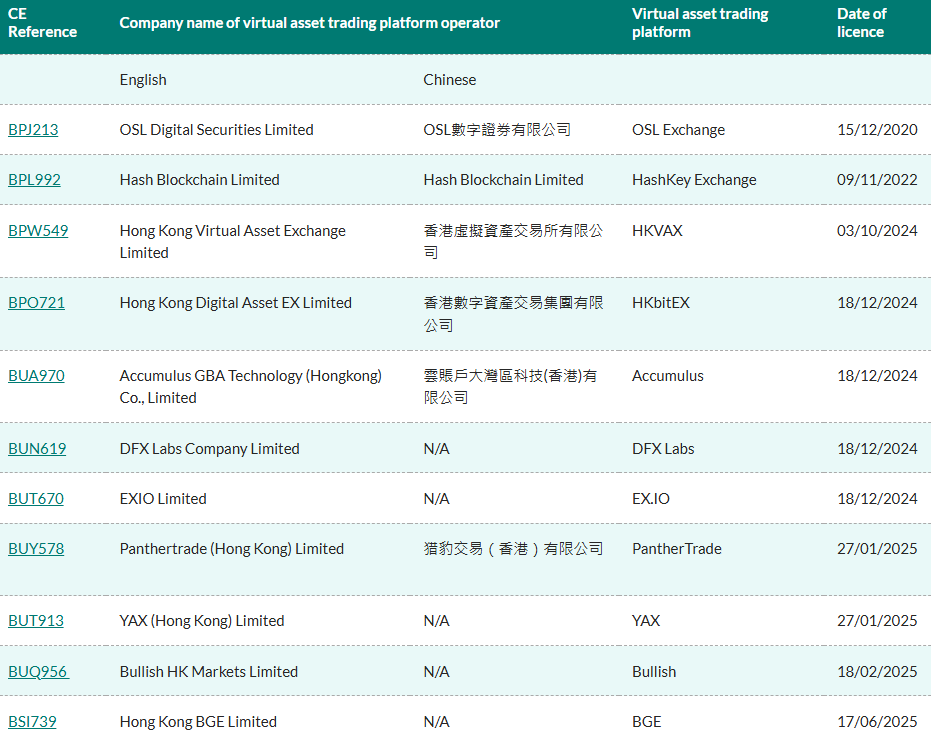
The Hong Kong Stablecoin Ordinance, which went into effect last Friday, introduced a new licensing system for stablecoin issuers. The European Union has its own stablecoin regulations as part of the broader Markets in Crypto-Assets (MiCA) framework. The US responded with the GENIUS Act, seen as essential to maintaining the dollar’s supremacy in the global financial system.
Related: Singapore’s expelled crypto firms may struggle to find alternative havens
This dynamic places cryptocurrency at the center of a larger geopolitical power struggle. China has been working to accelerate the internationalization of its fiat currency, the renminbi, through its central bank digital currency (CBDC). Conversely, US President Donald Trump signed an executive order in January prohibiting the issuance of any US government-backed CBDC.
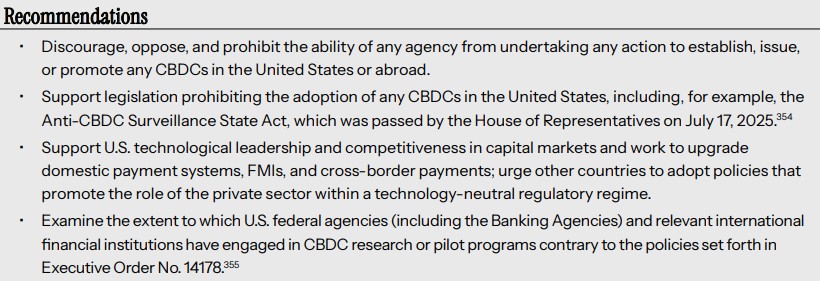
Kim supports this position, arguing that CBDCs pose a direct threat to privacy. Instead, he suggests that the GENIUS Act offers a feasible, market-driven alternative.
“The GENIUS Act has the potential to foster considerable growth and development in the private stablecoin sector. I believe the primary focus should be on these types of stablecoins,” he added.
Meanwhile, Hong Kong’s stablecoin regulatory framework is expected to play a strategic role in China’s CBDC ambitions. Chinese academics contend that Hong Kong’s stablecoin network could enable Beijing’s digital currency to integrate into the broader global stablecoin ecosystem.
US SEC’s “Project Crypto” and CFTC’s “Crypto Sprint”
Shortly after the release of the White House’s crypto report, the SEC announced “Project Crypto,” an initiative designed to develop formal guidelines for digital asset firms and attract crypto businesses back to the US in response to the report.
The SEC proposed streamlining licensing by allowing brokerages to operate across various asset classes using a unified license. It also aims to more clearly distinguish between securities and commodities.
“Being classified as a security should not be a stigma,” Atkins stated. “Many issuers may prefer the flexibility in product design offered by securities laws, and investors would benefit from the opportunity to receive distributions, voting rights, and other features typical of securities.”
Related: Key takeaways from the Operation Chokepoint 2.0 Congressional hearings
The CFTC, on the other hand, is positioning itself to assume a more prominent role in regulating non-security digital assets. Acting CFTC Chair Caroline Pham announced on Aug. 1 that the CFTC would launch a “crypto sprint” to implement the Presidential Working Group’s crypto recommendations.
This division of responsibilities, with the CFTC regulating spot markets for digital commodities and the SEC focusing on tokenized securities, is central to the CLARITY Act. Kim emphasized the Act’s importance in resolving the jurisdictional conflict between the two agencies. While the bill has been approved by the House, it is still awaiting action in the Senate.
“We anticipate increased collaboration between the two agencies. This is a key element often overlooked in this report. It was also included in the president’s executive order issued in January, which directed the agencies to work together on providing clarity, guidance, and rulemaking,” Kim explained.
US Crypto Clarity is Not Deregulation, CCI Argues
Bitcoin (BTC) advocates expressed disappointment with the White House’s crypto report, as it lacked an anticipated update on Bitcoin reserves.
These concerns are echoed outside the crypto community. A coalition of over 80 organizations representing civil rights and consumer advocacy groups opposed the CLARITY Act, asserting that it “deregulates” the crypto industry by legitimizing high-risk ventures.
Recently, Senator Elizabeth Warren, along with Senators Chris Van Hollen and Ron Wyden, urged the Office of the Comptroller of the Currency to address potential conflicts of interest arising from the Trump family’s cryptocurrency investments.
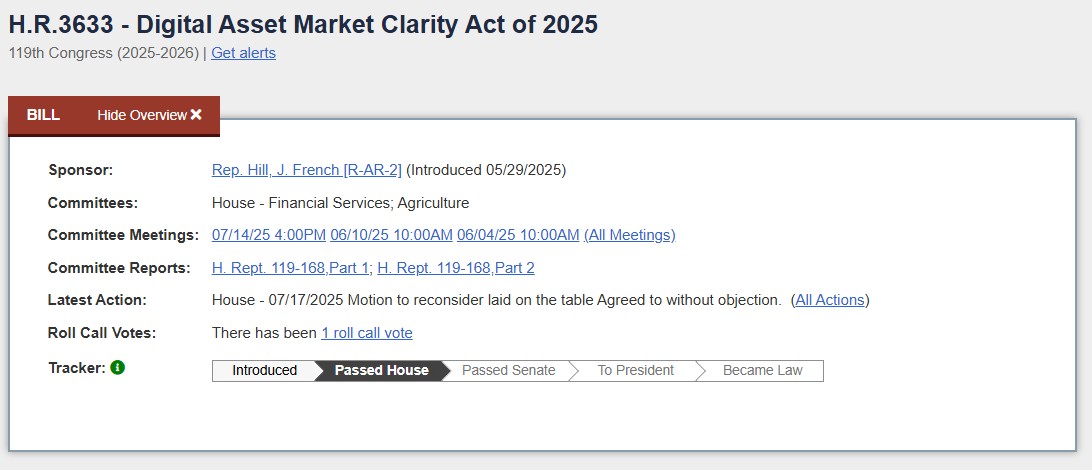
Kim disagrees with this assessment. According to him, the White House report and recent regulatory actions involving the GENIUS and CLARITY Acts reflect a change in regulatory approach, rather than deregulation.
“I don’t believe this constitutes deregulation,” he stated. “I see it as an acknowledgement of the unique characteristics of digital assets. The aim is to collaborate with the industry to effectively combat illicit finance, protect consumers and investors, and establish clear operational guidelines.”
With two of the nation’s leading financial regulatory bodies now largely aligned with the White House’s vision, the US appears ready to move beyond internal conflicts and ambiguity.
Magazine: A beginner’s guide to Ethereum’s roadmap to 10,000 TPS using ZK technology