

Key Points to Consider
Authorities in China are raising alarms about cryptocurrency initiatives that utilize biometric scanning, particularly those collecting iris data, citing potential risks to national security. The Ministry of State Security is calling on the public to report any observed instances of such data collection.
China is expressing concern over projects involved in collecting sensitive personal information, such as through iris scans, highlighting the potential dangers to national security.
In an official statement shared on WeChat, the Ministry of State Security (MSS) indirectly addressed operations similar to Worldcoin [WLD] that employ iris scanning. According to the message:
“Certain international companies are reportedly exploiting cryptocurrency token issuance to harvest iris scans and gather user information globally, then transferring this data elsewhere…”
The Chinese government emphasized the vital role of biometric identification technologies, including facial, fingerprint, iris, and gait recognition, in the modern digital landscape.
However, authorities also cautioned that these technologies are vulnerable to privacy breaches, data leaks, and threats to national security. The MSS is urging citizens to promptly report any suspicious activities involving the collection of biometric data to the appropriate national security agencies.
Worldcoin Under Scrutiny
Worldcoin stands out as a prominent project aimed at distinguishing humans from AI entities in the age of advanced artificial intelligence.
The advancement of deepfake AI platforms, such as Omnihuman, is rapidly blurring the lines between reality and simulation.
As AI assistants become increasingly common in everyday tasks like shopping and travel planning, differentiating between bots and real humans will become increasingly challenging.
Worldcoin’s “humanity layer” attempts to tackle this challenge by scanning for unique human identifiers. The project incentivizes users to provide their biometric data by offering its native token, WLD.
However, several countries, including Kenya, Brazil, Spain, Portugal, and Hong Kong, have placed restrictions on Worldcoin’s scanning operations.
While the MSS statement doesn’t directly name Worldcoin, it serves as an implicit warning to the project and others like it.
Following the statement on August 5th, WLD experienced a 5% decline. Whether this downturn was specifically triggered by the Chinese announcement remains unclear, as a broader market sell-off was observed across various asset classes.
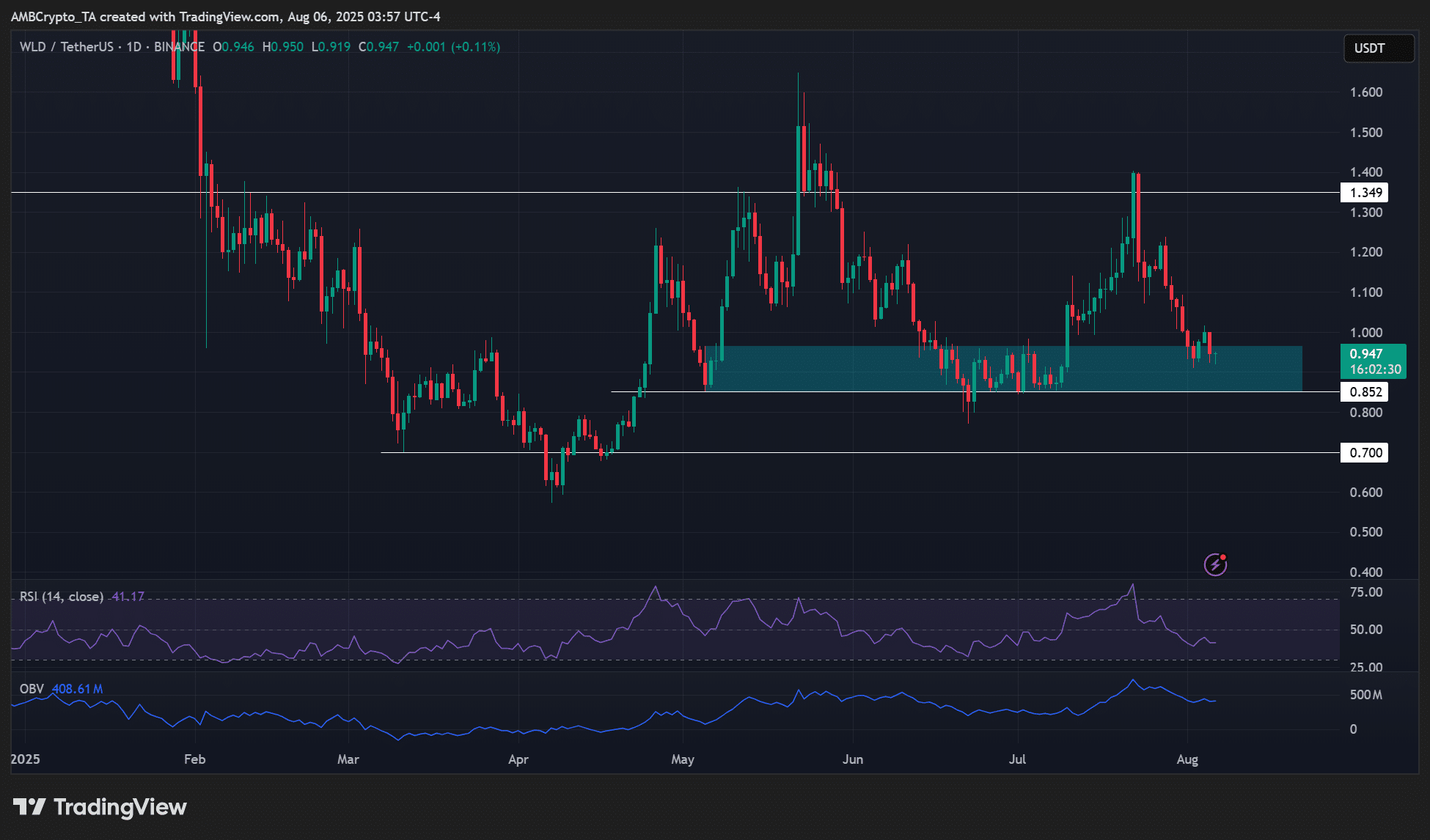
Source: WLD/USDT, TradingView
Separately, unsubstantiated rumors have been circulating about a potential ban on personal cryptocurrency ownership, including Bitcoin [BTC].
However, AMBCrypto’s investigation found no credible evidence to support these claims. This suggests the possibility of a coordinated disinformation campaign aimed at market manipulation.
The goal may have been to artificially depress prices, creating opportunities for strategic cryptocurrency purchases at discounted rates.
At the time of reporting, Bitcoin was trading at $114,000, approximately 7% below its recent peak of $120,000.