

A significant shift is occurring in the economics of cryptocurrency mining within the United States, spurred by a newly imposed 100% import tax on semiconductors. This tariff, officially implemented by the previous administration on August 7th, is poised to reshape the industry landscape.
This import duty, specifically targeting semiconductor chips produced outside of the United States, poses a direct threat to the financial stability of crypto miners. They are already navigating challenges presented by the halving event in April and the increasing difficulty of the Bitcoin network.
While the policy includes potential exemptions for companies committing to domestic chip manufacturing, the vast majority of advanced application-specific integrated circuits (ASICs) vital for Bitcoin mining are still procured from Asian suppliers, leaving U.S. miners with limited immediate alternatives.
The concept of this tariff first emerged during a House Republican gathering in January, where plans for a substantial duty, potentially as high as 100%, on imported computer chips were unveiled. As reported by Reuters, the rationale behind this policy is to encourage the growth of domestic chip production and lessen dependence on international suppliers. An executive order in April broadened the scope of the plan to include 57 nations, notably encompassing key Southeast Asian ASIC manufacturing hubs like Malaysia and Thailand.
This development prompted a flurry of activity among mining equipment distributors and operators, who raced to move their inventories before the new tariffs took effect. According to WIRED, companies, including Luxor and AsicXchange, resorted to chartering flights from Singapore, paying up to ten times the standard airfreight rates to ensure their goods cleared customs before the deadline.
Following criticism from industry organizations and supply chain participants, the White House announced a 90-day pause in April, temporarily suspending the tariff’s implementation. A revised tariff schedule, released in late July, lowered the rate on imports from Southeast Asia to 19%. However, it maintained the 100% tariff for other chip categories failing to meet domestic content requirements.
The previous administration reaffirmed this policy on August 6th, stating, in remarks reported by Reuters, that tariffs of “25, 50, or even 100 percent” would be imposed on foreign-produced computer chips. The policy was officially enacted the following morning.
Bitcoin miners heavily reliant on equipment from manufacturers like Bitmain and MicroBT are now confronting a significant increase in import costs. While both companies were initially based in China, they’ve strategically shifted some of their production to Southeast Asia in an attempt to avoid prior tariffs on goods manufactured in China.

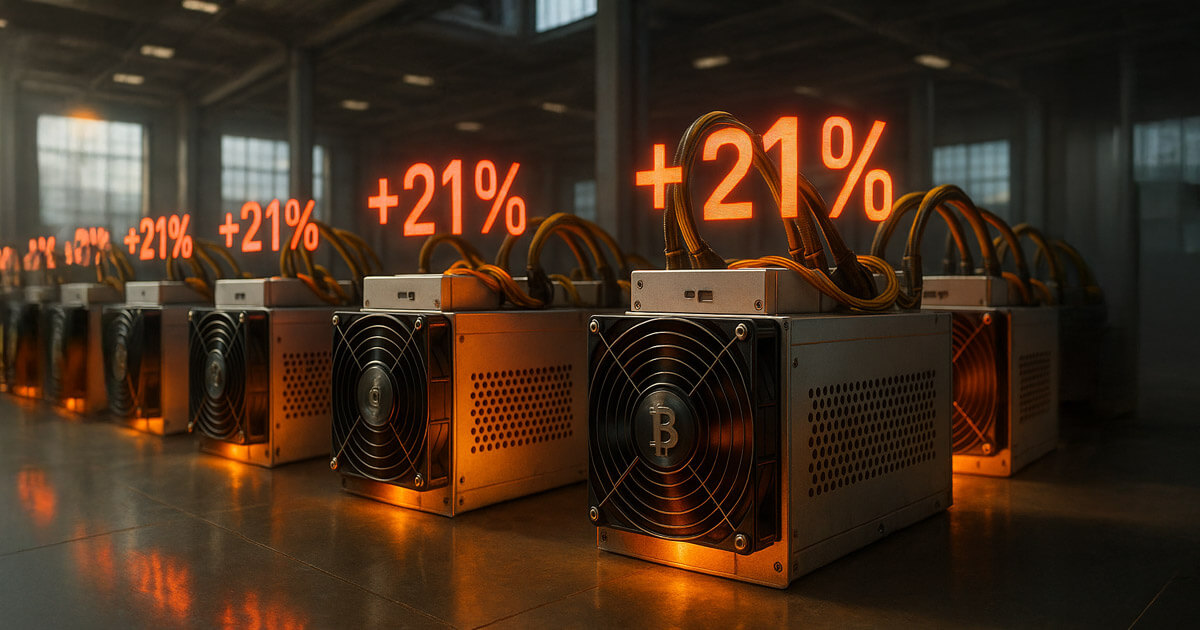
These strategies have become less effective as the updated tariff structure eliminates many of the exemptions previously utilized by miners to import equipment through more affordable channels. Current estimates indicate that ASIC procurement costs have risen by approximately 21% under the revised regulations, further straining the already tight margins of mining operations.
Data from Hashrate Index reveals that the daily revenue generated by a miner for one terahash/second of hashrate has decreased by 55% compared to the previous year, while global network difficulty remains at historically high levels, exceeding 123 trillion. This combination of diminished revenue following the halving event and elevated capital expenditures is causing operators to re-evaluate their expansion strategies.
Publicly traded mining companies, including Marathon Digital, Riot Platforms, Bitdeer, CleanSpark, and Hut 8, experienced slight declines in their after-hours share prices on August 6th, according to Nasdaq data. This reflects investors’ anxieties regarding the long-term profitability of these companies under the new tariff regime.
The Digital Mining Industry Report from Cambridge, which surveyed firms representing approximately half of the global hashrate, underscores the capital-intensive nature of the mining sector. Given that hardware accounts for 60% to 70% of the initial investment costs, any sustained increase in the price of mining rigs could potentially shift the global hashrate away from the United States.
Several mining executives, including Luxor COO Ethan Vera, have voiced concerns about the sudden implementation of the policy. In an interview with WIRED, Vera noted the challenges of conducting business under such unpredictable circumstances, highlighting the remarkably short notice for implementing such a significant tariff increase.
Although some exemptions might apply to chips produced by Samsung and TSMC at their U.S.-based facilities, the majority of the latest generation ASICs currently in use are manufactured overseas. Without a practical domestic alternative for mining hardware, companies may explore hosting their operations in regions free from such tariffs, such as Canada, Norway, or Kazakhstan.
The future strategic direction remains uncertain, and the full impact of the new tariff structure is expected to become clearer as miners assess their logistical options, power contracts, and capital allocation strategies in the coming weeks.