
Stay informed about Texas happenings! Subscribe to The Brief, your daily digest of essential news from The Texas Tribune.
The agency that regulates utilities in Texas approved a new regulation on Thursday. It mandates that cryptocurrency mining operations connected to the state’s primary electrical network must formally register with the grid operator.
This rule stems from legislation passed in 2023, specifically Senate Bill 1929. It applies to crypto mining businesses that draw more than 75 megawatts of electricity. These companies must disclose their location, ownership details, and anticipated electricity usage to both the Public Utility Commission (PUC) and the Electric Reliability Council of Texas (ERCOT), the organization responsible for managing the state’s power grid.
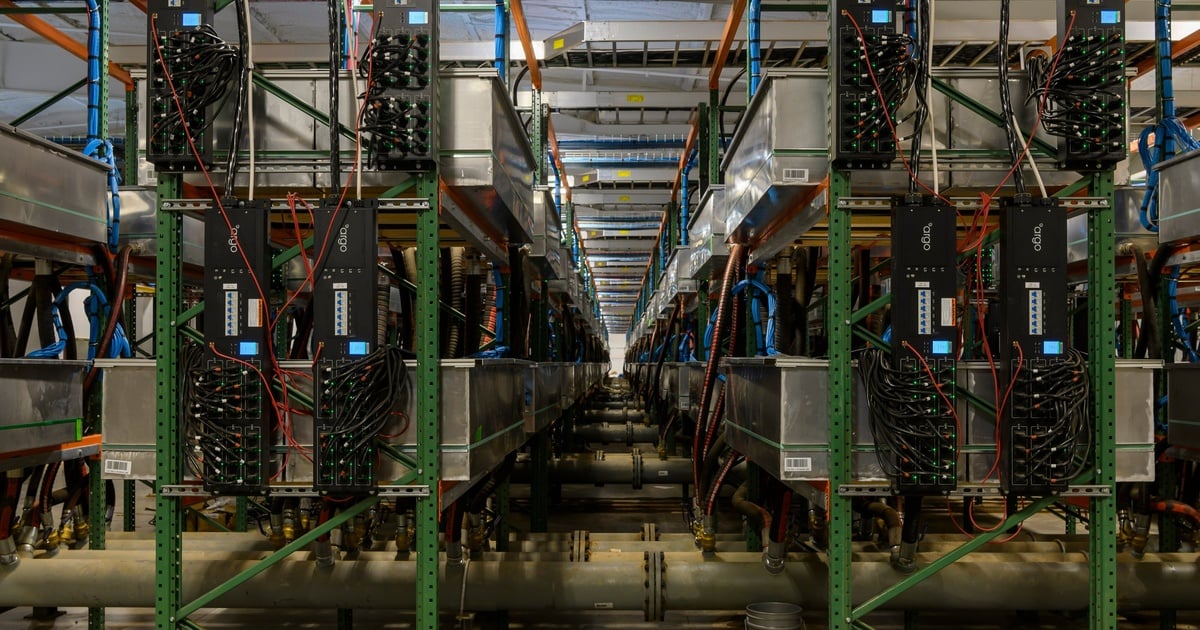
Cryptocurrency mining, a process requiring significant energy for running and cooling computer systems, has expanded within Texas. This growth contributes to an increasing demand for electricity statewide. The goal of the new regulation is to provide the state with insights into the power consumption of crypto mining facilities and to maintain the stability of the power grid.
PUC Chairman Thomas Gleeson stated, “This action exemplifies the PUCT and ERCOT’s proactive approach to accommodate a rapidly evolving industrial sector. Our priority remains ensuring a dependable and cost-effective power supply for all Texans, and we will continue to take necessary steps to achieve this.”
Existing crypto mining facilities must complete their registration by February 1st and renew it annually. Furthermore, companies are obligated to report the projected peak energy demands for each facility over the next five years, alongside the actual power usage from the preceding year.
Non-compliance with the registration requirements could result in penalties of up to $25,000 for each violation, per day.
State regulators categorize crypto mining operations as “large flexible loads.” This designation signifies their capability to rapidly adjust their power consumption, for instance, by shutting down their computers during periods of grid stress.
In July, ERCOT estimated that cryptocurrency mining operations on the main grid had the potential to consume up to 2,600 megawatts of electricity – a figure equivalent to the energy consumption of the city of Austin. Recently, the state gave the green light to additional crypto mining facilities expected to utilize another 2,600 MW of electricity, and more are anticipated to establish operations in Texas in the near future.
This expansion, coupled with heightened interest from data centers, hydrogen production plants, and oil and gas entities electrifying their drilling processes, particularly in the Permian Basin, is driving ERCOT’s forecast. They predict that electricity demand in Texas could almost double within the next six years.
The peak demand on the power grid reached a record 85 gigawatts last year, coinciding with the hottest year ever recorded in Texas. ERCOT experts now project that demand could potentially reach approximately 150 gigawatts by the year 2030.