
Quick overview
- In Izmir, Turkish authorities have taken into custody an Ethereum programmer, identified as “Fede’s
Intern,” on suspicion of facilitating improper application of the Ethereum technology. - Fede refutes all accusations, asserting that his contributions were strictly of a technical nature and
has received backing from more than ten nations. - The detention has triggered worries within the Ethereum community, centering on potential regulatory
overreach and Turkey’s increasingly stringent stance on digital currency laws. - The Capital Markets Board of Turkey has initiated stringent permit protocols, in addition to recently
prohibiting PancakeSwap, the country’s initial decentralized exchange.
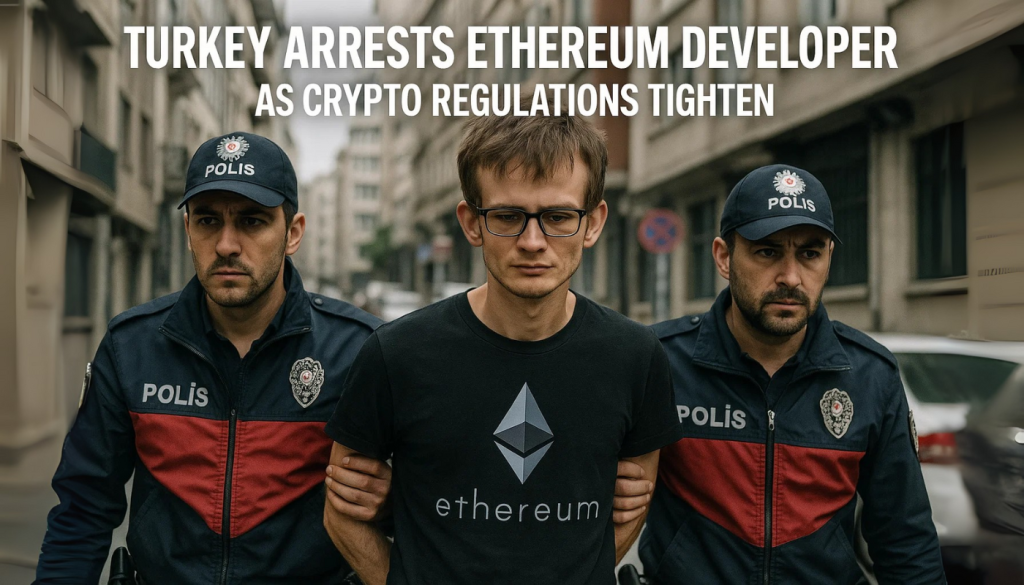
On August 11th, law enforcement in Turkey apprehended an Ethereum developer, colloquially known as “Fede’s Intern,” in
Izmir. The arrest is linked to alleged actions enabling the misuse of the Ethereum blockchain. Fede maintains his
innocence, stating his work was purely technical and lacked any malicious intent. As of now, official charges or legal
documents have not been released to the public.
Reports suggest the claim originated from the Minister of Internal Affairs, though specific details remain undisclosed. Fede
emphasizes the importance of privacy as a fundamental human right, arguing that authorities should focus on pursuing actual
criminals rather than penalizing blockchain innovators.
Industry Reaction and Legal Considerations
The arrest has caused a stir among the Ethereum and broader cryptocurrency community globally. Prominent Ethereum advocate Ryan Sean Adams
described the situation as “very concerning” and highlighted Istanbul’s candidacy to host Devcon 2026. Turkish crypto
commentator Cenk characterized the arrest as “not legal.”
While some speculate about a potential regulatory misunderstanding or translation error, others caution against potential
regulatory overreach. Fede has garnered support from over ten countries and is actively seeking release and challenging the
allegations from within Europe.
Turkey Increases Oversight of Crypto Space
This apprehension occurs amidst escalating regulatory measures on cryptocurrencies within Turkey. The Capital Markets Board
(CMB) has
been implementing stringent licensing mandates for exchanges, custodians, and wallet providers since March, demanding
comprehensive transaction records and regular monthly reports. In June, new Treasury regulations imposed further restrictions,
including requirements for 20-character explanations for transactions and limits on stablecoin withdrawals. By July,
Turkey banned PancakeSwap, marking the first instance of a decentralized exchange being prohibited in the country.
Furthermore, authorities have cautioned non-custodial wallets and DeFi services to exercise caution when serving Turkish users
directly.
Key Takeaways:
- An Ethereum developer was detained in Izmir based on ambiguous allegations of misuse.
- Formal charges or legal documentation have yet to be revealed.
- The Ethereum community and industry experts are expressing considerable apprehension.
- Since March, Turkey’s CMB has been enforcing stringent licensing and transaction regulations.
- PancakeSwap has been banned as Turkey increasingly targets decentralized exchanges.

Arslan Butt
Lead Markets Analyst – Multi-Asset (FX, Commodities, Crypto)
Arslan Butt serves as the Lead Commodities and Indices Analyst, bringing a wealth of expertise to the field. With
an MBA in Behavioral Finance and active progress towards a Ph.D., Arslan possesses a deep understanding of market
dynamics.
His professional journey includes a significant role as a senior analyst at a leading brokerage firm,
complementing his extensive experience as a market analyst and day trader. Adept in educating others, Arslan has a
commendable track record as an instructor and public speaker.
His incisive analyses, particularly within the realms of cryptocurrency and forex markets, are showcased across
esteemed financial publications such as ForexCrunch, InsideBitcoins, and EconomyWatch, solidifying his reputation in
the financial community.
Related Articles