SINGAPORE – Back in 2022, the mere mention of cryptocurrency to those involved, whether as workers or investors, would likely elicit a grimace and pursed lips.
That year was marked by a series of high-profile collapses. Crypto exchange giant FTX declared bankruptcy, sending shockwaves through the industry. Singaporean crypto hedge fund
Three Arrows Capital crumbled
, owing creditors a staggering US$3 billion (S$3.85 billion). The TerraUSD and Luna cryptocurrencies experienced catastrophic value crashes, resulting in a combined loss of US$45 billion in market capitalization.
As the value of cryptocurrencies cratered, layoffs swept across the sector, leading many industry observers to declare the arrival of a “crypto winter.”
Fast forward three years, and the atmosphere has undergone a dramatic transformation.
Bitcoin’s value has rocketed to unprecedented heights, exceeding US$100,000 – and even hitting $140,000 in January. This surge has been fueled by the crypto-friendly policies of US President Donald Trump’s administration, coupled with the growing acceptance of cryptocurrencies by major financial institutions like Goldman Sachs, BlackRock, and DBS.
Token2049, the world’s largest cryptocurrency conference, anticipates hosting a crowd of 25,000 attendees in Singapore this October.
When it initially debuted in Singapore in 2022, the event attracted approximately 7,000 individuals, confined to a single floor within the Marina Bay Sands Expo and Convention Centre. By 2025, the conference is set to expand across five floors, showcasing its significant growth.
The “crypto bros” (and girls) are back, arguably with more vigor than ever before. Among the 15 individuals interviewed by The Straits Times, the prevailing sentiment is one of optimism, even outright celebration.
“Since Trump’s election, the crypto market has experienced a remarkable surge,” notes Mr. Kaushik Swaminathan, 29, head of strategy at Web3 security firm Zellic. (Web3 is an industry term for a new iteration of the web leveraging blockchain technology.)
The Yale-NUS College graduate adds, “As prices rise, people feel wealthier, and when people feel wealthy, they indulge. Therefore, while the broader tech market may be facing compression or hiring freezes, the crypto space feels like it’s experiencing the opposite trend.”
He cites the recent EthCC crypto conference in Cannes, which drew 6,400 attendees, as evidence. In June, the glamorous city on the French Riviera, known for its wealthy and famous residents, was “overrun by crypto enthusiasts” at events that occupied yachts, chateaus, and Michelin-starred restaurants.
“If you find yourself on the beautiful French Riviera in the middle of summer for a ‘work conference,’ chances are things are going well,” he remarks. “The flamboyance never really left crypto, but when Bitcoin is trading above US$100,000, people are more willing to engage in that sort of behavior.”
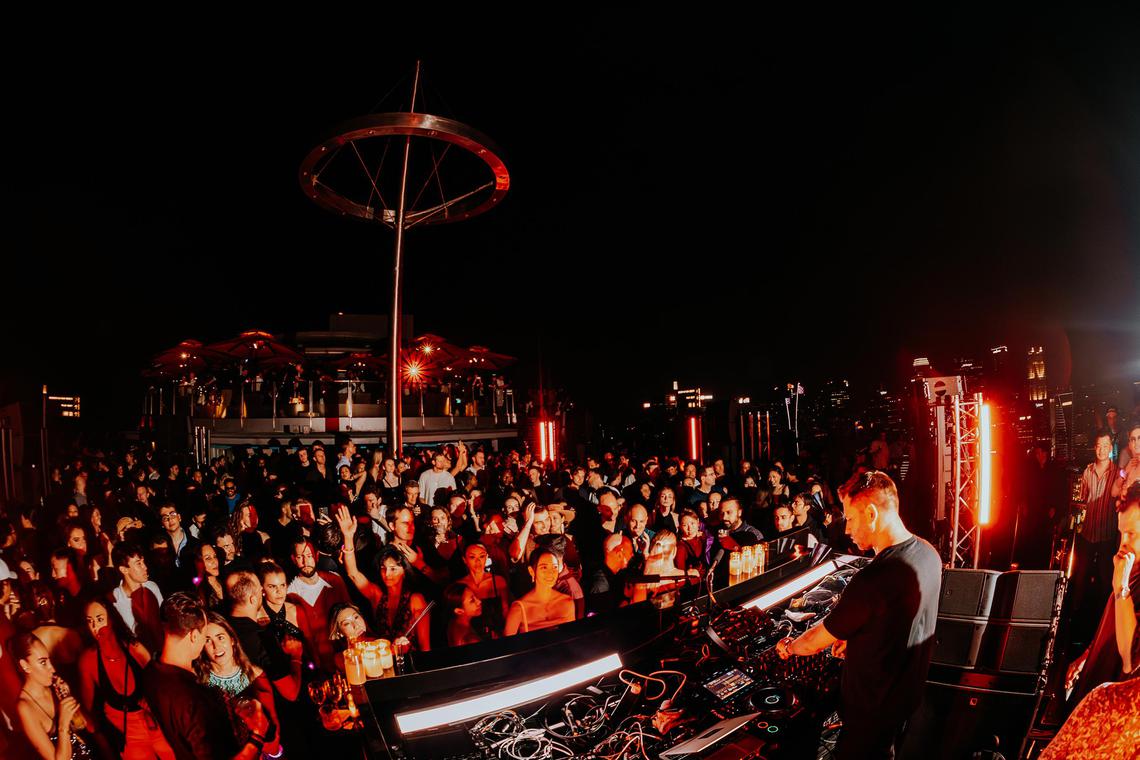
Token2049’s Singapore conference in 2024 attracted more than 20,000 participants.
PHOTO: TOKEN2049
The “crypto bro” culture, fueled by internet memes lampooning central banks and an idealistic vision of decentralized finance, is increasingly penetrating the mainstream.
It’s now attracting fresh graduates who might once have pursued careers in traditional finance or big tech, despite the industry’s ongoing association with scandals.
The mixture of idealism and opportunism within crypto has cultivated an industry culture with an “anti-establishment” feel, distinct from that of traditional tech and finance.
Imran Mohamad, a 41-year-old Singaporean crypto enthusiast, remembers receiving a thumb drive containing some Bitcoins from an enthusiastic entrepreneur back in 2010. At the time, it was a little-known technology, primarily discussed on obscure internet forums, and valued at mere cents.
“I have no idea where that thumb drive ended up,” says Mr. Mohamad, currently the head of marketing (Apac) for blockchain company Move Industries. “If I had been more prescient, I might not even need to be giving this interview right now.”
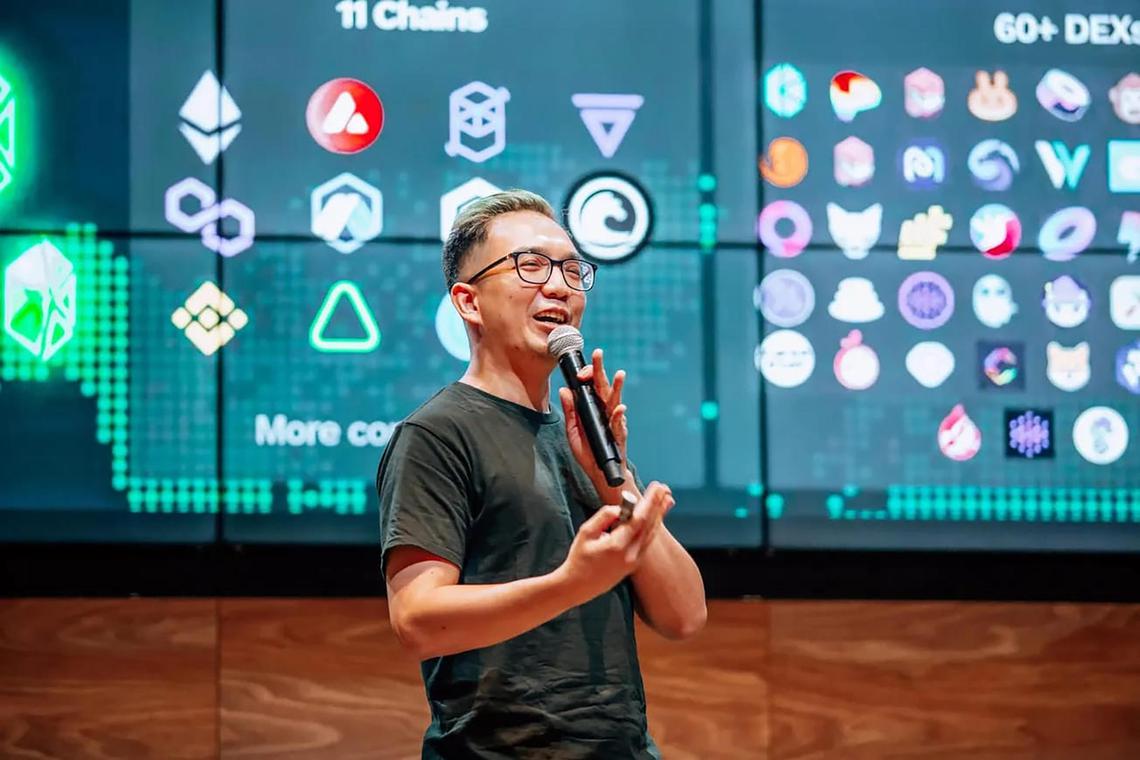
Mr. Imran Mohamad’s career trajectory within crypto mirrors the sector’s numerous boom-and-bust cycles.
PHOTO: COURTESY OF IMRAN MOHAMAD
Since then, his intermittent involvement with the crypto sector has mirrored its volatile boom-and-bust cycles. During the initial coin offering (ICO) boom of 2017, he operated a marketing agency serving crypto clients.
“For most of those companies, nothing ever came to fruition,” says the National University of Singapore (NUS) business graduate. “The real winners were the individuals who minted the tokens and then disappeared.”
These online sales, open to the general public, were fueled by social media hype and centered around white papers outlining how the proceeds would be used to develop a “hot new token,” and emphasizing the potential gains for early investors.
After becoming disillusioned with the industry due to having to threaten legal action against some crypto clients over unpaid fees, he returned in 2022 to head marketing for Kyber Network, a crypto trading platform – until it was hacked, resulting in a loss of assets valued at over US$50 million. Although Kyber eventually compensated its creditors, he points out they still missed out on the potential returns from their investments.
Such experiences are not uncommon in the crypto world. Insiders frequently describe a heady mix of “fear of missing out” (FOMO), profound optimism, and even an acceptance that malicious behavior is commonplace.
Instead of traditional introductions via LinkedIn or business cards, crypto professionals often prefer communicating via Telegram and X (formerly Twitter), or networking at events where the lines between work and play become blurred.
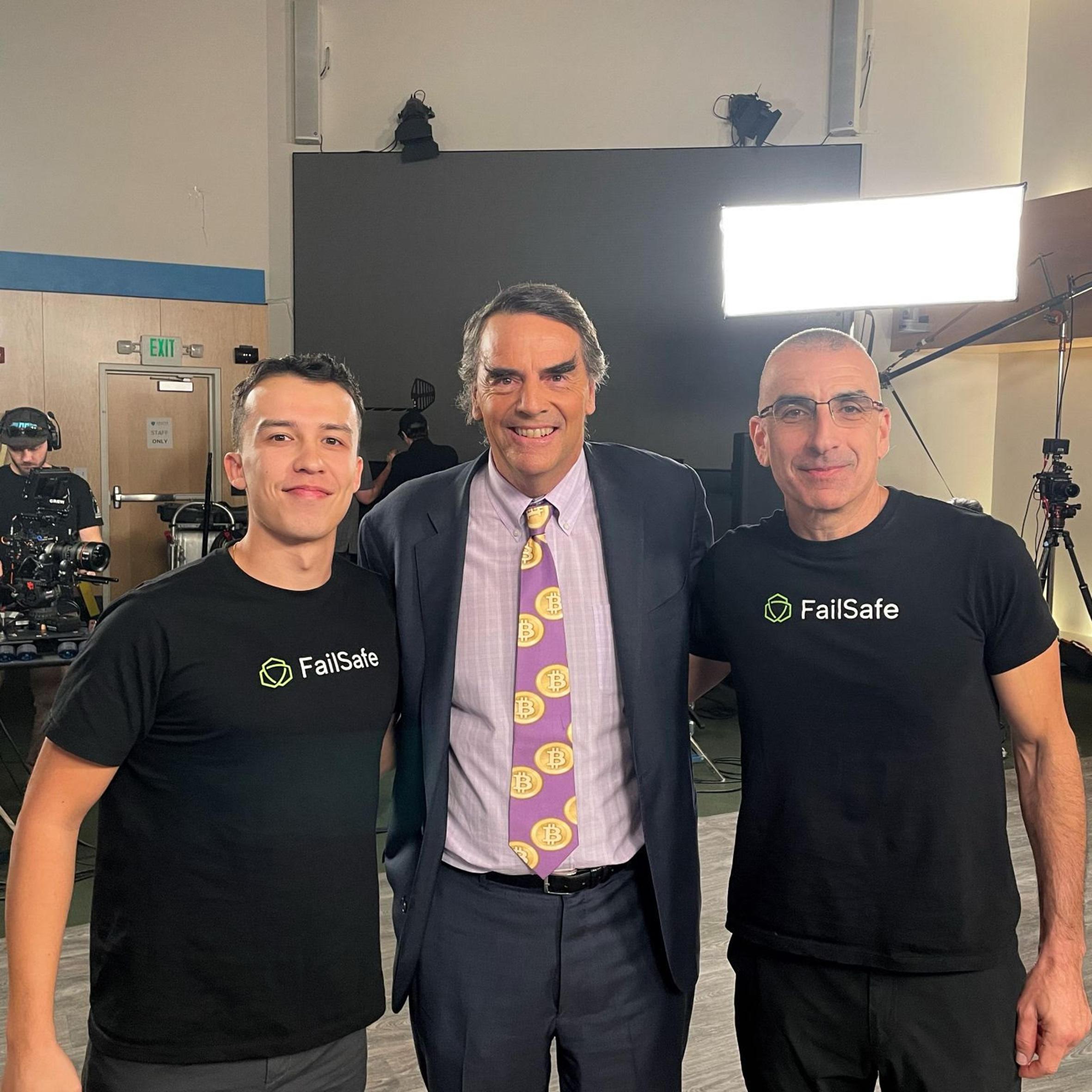
Mr. Aneirin Flynn (left, pictured at the start-up competition Meet The Drapers) chose to forgo university to immediately start working.
PHOTO: FAILSAFE
Young Singaporeans like Aneirin Flynn, 31, embody the subculture’s unconventional approach. As CEO and founder of a crypto cybersecurity startup, he hired an engineer who once hacked into his firm by discovering a vulnerability in its code.
Many in the sector maintain anonymity, avoiding the publication of their real names and photos online due to fears of being doxxed or hacked.
“He initially didn’t want to share his real name or location,” says Mr. Flynn, adding that he later learned the hacker was based in Egypt. After working together for a few months and establishing trust, the hacker proved to be “one of the good guys.”
He adds: “Today, he’s a core member of our company. A big, burly guy with a huge beard and kids, and the friendliest person you’ll ever meet.”
However, he acknowledges: “There was a very real possibility that he could have been a malicious actor.”
The inspiration for Mr. Flynn’s firm, FailSafe, stemmed from a hack in 2022 that cost him around $20,000 – an incident he attributes to placing trust in the wrong developer. After completing his A levels at Victoria Junior College, he decided against university and joined a startup instead.
He observes that while Web3 promotes an idealistic and “trustless” future for the internet, free from central authority, the reality is that “you’re essentially on your own.”
The prevalence of fraud has made face-to-face interactions more crucial for crypto professionals like Mr. Flynn.
Therefore, while others might choose to network by partying at events surrounding the annual Token2049 conference, he favors forging connections by organizing events that involve “sweating together and learning how we’d operate under pressure.”

Token2049’s distinctive culture is evident in its meme-infused, playful, and relaxed atmosphere.
PHOTOS: TOKEN2049
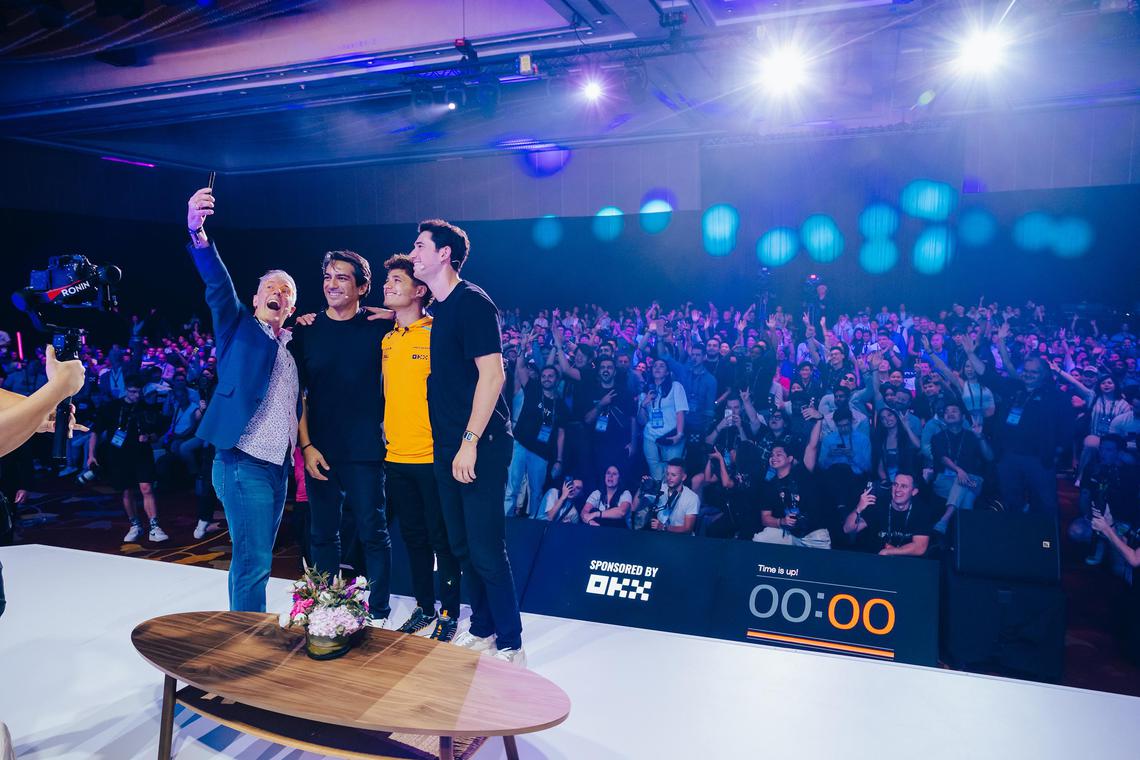
Token2049 exemplifies the industry’s eclectic culture, with the Singapore-based event featuring a diverse lineup of speakers, including Canadian Vitalik Buterin (co-founder of the Ethereum cryptocurrency), British F1 driver Lando Norris, American whistleblower Edward Snowden, and Australian rapper Iggy Azalea.
Insiders say that the real action takes place not on the conference stage, but at the numerous side events, such as invitation-only mixers and after-parties. At the expo itself, attendees can take a dip in ice-cold plunges or ride a mechanical bull, just meters away from a panel discussion.
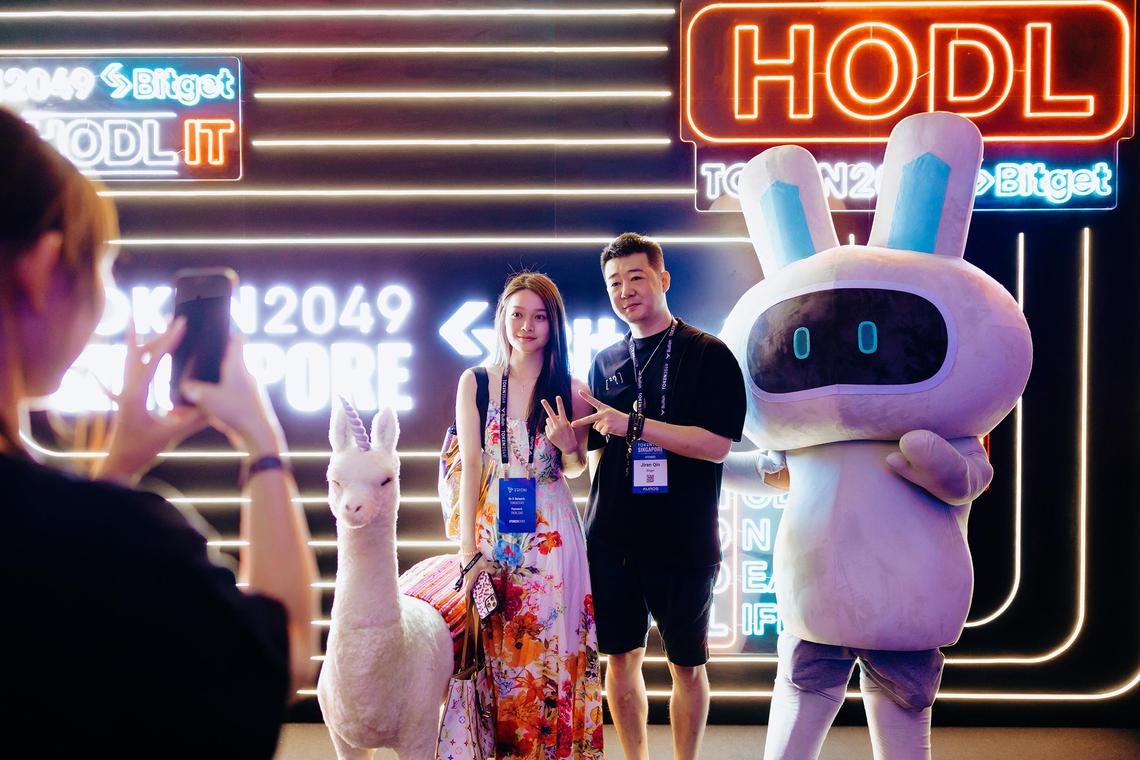
Meme culture is deeply embedded in the annual Token2049 conference. “Hodl” is a rallying cry for crypto investors to maintain their asset holdings despite market volatility.
PHOTO: TOKEN2049
The sector’s counter-cultural energy, arising from the intersection of fringe internet communities, tech, and finance, is rooted in its origins.
“Crypto, by its nature, is a rejection of established financial institutions and central banks,” explains Dr. Andrew Bailey, a philosophy professor at NUS and author of “Resistance Money” (2024), a book about Bitcoin. “Those drawn to that are likely to have similar reservations about other institutions and societal norms.”
The modern concept of cryptocurrency emerged in the wake of the 2008 financial crisis, as libertarians, anarchists, and those operating outside the law sought decentralized alternatives to what they perceived as a failing financial system.
Different generations have discovered crypto through diverse avenues. Early adopters were often computer programmers attracted by fringe internet communities or online black markets, while later generations, like Gen Z and younger millennials, were introduced through viral internet memes or influencers promoting a new path to financial success.
According to Dr. Bailey, disillusionment is the primary unifying factor.
Many who have embraced the subculture believe they’ve identified a space where they can gain an advantage over others and achieve lucrative short-term gains.
“I hesitate to dismiss the desire to get ahead in a world they perceive as unfair,” he says. “The 18- to 24-year-olds I interact with feel that very strongly. More so, I would argue, than their age group five to ten years ago.”
The result is a subculture predominated by individuals who are typically young, male, tech-savvy, and discontented with financial institutions.
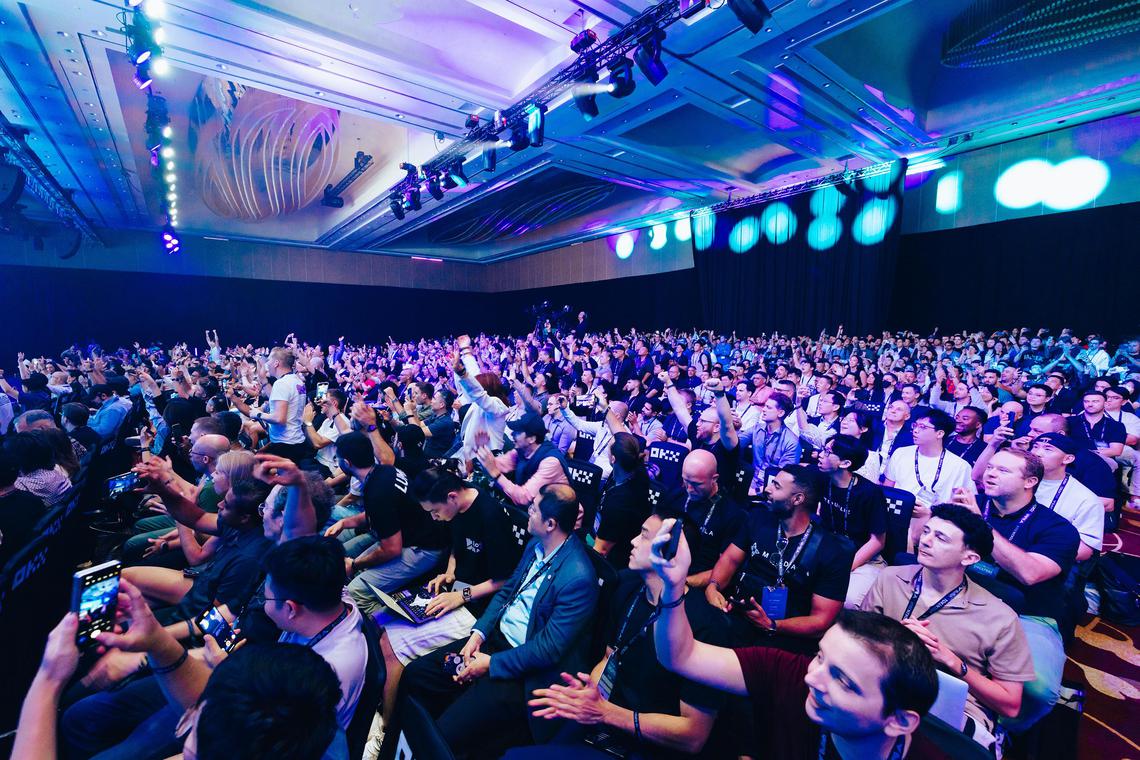
Similar to the tech industry, the crypto sector remains largely male-dominated.
PHOTO: TOKEN2049
Jeremy Tan, a 34-year-old businessman and crypto investor who ran as an independent candidate for Mountbatten SMC in the 2025 General Election, provides another perspective on evolving public attitudes toward cryptocurrency. Part of his platform called for the government to adopt Bitcoin as a reserve currency.
Mr. Tan says that the end of the 2008 financial crisis created a new “eat the rich” and “Occupy Wall Street” counter-culture that piqued his interest in Bitcoin – drawn in by his impoverished upbringing and desire for an asset that wouldn’t depreciate.
“Now, we’re witnessing a similar movement,” says the Nanyang Technological University business graduate, suggesting economic discontent is fueling the growing interest in crypto among Singaporeans today. “Our generation’s version of ‘Occupy Wall Street’ will be centered around artificial intelligence and youth unemployment.”
Similar sentiments are shared by other advocates who spoke to ST. Some lament their inability to break into the “high-net-worth club” due to a perceived “unfair” financial system, praising cryptocurrency’s potential to create a level playing field without established experts.
However, Web3’s decentralizing ethos does not automatically translate to self-regulation or a unified ideology within the crypto subculture.
Despite being conceived as a “superior” alternative to centralized finance, most crypto professionals interviewed by ST view growing interest from regulators and banks as a positive development.
Mr. Tan weighs in, explaining how he reconciles this apparent contradiction: “The original ideology was about the debasement of traditional currency and the need to challenge governments with ‘resistance money.'”
“I would say the original ideology is evolving, as stablecoins and Bitcoin enable a new type of revolution – one that relies on technology and mathematics instead of flawed fiscal policy.”