

A look at President-elect Donald Trump observing the SpaceX Starship rocket test launch in Brownsville, Texas, on November 19, 2024.
Brandon Bell | Getty Images News | Getty Images
With the presidential inauguration drawing near, investors are keenly analyzing the potential economic landscape under the incoming administration of President-elect Donald Trump.
Market watchers are dissecting Trump’s campaign promises – ranging from proposed tariffs to large-scale deportations, tax reductions, and regulatory easing – and his selections for key government positions, identifying both potential opportunities and challenges for various investment sectors.
According to experts, the Republican Party’s control of both the House and Senate might give Trump more freedom to put his promises into action. The specific details and timing of these actions, however, are still unclear.
“The level of uncertainty is significant right now,” observes Jeremy Goldberg, a qualified financial planner, portfolio manager, and research analyst at Professional Advisory Services, a firm that secured the 37th spot on CNBC’s annual Financial Advisor 100 list.
“I would advise against making any overly aggressive investment decisions at this time,” Goldberg cautions.
Sector Performance Often Defies Expectations
Larry Adam, Chief Investment Officer at Raymond James, suggests that historical market data shows the difficulty of accurately predicting which sectors will thrive or struggle under a new president.
Adam points out that following Trump’s 2016 election, financials, industrials, and energy stocks initially exceeded the S&P 500’s performance during the first week. However, over the next three years and 51 weeks, these same sectors lagged significantly.
“Markets frequently react quickly, attempting to anticipate future trends, but these reactions don’t always last,” Adam notes.
Furthermore, Adam states that sectors often perform in ways that are completely contrary to predictions based on a president’s stated goals.
For example, despite deregulation, record levels of oil production, and increased oil prices, the energy sector fell 8.4% during Trump’s initial tenure. In contrast, under Biden, the sector climbed 22.9% by November 19, despite the administration’s focus on sustainability and renewable energy sources.
Raymond James lists politics as eighth in importance when evaluating its possible effect on sectors for these reasons. According to the firm, economic development, fundamentals, monetary policy, interest rates and inflation, valuations, sentiment, and corporate activity are the seven factors that have more influence.
Here’s an analysis of how Trump’s stated positions might affect eight industries: automobiles, banks, building materials and construction, cryptocurrency, energy, health care, retail, and technology.
Automobiles
Monty Rakusen | Digitalvision | Getty Images
Experts suggest that the auto industry, like many others, is likely to experience mixed fortunes.
Trump’s negative stance on electric vehicles (EVs) will likely create obstacles for EV manufacturers.
His administration may consider reversing regulations such as the Biden administration’s tailpipe emissions rules, which aim to increase the adoption of EVs and hybrid vehicles. He also plans to eliminate EV tax credits for consumers, which could be worth up to $7,500, but states like California might try to implement their own EV rebates to mitigate the impact.
Losing the federal tax credit would raise the price of electric vehicles, which would hurt sales and possibly make the “per unit economics even less favorable” for automakers, according to a research note written by Bank of America Securities research analyst John Murphy on November 21.
However, some companies appear to be in a good position. Murphy wrote that Ford Motor, for instance, “has a robust pipeline of hybrid vehicles and conventional [internal combustion engine] vehicles to supplement its EV offerings.”
Trade wars and tariffs could hurt the car industry since the United States relies on other countries for the manufacturing of vehicles and components, according to Callie Cox, chief market strategist at Ritholtz Wealth Management.
Cox states that they “could have an effect on the cost and availability of automobiles in the U.S. market.”
Economists think that tariffs and other policies implemented by Trump will be inflationary.
In that instance, the Federal Reserve might be compelled to maintain higher interest rates for a longer period of time than initially anticipated. Cox argues that higher borrowing costs might have an impact on consumer desire or capacity to purchase cars.
Experts, however, predict that lower EV production might be a positive development for businesses that make conventional gasoline-powered vehicles.
Trump has also advocated for a “drill, baby, drill” strategy for oil production. According to experts, increased supply might lower gasoline prices, increasing demand for gasoline-powered vehicles. But trade wars and sanctions against Iran and Venezuela might potentially have the reverse effect.
— Greg Iacurci
Banks
President Donald Trump stands next to JPMorgan Chase CEO Jamie Dimon, left, in the State Dining Room of the White House in Washington, Feb. 3, 2017.
Andrew Harrer | Bloomberg | Getty Images
During his first term, Trump relaxed regulations pertaining to banking, fintech companies, and financial startups.
It is anticipated that Trump’s second term will also lead to less stringent financial laws.
Brian Spinelli, co-chief investment officer at Halbert Hargrove in Long Beach, California, which is ranked No. 54 on the 2024 CNBC FA 100 list, claims that this could aid in strengthening profitability in the industry and, consequently, stock prices.
“The bigger banks probably benefit more from that,” Spinelli stated.
David Rea, president of Salem Investment Counselors in Winston-Salem, North Carolina, which is ranked No. 8 on the 2024 CNBC FA 100 list, believes that less regulation, combined with the possibility that interest rates will remain higher, will be advantageous for the banking sector since banks may be able to lend out more risk-based capital.
Spinelli noted that one problem that surfaced this year and might resurface is worry over regional banks’exposure to commercial real estate.
“It wasn’t that long ago, and I don’t think those problems disappeared,” Spinelli said. “So you question, is that still looming out there?”
— Lorie Konish
Building Materials and Construction
Bill Varie | The Image Bank | Getty Images
Ritholtz’s Cox said that in recent years, the housing market has been “frozen” as a result of high mortgage rates.
She claimed that reduced rates would probably act as a “catalyst” for housing and related businesses.
However, she claims that it might not materialize—at least not quickly—under Trump. She argues that if policies like tariffs, tax cuts, and mass deportations fuel inflation, the Federal Reserve might have to maintain interest rates higher for a longer period of time than anticipated, which would probably raise mortgage rates and put pressure on housing and connected industries.
The whims of the housing market have an impact on retailers as well: Cox claims that if people aren’t buying, remodeling, or furnishing new homes, home goods stores might not do well.
According to Goldberg, deregulation might be “absolutely huge” for the sector if it accelerates building timetables and lowers developer expenses.
Trump has called for opening up public land to builders and providing tax breaks to homebuyers, but has not provided many details.
Cox stated that housing policy will be “one of the most closely watched initiatives coming out of the next administration.” “We haven’t gotten a lot of clarity on that front.”
Cox stated that “if we see realistic and well-thought-out policies, you could see real estate stocks and related stocks,” such as real estate investment trusts, home improvement stores, and home builders, “respond well.”
— Greg Iacurci
Crypto
Republican presidential nominee and former U.S. President Donald Trump gestures at the Bitcoin 2024 event in Nashville, Tennessee, U.S., July 27, 2024.
Kevin Wurm | Reuters
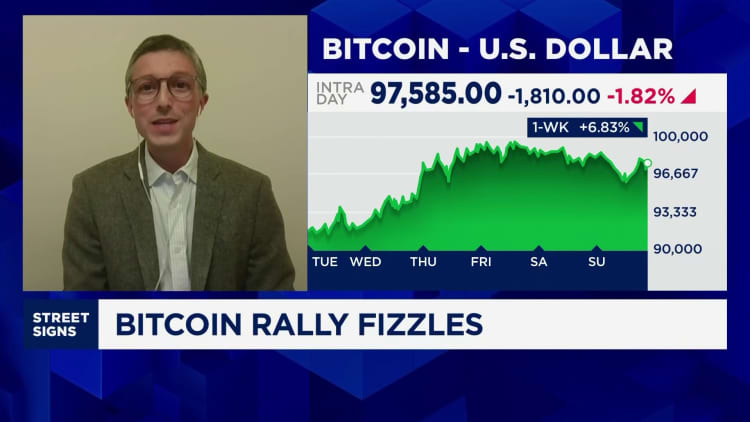
The cryptocurrency market has seen renewed optimism due to Trump’s election, with Bitcoin nearing a new $100,000 target before its recent ascent came to an end.
Trump is anticipated to be more open to crypto as president than any of his predecessors.
Notably, he has already introduced World Liberty Financial, a crypto platform that will promote the use of digital currencies.
With the January debut of spot bitcoin ETFs and, more recently, the addition of bitcoin ETF options, these developments coincide with the emergence of novel methods for investing in crypto this year.
Yet, financial advisors are hesitant; only approximately 2.6% advise their clients to invest in crypto, according to a April survey conducted by Cerulli Associates. Approximately 12.1% stated that, depending on the client’s preference, they would be open to utilizing it or discussing it. Advisors, on the other hand, do not anticipate ever using cryptocurrency with clients at a rate of 58.9%.
According to Matt Apkarian, associate director in Cerulli’s product development practice, “The No. 1 reason why advisors aren’t investing in cryptocurrency on behalf of their clients is they don’t believe it’s suitable for client portfolios.”
Apkarian stated that even for advisors who do anticipate possibly using crypto at some point, it is a “wait and see” situation, particularly in regards to how the regulatory environment develops.
However, investors are showing interest in cryptocurrency; according to research from Christina Lynn, a certified financial planner and practice management consultant at Mariner Wealth Advisors, 90% of advisors receive queries on the subject.
Lynn stated that exchange-traded funds are a suitable starting point for those investors because there is less of a chance of falling prey to one of crypto’s disadvantages, such as frauds or losing the keys, the unique alphanumeric codes connected to the investments. Since crypto can be more unstable, she advised against investing any funds you anticipate needing to pay for short-term objectives.
Lynn advised investors to view cryptocurrency as an alternative investment and limit their allocation to 1% to 5% of their overall portfolio.
“You don’t need to have a lot of this to have it go a long way,” Lynn said.
— Lorie Konish
Energy
President Donald Trump gestures after delivering a speech at a Double Eagle Energy Holdings LLC oil rig in Midland, Texas, July 29, 2020.
Cooper Neill | Bloomberg | Getty Images
According to Raymond James, as of November 19, the energy sector has been the best performing one under President Joe Biden, with a 22.9% gain, even with the administration’s emphasis on sustainability and renewables.
But it’s yet unknown if Trump, who has pushed for increased oil, gas, and coal production, will be able to sustain that performance. The industry’s prospects could shift if Trump carries out a campaign promise to repeal the Inflation Reduction Act, a law passed under Biden that includes incentives for clean energy.
Raymond James’ Adam claims that if Trump continues to make it easier to produce more oil, this might not be good for oil companies.
“Because there’s more supply, it may tamp down on the price of oil, and that’s one of the biggest drivers of that sector,” Adam said.
According to portfolio manager Mike Cerasoli, Eagle Global Advisors, a Houston-based investment management firm specializing in energy infrastructure, is “cautiously optimistic” about Trump’s influence on the industry. Eagle Global Advisors is ranked No. 35 on the 2024 CNBC FA 100 list.
“We would say we’re probably more on the optimistic side than the cautious side,” Cerasoli said. “But if we know anything about Trump it’s that he’s a wild card.”
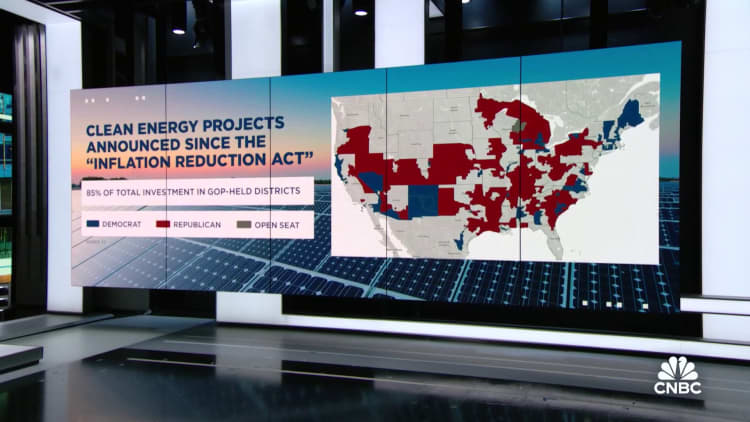
Cerasoli asserts that much of the Inflation Reduction Act may remain intact since the states that gained the most financially from the law also handed Trump a victory in the election.
When Biden won in 2020, there was a lot of concern about the outlook for energy, oil, and gas. Cerasoli recalls writing in a third-quarter letter that year, “I don’t think it’s going to be as bad as you think.”
Four years later, he has the same message for investors on the outlook for renewables. Cerasoli anticipates that there will be a deluge of executive orders in the days following Trump’s inauguration.
“Once you get past that, you’ll get a sense of exactly how he’s going to treat energy,” Cerasoli said. “I think people will realize that it’s not the end of the world for renewables.”
— Lorie Konish
Health care
Medicine vials on a production line.
Comezora | Moment | Getty Images
Trump has nominated Robert F. Kennedy Jr. to lead the Department of Health and Human Services.
Goldberg of Professional Advisory Services stated that if the U.S. Senate were to confirm him, RFK would be a “huge wild card” for the healthcare sector.
David Weinstein, a portfolio manager and senior vice president at Dana Investment Advisors, which is ranked No. 4 on CNBC’s annual FA 100 ranking, stated that RFK is a well-known skeptic of vaccines, which may bode poorly for major vaccine producers like Merck, Pfizer, and Moderna.
To lower government expenditure and generate funds for a tax-cut package, experts claim that cuts to Medicaid and the Affordable Care Act, also known as Obamacare, are also likely on the table.
Robert F. Kennedy Jr. during the UFC 309 event at Madison Square Garden in New York City, Nov. 16, 2024.
Chris Unger | Ufc | Getty Images
Weinstein noted that lower volumes of Medicaid patients or consumers who face higher healthcare premiums after losing ACA subsidies, for example, may have an impact on publicly traded healthcare companies like Centene, HCA Healthcare, and UnitedHealth