

The Monero network, known for its emphasis on privacy, recently experienced a 51% attack. This situation implies that a single entity has gained control over the network. Following developer announcements regarding this event, the value of XMR saw a decrease of nearly 9%.
On August 12th, Sergey Ivancheglo, a prominent figure in the crypto space known as “Come-from-Beyond” (CFB), made a statement on X (formerly Twitter). He indicated that Qubic’s computational power had exceeded 51% of Monero’s total network hash rate, adding:
“It appears Qubic has achieved 51% control over Monero. Independent confirmations are awaited.”
Charles Guillemet, Ledger’s CTO, later verified this claim. He confirmed that Qubic now commands a majority of Monero’s overall computational resources.
He further explained:
“Other miners are disincentivized from participating, as Qubic can simply reject any competing blocks, effectively becoming the only miner.”
Guillemet cautioned that this degree of dominance could enable large-scale alterations to the blockchain, facilitate double-spending, and introduce transaction censorship.
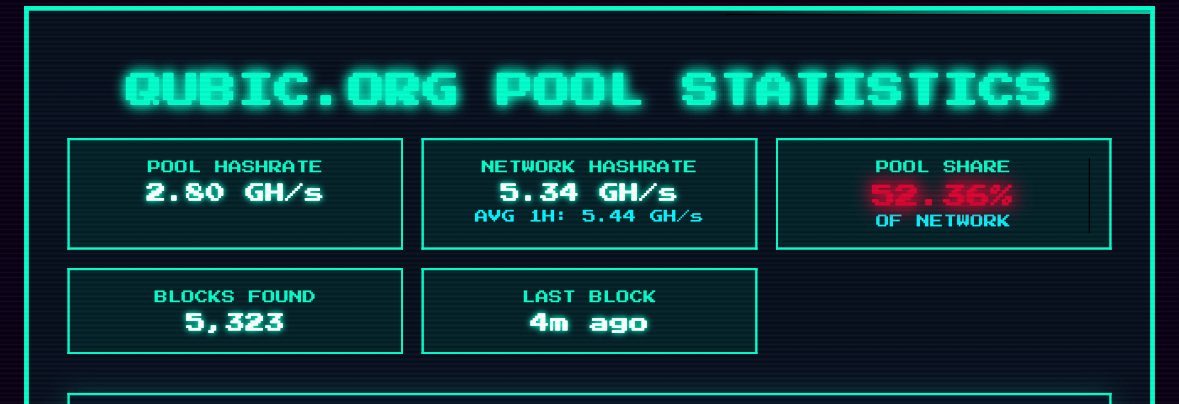
Guillemet estimated the daily operational costs of this attack to be around $75 million, but also suggested it could still be profitable, at least for the time being.
The Ledger CTO concluded by stating that this attack has allowed a smaller blockchain to take over a major crypto token. He explained:
“Effectively, a chain with a $300 million market capitalization is taking over one valued at $6 billion. Monero’s avenues for recovery are limited, and a complete takeover is now a distinct possibility, even likely.”
However, CFB asserted that this takeover of the privacy-centric network was specifically designed to better protect it against similar attacks in the future.

According to CFB:
“The Monero team is finalizing their 51% attack protection strategies. Many have accused us of being funded by government agencies to target this anonymous coin. What are your thoughts now, after we have assisted Monero in preparing for future battles against these agencies?”
How Qubic Gained Control of Monero
Qubic’s approach centered on a mining campaign with “pay-to-switch” incentives.
By providing significantly more attractive rewards compared to typical Monero mining pools, Qubic attracted a sufficient number of miners to exceed the 51% threshold.
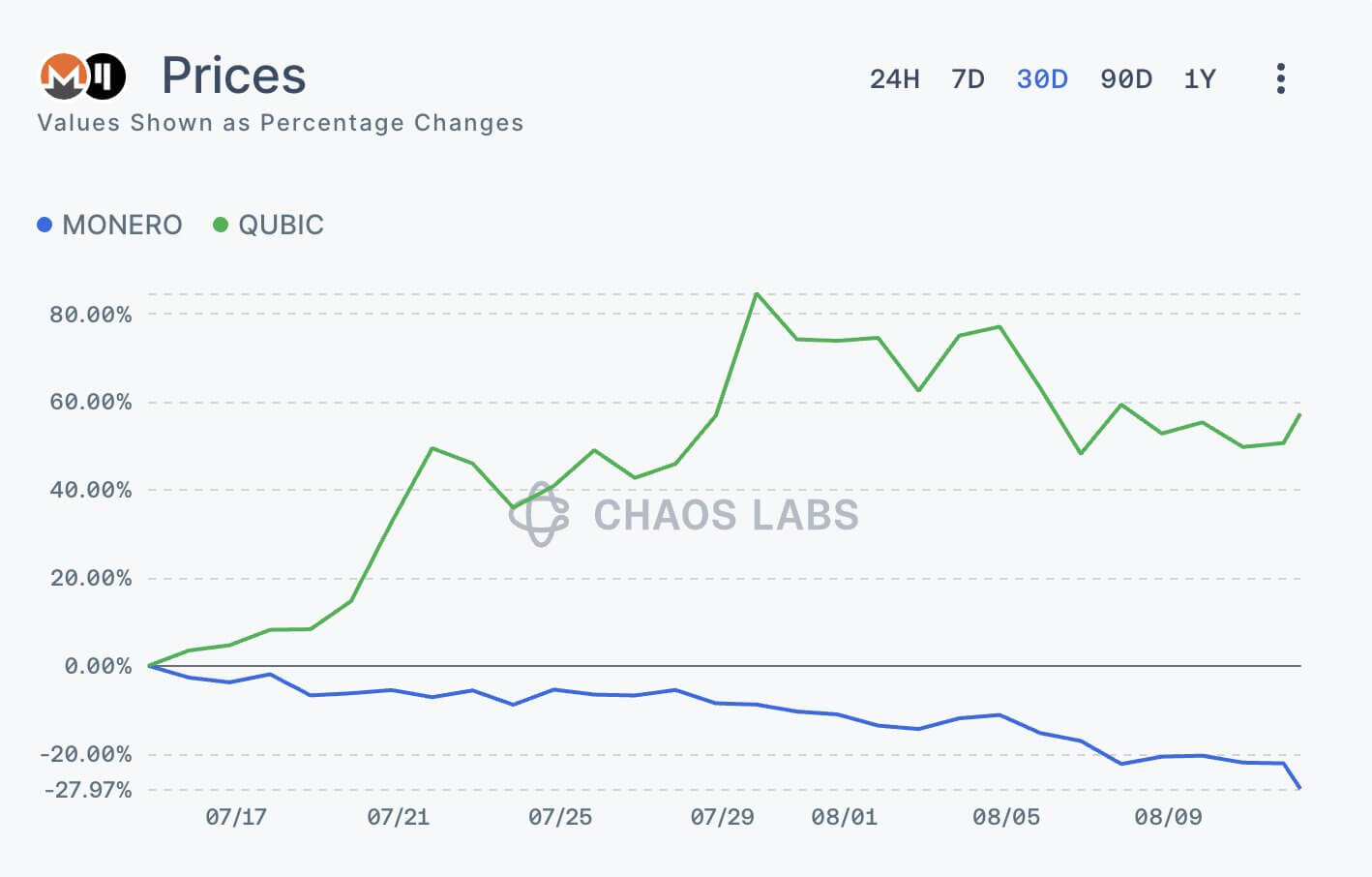
Data from Chaos Labs indicates that Monero’s hash rate reached 3.01 GH/s as miners pursued daily earnings of $3.13 compared to $0.64 from standard pools. Over the preceding month, Qubic’s actions have contributed to a 28% decrease in XMR’s value, while QUBIC tokens experienced a surge of 57%.
Qubic’s model also includes distributing half of its mining profits to participating miners and using the remaining half to buy and destroy QUBIC tokens.
Consequently, if the project mines 100% of Monero’s blocks daily, it yields approximately 432 XMR, valued at around $118,000 at the current rate, with $59,000 being burned daily.
Considering Monero’s focus on privacy, there’s some debate regarding whether Qubic actually achieved the 51% target. The network’s design allows for the obfuscation of hash rate ownership, though CFB, a Qubic developer, has confirmed achieving the hash rate quota. This “stealth hashrate” won’t be reflected on public dashboards that attribute ownership.