
Widely regarded as a leading entrepreneur of our time, Elon Musk’s financial success is undeniable. By June 2025, his estimated net worth reached an impressive $394 billion, crowning him as the world’s wealthiest individual. Earlier, toward the end of 2024, Musk’s wealth peaked at a remarkable $486 billion before a dip in Tesla (TSLA -0.86%) share value occurred.
Consequently, many investors are keen to understand where Musk allocates his vast capital. We’ll examine the investments he makes, encompassing businesses he establishes and acquires, the investment categories he generally avoids, and insights into his overall strategy.
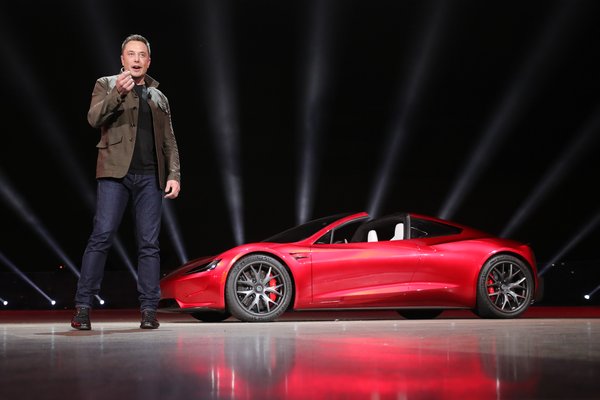
Image source: Tesla.
Investment Approach
Decoding Elon Musk’s Investment Strategy
Musk’s investment philosophy, at least based on public knowledge, appears straightforward. His investments primarily fall into two main areas: companies he has either launched or controls, and the dynamic world of cryptocurrencies. Unlike numerous other billionaires, Musk doesn’t maintain an extensive collection of publicly traded shares in companies where he lacks direct management responsibility.
Even his acquisition of a 9.2% ownership in the social media network Twitter in April 2022 was driven by his desire to ultimately purchase the entire company and transition it to private ownership. This ambition explains his decision to decline a position on Twitter’s board of directors. Following prolonged negotiations, the transaction was finalized in late October 2022, with Musk acquiring Twitter for $44 billion and subsequently rebranding it as X in 2023.
Musk’s investment portfolio is heavily concentrated in his entrepreneurial ventures. These investments can be divided into publicly traded stock investments and private companies that he created and continues to hold equity in. Let’s examine the details of Musk’s investments as we currently understand them.
A publicly traded company is one that has issued shares available for purchase and sale on the stock market.
Publicly Held Assets
Elon Musk’s Investments in Publicly Traded Stocks
Elon Musk’s largest holding in publicly traded stocks is in the electric vehicle industry, specifically with Tesla. He was an early investor, leading the Series A funding round and joining as one of the first employees. Musk eventually gained a majority stake and assumed leadership of the company in 2008.
As of June 2025, Musk possessed roughly 12.8% of Tesla’s stock, estimated at over $100 billion. Moreover, his compensation package with Tesla entails receiving payment solely in company stock through performance-based stock options, contributing to the growth of his ownership over time.
During the dot-com era, Musk co-founded X.com, which later became known as PayPal (PYPL 0.29%). He served as PayPal’s CEO until 2000 and once held 11.7% of the company’s outstanding shares. While he no longer owns a stake in PayPal, he possessed shares prior to its acquisition by eBay (EBAY 1.28%) in 2002.
He received in excess of $100 million for his equity after selling his shares. Currently, Musk’s ownership in PayPal would be valued in the billions. However, considering he allocated the proceeds to finance both Tesla and SpaceX in their formative years, it is reasonable to conclude that selling was a prudent decision.
Privately Held Assets
Elon Musk’s Private Equity Investments
Musk established and remains in control of several companies, among which SpaceX stands out as the most significant. He holds approximately 42% ownership in the space exploration technology enterprise, which had an estimated value of around $350 billion as of the fourth quarter of 2024.
Private equity involves investment partnerships where private equity firms and knowledgeable investors combine resources into a managed fund.
Aside from SpaceX, Musk possesses majority ownership in several privately held startups that he either established or co-founded, most notably:
Cryptocurrency Investments
Elon Musk’s Cryptocurrency Portfolio
While the precise amounts are undisclosed, it’s evident that Musk invests in cryptocurrencies, both through his companies and personally. He has openly shared his enthusiasm for certain digital currencies, particularly Dogecoin (CRYPTO:DOGE).
Musk has also revealed his holdings in Bitcoin (BTC -1.06%) and Ethereum (CRYPTO:ETH), stating that his Bitcoin holdings are significantly larger in value compared to his Ethereum or Dogecoin.
Tesla and SpaceX both maintain substantial Bitcoin reserves as well. While we know that Tesla possessed 11,509 Bitcoins as of March 2025 (valued at over $1 billion at the time), the exact quantity of cryptocurrencies Musk personally owns remains undisclosed.
Investments Avoided
Stocks Elon Musk Typically Doesn’t Invest In
While the complete details of Musk’s investment portfolio aren’t fully known, it’s apparent that the majority of his stock holdings are within publicly and privately held companies that he controls. He generally avoids owning significant stock positions in other businesses. In 2021, he stated, “The only substantial asset I hold outside of Tesla is SpaceX.”
Musk is not a hedge fund manager and isn’t obligated to disclose minor investments. It’s possible that he has smaller investments in publicly traded stocks that remain unreported. However, all indications suggest that he primarily invests in his own ventures.
Mimicking Musk’s Investments
Strategies for Investing Like Elon Musk
For those interested in replicating Elon Musk’s investment approach, acquiring shares of Tesla stock would be a primary step, given that it constitutes a large percentage of the billionaire’s total wealth. However, emulating the private equity aspect of his portfolio poses a greater challenge.
Purchasing shares of SpaceX or The Boring Company on the public market is not an option, and participation in funding rounds for these companies is generally limited. A viable alternative is to identify publicly traded companies that operate in similar sectors. For instance, Rocket Lab (RKLB 0.86%) is often viewed by investors as the publicly traded company closest to SpaceX.
Related Investment Insights
To emulate Musk’s approach to cryptocurrencies, one could focus on Bitcoin, Ethereum, and Dogecoin, which are the currencies he has publicly acknowledged holding. However, it’s important to remember that merely because a wealthy and/or prominent investor acquires a cryptocurrency, it does not automatically warrant investment. Conduct thorough research on each currency before committing capital and limit the allocation of your portfolio to crypto assets, considering the inherent risks involved.
In conclusion, despite Elon Musk’s immense wealth, the majority of his net worth is concentrated in a single stock (Tesla) and private companies that are generally inaccessible to the average investor. Beyond purchasing Tesla stock, the most effective way to emulate Elon Musk’s investment approach might be by pursuing a career as an entrepreneur.
Frequently Asked Questions
Elon Musk investment strategy FAQ
What crypto is Elon Musk investing in?
Elon Musk has publicly stated that he owns Bitcoin, Ethereum, and Dogecoin. While he may have investments in other cryptocurrencies, those are the only three he has confirmed.
What AI company is Elon Musk investing in?
In 2023, Elon Musk launched his own AI enterprise, xAI. He also invested upwards of $44 million in OpenAI from 2016 to 2020.
What is Elon Musk’s biggest source of income?
Elon Musk’s primary source of wealth stems from his equity stake and leadership role as CEO of Tesla. He possesses approximately 12.8% of Tesla’s outstanding stock as of June 2025 and is entitled to stock options as CEO contingent on the company’s performance and valuation targets.
What are Elon Musk’s largest holdings?
Elon Musk’s most substantial holdings are his ownership stakes in Tesla and SpaceX.