
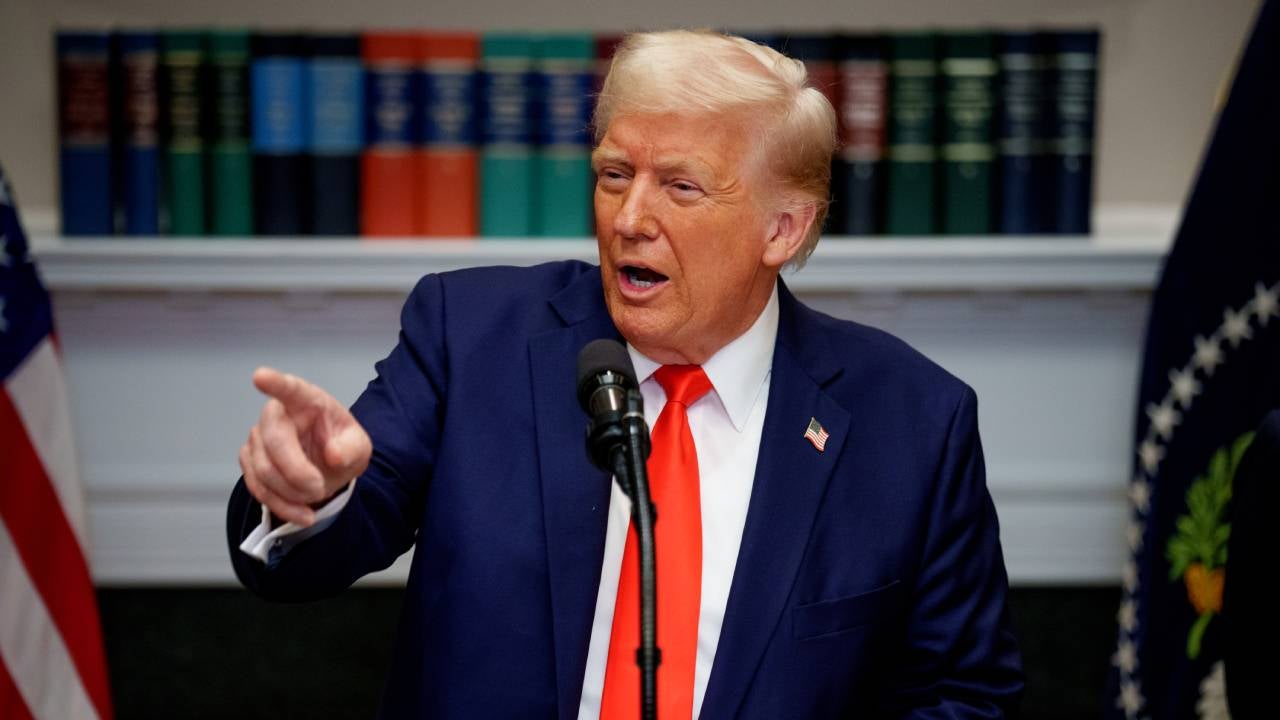
Andrew Harnik / Staff / Getty Images
President Donald Trump took executive action on March 6, establishing the Strategic Bitcoin Reserve. This directive also creates the United States Digital Asset Stockpile to manage various forms of cryptocurrencies.
The newly formed Strategic Bitcoin Reserve will initially be stocked with all bitcoins seized by the Department of the Treasury through legal proceedings, both criminal and civil. The Digital Asset Stockpile, on the other hand, will house all other types of cryptocurrencies obtained through similar forfeiture actions.
According to the order, further Bitcoin acquisitions for the Strategic Bitcoin Reserve are permissible, but they must be “budget neutral.” This means any Bitcoin purchases must be balanced by equivalent spending cuts elsewhere in the budget to avoid increasing the national deficit. The executive order also clarifies that the U.S. will not actively purchase any of the thousands of other cryptocurrencies for the Digital Asset Stockpile.
David Sacks, the U.S. crypto czar, has stated that the United States already possesses approximately 200,000 bitcoins obtained through various forfeitures. These bitcoins, valued at around $18 billion based on current market prices, will form the initial capital for the Strategic Bitcoin Reserve.
However, Trump’s executive order outlines the “re-assignment” of already held coins into these reserves, instead of suggesting plans to purchase Bitcoin or other digital currency actively.
Need an advisor?
Looking for expert advice on your investment decisions?
Bankrate’s AdvisorMatch can help you find a qualified CFP® professional to help you reach your financial goals.
Cryptocurrency Investment: Navigating the Risks
Despite the Trump administration’s actions, investing in cryptocurrency remains inherently risky. If the U.S. government begins actively purchasing Bitcoin, rather than simply managing forfeited assets, U.S. taxpayers would be exposed to these potential risks.
The Underlying Issue: Cryptocurrency Lacks Tangible Backing
Unlike stocks or bonds, Bitcoin, Ethereum, and other cryptocurrencies are not supported by underlying assets or cash flows. Their value hinges solely on what other investors are willing to pay. Should demand decrease, their prices will fall.
This type of investment relies on the “greater fool theory,” where profits depend on selling the asset to someone who believes it will be worth more in the future. Because Bitcoin lacks intrinsic value, its profitability depends on continuous hype and new investors to keep people buying crypto and pushing the price up.
Criminal Activity and Cryptocurrency
Cryptocurrency facilitates criminal activity by providing an avenue for anonymous or semi-anonymous money transfers. This makes it easier for criminals to launder money by selling cryptocurrency to legitimate investors.
If the U.S. government starts purchasing cryptocurrencies rather than managing forfeited assets, it risks unintentionally supporting criminal activities.
Limited Utility: Cryptocurrency Not Widely Accepted for Transactions
Few legitimate businesses use cryptocurrencies like Bitcoin or Ethereum for actual transactions. Some businesses briefly allowed cryptocurrency payments nearly a decade ago, but discontinued the practice due to low usage.
The volatility of cryptocurrency makes it impractical as a currency. The unpredictability of cryptocurrency prices could significantly alter the price of goods and services from day to day, deterring widespread adoption.
Vulnerability to Hacking: A Significant Risk
A major concern is the potential for hacking. Unlike physical assets like gold, the code underlying cryptocurrencies is vulnerable to compromise. The increasing value of Bitcoin offers a strong incentive for malicious actors to find and exploit vulnerabilities in its code.
Increased U.S. government investment in cryptocurrency further motivates hackers to target the world’s wealthiest nation.
Editorial Disclaimer: Investors should conduct thorough independent research before making investment decisions. Past investment performance does not guarantee future price appreciation.
Why we ask for feedback
Your feedback helps us improve our content and services. It takes less than a minute to
complete.
Your responses are anonymous and will only be used for improving our website.
Help us improve our content