
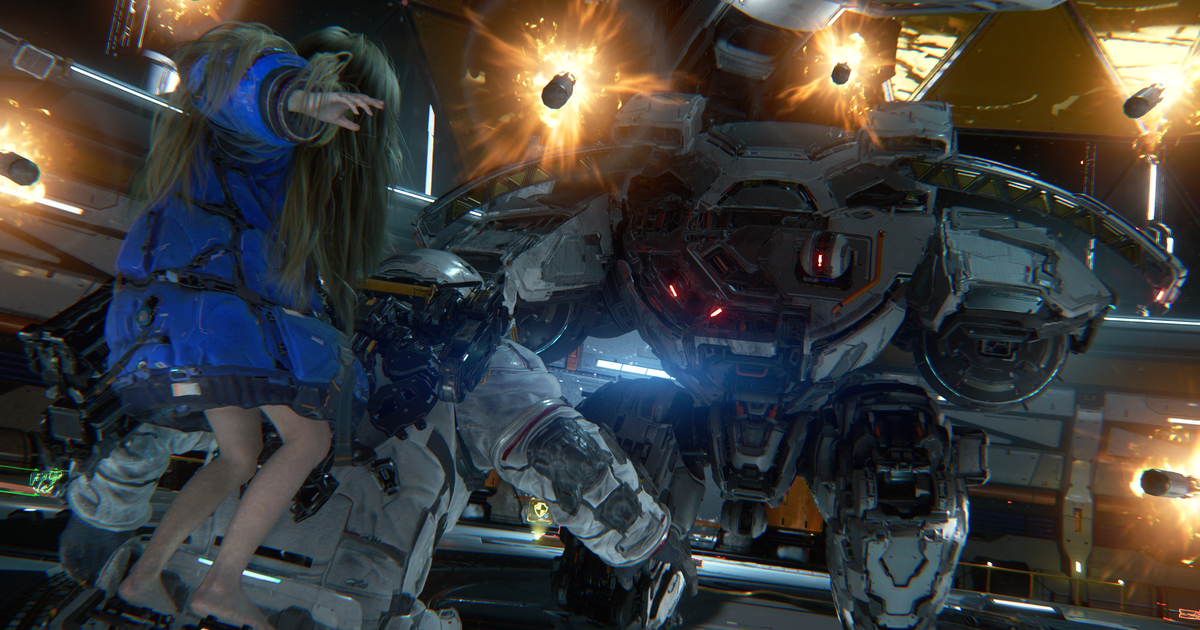
Recently, I dove into a preview build of Pragmata, and frankly, I wasn’t fully aware of the strong opinions circulating about its core hacking mechanic. Apparently, disabling enemy robots’ defenses via hacking before engaging them in combat is viewed by some as a potential drawback. In response, Capcom has released a playable browser game that allows players to experience the hacking system. This feels like Capcom’s attempt to reassure players that the system isn’t overly complicated before the game’s launch next year.
I understand the concern. On paper, the concept can be described as a blend of third-person shooting gameplay with a tile-matching puzzle minigame. However, after playing Pragmata, I’m definitely in favor of the hacking component. Not only does it offer upgrade potential, but it also enhances the gameplay rhythm and offers a unique feel compared to other third-person shooters.
As a quick summary, the player controls Hugh, a space explorer tasked with protecting Diana, a spirited android child who offers a means of escape from an AI-overrun lunar base. Hugh excels at combat and swift movements, while Diana possesses the ability to hack into doors and hostile robots, converting them into valuable scrap metal. Hacking involves maneuvering a cursor through a grid-like interface toward a shutdown icon, earning bonus effects based on the cells selected along the way.
Again, this description may not sound captivating. However, I appreciate how this real-time process significantly impacts the usual run-and-gun gameplay. First, there is a palpable sense of pressure as your impervious foe begins its attack sequence. During this period, I would think, “Come on, come ON!” as I rushed to disable their systems before they closed in. Then, the tension breaks once their shield is down, allowing you to obliterate them with just a few well-placed shots. Even basic enemies create this sense of escalation and satisfying climax. While boss encounters involve more back-and-forth, successfully hacking larger robots, whose grids are larger and more difficult to navigate, creates a more engaging experience than simply exchanging gunfire from the start.
Hacking upgrades also pique my interest. During a battle with a formidable guardian robot, I discovered an anti-armor enhancement that added a unique cell type to its grid. If I activated this cell during the hacking sequence, the subsequent damage dealt to the robot would increase significantly. This highlights an understated quality of the whole system: it isn’t a pre-set minigame to be overcome with a predetermined solution, but a method of adapting your combat strategy. For example, I could have ignored the debuff nodes for a faster, more reliable hack, repeated during the boss’s attack patterns. However, by risking a slower, less frequent hack, I was able to inflict more damage with less ammunition. Will the thorough approach be universally effective? Probably not, but the options are appreciated.
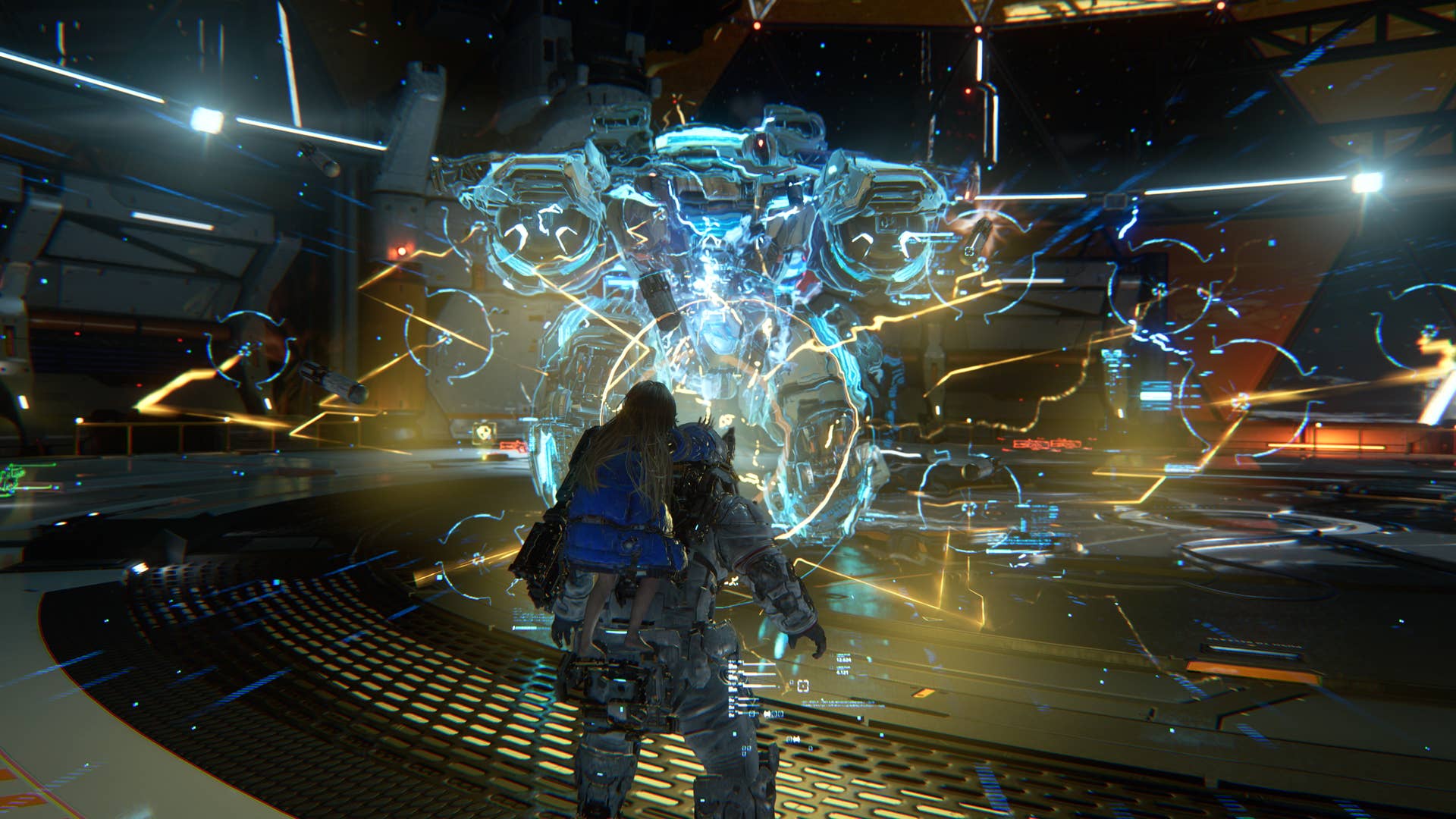
The game also offers the potential for more unique upgrades beyond simple damage modifiers, which I hope to see realized. I’m unsure what Capcom has planned, but the hacking system could inflict various status ailments on enemies by investing additional time within the grid. Maybe we could also see a suite of Dishonored-inspired powers that let us confuse and disrupt robots before dismantling them.
I’m aware that I might be describing the game I want to see, instead of the one I actually experienced. And truthfully, much of what I saw was standard science fiction fare. The environments frequently consisted of boxy corridors, and the enemy designs lacked detail outside of the protective flaps that open during hacking attempts.
Nevertheless, there’s a spark of something greater here, and the hacking, with its influence on pacing, tension, and tactical decision-making, is at the core of it. I wouldn’t have thought a shooter could be more compelling by reducing the amount of shooting. But then, I wouldn’t have thought I’d be excited about a tragic father-figure game in 2025 either.
Stay updated on all PC game announcements and previews from Cologne by visiting our Gamescom 2025 hub.