
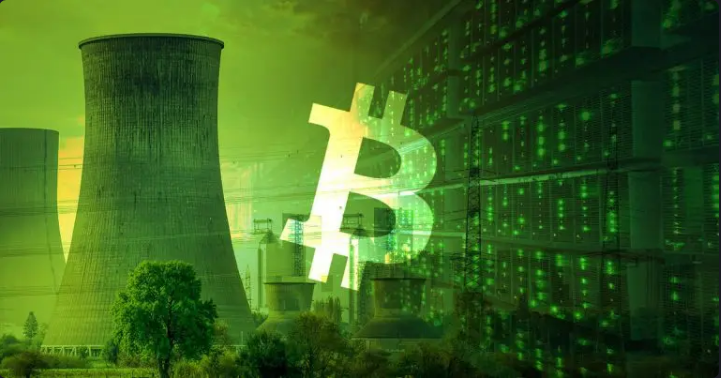
Google Expands Investment in TeraWulf, Becoming Largest Shareholder
Tech giant Google has significantly increased its ownership in TeraWulf, a company specializing in Bitcoin mining and data center operations. Google’s stake has grown from 8% to a substantial 14%, making it the leading shareholder.
This move comes after a considerable $3.2 billion commitment, which includes an additional $1.4 billion to bolster a decade-long colocation agreement with Fluidstack, an AI cloud service provider. The agreement centers around TeraWulf’s Lake Mariner facility located in New York. As part of the deal, Google will receive warrants to acquire 32.5 million shares of TeraWulf. Furthermore, the facility’s capacity will be expanded to exceed 360 MW by 2026, catering to the growing demands of AI and high-performance computing (HPC).
News of the increased investment caused TeraWulf’s stock to jump between 12-13%, reflecting a broader trend of a 90% rise over the preceding week. This surge demonstrates investor confidence in TeraWulf’s strategic shift towards AI infrastructure in addition to its Bitcoin mining operations. The alliance aligns with Google’s ambitions in artificial intelligence while providing TeraWulf with a stable, long-term revenue stream from AI/HPC services, potentially worth between $6.7 and $16 billion.
Google’s deepened involvement injects significant credibility into the digital currency mining industry. This development signals to the wider market that blockchain infrastructure represents a solid and strategically viable investment opportunity, potentially attracting further institutional capital to Bitcoin mining companies and related SPACs (Special Purpose Acquisition Companies).
The partnership serves as validation for TeraWulf’s zero-carbon infrastructure, as well as its strategic pivot towards AI and high-performance computing (HPC). This illustrates how sustainable and diversified mining operations are becoming increasingly attractive to major corporations.
Register for Tekedia Mini-MBA edition 18 (Sep 15 – Dec 6, 2025) today for early bird discounts. Do annual for access to Blucera.com.
Tekedia AI in Business Masterclass opens registrations.
Join Tekedia Capital Syndicate and co-invest in great global startups.
Register for Tekedia AI Lab: From Technical Design to Deployment.
Industry Shift: Integrating AI and HPC within Blockchain Mining
TeraWulf’s strategic decision to move beyond solely focusing on Bitcoin mining and embrace a more inclusive model incorporating AI and HPC workloads reflects a significant trend within the industry. The Bitcoin halving event in April 2024, which reduced mining rewards to 3.125 BTC per block, placed pressure on profitability, compelling miners to explore additional revenue streams.
Google’s $3.2 billion backstop for TeraWulf’s colocation agreement with Fluidstack highlights the increasing overlap between blockchain mining and AI infrastructure. This development could inspire SPACs to consider targeting companies that fuse cryptocurrency mining with AI/HPC capabilities, given that these integrated models provide a more stable income stream and reduced vulnerability to the volatile cryptocurrency market.
For SPACs, this suggests that targeting or merging with mining companies that secure high-profile tech partnerships could lead to significant valuation increases and attract both retail and institutional investors. TeraWulf’s emphasis on zero-carbon energy production is also well-aligned with Google’s commitment to sustainability, making it a particularly appealing partner.
This focus on renewable energy addresses a key criticism surrounding Bitcoin mining—its impact on the environment. SPACs that target blockchain mining companies with sustainable practices may gain a competitive edge, particularly as environmental concerns increasingly influence investor decisions and regulatory frameworks.
Google’s increased involvement could initiate consolidation within the mining sector. As leading technology companies such as Google secure stakes in prominent miners, smaller or less diversified companies may struggle to compete. SPACs could facilitate this consolidation by merging with or acquiring smaller mining companies, scaling operations and adapting to AI/HPC opportunities.
Impact on Blockchain Mining SPACs and Investment Strategies
SPACs operating in the blockchain mining arena will likely prioritize companies that have, like TeraWulf, incorporated AI and HPC capabilities into their business models. The combination of revenue streams from cryptocurrency mining and AI infrastructure can minimize risk and enhance profitability long-term, making these companies attractive acquisition targets.
For instance, entities such as Core Scientific and Iris Energy, both of which have also strategically shifted towards AI, may emerge as prime candidates for SPACs looking to capitalize on this growing trend. Google’s entrance into this sector could further intensify competition for quality mining companies that demonstrate scalable infrastructure. SPACs will need to move decisively to identify and merge with companies that demonstrate robust and energy-efficient operations, as well as the potential for AI/HPC integration.
The TeraWulf transaction underscores that blockchain mining companies with robust strategic alliances can achieve significant increases in stock price and solidify institutional support. This could improve investor sentiment toward SPACs in the mining sector, particularly those focused on companies with similar profiles – sustainable energy, scalable infrastructure, and existing technology partnerships.
The success of the TeraWulf partnership could also inspire new SPACs to emerge in the blockchain mining and digital infrastructure landscape, specifically concentrating on companies that can effectively bridge the gap between cryptocurrency and AI. These new SPACs could target businesses that have pre-existing data center infrastructure, low-cost renewable energy contracts, or working partnerships with AI or tech firms – closely mirroring the TeraWulf model.
Projections indicating that miners who pivot to AI/HPC could realize an estimated $13.9 billion in additional profits by 2027, as provided by VanEck, further validates the long-term potential for SPAC-driven growth in this hybrid sector. Google’s increased stake in TeraWulf signifies a pivotal moment for blockchain mining, emphasizing the vital role of AI, HPC infrastructure and sustainable operations.
For blockchain mining SPACs, this evolution highlights the importance of targeting companies that offer diversified revenue streams, strong partnerships, and environmentally-conscious practices. This will not only legitimize the sector and enhance its attractiveness to investors, but also raise the stakes in terms of valuation, regulatory scrutiny, and competition for quality acquisition targets.