
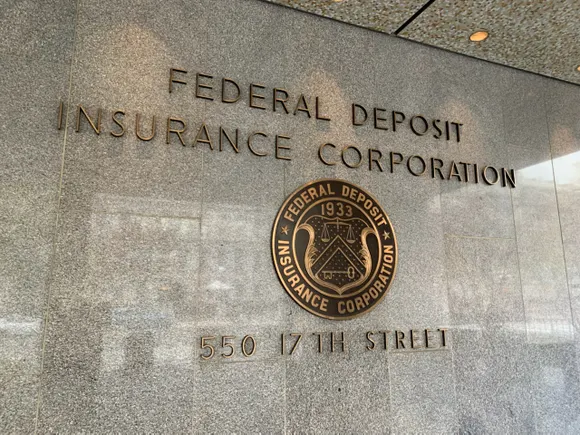
Newly released documents from Friday reveal that the Federal Deposit Insurance Corp. (FDIC) advised banks in 2022 and 2023 to temporarily halt new ventures involving cryptocurrencies. However, these communications, detailed in official records made public, did not explicitly forbid them from providing standard banking services to companies operating within the crypto sector.
These previously confidential letters, including two that were recently unveiled, appear to contradict claims prevalent in the crypto industry. The industry has suggested the FDIC instructed banks to systematically cut off financial support, a process often called “de-banking,” to crypto firms. While no blanket order was given, the correspondence does indicate the FDIC discouraged banks from supporting services directly on public blockchain networks. Furthermore, the agency requested at least one bank postpone the introduction of a crypto-focused financial product while the FDIC assessed its potential risks.
Last month, twenty-three of these FDIC letters, addressed to numerous banks, were initially disclosed as part of legal proceedings involving History Associates, a consultant for Coinbase, and the FDIC itself. History Associates initiated legal action against both the FDIC and the Securities and Exchange Commission (SEC) in June, seeking access to documentation related to the regulators’ inquiry into Coinbase’s activities.
The identities of the banks involved, specific crypto products, and the blockchain networks discussed remain confidential and have been redacted from the released documents.
An FDIC spokesperson has chosen not to comment on the specifics of these newly released letters.
Coinbase’s Chief Legal Officer (CLO) commented on the matter via X (formerly Twitter) on Friday, asserting that the disclosed letters “illustrate a carefully orchestrated campaign designed to stifle a broad spectrum of crypto-related activities, ranging from basic Bitcoin transactions to more sophisticated financial instruments.”
Referring specifically to the two recently revealed “pause letters,” Coinbase CLO Paul Grewal stated, “It’s difficult to maintain faith in their integrity, as each new revelation further exposes deeper layers of questionable conduct.”
He urged the newly elected Congress to convene hearings to investigate these actions.
Grewal, along with other industry figures, has long argued that the Biden administration has been pursuing a coordinated strategy, frequently referred to as “Operation Choke Point 2.0,” aimed at hindering the integration of cryptocurrencies into mainstream finance.
This alleged strategy draws its name from “Operation Choke Point,” a policy enacted during the Obama administration. That earlier policy sought to restrict banking access for industries deemed high-risk, such as payday lenders, gambling services, and firearms dealers.
In addition to releasing the unredacted letters, the FDIC also made public an internal memorandum from 2022. This memo provided guidance to FDIC staff regarding the procedures for receiving, reviewing, and responding to notifications from banks that were either involved in or considering involvement in activities related to cryptocurrencies.
The memo stated: “The FDIC is aware of several financial institutions already engaged in crypto-related activities, based on previous communications, media reports, and regulatory examinations. The issuance of the [Financial Institutions Letter] was intended to address an existing gap in the data collected about this developing area.”
The memo further cautioned that “[C]rypto-related activities may introduce substantial risks to the safety and stability of the financial system, as well as pose concerns regarding consumer protection. These risks and concerns are still evolving, given the nascent and not fully understood nature of activities involving crypto-assets.”