
Editor’s Note: This content is optimized for audio consumption. For the best experience, WCMU recommends listening to the audio version by clicking the “LISTEN” button.
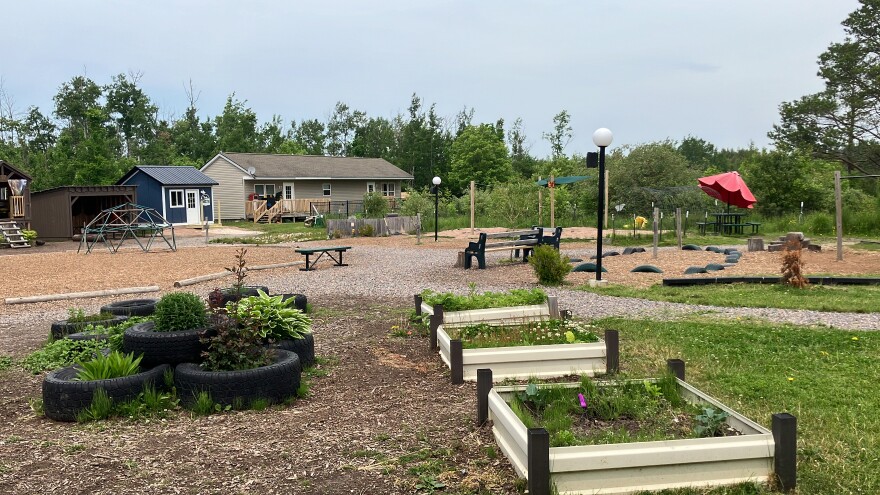
At Lake Superior Academy, located near Sault Ste. Marie, Superintendent Susie Schlehuber proudly refers to the school’s outdoor area as an extension of their learning environment.
“This isn’t just a playground; it’s where learning happens daily,” she explains.
Students at this charter school, spanning from preschool to 5th grade, typically dedicate two hours each day to outdoor activities. They engage in play, reading, journaling, gardening, and nature observation.
However, according to Schlehuber, the natural soundscape has changed drastically since March. The once-familiar melodies of birdsong are now often obscured by the mechanical drone emanating from a large-scale computing operation across the street.
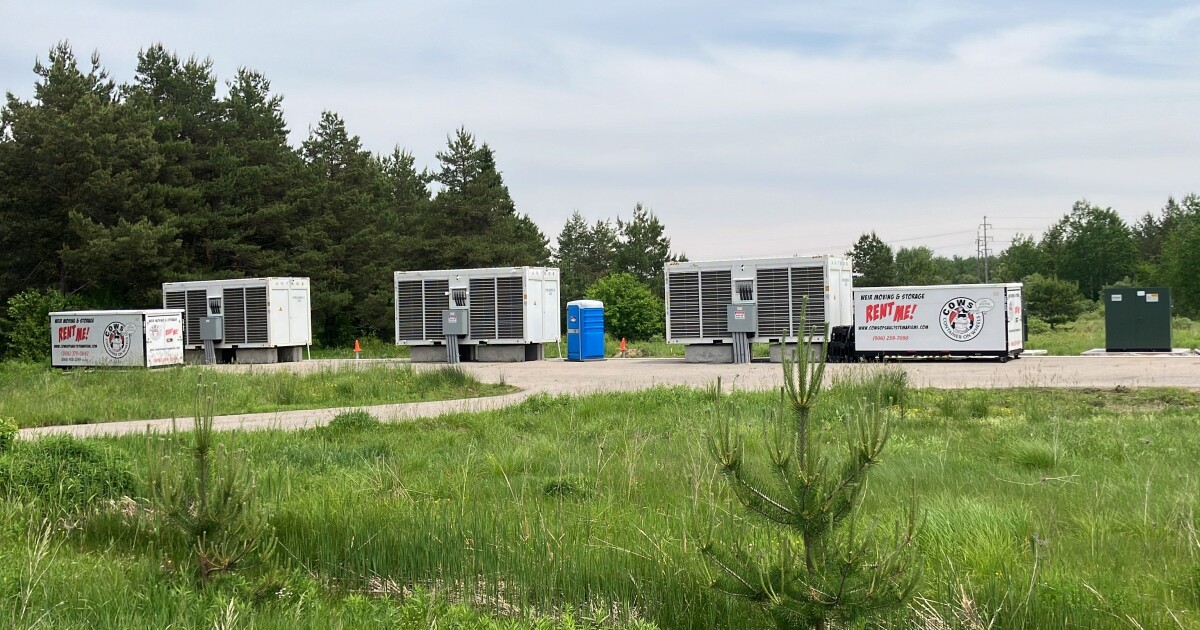
The source of this noise? A bitcoin mining facility, comprised of six metal containers resembling shipping containers, housing rows of powerful computers.
“Almost daily, the students ask when the noise will cease,” says Schlehuber. “Some of our special needs students are particularly sensitive, often covering their ears in response.”
The constant humming originates from the cooling systems required to prevent the high-powered computers from overheating. These machines operate around the clock, working to solve intricate computational problems to generate cryptocurrency.
Schlehuber estimates the constant sound level to be between 70 and 75 decibels, comparable to the sound of a washing machine or a blender.
“Whenever we step outside, the hum is always noticeable,” she states.
Area residents are increasingly concerned about the potential long-term health implications stemming from continuous noise pollution and the air pollution associated with bitcoin mining activities.
There are also growing complaints regarding the lack of clear information about the ownership and operational structure of the bitcoin mining facility.
An Enigmatic Enterprise
According to Schlehuber, the two individuals who maintain the facility have been approachable and attended a recent township meeting. However, they have not revealed the identity of their employer or the organization behind the operation.
“The more we interact, the less we seem to know. We’re left with more questions than answers,” she explains. “We haven’t gained a better understanding of the organization itself; instead, we’ve become aware of just how much remains unknown.”
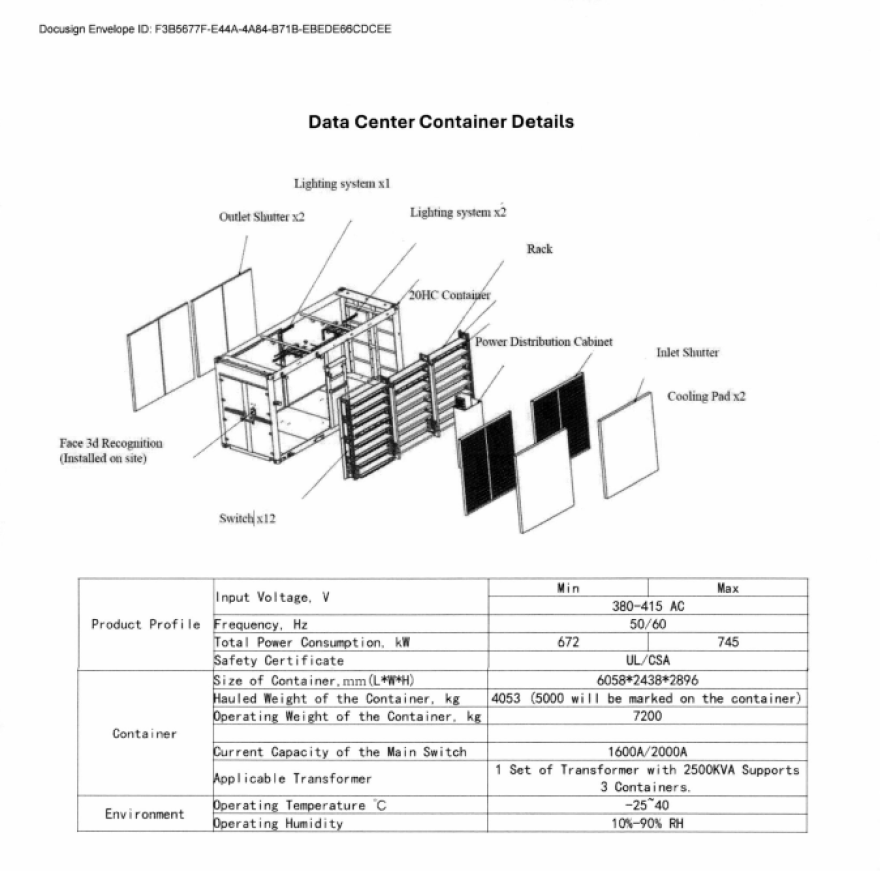
Building Permit Application
/
Dafter Township
According to Chippewa County records, the building permit application lists Michael Carbonara of Odessa LLC as the property owner.
Carbonara also serves as the CEO of Ibanera, a financial technology firm. WCMU confirmed that the address listed on Ibanera’s business filings in Boca Raton, Florida, matches the address on the Dafter Township permit.
WCMU attempted to contact Carbonara, his company, and other Ibanera employees multiple times but received no response.
In an interview from October, posted on “Tech or Leave It,” Carbonara describes himself as an entrepreneur.
“Entrepreneurship requires hands-on experience and people skills,” he said. “In my late 20s, I started launching my own businesses, taking risks, embracing creativity, and no longer being an employee.”
Recent reports indicate that a bank in the Bahamas has filed a lawsuit against Carbonara and his company, alleging the misappropriation of over $20 million through the “wrongful withholding” of funds.
However, the extent of Carbonara’s current involvement with the Dafter Township bitcoin facility remains uncertain.
He signed the permit application in October of last year, paid the associated $219.25 fee, and designated the building’s use as “storage, warehouse, etc.” The application stated that the site would “host 6 containerized data centers consisting of computer systems managing data.”
Zoning Regulations
Dafter Township Supervisor Bob Brown asserts that the facility’s classification as a storage facility is appropriate under current zoning regulations, which do not explicitly prohibit bitcoin mining operations.
“What if the containers held balloons? Or aquariums requiring electricity?” he asks. “The existing code doesn’t restrict storage based on the specific contents.”
The controversy surrounding the bitcoin facility has prompted the township to review its zoning ordinance and consider implementing more specific regulations for data centers. Brown plans to propose hiring a consulting firm to provide expertise on regulating emerging technologies like data centers.
Brown also acknowledges the township’s lack of a noise ordinance, though he believes that even if one were implemented, it likely wouldn’t apply retroactively to the existing bitcoin mining facility.
“We learn from these situations,” Brown notes. “What if someone wanted to install a thousand of these? Without appropriate regulations, we’d face the same issue again.”
Brown hopes the current disagreement between the school and the bitcoin farm can be resolved amicably. The facility’s operators are scheduled to present potential noise reduction solutions this August.
The Growth of Data Centers
The facility near the academy isn’t the only bitcoin mining operation in the area. Another site, also in Dafter Township, is currently under development.
A video posted seven months ago by “Bitcoin Mining World” promotes the Soo as an ideal location for cryptocurrency mining and lists the property for sale.
“The advantage of a small town is the availability of local contractors who can reliably complete projects quickly, making it perfect for remote investors,” the video’s narrator states.
Cloverland Electric Cooperative, the area’s electricity provider, released a statement in mid-June clarifying that it “does not own or operate these facilities.”
“Cloverland cannot choose whether to serve a business based on the nature of the business and cannot stop service even if the operation is offensive, noisy, smells bad or is otherwise disagreeable for other members,” the statement read.
The data center industry, including cryptocurrency mining and AI applications, is projected to expand considerably. One recent report projects a 46% increase in data center capacity within the next two years, nearly tripling by 2030.
Tech companies are increasingly targeting rural areas for development, attracted by lower taxes, energy costs, and land prices. However, these communities may be unprepared for the potential impact.
“You don’t know what you don’t know until you know it,” Brown concludes.