
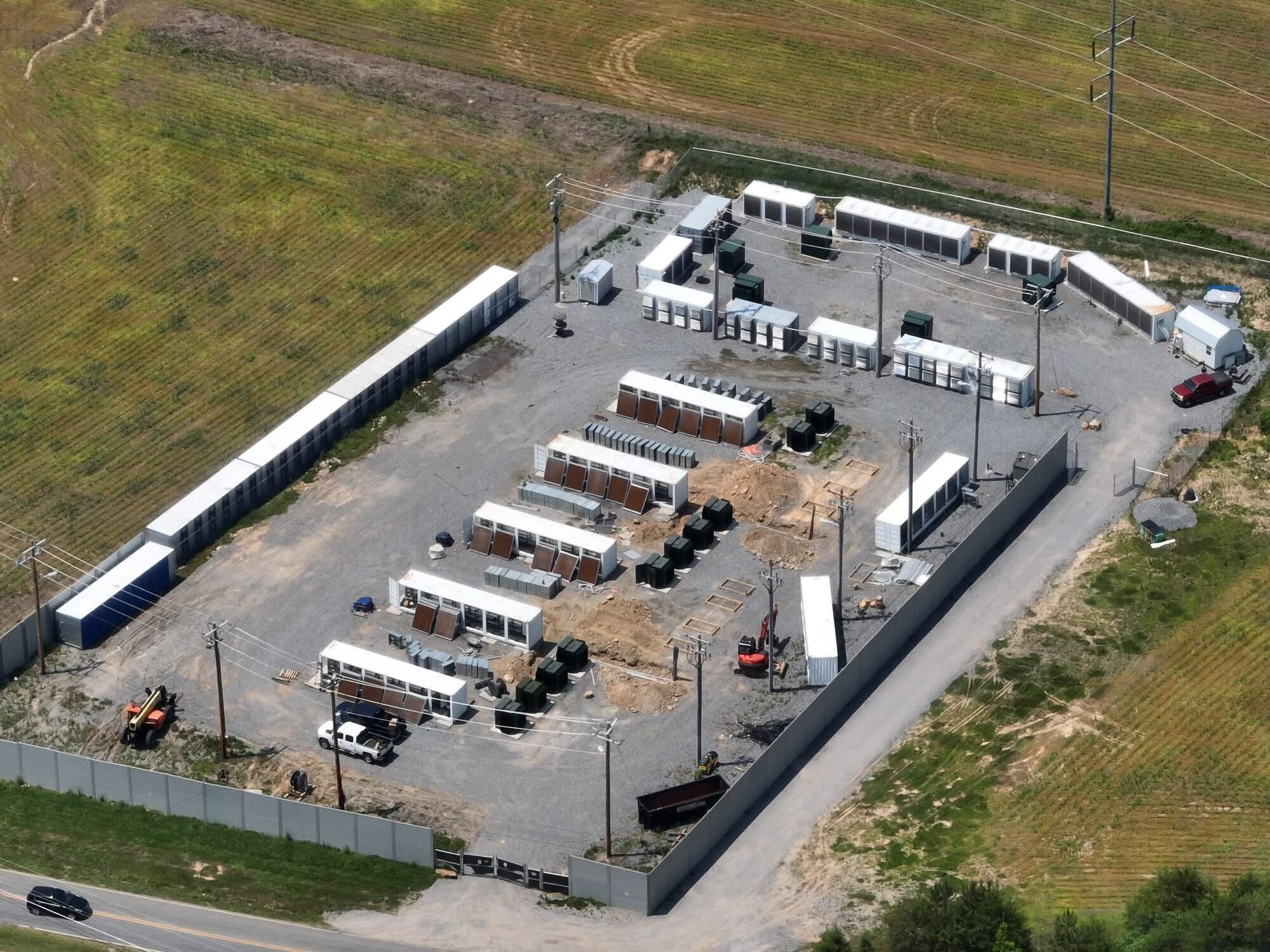
While North Carolina has recently attracted diverse industries, from automotive manufacturing giants like Toyota to tech titans such as Google and e-commerce leaders like Amazon, the growing presence of cryptocurrency mining operations might be a surprise to some.
The state’s expansive, largely undeveloped land areas are proving increasingly attractive to these energy-intensive businesses, a trend that is generating concern and opposition among many local residents.
However, with state legislators and political figures showing increased interest in digital currencies, these mining facilities are gaining prominence in the economic landscape.
Understanding “cryptomining” requires moving beyond the image of traditional mining. Instead of extracting physical resources, these operations validate cryptocurrency transactions and record them on a digital ledger known as a “blockchain.” Without this validation process, cryptocurrencies like Bitcoin would be unable to function.
[Stay Informed: Get FREE Updates and Weekend News from Carolina Public Press!]
North Carolina’s appeal to cryptominers stems from a global shift. Following the 2021 ban on digital currency mining in China, numerous companies relocated to the United States, seeking regions with affordable and plentiful electricity in areas with low population density.
The remote locations also offer the advantage of fewer noise complaints associated with the constant hum of high-speed cooling fans, vital for maintaining the computer infrastructure within the mines.
Recently, a cryptomining venture was on the verge of commencing operations in Burke County before the Town Council, prompted by the National Coalition Against Cryptomining, enacted stricter zoning regulations, effectively hindering the project.
Raising Concerns
Living in proximity to a cryptomine can disrupt the peace and quiet of a community.
Residents often describe the noise from the cooling fans as similar to a roaring jet engine, a perpetual waterfall, or a continuously revving motorcycle.
Cyndie Roberson moved away from Cherokee County to escape the intrusive noise of these mines. She has witnessed firsthand the emotional distress of others affected by the constant drone at public forums.
Roberson views cryptocurrency mining as a destructive force, both environmentally and socially. She argues that these facilities primarily benefit remote investors, leaving the local community with noise pollution and disruption, likening the presence of a cryptomine to having a noisy racetrack in one’s backyard.
Cryptomines often resemble nondescript rows of shipping containers. They require minimal human oversight; computers operate autonomously, validating cryptocurrency transactions by solving complex mathematical problems.
Successfully solving these computational puzzles verifies crypto transactions and adds them to the blockchain. The mining company receives new cryptocurrency and transaction fees as a reward. However, the intense computing process demands vast amounts of electricity and generates substantial heat, necessitating the use of powerful, and loud, cooling systems.
Some cryptomines consume hundreds of megawatts of electricity every hour. To illustrate, a single megawatt can power over 400 homes.
Consequently, cryptominers prefer locations near power substations or other reliable energy sources.
To date, nine counties in the North Carolina mountains, including Cherokee, have implemented bans or protective ordinances against cryptomining. However, in Cherokee County, three mines were already operational and exempt from the new restrictions by the time the ban was enacted in 2023.
These facilities continue to operate, generating a constant noise.
Gaining Acceptance
Digital currency is gaining traction in North Carolina. House Bill 920 proposes recognizing cryptocurrency as legal tender within the state. Another bill, approved by the House, would allow NC Treasurer Brad Briner to allocate up to 5% of the state’s investment portfolio to crypto assets.
Despite his belief in cryptocurrency as a viable investment, Briner expresses reservations about its mining operations within the state.
“I’m concerned about cryptomines,” Briner told Carolina Public Press. “If your business isn’t creating jobs and is just guzzling cheap energy, that’s not the kind of business we want to attract.”
On a national level, President Donald Trump has pledged to position the United States as the “crypto capital of the world,” advocating for a Bitcoin reserve and deregulation of digital currencies.
North Carolina currently lacks a formal registry of cryptomines, making it challenging to accurately determine the total number operating statewide.
Local Opposition
Despite the growing enthusiasm for crypto in Raleigh and Washington, local governments are increasingly resisting the establishment of these facilities within their communities.
When Digihost, a Canadian cryptocurrency mining company, purchased land within Hildebran, a small town in Burke County, the transaction initially went unnoticed by most residents.
The town was unaware of Digihost’s plans to build a mining facility on the acquired property.
Upon discovering Digihost’s intent, Hildebran quickly responded by enacting restrictive zoning ordinances against cryptomining during a Town Council meeting in late April. These regulations impose a near-impossible sound level limit for cryptomines, capping noise at 55 decibels, comparable to the sound of a typical household refrigerator. Normal cryptomines can generate noise levels reaching 95 decibels, potentially causing permanent hearing damage with prolonged exposure.
While not explicitly banned, Hildebran leaves the possibility open for future compromise.
“At this time, the town has no official knowledge of when or if any such operation will begin,” Hildebran’s Town Council stated. “Our goal with the proposed ordinances is to ensure cryptomining operations are sound-neutral… and do not negatively impact the power usage of residents and local industries.”
The zoning also restricts the operating hours, prohibiting overnight operation.
Roberson believes this effectively signals “game over” for cryptomines in Hildebran.
While this may be true in Burke County, the future of cryptomining remains uncertain in North Carolina overall.