
January 23, 2025
The Future of Cryptocurrency Regulation in the United States
From Davos, following US President Trump’s virtual address to delegates on Thursday, where he declared the United States would spearhead the global crypto movement, comes fresh insight. Hours later, the White House released the highly anticipated executive order focused on digital assets. Since his November victory, President Trump and his administration have signaled strong support for the crypto sector, notably appointing David Sacks as the White House’s point person for crypto and artificial intelligence (AI). Unlike the previous Biden administration, where regulatory ambiguity was a primary concern for the crypto industry, along with the SEC’s enforcement-led approach, the Trump administration aims to resolve these regulatory uncertainties and champion broader deregulation in the innovation landscape early in his term.
With industry-friendly figures in key positions—including Representative French Hill leading the House Financial Services Committee (revisit his Atlantic Council discussion on stablecoins here), Senator Cynthia Lummis chairing the newly established Senate Banking Committee subcommittee on digital assets, Paul Atkins as the SEC chair nominee, and advisors such as Elon Musk and Commerce Secretary nominee Howard Lutnick—optimism is growing for a pro-crypto agenda. But what will regulatory success look like? How will this impact the global landscape? Let’s delve into the congressional review of a dozen relevant bills, focusing on three critical themes in crypto regulation for 2025.
SEC vs CFTC: A Resolution at Last?
A central point of contention between the crypto sector and policymakers revolves around the question of which agency, the SEC or the Commodity Futures Trading Commission (CFTC), should regulate the industry. The core issue: Is cryptocurrency a security or a commodity? Under former SEC Chair Gary Gensler, the agency imposed penalties on crypto firms found to be violating securities laws. Consequently, some legislators and industry participants favored the CFTC’s oversight. Several pending bills, including the Financial Innovation and Technology for the 21st Century Act, the Digital Asset Market Structure and Investor Protection Act, the Responsible Financial Innovation Act, and the BRIDGE Digital Assets Act, seek to clarify the SEC and CFTC’s respective jurisdictions over cryptocurrency.
A key election promise of the Trump campaign was to end the era of regulation by enforcement. Paul Atkins, President Trump’s nominee to succeed Gary Gensler as SEC chair, is viewed favorably by the crypto industry. His nomination follows a series of legal rulings over the past two years that have favored crypto companies in disputes with the SEC. Upon confirmation, Atkins will have a dual role: clarifying the SEC’s authority over the crypto market and enforcing regulations on crypto-assets—their issuance, use, and impact on the US economy. Congress is expected to support these efforts, with several bills likely to adjust the SEC and CFTC’s jurisdiction and enforcement capabilities. See below for a detailed summary.
Stablecoins in Focus!
The global stablecoin market has now surpassed $190 billion in circulation. Stablecoins can bolster liquidity in the crypto market and bridge the gap between crypto and traditional assets. They are increasingly being utilized for humanitarian aid and international payments, including remittances, particularly in regions like Ukraine.
While the majority (98%) of stablecoins are dollar-pegged, over 80% of transactions occur outside the United States. This subjects these “digital dollars” to regulations in Europe, Asia, and Africa. Europe’s Markets in Crypto-Assets (MiCA) framework became fully operational in January 2025. Its implementation should prompt a review across the Atlantic regarding pending stablecoin legislation in Congress. The Clarity for Payment Stablecoins Act and the Lummis-Gillibrand Payment Stablecoins Act are the two bills under consideration. The Clarity Act has been under evaluation by the House Financial Services Committee for the past year, with periods of near-bipartisan agreement. It has since evolved into a discussion draft proposed by Senator Bill Hagerty. The Lummis-Gillibrand Act was introduced in the Senate in May 2024.
Ultimately, as demonstrated by our cryptocurrency regulatory tracker, regulations in the US will significantly shape the global future of cryptocurrency. While other nations have developed their regulatory frameworks, the US has lagged; however, this may change in the coming months.
Exploring a National Bitcoin Reserve
With Senator Lummis as chair of the digital assets subcommittee within the Senate Banking Committee, the possibility of establishing a national bitcoin reserve is likely to be discussed. The proposal involves purchasing Bitcoin to help reduce the national debt. Questions persist surrounding the Lummis proposal, including the complexity of the funding mechanism that revalues gold certificates from their 1993 price to their current market value.
Additionally, discussions are underway regarding a US Central Bank Digital Currency (CBDC). The Trump administration and Republican lawmakers have clearly stated that a retail CBDC, or digital dollar, is not currently planned for the United States. This stance diverges from countries like Europe, which is piloting a digital euro in 2025, and the United Kingdom, which recently established a CBDC lab. The recent executive order instructs all agencies to cease any current CBDC-related initiatives.
A summary of key legislative proposals currently under consideration is detailed below.
Ananya Kumar is the deputy director, future of money at the Atlantic Council’s GeoEconomics Center.

The GeoEconomics Center operates at the nexus of economics, finance, and international affairs, providing insights to help shape a more promising global economic future.
Further reading
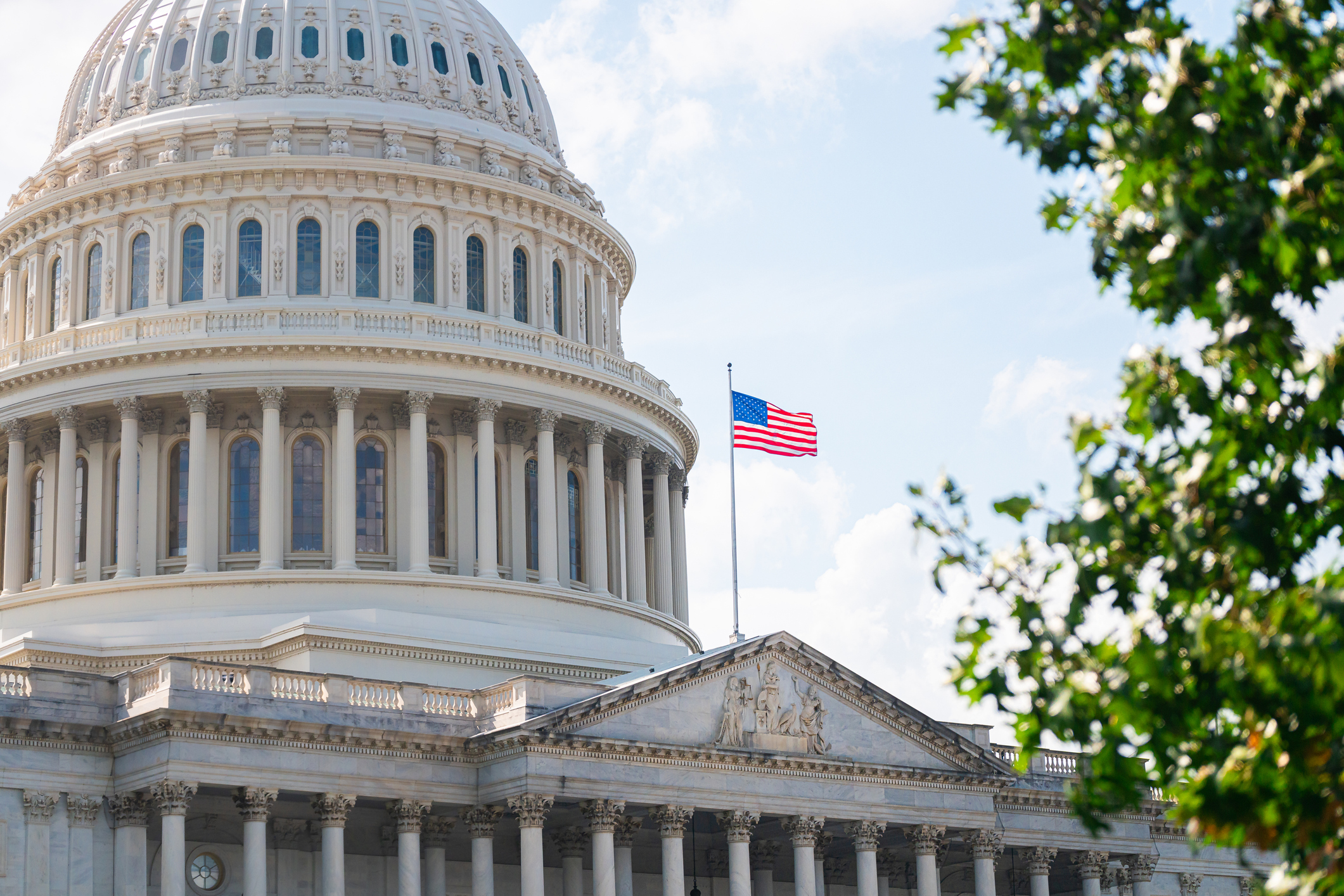
Image: U.S. Capitol building in Washington D.C. on a Sunny, Partly Cloudy Summer Day in August