

Source: KarenZ, Foresight News
Raoul Pal, formerly with Goldman Sachs, the writer behind “Global Macro Investor,” and the driving force of Real Vision, is well-known for his accurate prediction of the 2008 financial crisis. Recently, Pal shared his insights on building wealth consistently within the cryptocurrency world during a discussion with “When Shift Happens” and at a presentation during Sui Basecamp in Dubai. His remarks encompassed various crypto assets, ranging from fundamental coins like Bitcoin and Ethereum, speculative investments like meme coins, emerging technologies such as AI and NFTs, the Sui ecosystem, specific Bitcoin and crypto investment strategies, broader economic trends, and market forecasts.
Key Takeaways from Raoul Pal’s Interview with When Shift Happens:
1. Achieving Crypto Wealth Without Relying on Chance
What’s the secret to succeeding in crypto without just getting lucky? According to Pal, the answer is simple: invest in Bitcoin and consistently use a Dollar-Cost Averaging (DCA) approach.
Many newcomers make the mistake of chasing instant riches, a path filled with potential pitfalls.
The moment you start being envious of others’ astronomical gains, like 100x returns, you’re already in dangerous territory. Greed can easily override logic, leading to poor decisions that wipe out your investments.
The crypto environment is rife with dangers, including DeFi exploits and wallet hacks, underscoring the need for investors to stay alert and rational.
2. Thoughts on Meme Coins
When asked about meme coins, Pal clarified that while he doesn’t hold Fartcoin, he does have investments in SCF (Smoking Chicken Fish) and DODE. Despite SCF’s significant drop of 90%, it’s currently showing signs of recovery. He cautioned investors against allocating too much of their portfolios to highly speculative meme coins like Fartcoin, WIF, or BONK, noting their high probability (85%) of eventually becoming worthless. He even expressed surprise that LUNA didn’t transform into a meme coin, as he initially thought the community would embrace it.
3. Avoiding Market Hysteria and Focusing on Value
Pal advises investors feeling overwhelmed by market volatility to step away, disconnect from the screens, and refocus on their daily lives. He believes that constantly monitoring short-term candlestick charts (5-minute or 1-hour) provides little value for making informed investment choices.
While many dream of becoming successful short-term traders and achieving quick fortunes, the real path to sustainable wealth in this sector lies in consistent, long-term buying and holding.
4. Understanding the Risks of Crypto Yield
Generating crypto yield, such as through staking, isn’t without risk. Pal stresses that ordinary investors should be highly skeptical of opportunities promising seemingly high returns, like 20%, and thoroughly assess the potential downsides.
5. Perspective on Michael Saylor’s Bitcoin Accumulation Strategy
Pal explains that Strategy’s Bitcoin strategy involves creating leverage within the existing financial system. By issuing convertible bonds to purchase Bitcoin, Strategy is essentially selling options at a reduced price. These options are then bought by arbitrageurs (options traders), who hedge on exchanges to mitigate the risk associated with Bitcoin price swings and MicroStrategy stock options.
These arbitrageurs capitalize on price differences between MicroStrategy’s net asset value (NAV) and the price of Bitcoin, using tools like perpetual contracts and spot-futures spreads.
Currently, Strategy’s convertible bonds are primarily being purchased by TradFi hedge funds and other institutional investors. Sovereign wealth funds, like Norway’s, may be primarily interested in the Bitcoin aspect, while major hedge funds like Citadel, Millennium, and Point72 also engage in arbitrage. These institutions possess extensive risk management expertise and systemic support, and they manage their position sizes carefully, which reduces their likelihood of liquidation.
Conversely, traders who employ excessive leverage face significantly greater risks, and stories of trading failures caused by over-leveraging are commonplace in the market.
6. Raoul Pal’s Investment Portfolio
Regarding his portfolio allocation, Pal revealed that Sui makes up 70%, significantly more than Solana at this time. He noted that Sui’s adoption rate and developer activity are encouraging. He also holds some DEEP (DeepBook), a liquidity layer protocol specifically within the Sui ecosystem.
7. The Significance and Future of NFTs
Pal is optimistic about the potential of NFTs as a technology capable of permanently storing and trading unique digital assets. He highlighted the broader context: the crypto industry is currently valued at $3 trillion, and if it reaches $100 trillion in the next decade, it will generate an astounding $97 trillion in new wealth. Even a conservative estimate of $50 trillion implies a substantial $47 trillion increase.
This new wealth will be distributed across various sectors. Pal believes art, particularly digital art, is positioned to capture a significant share. He pointed to pioneers like XCOPY and Beeple, who have spurred the generative art movement. He emphasized his conversations with notable figures who are demonstrating strong interest in the space. Wealthy crypto investors have a natural desire to collect art, seeing it as a way to express their identity and connect with others. Pal believes this trend, spanning institutions to high-net-worth individuals to everyday people, is in its early stages. He personally holds numerous digital artworks with a long-term investment horizon.
8. The Strengths and Outlook for Ethereum
Pal stated that Ethereum’s network capabilities now exceed current system demands, and future adjustments may simplify some of its core mechanisms, potentially focusing on Layer 1. He drew parallels between Ethereum’s dominant position and Microsoft’s, noting how many banks, insurance companies, and large corporations globally rely on Microsoft’s technology rather than alternatives from Apple or Google.
He argued that once a corporation integrates a particular technology, it’s exceptionally difficult to displace it, due to risk aversion and switching costs. Drawing on the Lindy effect (the longer something exists, the more likely it is to persist), Pal suggests Ethereum has proven its resilience and ability to meet the demands of the financial market. He finds it unlikely that institutions like Goldman Sachs or JPMorgan would choose to build on Solana, as they are more comfortable with Ethereum. He anticipates that Ethereum will bring a new narrative to the market, potentially outperforming Bitcoin in the near future. Over the next five years, he believes its importance will only grow, barring unforeseen errors.
Pal contends that ideas about Bitcoin’s Lightning Network and its use for payments have limited impact on its price. Bitcoin’s core strength remains its role as a store of value, and he believes Ethereum will follow a similar trajectory.
9. Insights on Artificial Intelligence (AI)
Pal observed the rapid advancement of AI, noting its analytical capabilities now surpass the vast majority of human analysts. After careful consideration, he believes that the rise of AI raises profound questions regarding consciousness and the future role of humans. He urges individuals to actively engage with, understand, and skillfully use AI technology.
He continued, saying that while the implications for employment and wealth creation are unclear, he has identified what humans excel at, asking: What can humans do that AI cannot? The answer, he suggests, is “to be human.”
Pal described his creation of an AI Raoul, designed to read daily news written by AI. He also built a chatbot trained on his voice, using all of his X (formerly Twitter) and YouTube content, as well as information from 100 books. Real Vision users can now interact with this chatbot. He predicts that the convergence of these two technologies will fundamentally reshape podcasting and media, leading to highly personalized content experiences. Furthermore, he speculates that human memories and actions may ultimately “nourish” AI, achieving a form of “immortality.”
10. Gaining Market Traction and Identifying Promising Projects
Pal emphasized that attracting attention is key. He noted that focus on specific tokens is often fleeting, and many narratives have relatively short lifespans. He maintains that holding Bitcoin remains a prudent strategy, and that buying Solana at the bottom of the market cycle and purchasing SUI last year were also good decisions.
He advises investors to concentrate on the top 10 to 20 tokens, with particular attention to projects that demonstrate continuous growth in network adoption, as these tend to offer greater investment potential. Drawing on Metcalfe’s Law, he suggests assessing a project’s potential based on metrics like active users, total transaction value, and user value.
Pal highlighted Bitcoin’s large user base and its increasing adoption by sovereign nations, explaining its high value. He also acknowledged Ethereum’s extensive user base and broad range of applications. While the emergence of Layer 2 solutions introduces some complexity, he believes Ethereum still holds considerable value. He encourages investors to actively seek projects exhibiting growth in both user numbers and application value, citing examples like Solana during its market low, where the developer community continued to expand and user numbers remained stable. The launch of Bonk further boosted market confidence in Solana. He also mentioned Sui as another promising project. (Note: The host recalled that in a previous conversation with Toly, Toly identified Mad Lads as a turning point for Solana.)
Highlights from Raoul Pal’s Presentation at Sui Basecamp in Dubai
1. Core Macroeconomic Factors: Liquidity and the erosion of currency value. He pointed out that crypto and the broader economy tend to move in four-year cycles, driven by the dynamics of debt refinancing. Since the global debt crisis of 2008, the global economy has been sustained by taking on new debt to service old debt.
2. The Impact of Aging Populations on Economic Growth: Aging populations are linked to slower economic growth, requiring greater debt to sustain GDP growth. He emphasized that this trend is widespread and clearly illustrated by the correlation between debt and GDP.
3. The Primacy of Liquidity: Pal identified the net liquidity of the Federal Reserve as a crucial indicator. From 2009 to 2014, liquidity was primarily injected through balance sheet expansion, followed by tools like adjustments to bank reserve requirements. Total liquidity (including M2) is currently crucial, displaying a strong correlation with Bitcoin (90%) and Nasdaq (97%).
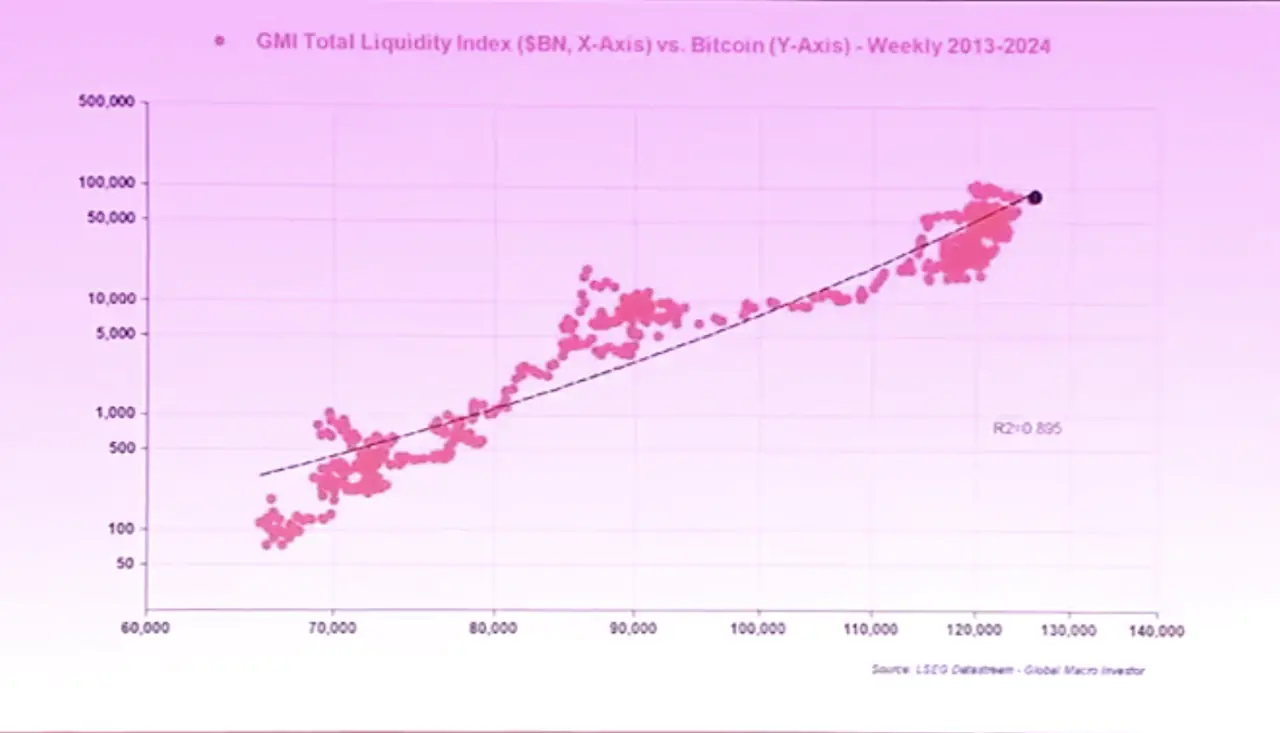
4. Understanding Currency Depreciation: Pal described currency depreciation as a global tax, involving an implicit inflation tax of 8% annually, coupled with an explicit inflation rate of 3%, requiring an annual return of 11% just to preserve wealth. He explained that this dynamic attracts younger generations to the crypto space, as traditional assets like real estate and stocks fail to provide sufficient returns, pushing them to seek higher-risk, higher-reward investments.
5. Wealth Inequality and Crypto Opportunities: Pal noted the divide between the wealthy, who possess scarce assets, and the less affluent, who rely on income from labor (which is losing purchasing power each year). He believes the crypto system disrupts this pattern, providing young individuals with opportunities for upward mobility through high-risk assets.
6. Crypto Asset Performance Metrics: Pal stated that since 2012, crypto assets have demonstrated annualized returns of 130% (even including three major corrections), with Ethereum at 113% and Solana at 142%. Bitcoin has appreciated cumulatively by a factor of 2.75 million, which is incredibly rare in investing, and he believes that crypto assets are evolving into a “super black hole” for attracting capital.
7. The Vast Potential of the Sui Ecosystem: DEEP (DeepBook liquidity layer protocol) has been performing exceptionally well recently. The SOL/SUI ratio suggests Sui’s relative strength.
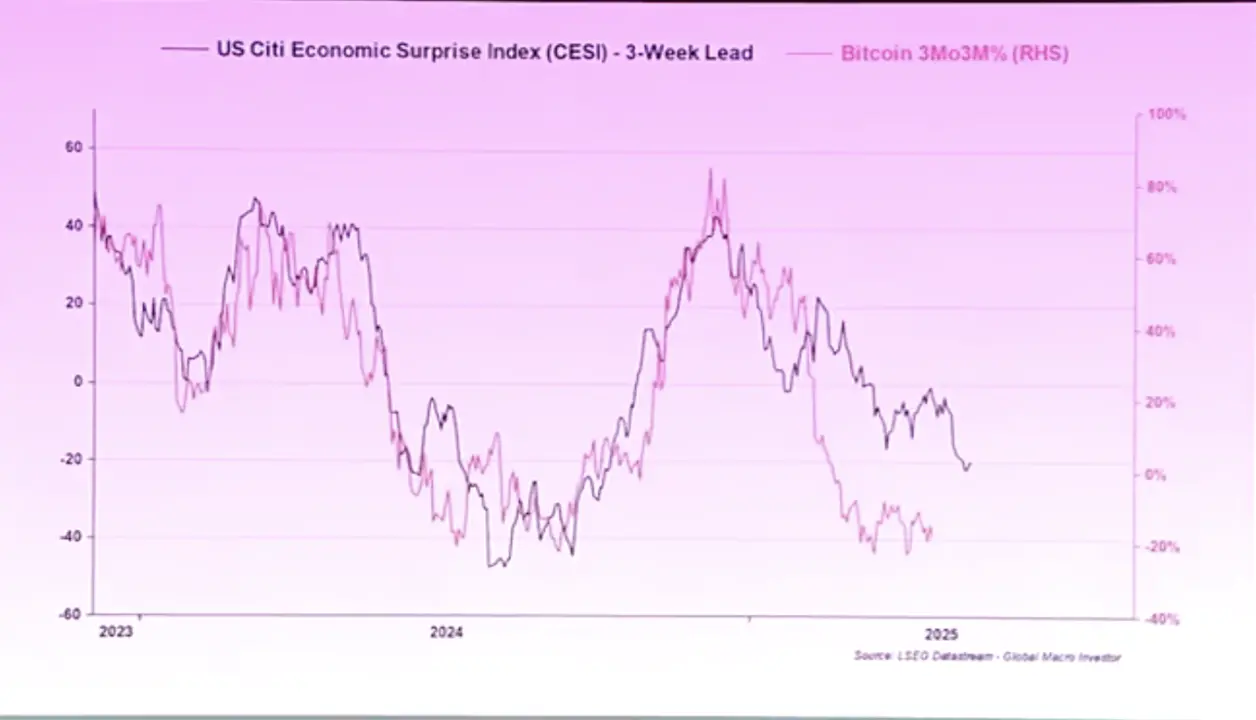
8. Identifying Current Market Misconceptions: Pal cautioned against using outdated liquidity data to interpret current market trends. He warned that the tightening of financial conditions in Q4 2024 (rising dollar rates, increasing oil prices) will likely have a three-month lag effect. He cited the economic surprise index as an indication that current economic weakness may only be temporary. Reflecting on the Trump tariff cycle in 2017, he pointed out that the dollar initially rose before falling, and that liquidity ultimately drove asset prices significantly higher.
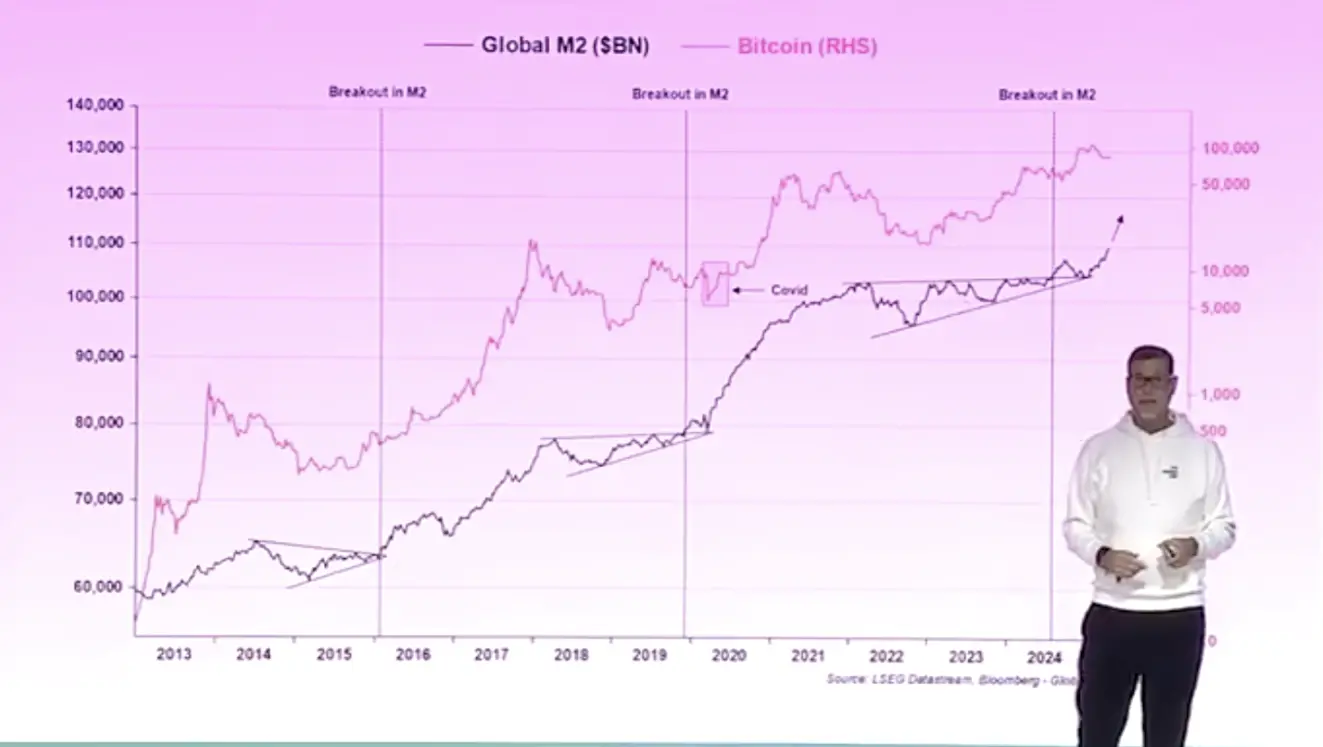
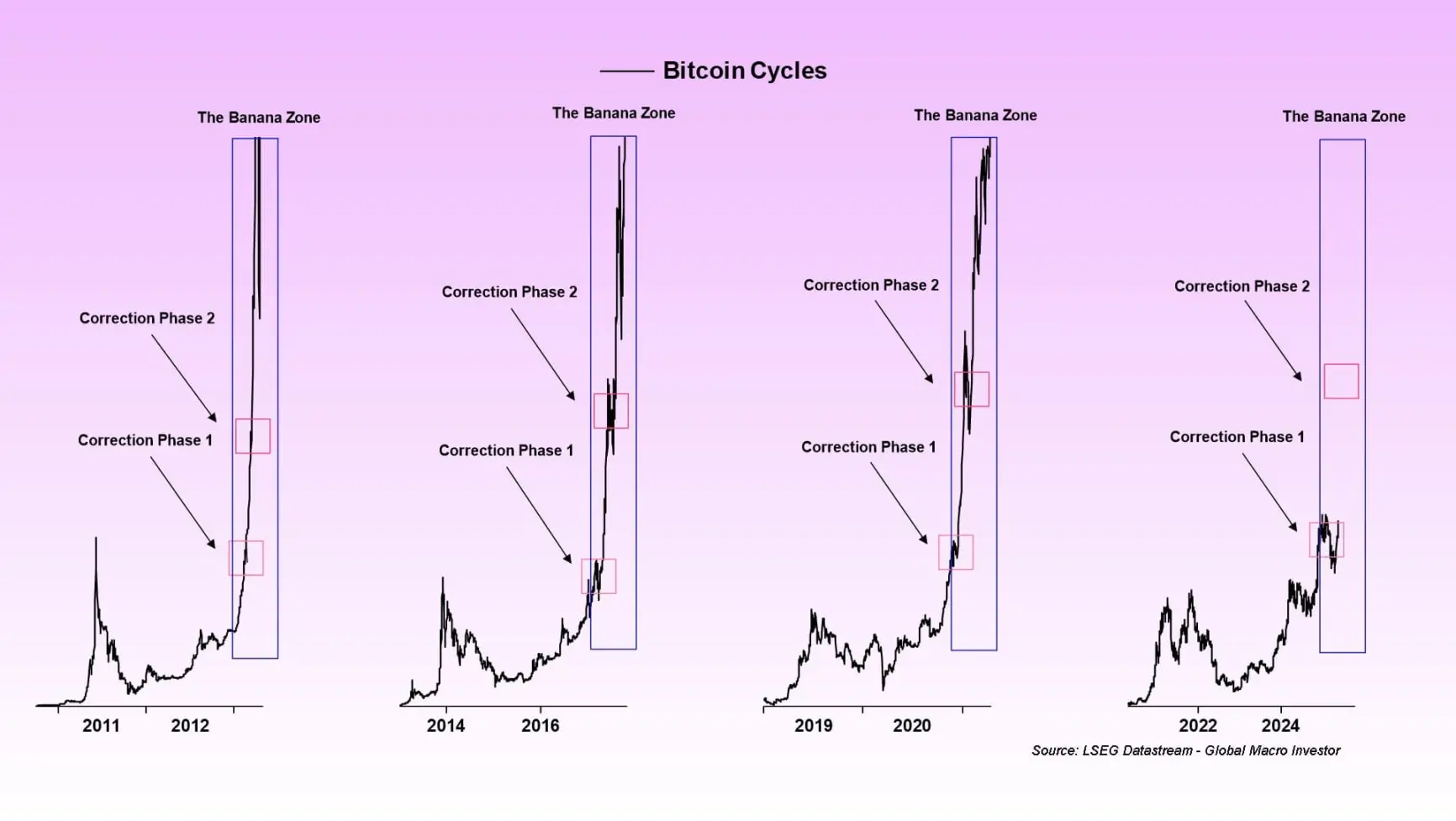
9. The Interplay Between Global M2 and Asset Prices: Pal suggested that when global M2 reaches a new peak, asset prices should rise accordingly. He described Bitcoin’s price movements as following a pattern of breakout, retest, and acceleration in the “banana zone.” Compared to the 2017 cycle, Bitcoin’s increase that year was 23 times; and while the current market is somewhat different, significant gains are still expected. He thinks the market is currently in the correction phase after breaking through the first part of the “banana zone,” and is about to enter the second part, which usually welcomes altcoin rallies.
10. Business Cycles and Bitcoin Trends: He highlighted the ISM manufacturing index as an important leading indicator. When this index surpasses 50, it signals a return to economic growth, boosting corporate earnings, and incentivizing companies to reinvest their profits, leading to more rapid increases in Bitcoin’s price. If the ISM index rises to 57, Bitcoin’s price could potentially reach $450,000. As the business cycle improves and household cash reserves increase, risk appetite rises, making the investment logic for altcoins similar to that of junk bonds and small-cap stocks.
Note: Raoul Pal also serves on the board of directors of the Sui Foundation.
ChainCatcher advises readers to approach blockchain technology with a critical perspective, prioritize risk awareness, and exercise caution regarding virtual token offerings and speculation. The content on this site is for informational purposes only and should not be interpreted as investment advice. Please report any potentially sensitive content by clicking “Report”, and the team will promptly investigate.