
As the credits rolled on Shinobi: Art of Vengeance, a memory surfaced of a high school friend, perpetually overwhelmed by extracurriculars. She’d arrive at school exhausted, confessing to 12-hour weekdays fueled by a desire to not disappoint anyone. My advice at the time, born from concern for her well-being, was simple: “You can’t please everyone.”
To get straight to the point: I found Shinobi: Art of Vengeance enjoyable. It’s a solid title, brimming with nods to Sega’s legacy, and likely to appeal to fans of the genre. However, like my overextended friend, Art of Vengeance seems spread thin, attempting to cover too much ground within a relatively contained experience.
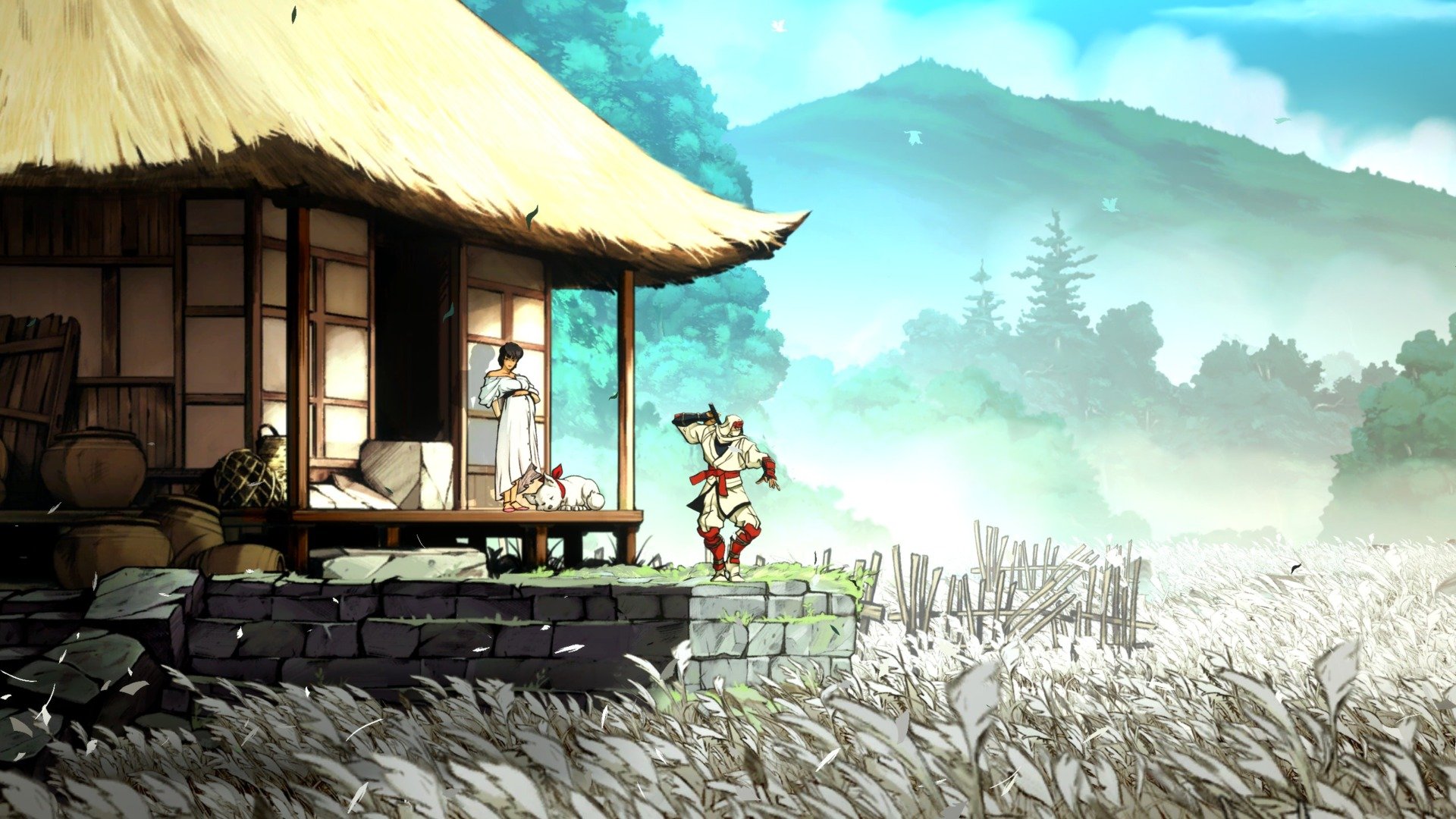
Art of Vengeance casts players as Joe Musashi, the iconic protagonist from Sega’s original Shinobi games. His tranquil existence with his pregnant wife is shattered when a paramilitary group attacks his clan’s village, with ambitions – incredibly – of global domination. Driven by righteous fury, Joe embarks on a mission to hunt down his attackers and deliver justice. While the world’s fate hangs in the balance, the quest is undeniably personal. But the path of revenge is a double-edged sword, and Joe must confront the very cycle of life and death before finding peace.
Addressing the obvious comparison, Shinobi: Art of Vengeance differs significantly from the recent Ninja Gaiden: Ragebound. While both are revivals of classic, late-80s ninja side-scrollers, and share a similar opening with an attack on the hero’s village, their approaches diverge. Ragebound feels like a retro-inspired game tailored for modern audiences, while Art of Vengeance presents itself as a modern action experience translated into a 2D format that classic gaming fans can appreciate. Comparing them is akin to comparing apples and potatoes.
Unleashing the Combos
Though Joe Musashi hasn’t headlined a game in decades, his moveset in Art of Vengeance proves he’s still a force to be reckoned with. Right from the start, the ninja master can seamlessly throw kunai, string together light and heavy attacks, and utilize special moves to overcome challenging situations. As a novice ninja, I quickly appreciated the fluid, combo-driven combat. I could effortlessly link attacks while dodging enemies after only a short time with the controls. I loved the ability to instantly dash through weakened enemies to perform executions. Even as the game ramps up the difficulty, it provides a consistently satisfying power fantasy.
Art of Vengeance does take time to unlock its complete combat system. While Joe’s initial abilities are useful, many attacks are locked behind shop upgrades and hidden items (more on that later). This design, however, allowed me to gradually learn and master each move, a process that the game rewards. One could simply button-mash to victory, but to effectively defeat opponents, understanding which attacks break armor, deal the most damage, or offer the best angles of attack becomes essential. While it might sound overwhelming, unlocking Joe’s full potential actually simplifies executing stylish and intuitive combos. Art of Vengeance achieves a balance of accessibility and depth in its controls.
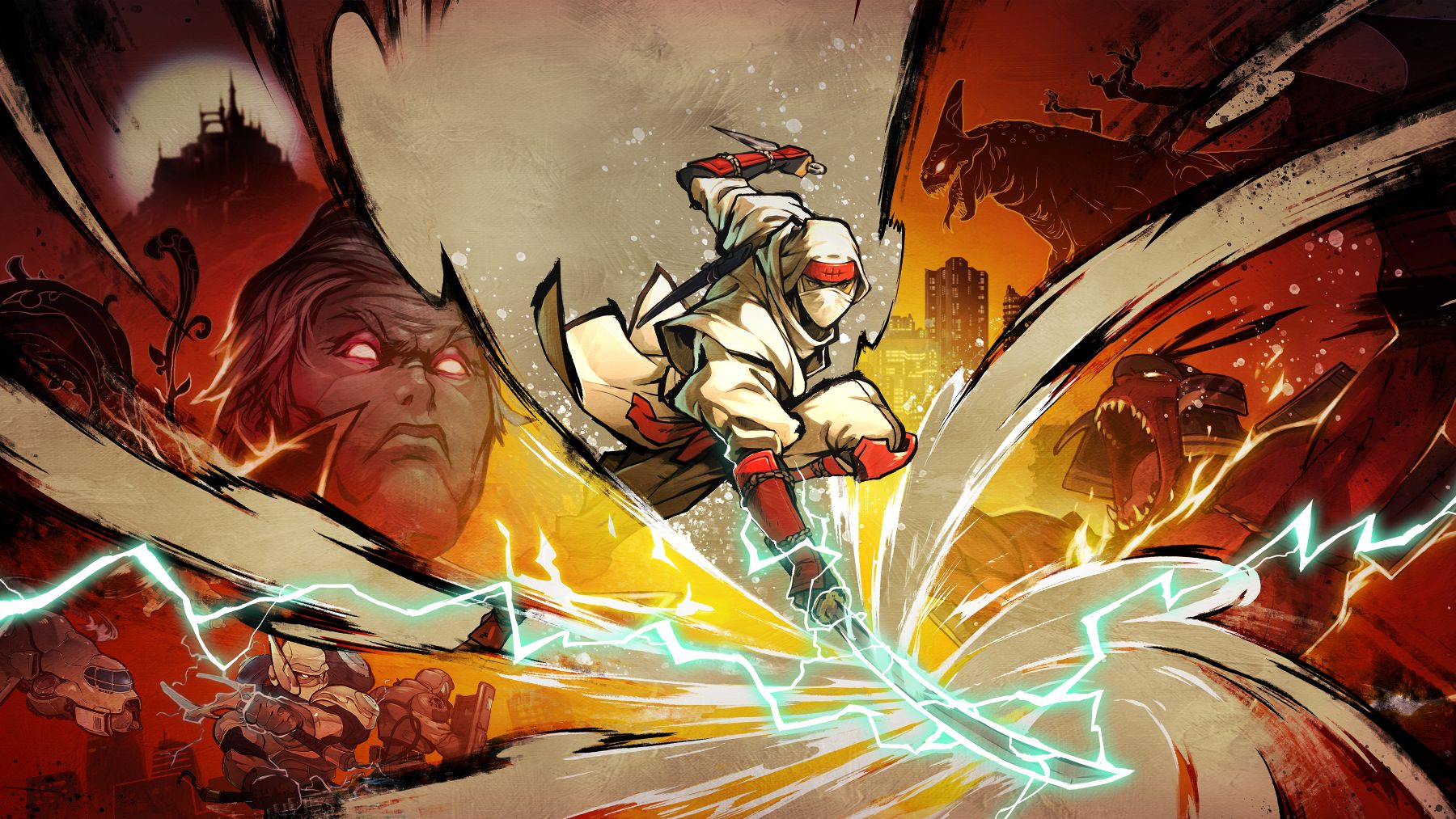
Regardless of your skills, it’s easy to feel powerful when playing a game as aesthetically pleasing as Art of Vengeance. Lizardcube has produced visually impressive titles before, but Art of Vengeance represents their finest work to date. The hand-drawn character animations are superb, and the level design is rich in detail, compelling me to pause and admire the scenery. Reviewing the screenshots for this piece, I was astonished at how often the in-game action mirrored those idealized promotional images that frequently overpromise. To claim that Shinobi has never looked better is an understatement; it’s a truly stunning visual experience.
Action Meets Exploration
While the core mechanics and presentation of Art of Vengeance are excellent, the level design is where it falters. For those wondering if this game leans into the Metroidvania style, the answer is…sort of. Although it features distinct stages, each level is extensive, featuring branching paths leading to collectibles and stat upgrades. In a nod to Metroidvania tropes, many secrets require late-game traversal abilities to access. Although Art of Vengeance presents itself as an action game first, the exploratory elements felt like an attempt to provide optional challenges and extend playtime.
Unfortunately, this hybrid approach often proved detrimental. The level exploration itself wasn’t particularly engaging, frequently boiling down to identifying obvious side routes and hitting dead ends. Additionally, many of these expansive levels don’t effectively showcase the game’s exceptional combat. It was surprisingly easy to bypass many enemies, rather than engaging in combat. When combat was mandatory, it often consisted of waves of enemies that didn’t require much tactical variation. Thankfully, the boss battles were consistently enjoyable, rewarding mastery of Joe’s abilities, which always proved to be high points at the end of each stage.
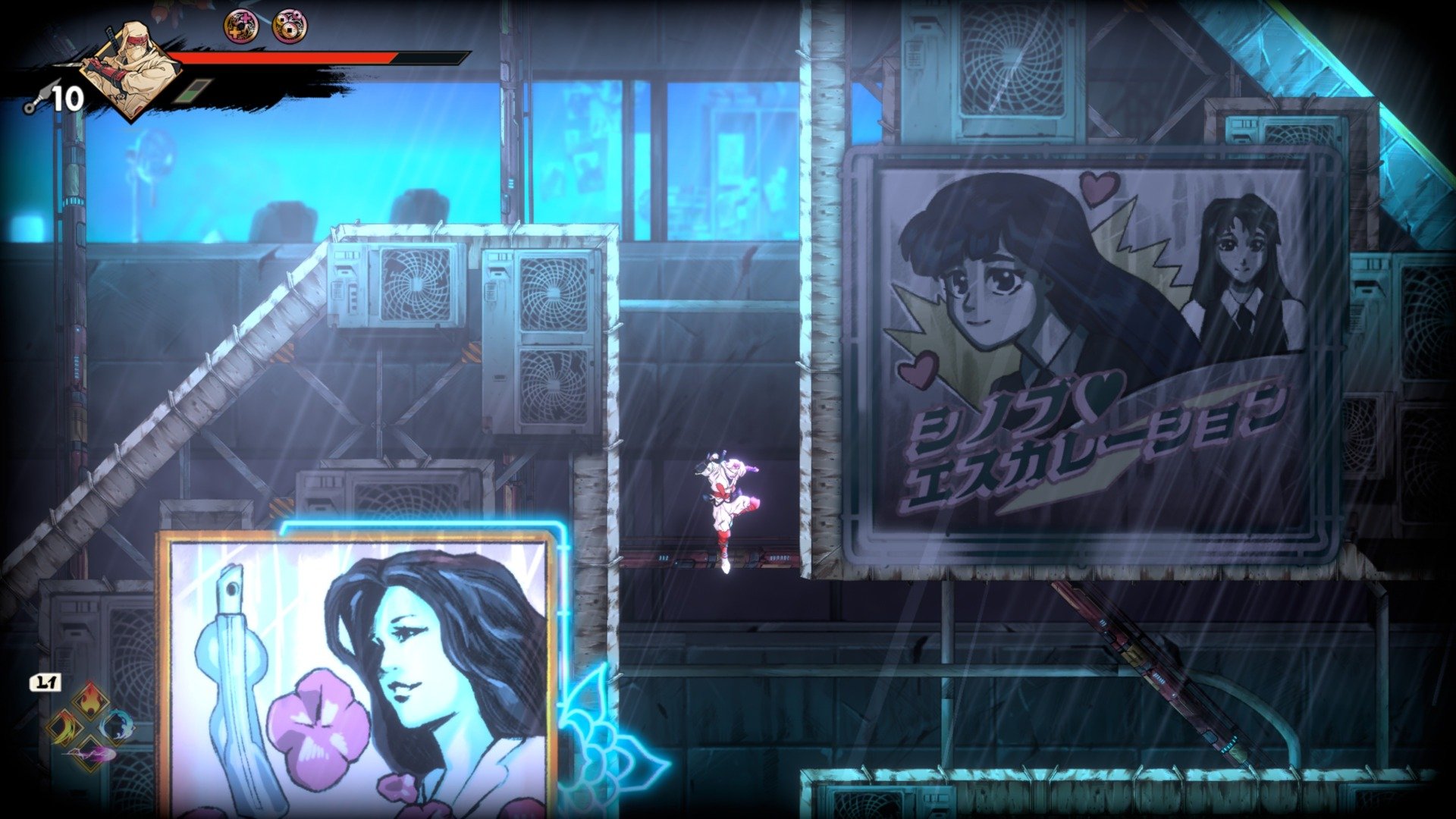
Some levels benefit from this open structure. Neo City, with its nonlinear layout, offers genuine replay value. The soundtrack from Tee Lopes, channeling Yuzo Koshiro’s classic Streets of Rage sound (with Koshiro himself contributing!), made the area delightful to explore. Conversely, stages like the Submarine Base, where Joe tediously pushes canisters to unlock doors, felt acceptable the first time but became a chore during subsequent Arcade Mode runs.
Beyond exploration, the game also integrates a range of platforming challenges, generally as obstacles to overcome to reach hidden secrets. Some succeed, like the frantic autoscrolling sequences where Joe must evade monsters and gunfire while leaping between platforms. However, during the precision platforming segments, I sometimes struggled against the game’s core mechanics, such as precisely timing the jump button to run up walls without accidentally double-jumping. While the platforming is functional, it is not on the same level of quality as Celeste.
The story also lacks tonal consistency. The running gag of Joe only communicating through grunts initially elicited amusement, but the game relentlessly perpetuates the bit, even during dramatic scenes. While blending drama and absurdity is possible – as demonstrated by the edgy Pac-Man reboot Shadow Labyrinth – Art of Vengeance struggles to achieve this balance, often failing to let serious moments simply be serious. Collectively, these issues result in a game that feels somewhat disjointed, despite its individual strengths.
Trying to Please Everyone
There was nothing about Art of Vengeance that caused me to outright dislike it. My primary desire was that it would have focused more on refining its combat system. While I appreciated unlocking Joe’s complete arsenal, I found myself relying on a few effective attacks to dispatch the majority of enemies by the endgame. I even replayed levels to achieve S-ranks, hoping to be compelled to adjust my tactics. Ironically, the opposite occurred. The scoring system, which heavily favors avoiding damage, discouraged experimentation. Jumping and kicking with the optimal build proved safer and equally effective.
Despite my reservations, Art of Vengeance successfully reignited my interest in Shinobi. As video game historian Jeremy Parish observes in his retrospective, a key strength of the series is its capacity to reimagine its core concepts to “suit the current moment.” While Art of Vengeance draws inspiration from numerous classic titles, its design philosophy remains distinctly modern. Therefore, if the goal was to recapture the spirit of Shinobi, Art of Vengeance is undeniably a success.
Shinobi: Art of Vengeance
-
back-of-the-box quote
“At long last, the dog from Shadow Dancer returns!”
-
Type of game
2D action platformer with Metroidvania elements.
-
Liked
Stunning visuals, satisfying combat system, and epic boss fights.
-
Disliked
Exploration feels shallow and distracts from the core combat, inconsistent tone in the narrative, and uneven platforming sections.
-
Developer
Sega, Lizardcube
-
Platforms
PS5, PS4, Xbox Series X/S, Xbox One, Switch, PC (Played).
-
Release Date
August 26, 2025 (Early Access), August 29, 2025 (General Release).
-
Played
32 hours. Completed story mode to 100%. Achieved S-Ranks on all Arcade Mode stages. Unlocked all achievements.
While my time with this game was pleasant, it also left me feeling somewhat indifferent. I appreciate the breadth of experiences it offers, just as I understood my friend’s desire to connect with everyone. However, this experience also reminded me of that friend for the first time in nearly 2 decades. Art of Vengeance is much like those pleasant memories from the past: enjoyable, but lacking a lasting impact. It’s a game worthy of your time, but one that did not deeply resonate with me.
Shinobi: Art of Vengeance possesses all the core elements for a fantastic experience. The fluid combat is a blast at its best, and the visuals are truly stunning. Sadly, the unfulfilling exploration and inconsistent platforming prevent the game from realizing its full potential. If you’re looking for a dose of Sega nostalgia or simply need to relax with a less demanding game, this is a pleasant choice. However, similar to interacting with someone who spreads themself too thin trying to please everyone, the experience can feel a little shallow. This is a solid return for Shinobi, but I only wish that I could love it even more.