
In August of 2025, the native token of the OKX exchange, OKB, experienced an unprecedented surge in value. The token skyrocketed, achieving a record-breaking peak after increasing by over 400% in a single week, surpassing the $250 mark. This impressive climb was not simply a coincidental market fluctuation, but rather the result of a well-defined strategy by the OKX team to revolutionize the token’s underlying model and future direction.
Supply Dynamics: Revamping the Tokenomics
Launched in 2018, the OKB token was envisioned by the OKX team as a multifaceted utility token. It aimed to offer a range of benefits to its holders, including preferential trading rates and various reward mechanisms. These perks encompassed discounted trading fees, incentives for staking, and avenues for participating in the Jumpstart platform. The original tokenomics framework featured a capped maximum supply of 300 million tokens, coupled with a buyback-and-burn system financed through the exchange’s trading revenue on a quarterly basis. This model shared similarities with Binance’s BNB token in its early phases, resulting in a gradually deflationary effect.
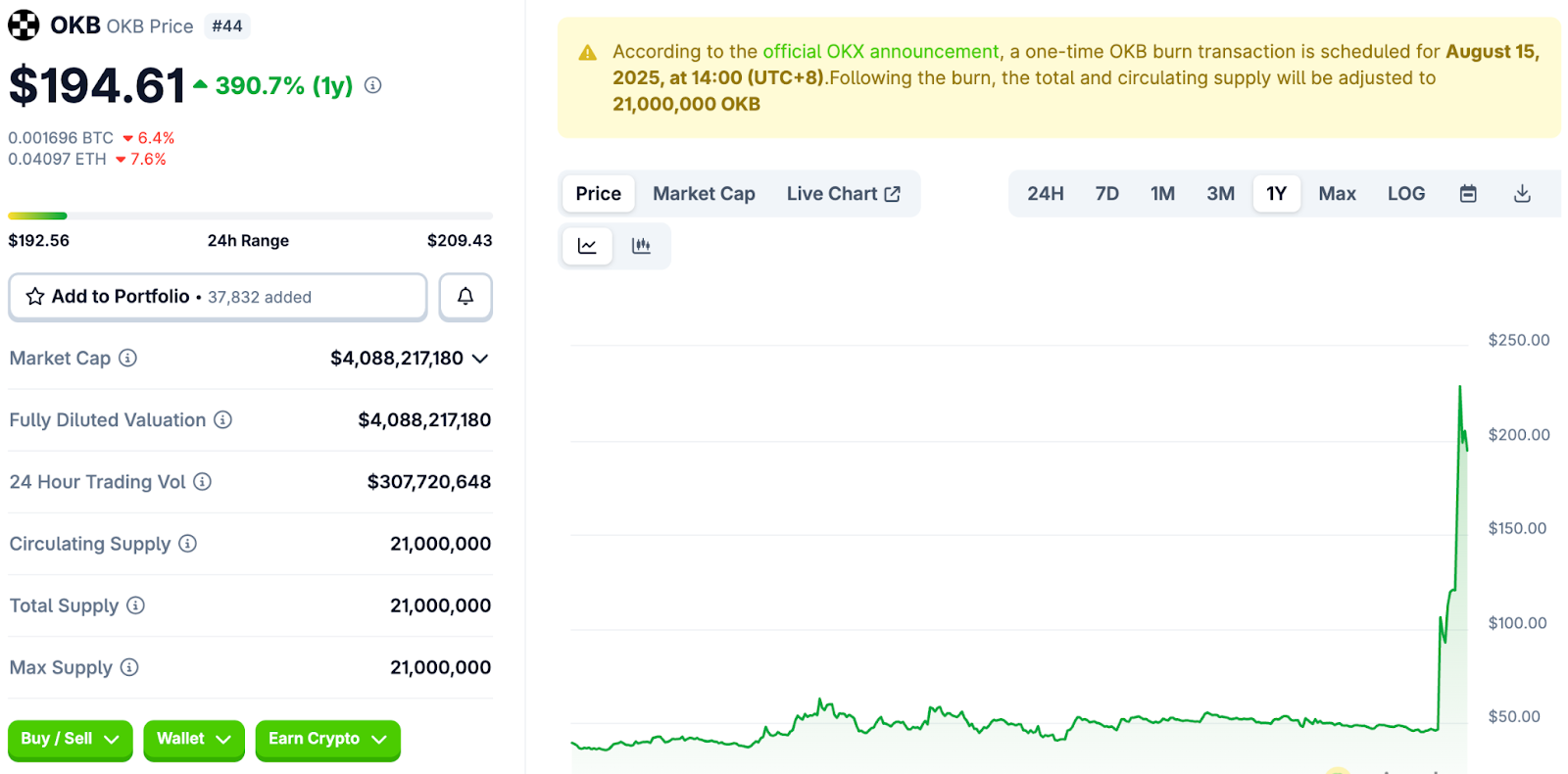
Source: Coingecko
Prior to the surge in August 2025, OKB’s price had been fluctuating between $40 and $50, with trading volumes ranging from $50 million to $80 million. These figures were significantly lower compared to other exchange tokens such as BNB (averaging $800 million to $1.2 billion daily) and MX (around $15 million to $20 million per day).
For more: OKX Referral Code 2025: “12554491” ($10,000 USDT SignUp Bonus)

Following the announcement in August 2025, the landscape changed dramatically. In an unprecedented event, OKB’s market capitalization soared to $6 billion in a single week, surpassing benchmarks previously considered achievements for leading blockchains. The token’s value increased by 400%, exceeding the average performance of exchange tokens.
We are making a strategic upgrade to @XLayerOfficial, aiming to build a leading public chain focused on DeFi, payments, and RWAs.
Key updates:
1️⃣ Underlying tech – PP upgrade
2️⃣ Ecosystem development strategy
3️⃣ Deep integration with OKX Wallet, OKX Exchange & OKX Pay
4️⃣… pic.twitter.com/OU4EpKtuJz— OKX (@okx) August 13, 2025
On August 15, 2025, a substantial burn of 65.26 million tokens created a supply shock, effectively capping the total OKB supply at 21 million. This marked the largest single token burn in cryptocurrency history and significantly altered OKB’s valuation. Previously, OKB’s value was tied to the company’s revenue-driven buybacks and burns. Now, its value is determined by its fixed and limited supply, mirroring the scarcity premium associated with Bitcoin.
Concurrently, the market responded positively, with the average cryptocurrency token’s price increasing by 400% and a total daily trading volume of $80 million. Such liquidity growth is rare, comparable only to the launch of Binance’s BNB Chain in 2021.
For more: OKB Token ATH, Pumps 400% After 65 Million Token Burn Event
Demand Catalyst: The X Layer Innovation
In 2023, OKX entered the Ethereum Layer-2 arena, competing with Polygon through the introduction of an L2 chain based on zkEVM. This chain employs zero-knowledge proofs to achieve cost-effective and scalable transactions, with OKB serving as its native token. Initially named OKX’s L2, the chain was rebranded as X Layer in April 2024 and quickly attracted numerous infrastructure partners, including prominent names such as The Graph, QuickSwap, Curve, and Wormhole. These protocols formed the foundational layer for the ecosystem’s early expansion.
As of August 18, 2025, X Layer had processed 13.06 million transactions, with a total transaction volume of 1.33 million OKB (approximately $150 million) and 378,000 OKB (around $43 million) bridged to the network. OKX’s Star highlighted that X Layer’s recent upgrades, featuring 5,000 TPS, near-zero fees, and a fixed OKB supply of 21 million, have reset expectations. Star described the chain’s model as “one chain, one token,” designed to support DeFi, global payments, and real-world assets (RWA) within the ecosystem.
However, the X Layer still trails its competitors, with a Total Value Locked (TVL) of only $6.5 million as of August 2025. In comparison, other blockchains like BNB Chain, Arbitrum, and Polygon held $7.3 billion, $12.1 billion, and $5.6 billion, respectively. X Layer’s daily transaction volume remains in the hundreds of thousands, significantly lower than the 5-12 million daily transactions processed by rival networks.
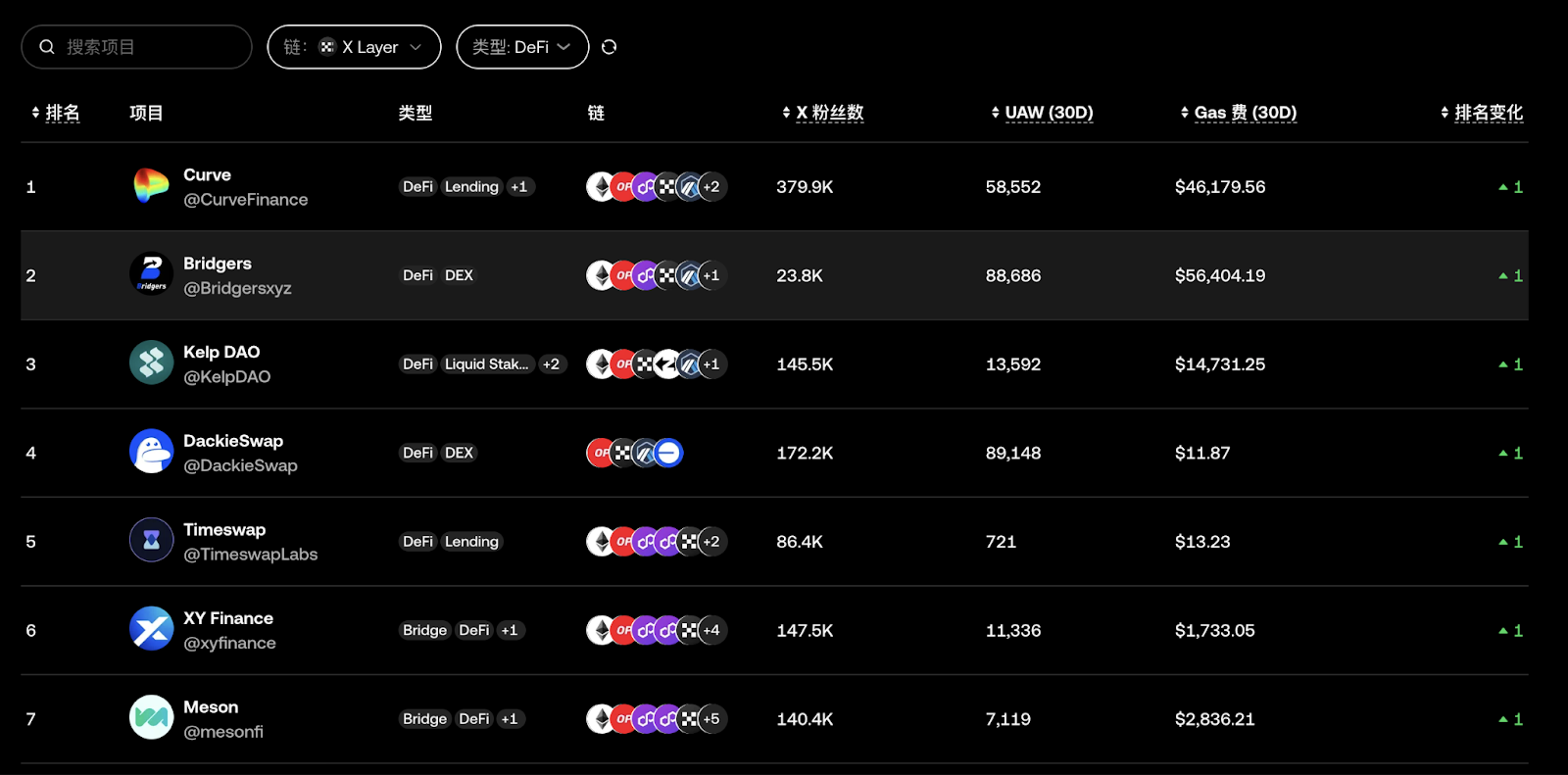
Protocols on X Layer
These disparities stem from three distinct challenges:
- The number of major protocols live and operational for a given region is limited to seven, resulting in a less comprehensive DeFi stack compared to other fully functional chains that host numerous protocols.
- There exists a gap in conversion for payments; for instance, OKX’s exchange user base of 60 million only represents a fraction of active on-chain participants.
- A disparity exists in stablecoin issuance compared to other chains, leading to underdeveloped Real World Assets (RWAs). For example, TRON boasts over $80 billion in USDT supply, while Solana minted $5.5 billion in USDC in just one month.
In conclusion, while X Layer possesses the exchange user base and the infrastructure necessary for scaling, it must address the gaps in DeFi breadth, payments, and stablecoin liquidity to compete effectively with other L2 ecosystems.
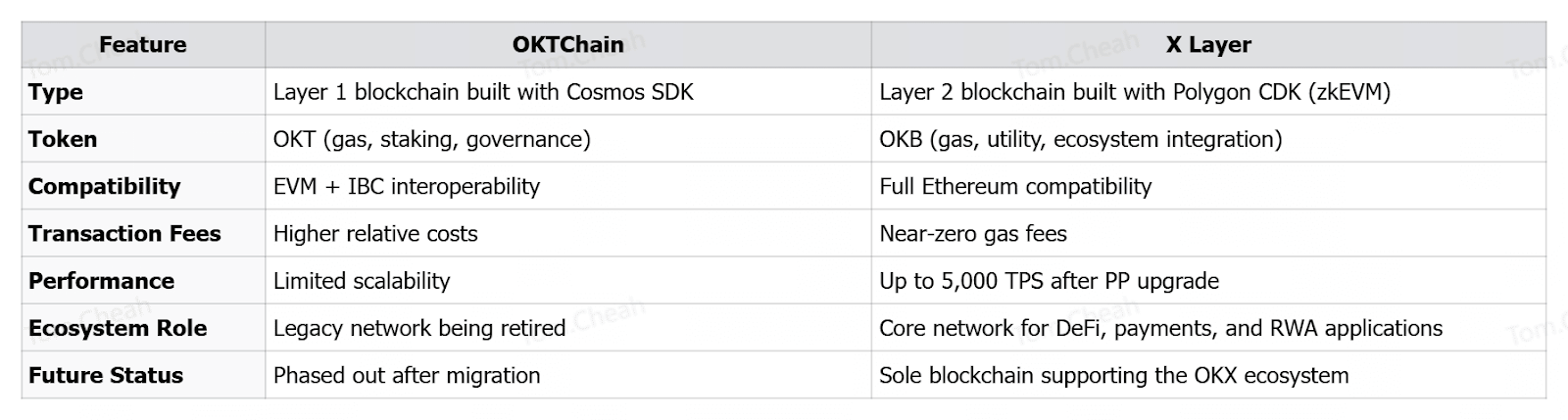
Table: Comparison OKTChain and X Layer
Strategic Analysis: OKB versus BNB
OKB’s strategic pivot closely mirrors the developmental trajectory of BNB. Both tokens originated as exchange utility tokens and later transitioned into gas tokens for public blockchains. A key difference lies in their tokenomics: BNB continues with quarterly burns tied to Binance revenue, gradually reducing supply without permanently fixing it; OKB, on the other hand, immediately adopted a hard cap of 21 million tokens, similar to Bitcoin.
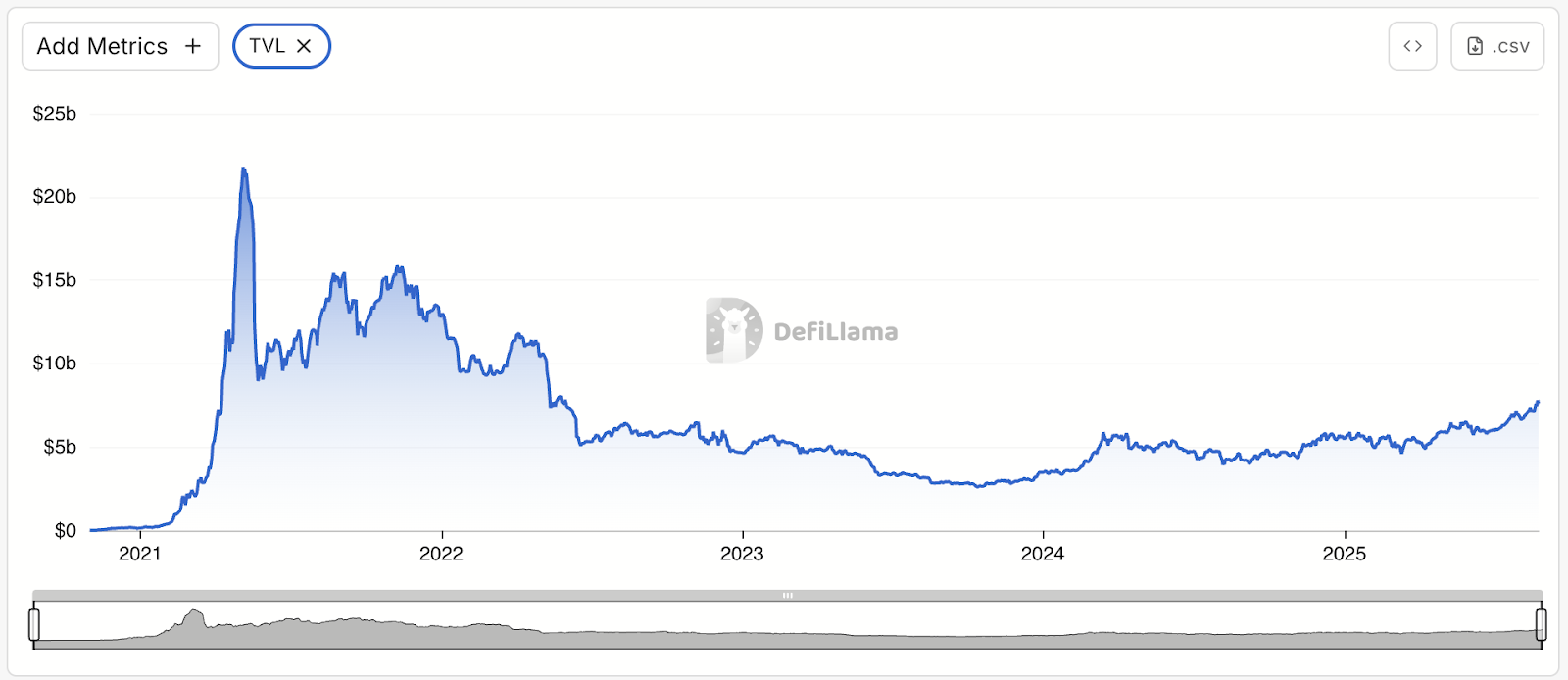
Source: DefiLlama
The numbers underscore the disparity. BNB Chain commands approximately $7.3 billion in TVL, processes around 12 million transactions daily, and boasts a market capitalization of $130 billion. In comparison, OKB’s ecosystem is still nascent—with only $13.9 million in TVL and a few hundred thousand daily transactions. While X Layer is in its early stages, OKX’s 50 million global users provide a foundation for potential growth, mirroring the success story of BNB Chain.
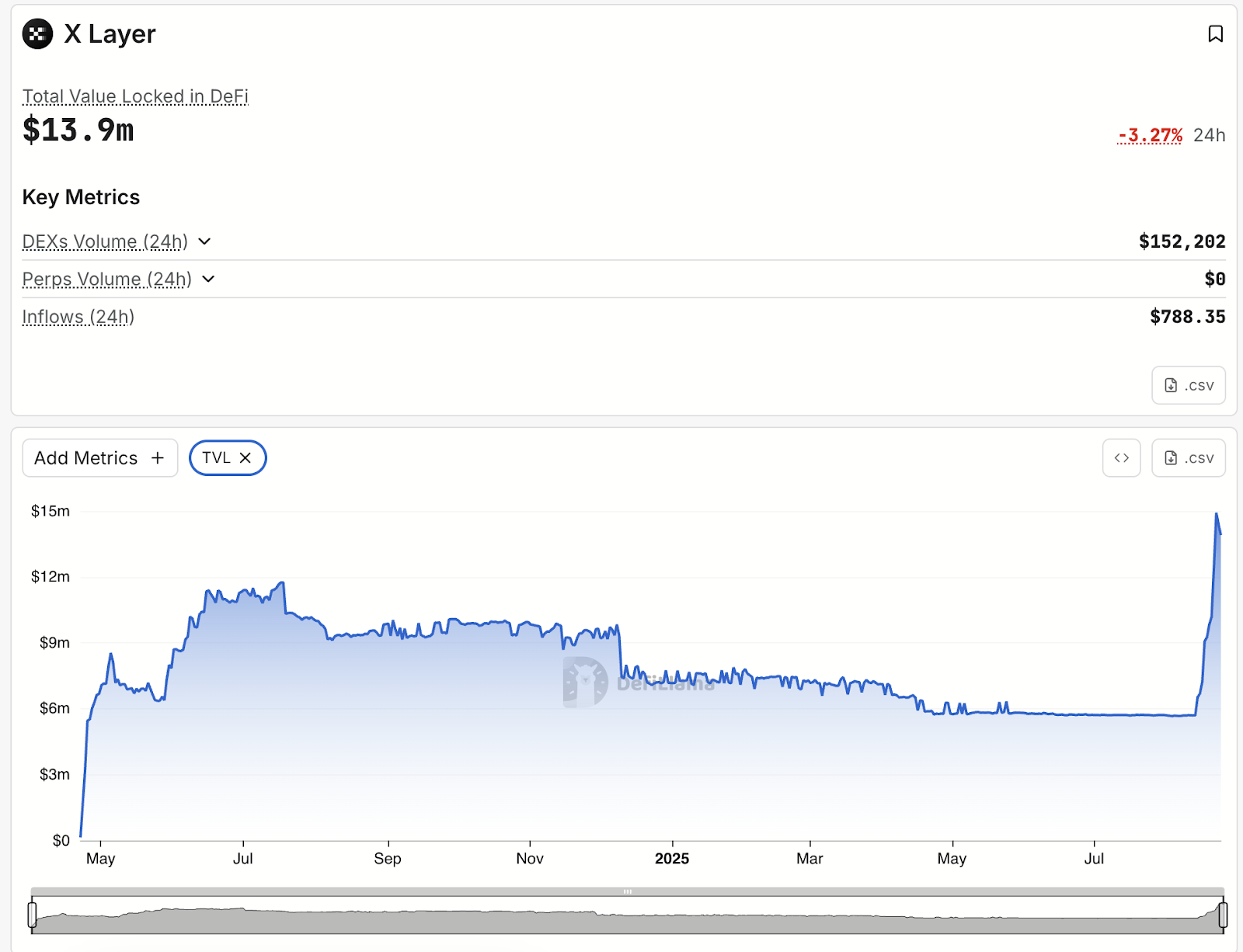
Source: DefiLlama
Potential Risks
Despite the positive market reaction, three critical risks persist. The first is short-term volatility. OKB’s RSI indicators exceeded 85, signaling overbought conditions. On-chain data from Nansen revealed deposits of over 20 million OKB (approximately $3.5 billion) to centralized exchanges within three days after the burn, indicating potential profit-taking activity.
In the Layer-2 landscape, X Layer remains a minor player. Its TVL of $13.9 million is a fraction of that held by competitors like Arbitrum ($12 billion), Optimism ($6.7 billion), and Polygon ($5.6 billion). Sustaining long-term demand for OKB will be challenging unless it can rapidly attract more dApps and liquidity.
On the regulatory front, OKX faces considerable pressure, having already incurred a $500 million fine in the U.S. and facing restrictions in several major markets. This poses a significant obstacle to attracting developers and users to build momentum on X Layer.
Concluding Remarks
The recent surge in OKB demonstrates the impact of a significant supply reduction, such as a massive token burn, coinciding with a new demand driver from a Layer-2 upgrade. These combined factors have fundamentally reshaped the market’s perception of OKB. Once viewed solely as a utility token for the OKX exchange, it is now considered a scarce asset with tangible on-chain applications.
For OKB to maintain its newfound status, the critical factor will be X Layer’s growth. It must scale to billions in TVL, attract millions of active on-chain users, and successfully navigate the complex regulatory landscape worldwide. Without these developments, the recent rally may be unsustainable. However, with them, OKB has the potential to become a true “second BNB” and maintain its value over the long term.