
Based in Bengaluru, K.S., a 33-year-old working in financial services, enthusiastically embraced
digital currencies
early in 2017. He invested at the start of that year and experienced a near 20-fold return on his funds. Throughout the year, he shared his enthusiasm for cryptocurrencies with friends and online contacts, as a growing number of tech-savvy young Indians jumped on the cryptocurrency trend.
However, K.S.’s interest waned following a sharp market decline in early 2018. This was followed by a ban implemented by India’s central bank, the Reserve Bank of India (RBI), in April 2018, which brought the industry to a near standstill. Cryptocurrency exchanges either ceased operations or explored opportunities outside of India. This period of instability and declining interest may have concluded. Cryptocurrency markets are experiencing renewed growth amidst the global pandemic. Crucially, businesses are increasingly viewing cryptocurrencies as a valuable alternative for storing wealth, rather than merely a bubble-prone asset, a long-held belief of cryptocurrency supporters.
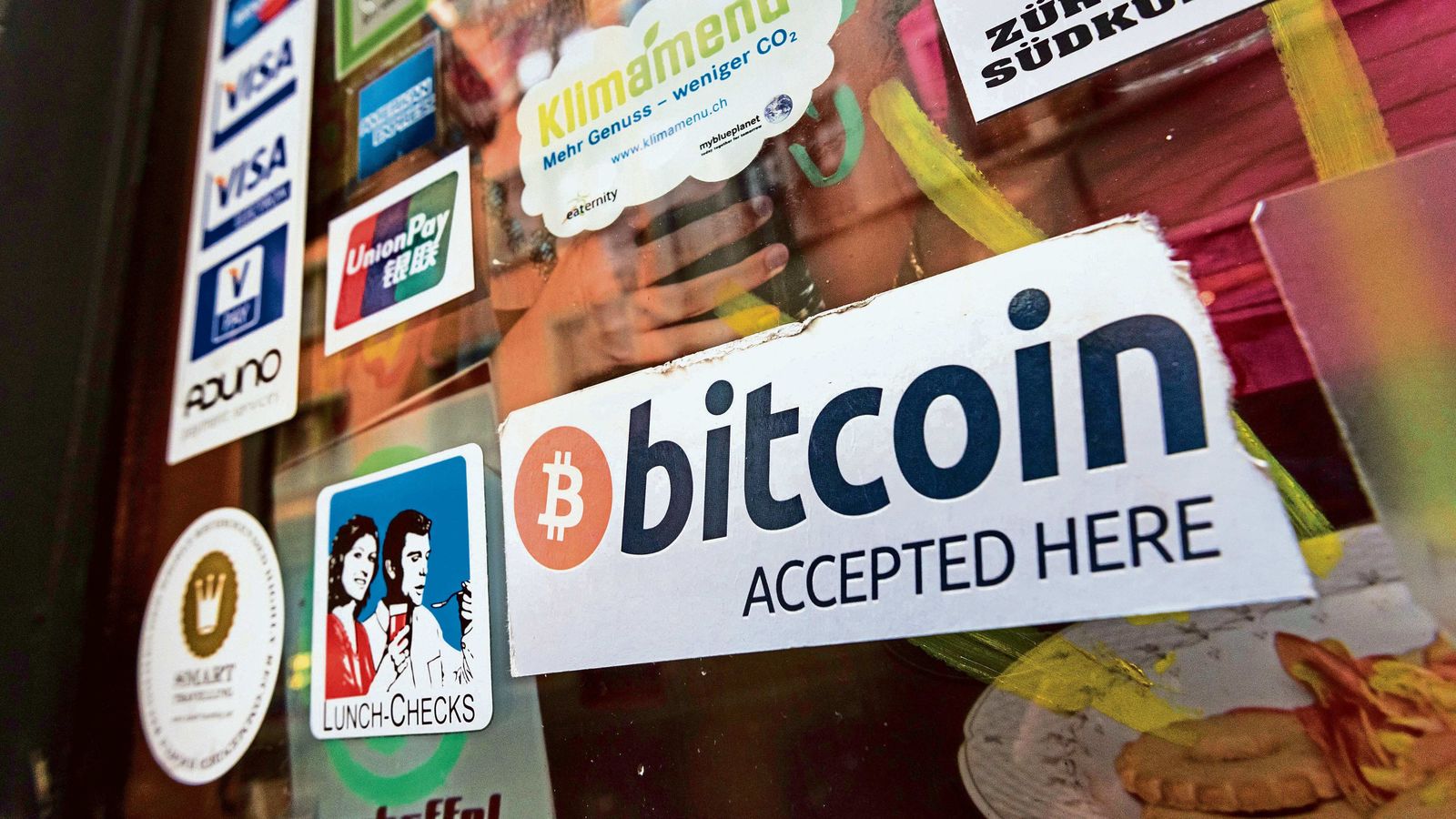
Recently, PayPal announced its plans to integrate cryptocurrency into its digital wallets. This announcement came after several organizations decided to hold cryptocurrency assets in their financial reserves. A global shift in attitude is likely to have a significant effect on India. Ultimately, the primary and potentially transformative change lies not merely in the ability to possess cryptocurrency but in its acceptance by businesses as a payment method for everyday purchases, such as groceries or movie tickets. This possibility now seems far more attainable than it did in 2017.
In India, the Supreme Court overturned the RBI’s 2018 ban in March 2020. Furthermore, India’s traditionally cautious banking sector is beginning to tentatively explore the cryptocurrency sector. Cashaa, a cryptocurrency platform based in London, announced a collaboration with an Indian multi-state cooperative credit society, intending to pursue similar partnerships as part of its operations in India. These societies are governed by the registrar of cooperative societies, not the RBI. The regulatory landscape remains undefined and continues to be the main source of uncertainty. Despite this, several key players in the ecosystem are committed to pushing forward with cryptocurrency initiatives.
Consumer interest is also rising. Although K.S., who lost money in the 2017 surge, didn’t return to the sector, Yash Zanwar, a 21-year-old engineering student at BITS Pilani, stated that he will consistently allocate 5% of his savings to cryptocurrency. “If the price increases, I’ll benefit, and if it declines, I won’t lose much. I have a general interest in technology, which makes cryptocurrency attractive,” he explained.
“Approximately 15% of today’s investors are individuals who invested before the Supreme Court ruling (in March) and witnessed the 2017 rally,” stated Gaurav Dahake, CEO of the cryptocurrency exchange Bitbns. “For the majority of new investors, the appeal lies in low fixed deposit rates, a weakening currency, and uninspiring stock market performance.”
Cryptocurrency exchanges have recognized the emerging opportunity and are expanding their operations. Coinswitch Kuber, one such exchange, reported to
Mint
that it has acquired 400,000 users within just four months of operating in India. Many of these new users are less likely to be driven by the frenzied expectations of 2017 and may prove to be more committed to cryptocurrency long-term. What’s driving this new investment? The belief that global attitudes will progressively evolve towards greater acceptance of cryptocurrency-like instruments.
“Since the Supreme Court judgement, our monthly active users have tripled,” said Vikram Rangala, chief marketing officer at Zebpay, a cryptocurrency exchange. “These aren’t just short-term traders. We’re seeing significant interest in long-term value investing in crypto, including from women, who have been previously underrepresented. Investors prioritize security and transparency, which is why we welcome regulatory developments.”
Indications of another boom in the sector have spurred venture capital investments into India, with international exchanges acquiring Indian ones and private equity (PE) investments flowing in. Binance, a global player, acquired Wazir X, India’s largest crypto exchange, in late 2019. Unocoin, previously India’s second-largest exchange in 2017, recently announced raising $5 million in funding from Draper Associates. Coinswitch, an international cryptocurrency exchange, launched its Indian venture, Coinswitch Kuber, in June 2020.
“We’re observing daily trading volumes of ₹10-11 crore. The average user invests roughly ₹11,000 in cryptocurrencies on our exchange, and about 75-80% are under 45,” said Ashish Singhal, co-founder of Coinswitch. “Within a short time, India has become about 15% of our total global volume. Nevertheless, India does not yet play a significant part in the global crypto market at an industry level,” he noted.
The cryptocurrency sector has also been working to shift investors away from short-term trading. “In contrast to other assets, a majority of crypto participants in India are traders rather than investors. We’re addressing this with our daily SIP-like feature,” explained Bitbns’ Dahake. “The original need for crypto stemmed from freelancers who received small international payments,” stated Nitin Agarwal, founder and director of B21 Ltd, a cryptocurrency investment platform. “International money transfer costs were excessive, particularly for small amounts, and the process was slow. In 2017, many new cryptocurrencies launched, leading to speculation. Currently, we’re consciously fostering long-term holders.”
Globally, a long-term perspective is driving regulatory changes and a resurgence in cryptocurrency. The integrity of the underlying technology, especially for international money transfers and enforcing contractual payments, is facilitating greater adoption. Beyond PayPal’s recent initiative, Square, a payments fintech led by Twitter CEO Jack Dorsey, has announced plans to allocate 1% of its assets ($50 million) to bitcoin this year. Moreover, on October 9, the Bank of International Settlements (BIS) and seven other central banks, including the US Federal Reserve and the European Central Bank, issued a report outlining the principles by which central banks could introduce their own cryptocurrencies.
The report stated that such central bank digital currencies (CBDCs) should enhance, rather than replace, cash. They should not negatively impact financial stability and should be either low-cost or free. A proper role should exist for the private sector, and their features should encourage innovation and efficiency. This report appeared as individual central banks, like China, have been progressing with testing their own CBDCs.
“You can categorize the world into three groups,” stated Ajeet Khurana, former CEO of Zebpay. “Countries that oppose crypto, countries that allow it but don’t actively promote it, and countries that actively encourage it. In recent years, numerous countries have shifted from the first to the second group, and some to the third, such as South Korea and Japan. China is a fascinating example. Even when it previously banned crypto, it still allowed its companies to manufacture crypto mining hardware for export,” he said.
In India, while the RBI ban on crypto payments was in effect for two years, the government worked on stronger criminal legislation related to the subject. “No person shall mine, generate, hold, sell, deal in, issue, transfer, dispose of, or use cryptocurrency within India,” section 3(1) of the draft Banning of Cryptocurrency and Regulation of Official Digital Currency Bill 2019 states. The law further prescribes imprisonment of up to 10 years, but not less than one year, for such actions.
Despite not yet being enacted, this law, based on the Subhash Garg committee’s recommendations, looms over India’s cryptocurrency sector like a Damocles sword. News reports about the government’s introduction of the bill periodically appear in the media, causing unease in the industry. Meanwhile, the bill’s creator has left the government and revised his position away from a blanket ban. In an online session with cryptocurrency industry professionals and lawyers on July 17, 2020 (a webinar hosted by Khaitan & Co.), Subhash Garg differentiated between permitting cryptocurrency as a currency and allowing it to exist as an asset.
Garg stated that while the former should be prohibited, the latter should be permitted with appropriate safeguards to prevent uninformed investors from entering a speculative bubble. “I don’t believe that a complete ban on cryptocurrency in India would withstand judicial review. Such a ban would immediately be challenged by the industry. Instead, regulation would bring certainty to the industry and tax revenue to the government,” said Rashmi Deshpande, partner, indirect tax at Khaitan and Co.
Calls for adequate safeguards and concerns about speculative bubbles have been a consistent aspect of the cryptocurrency market. During the 2017 boom, numerous “Made in India” coins were introduced in the country, only to be revealed as Ponzi schemes. The anonymity inherent in the technology poses a significant concern for India’s law enforcement agencies.
95% of initial coin offerings (ICOs) are scams, according to industry insider and Bitbns CEO Dahake. Recently, on September 3, the Twitter account of Prime Minister Narendra Modi was compromised. A tweet from the account requested cryptocurrency donations to the PM National Relief Fund. This incident highlighted the connection to crime that India’s cryptocurrency industry is striving to minimize.
Large cryptocurrency exchanges emphasize that they implement thorough Know Your Customer (KYC) procedures to combat money laundering and other criminal activities. “We conduct KYC for our users similarly to stock exchange brokers, requesting Aadhaar, PAN, and video verification,” stated Singhal of Coinswitch. However, the absence of a regulator makes the industry vulnerable to risks. Exchanges can sometimes fail or disappear completely. Cryptocurrency can easily be transferred out of the country, as its very nature disregards national borders. This leaves investors vulnerable to theft and completely reliant on the trustworthiness of the exchange.
India’s payments revolution, from the creation of NEFT to UPI, has been a relative success in an otherwise bureaucratic business environment. However, the system is experiencing strains as banks increasingly resist processing countless small transactions without charge.
Several banks began limiting the number of free UPI transactions in 2020, even imposing fees on some transactions. This prompted an angry response from the IT department in August 2020, which ordered banks to refund these charges or face penalties. Cryptocurrency could offer RBI a more sustainable, low-cost domestic payments system. Industry executives highlight crypto’s potential to support micropayments, such as small payments per page view for websites, which current systems and payment gateways cannot facilitate. The issue of high forex transfer costs for small Indian freelancers (when their customers are located outside the country) persists.
A regulated cryptocurrency market could significantly reduce costs, according to Zebpay’s Khurana. However, everything hinges on the type of regulation India adopts. “These cost savings could be negated if existing levies and market structures in the current forex market in India are mandated (through new rules),” Khurana added.
While far removed from the fervor of 2017, cryptocurrency remains relevant. Industry experts and investors are exploring new applications to further develop it. Decentralized Finance (DeFi) is one such concept. It involves self-executing contracts, like loan agreements, potentially rendering banks and courts unnecessary for enforcing traditional contracts. DeFi could also allow cryptocurrency investors to earn interest on their holdings.
Meanwhile, global attitudes are clearly becoming more favorable. The IMF released an informational video on cryptocurrency in August 2020, adopting a neutral stance. Ultimately, the regulatory approach India adopts will be decisive. If the country chooses a path of complete criminalization, it risks missing opportunities in the anticipated second wave of fintech innovation.