

Key Points:
-
BlackRock’s iShares ETH ETF is approaching a milestone, possessing 3.6 million ETH, only about 200,000 ETH less than what Coinbase holds.
-
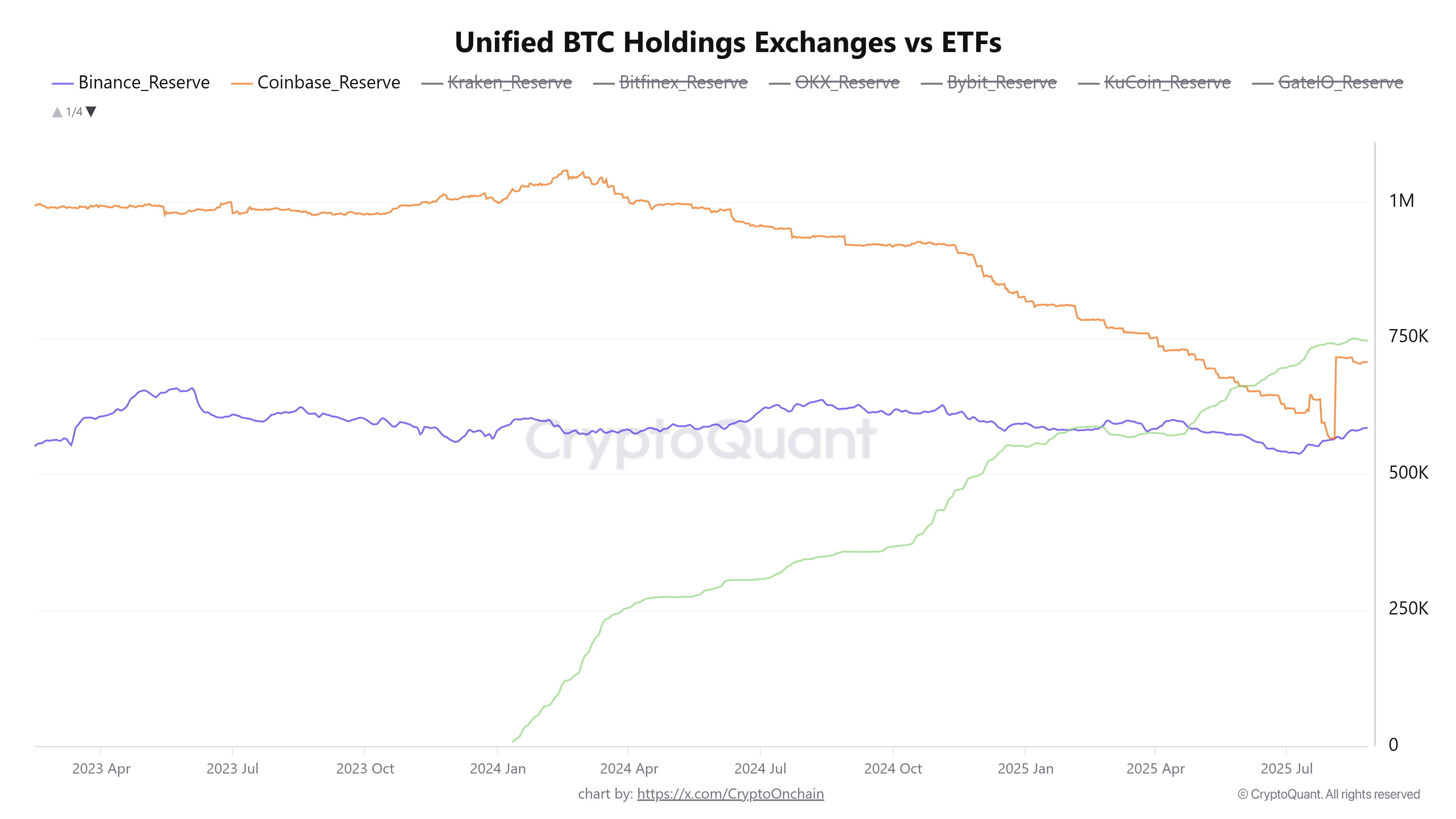
IBIT, another BlackRock fund, already manages a substantial 745,000 BTC, exceeding the Bitcoin reserves of both Coinbase and Binance.
-
A decline in Bitcoin and Ether flowing into exchanges indicates a potential decrease in available supply and reduced pressure to sell.
BlackRock’s iShares Ethereum ETF is quickly closing in on Coinbase’s position as the second-largest holder of Ether (ETH) globally, with a difference of just 200,000 ETH separating them. iShares’ holdings have ballooned to 3.6 million ETH, a significant increase of 1.2 million ETH within approximately two months.
If this growth rate persists, iShares could overtake Coinbase before the year concludes. This shift would also narrow Binance’s lead to a slim 1.1 million ETH.
This situation illustrates a notable shift in cryptocurrency custody. Binance currently remains in the lead with 4.7 million ETH, a substantial gain from the 2.5 million ETH it held in 2019, though its growth has stabilized. Coinbase, formerly the top Ether custodian with over 8 million ETH in 2019, has seen its reserves diminish to 3.8 million ETH, a significant 52% decrease over the past six years.
BlackRock’s rapid accumulation of Ether highlights a fundamental restructuring within the cryptocurrency markets, with institutional investors increasingly opting for the security and regulatory compliance offered by ETFs rather than direct exchange custody. The increased ETF holdings are reducing the readily available supply of Ether, suggesting growing long-term confidence in the asset from major financial players.
This trend isn’t limited to Ether. Recent data analysis indicates that IBIT’s Bitcoin (BTC) holdings have reached approximately 745,357 BTC, exceeding the amounts held by Coinbase (706,150 BTC) and Binance (584,557 BTC).
These developments underscore BlackRock’s increasing prominence as a major institutional custodian for both Bitcoin and Ether, establishing its significant influence on the overall cryptocurrency market structure.
Related Article: Bitcoin Could Still Reach $160,000 by Year-End Based on Historical Q4 Performance
Decline in Bitcoin and Ether Exchange Inflows
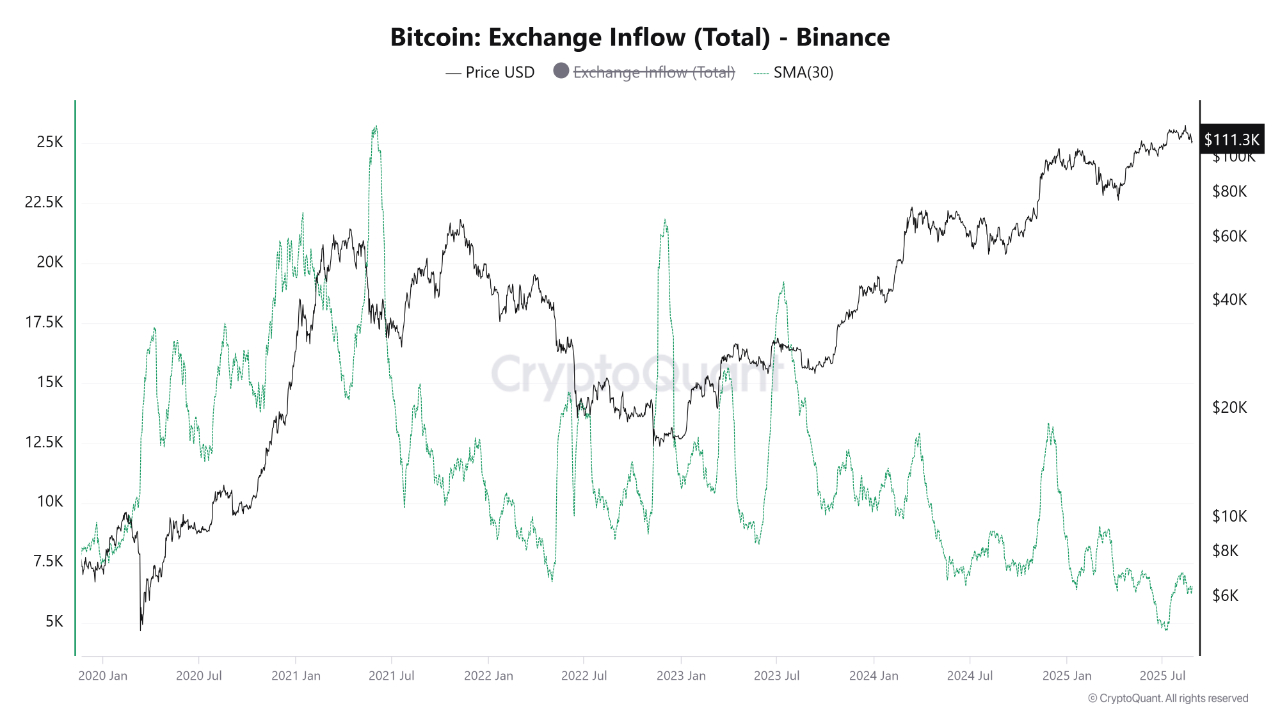
Analysis from CryptoQuant shows that the 30-day moving average of BTC inflows has fallen to its lowest point since May 2023, even as Bitcoin trades near $111,000. Both Coinbase and Binance are reporting historically low deposit volumes, suggesting a potential reduction in selling activity from both individual and institutional investors.
Ether inflows present a similar picture. The 30-day simple moving average (SMA) of mean inflows has decreased to levels last seen on April 10, reaching just 25 ETH. At that time, ETH was trading around $1,700, despite the current price being near $4,600. The absence of increased exchange inflows at higher prices implies that investors are holding onto their assets, demonstrating confidence in the current market conditions.
Concurrently, ETF flow data reveals the source of current demand. Ether ETFs have attracted over $1.5 billion in net inflows since last Thursday, including a remarkable $450 million influx in a single day.
While Bitcoin ETFs experienced substantial outflows of $1.17 billion last week, renewed buying activity has resulted in approximately $310 million in inflows over the past two days.
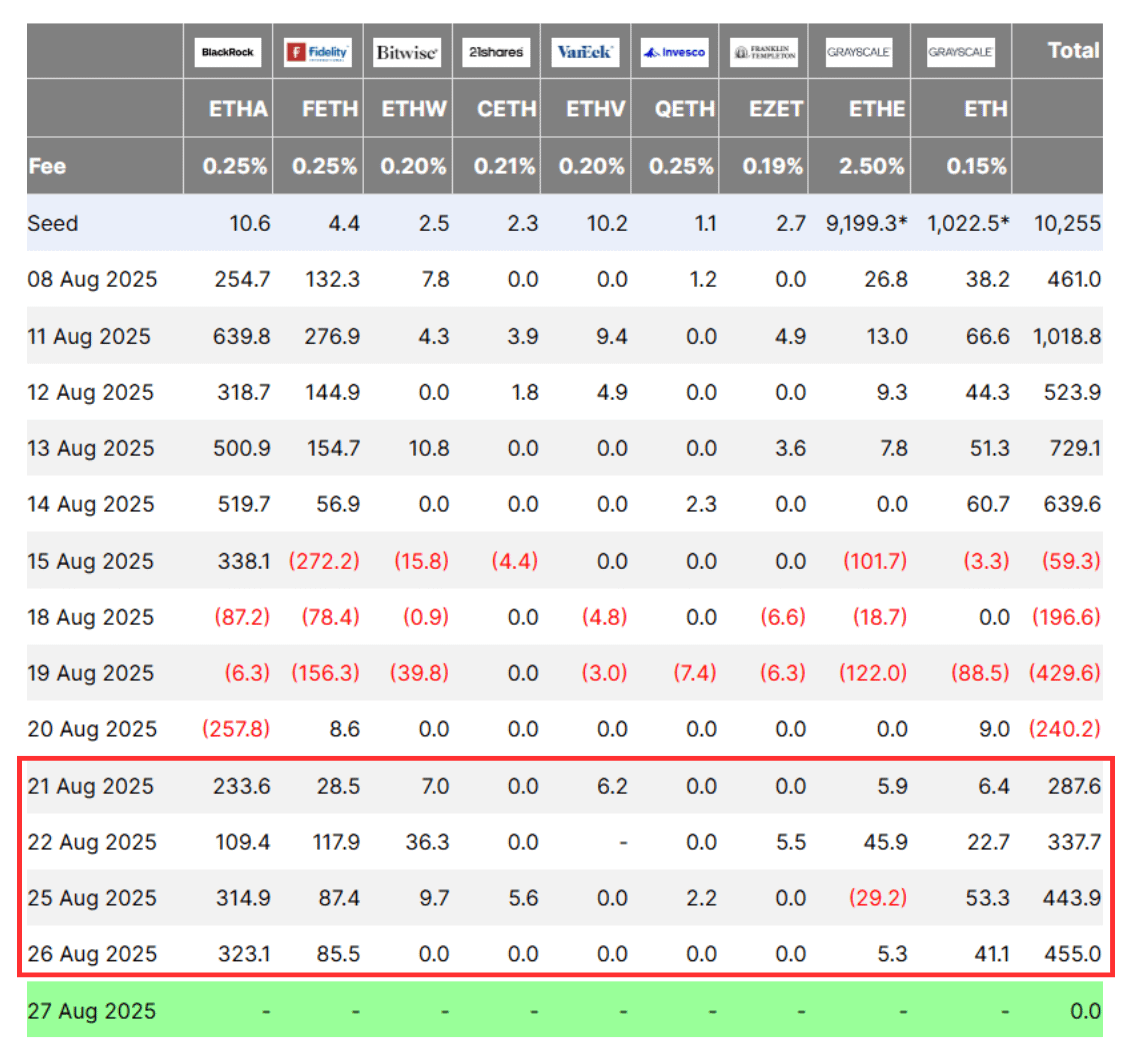
Taken together, these trends – declining exchange inflows and accelerating ETF accumulation – suggest a potential supply squeeze for both Bitcoin and Ether, possibly paving the way for continued upward price momentum as the year progresses.
This article is for informational purposes only and should not be considered financial advice. Cryptocurrency investments carry inherent risks. Conduct thorough research before making any investment decisions.