
Unbelievable Luck: Solo Miner Nets $373,000 Bitcoin Reward
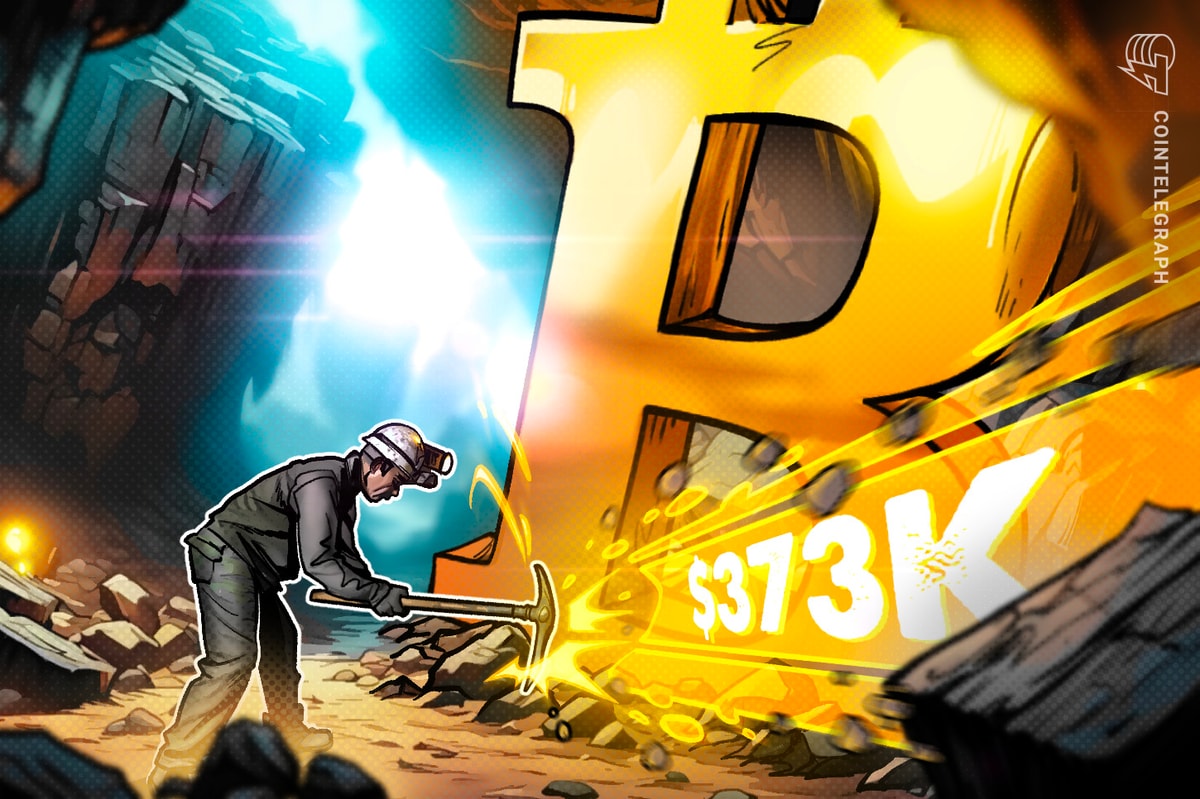
On July 26th, 2025, a remarkable event unfolded: a lone Bitcoin miner triumphed against overwhelming odds, successfully mining block 907,283 using the Solo CKPool service. This is a very rare occurance!
In a mining landscape dominated by large, industrial operations, this individual defied the odds to secure the complete
block reward
of 3.125 Bitcoin (
BTC), equivalent to approximately $372,700. The block contained a total of 4,038 transactions, plus an additional $3,400 in transaction fees.
Solo CKPool is a specialized
mining pool
designed for individual miners seeking independence while leveraging a shared infrastructure. Unlike conventional pools, it doesn’t distribute the block reward among participants.
This improbable achievement took place amidst record-high levels of
Bitcoin network
difficulty, hovering around 26 trillion, rendering solo mining wins increasingly unlikely.
Yet, through dedication and a fortunate stroke of luck, this miner outperformed millions of competitors. The successful addition of this block to the blockchain serves as a potent reminder: despite the increasing corporatization and competitiveness of the
mining market, individual miners still possess the potential for significant success, however slim the chances may be.
Solo CKPool: How Independent Bitcoin Mining Works
Solo CKPool caters to miners desiring a solo approach without managing all the technical complexities. Unlike traditional mining pools where rewards are divided based on computing power, Solo CKPool awards the entire block reward to the miner who discovers the valid block – but if you don’t find the block, you earn nothing.
It simulates the experience of true solo mining but utilizes the infrastructure maintained by the CKPool operator, providing enhanced stability and connectivity compared to running a solo node.
This arrangement allows smaller miners the chance to win large rewards, despite the long odds. It’s a high-risk, high-reward venture suitable for those understanding the low probability but attracted to the potential of earning 3.125 BTC in a single strike.
You can monitor your mining statistics and block status through websites like
solostats.ckpool.org
and
mempool.space. These tools verify if your miner has submitted a valid block, and as evidenced by the miner of block 907,283, it occasionally happens.
Did you know?
Satoshi Nakamoto
mined the inaugural Bitcoin block, known as the “Genesis Block,” on January 3, 2009. It contained a hidden message derived from a newspaper headline, proving it wasn’t pre-mined and marking the genesis of decentralized digital currency.
The Longshots: Understanding Solo Mining Odds
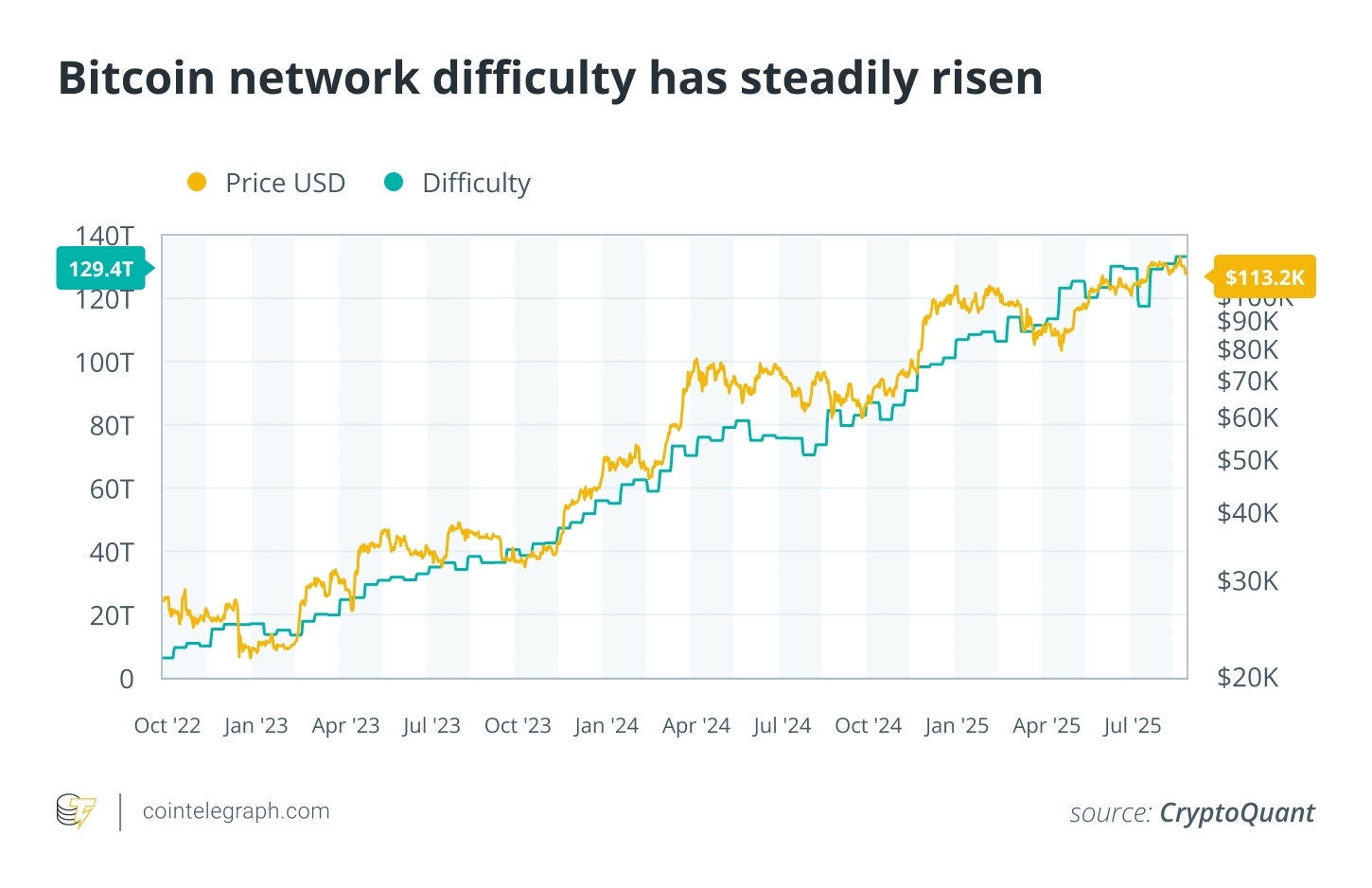
Solo Bitcoin mining is exceptionally challenging given the intense competition. The global network hashrate is around 902 exahashes per second (EH/s), and
mining difficulty
exceeds 127 trillion. Industrial-scale operations dominate the field.
A miner contributing 1 petahash per second (PH/s) has a roughly one-in-4.26 million chance of solving a block daily. For comparison, you’re more likely to be struck by lightning than solve a Bitcoin block solo with that hashrate.
This statistical improbability means solo victories in 2025 are incredibly rare. Yet, they still occur, reminding everyone that Bitcoin was designed for decentralization, granting even the smallest miner the opportunity to secure the entire block reward and associated transaction fees.
2025: Other Amazing Solo Bitcoin Mining Wins
Several independent Bitcoin miners defied the odds in 2025, achieving victories that reverberated throughout the mining community.
In February, a miner
solved block 883,181
and pocketed the full 3.125 BTC reward (worth roughly $300,000 at the time).
March and June witnessed similar success stories, including a miner using a modest 480 gigahash-per-second Bitaxe rig – a low-power, DIY device –
to mine a full block. For context, large mining firms typically use hardware rated at over 230,000 GH/s.
On June 5, another solo miner validated block 899,826 via the Solo CKPool, earning a $330,386 reward comprising 3.125 BTC from the block subsidy and 0.026 BTC in fees. The block included 3,680 transactions, and the network difficulty registered at 126.98 trillion.
Did you know? The famous 10,000-BTC pizza transaction in 2010 likely originated from early mining rewards. Back then, each block paid 50 BTC, and coins were often traded or given away casually (long before they gained any substantial market value).
How Did These Solo Bitcoin Miners Do It?
Solo Bitcoin miners continue proving that efficient hardware, persistence, and luck still matter. Their wins keep the decentralized spirit of Bitcoin alive.
- Application-specific integrated circuits (ASICs): ASICs are specialized machines delivering high computing power at low energy consumption. They give small-scale miners a fighting chance, especially when used with platforms like Solo CKPool. Still, solo mining carries significant risk. Most attempts remain unrewarded, but every now and then, a miner solves a block and earns the full payout. These rare wins keep the motivation going.
- Core principles of Bitcoin: Solo mining victories do more than reward tenacity; they show Bitcoin’s foundational values. These moments demonstrate that anyone can secure the network without needing permission. Each block highlights Bitcoin’s open and decentralized design. These wins are reminders of the individual’s power.
- Persistence and luck: Technical upgrades can only do so much; persistence and luck still influence the outcome. Even with ASICs running constantly, most solo miners know the odds are against them. Yet they continue, driven by the belief that one valid hash could change everything. Every win is a testament to endurance.
Platforms like Solo CKPool enable individuals to mine Bitcoin without joining a large setup. Most solo attempts don’t yield payouts, but sometimes, luck aligns and a miner gets away with the entire block reward.
Did you know? When Bitcoin started in 2009, each block paid 50 BTC. The reward halves approximately every four years: 25 BTC in 2012, 12.5 BTC in 2016, 6.25 BTC in 2020, and 3.125 BTC in 2024. This gradual reduction ensures scarcity, capping the total supply at 21 million.
The Broader View: Industry Pressures and Changes
Solo Bitcoin miners achieved rare wins in 2025 despite growing industry challenges. With rising costs and competition impacting large operations, these solo victories, often powered by basic hardware, stood out.
-
Rising costs and industry challenges: In Q2 2025, the average
cost to mine 1 BTC
exceeded $70,000, driven by global hashrate approaching 1,000 EH/s and a mining difficulty surpassing 126 trillion. Corporate miners face tight profit margins, which prompt efforts to optimize energy use and secure affordable power sources. - Strategic industry shifts: Major mining firms are diversifying into AI data centers and high-performance computing for more stable returns, which reflects a broader strategic shift in the industry.
Despite these challenges, solo miners with smaller rigs keep pulling off wins. These moments highlight Bitcoin mining’s unpredictable nature and prove that luck still matters.