

Source: Cointelegraph
Reported by Odaily Planet Daily ( @OdailyChina );
Translated by Moni
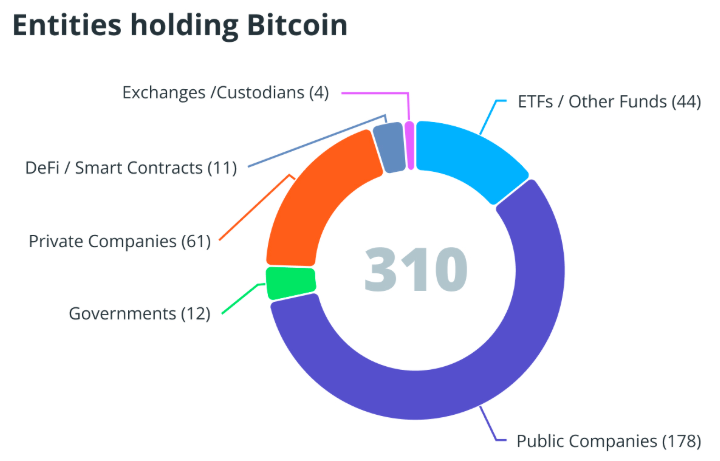
Since MicroStrategy first blazed the trail with its Bitcoin treasury strategy, amassing a significant holding of 632,457 BTC, its stock value has surged dramatically, posting a remarkable 2,200% gain since its inception in August 2020. Inspired by this success, an increasing number of corporations are now adopting similar approaches, utilizing financial mechanisms like convertible bonds to establish their own Bitcoin reserves. Data sourced from BitcoinTreasuries indicates that, as of August 29, 2025, approximately 174 publicly traded companies maintain Bitcoin holdings, with 161 possessing at least one BTC. Collectively, these entities control 989,926 Bitcoin, representing about 4.7% of the total Bitcoin supply.
However, this seemingly burgeoning trend of corporate Bitcoin adoption appears to be facing headwinds. The stock performance of certain companies pursuing this strategy hasn’t mirrored the extraordinary gains initially anticipated. We delve into the performance of six publicly listed companies whose Bitcoin investments have yet to yield the desired results.
GameStop: 4,710 BTC
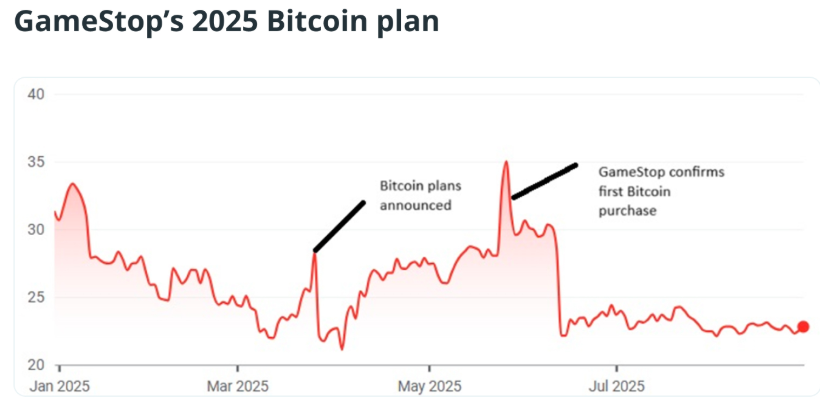
GameStop’s narrative has been closely linked to the cryptocurrency realm, particularly Bitcoin. Back in 2021, the r/WallStreetBets community on Reddit instigated a short squeeze on GameStop shares, catapulting the concept of meme-driven finance into the mainstream consciousness. On March 26, 2025, GameStop disclosed its plans to allocate capital to Bitcoin, which initially triggered a 12% jump in its stock price. Following the May 28 announcement revealing a purchase of 4,710 Bitcoins, the share price peaked at $35.
Unfortunately, this positive momentum proved unsustainable. Investor sell-offs followed each positive announcement, leading to a situation where GameStop’s stock has experienced a decline exceeding 27% year-to-date.
Empery Digital: 4,019 BTC
The adoption of Bitcoin isn’t confined to companies with a background similar to GameStop. Many enterprises venturing into Bitcoin treasuries operate outside the crypto and blockchain sectors. For instance, MicroStrategy previously specialized in business intelligence software before pioneering the Bitcoin treasury concept, and Metaplanet, a Japanese company, was initially focused on budget hotel operations.
Electric vehicle manufacturer Volcon unveiled a $500 million Bitcoin investment initiative on July 17th. Shortly after, the company rebranded itself as Empery Digital and began trading on the Nasdaq under the ticker EMPD.
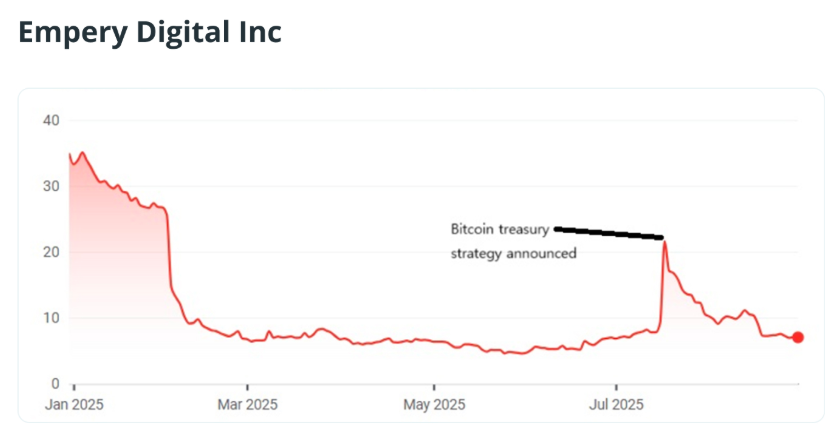
Prior to this recent shift, Empery Digital’s stock had generally fluctuated between $6 and $7, significantly below its January high of $35. The announcement of the Bitcoin treasury strategy on July 17th initially propelled the stock to a peak of $21, but this surge was fleeting, with the stock subsequently retreating to its typical $7 range this past week.
Sequans Communications: 3,170 BTC
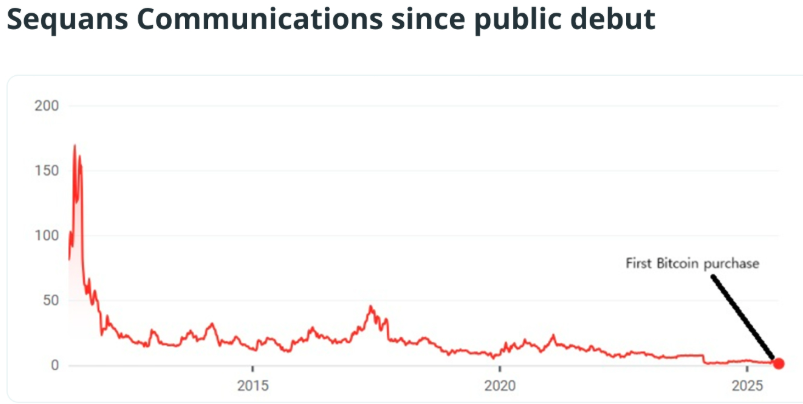
Sequans Communications, a French semiconductor manufacturer, has been publicly traded on the New York Stock Exchange under the ticker SQNS since 2011. Around early July 2025, Sequans’ stock was trading around $1.45 after a year of consistent decline. The company’s announcement on July 10th of its initial Bitcoin purchase triggered a sharp increase in its share price. The stock experienced a brief surge to $5.39 in the following days; however, this upward trajectory quickly lost steam, falling back to $1.25 by early August.
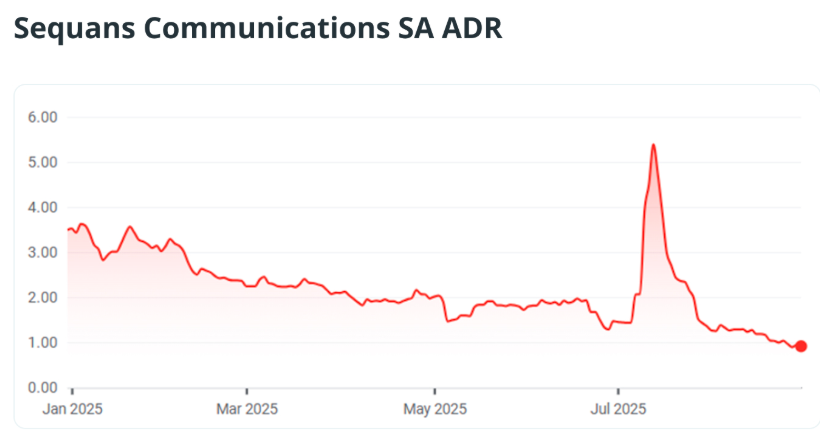
Sequans recently shared its intention to raise $200 million through a rights offering to support its long-term goal of accumulating 100,000 BTC by 2030. However, this announcement was not sufficient to prevent SQNS’s share price from declining further, now trading in the $0.9 range.
Vanadi Coffee: Holds 100 BTC
Similar to numerous other companies embracing Bitcoin, Spanish coffee chain Vanadi Coffee’s decision appears linked to financial difficulties. The company reported an annual loss of €3.33 million ($3.9 million) in 2024, which was higher than the €2.87 million loss reported in the previous year.
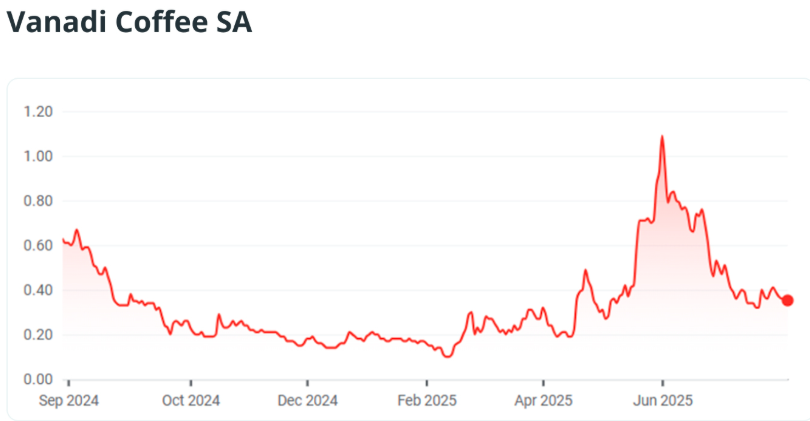
On June 29th, Vanadi Coffee revealed the launch of its Bitcoin reserve program, leading to a surge in its stock price to €1.09 the following day, resulting in a monthly gain exceeding 300%. However, by the start of trading on Friday, August 29th, 2025, Vanadi Coffee’s share price had receded to 35 euro cents. While still showing a year-to-date gain of 95.6%, it was down 44% compared to the same period in 2024.
Mingcheng Group: Holds 833 BTC
Mingcheng Group, a construction engineering firm headquartered in Hong Kong, went public on the Nasdaq in November 2024 with an initial offering price of US$5.59. The company has initiated a Bitcoin treasury reserve strategy, making its initial purchase of 500 Bitcoins on January 13, 2025, and now holds a total of 833 Bitcoins.
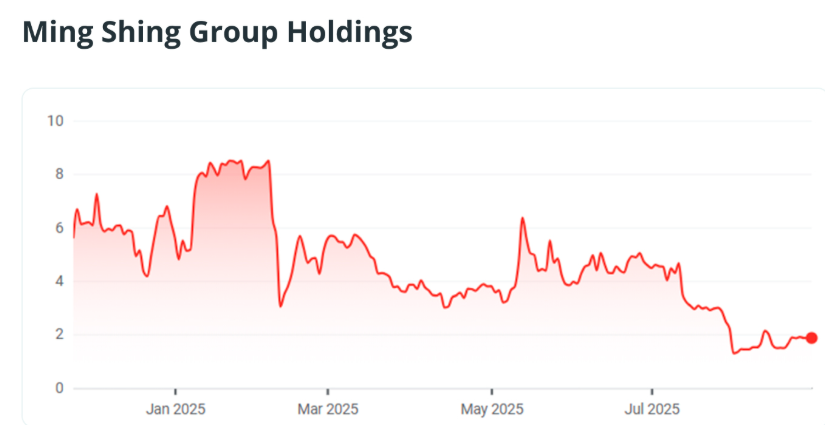
Mingcheng Group’s Bitcoin strategy initially propelled its stock to an all-time high of $8.50; however, it quickly declined to $1.85.
On August 21st, the company announced its intention to acquire an additional 4,250 Bitcoins through a share issuance valued at $483 million. If this transaction were to be finalized, Mingcheng would become the largest corporate Bitcoin holder in Hong Kong, surpassing Boyaa Interactive, which holds 3,640 Bitcoins. Currently, it holds the second-largest publicly listed Bitcoin treasury in Asia, only behind Metaplanet. While the announcement temporarily provided a boost to Mingcheng Group’s struggling stock, much of these gains were subsequently erased within the same day.
K Wave Media: Holds 88 BTC
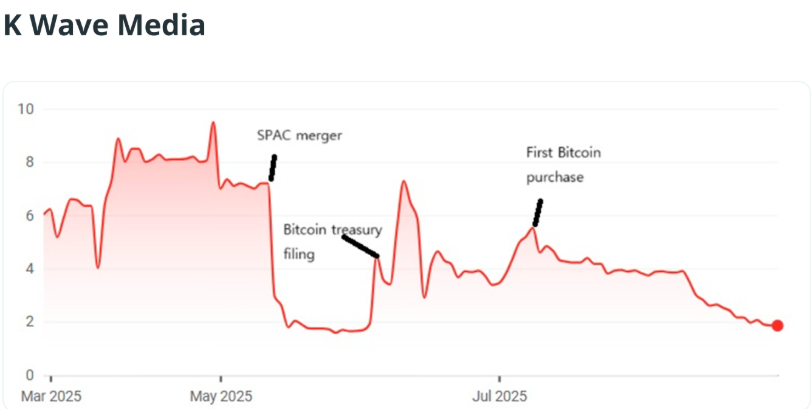
South Korean entertainment company K Wave Media made its initial Bitcoin purchase in July 2025; however, its stock price has been on a downward trend since then. The company has raised $1 billion to acquire Bitcoin, but its stock price continues to experience pressure.
Global Star Acquisition finalized a special purpose acquisition company (SPAC) merger with K Enter Holdings on May 13th, resulting in the formation of K Wave Media. Since the company’s initial Bitcoin purchase on July 10th, the stock price has continued to decline, closing at $1.85 on August 28th, slightly below its recent high of $1.92 on July 3rd, which was the day before it filed its Bitcoin financial report.
How Long Will MicroStrategy’s Bitcoin Strategy Endure?
Michael Saylor, the co-founder and chairman of MicroStrategy, has significantly influenced the financial landscape with his Bitcoin investment strategy. MicroStrategy’s method for accumulating Bitcoin is straightforward: issuing equity or equity-linked securities to generate funds for Bitcoin purchases, and then holding these assets on the company’s balance sheet. While increasing the stock supply typically depreciates the share price, acquiring large amounts of Bitcoin can increase the price of Bitcoin, thereby boosting MicroStrategy’s overall valuation and allowing it to issue more debt.
The cycle continues…
This strategy has demonstrated such success for MicroStrategy that it has attracted numerous followers. However, in recent weeks, the Bitcoin financial model championed by Michael Saylor appears to be losing momentum. This is because once the price of Bitcoin falls too close to a company’s per-share Bitcoin price target, or net asset value (NAV), the stock loses the valuation cushion that once supported its share price, leading to a so-called “death spiral,” whereby a company’s access to financing dwindles as its market capitalization shrinks. Without buyers and lenders, the company finds it difficult to expand its holdings or refinance its current debt. Forced liquidations can occur when loans mature or margin calls are triggered.
Meanwhile, major investors are collectively shifting away from BTC and towards ETH (see: “Whales Are Fleeing BTC for ETH: Is a New King Emerging? “). Analysts suggest that the rationale for holding Bitcoin for the long-term is being reevaluated, while the value of Ethereum’s asset allocation is being reconsidered. Strategic deployments by treasury companies have become a primary driver of Ethereum’s price increase, with SharpLink and Bitmine recently sparking a “strategic arms race” in the market. MicroStrategy, a pioneer in Bitcoin treasury management, has notably reduced its purchases over the past two weeks, from thousands of BTC to just a few hundred.
Although current market conditions appear relatively stable, and governmental policies remain supportive of cryptocurrencies, a cryptocurrency downturn will inevitably occur. What will become of Bitcoin treasuries then?