
Imagine your neighbor, a friendly baker named Scotty, needs to whip up a cake for young Mindy’s upcoming 8th birthday bash, happening in just a couple of hours. Scotty, bless his heart, isn’t the most organized, and guess what? He’s completely out of eggs!
Without eggs, Mindy might find herself making a birthday wish over a slice of…meatloaf. Not exactly the sweet treat a birthday calls for!
Now, you, being the helpful neighbor, have a fridge overflowing with eggs. But you’re knee-deep in your own project, unable to leave the house. A slow walk over to Scotty’s just won’t cut it. A direct solution is needed.
So, you throw open your window and yell, “Scotty, heads up!” before launching eight eggs in his general direction. Unsurprisingly, not a single egg survives the flight.
Scotty might now sport an eggy aroma, but he’s still egg-less. And the prospect of birthday meatloaf looms, potentially scarring Mindy’s culinary preferences for life.
What does any of this have to do with cryptocurrency?
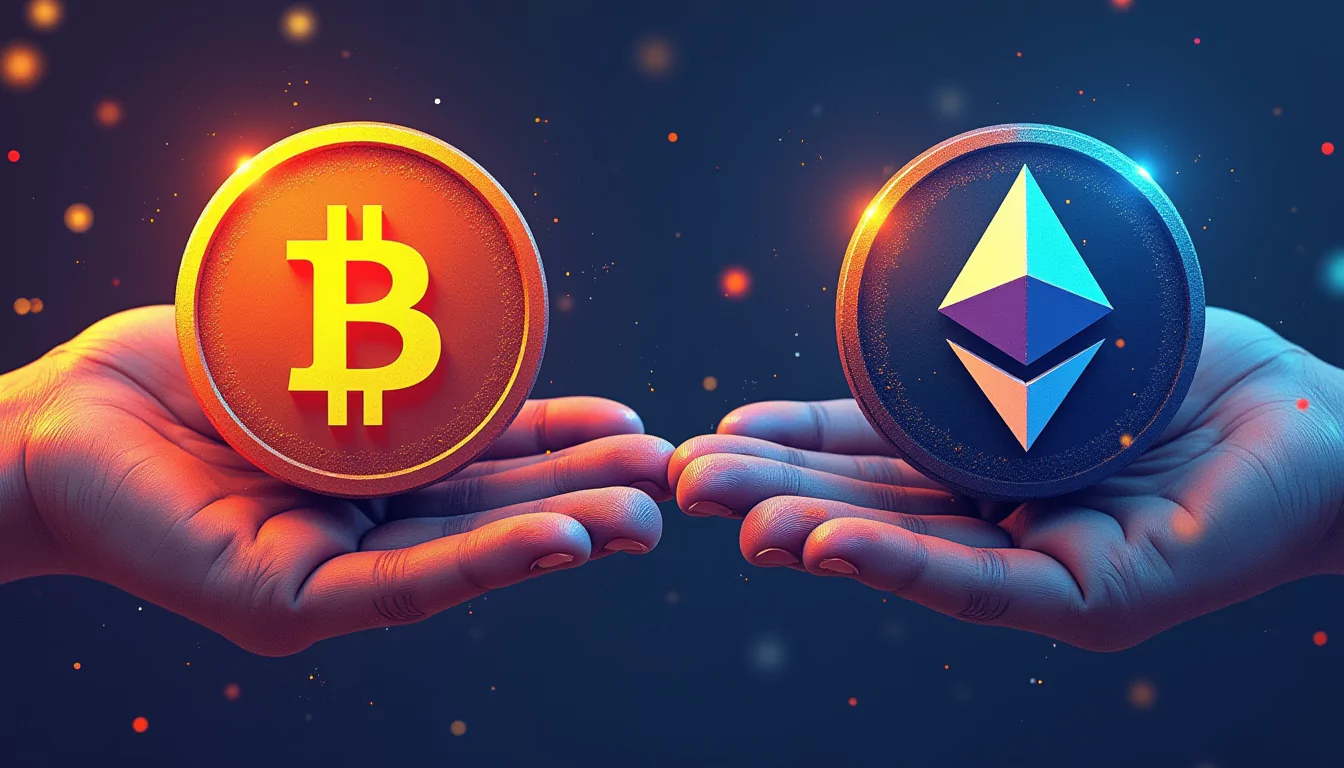
This egg-cellent disaster perfectly illustrates what happens when you try to send a cryptocurrency from one blockchain to another without the right tools. Bitcoin and Ethereum, like Scotty’s forehead and eggshells, don’t mix very well on their own.
This is precisely why wrapped tokens are so crucial. Instead of sending digital assets into the abyss, wrapped tokens act like sturdy, protective containers. They allow you to securely lock your cryptocurrency within a bridge, generating new tokens with equivalent value on a different blockchain.
Think of it this way: you commit to providing eight eggs through a marketplace. Then, a local delivery service fulfills that commitment by delivering eight fresh eggs directly to Scotty’s doorstep.
How Wrapped Tokens Function
As other digital currencies rose in popularity, a clear challenge emerged: How can I trade my Bitcoin for Ethereum, or use my BTC within an Ethereum-based application? Blockchains, by design, aren’t inherently designed to work together. Bitcoin can’t simply “travel” to Ethereum, because each runs on separate code and infrastructure.
Wrapped tokens, often referred to as “bridge tokens,” bridge this gap by creating a roundabout method for different blockchains to interact.
The Process of Wrapping and Unwrapping Crypto
Here’s how you might transfer BTC to the Ethereum network:
-
A trusted custodian or a pre-programmed smart contract accepts the BTC to be locked, becoming the intermediary between the blockchains.
-
Once the BTC is safely locked, the bridge creates new tokens of equal value on the new blockchain. In this instance, it would be Wrapped Bitcoin (WBTC).
-
If the original owner wishes to recover their BTC on its native blockchain, the bridge destroys the wrapped Bitcoin, unlocking the original BTC and returning it to the owner.
The concept is surprisingly new. The idea of wrapping cryptocurrencies to make them compatible with other blockchains began around 2018. The “Wrapped Token Project,” a collaboration between BitGo, Kyber Network, and Ren, officially launched in January 2019, setting the stage for a wave of wrapped versions of well-known cryptocurrencies, fostering connectivity across different blockchains.
Examples of Wrapped Cryptos
Wrapped Bitcoin (WBTC) – Native Blockchain: Ethereum
Wrapped Ether (WETH) – Native Blockchain: Ethereum*
Wrapped Dogecoin (wDOGE) – Native Blockchain: Ethereum
* Ether itself does not adhere to the ERC-20 standard. Thus, WETH was created to make Ether compatible with dApp applications on the Ethereum Blockchain.
Cross-Chain Assets
Cross-chain assets are tokens developed to be natively interoperable. USDC, for example, can be issued on numerous chains. Circle, the company behind USDC, directly mints USDC on networks like Ethereum, Solana, and Avalanche.
The fundamental difference is that cross-chain tokens can be created directly on various chains, while bridged assets require a “mirroring” process to transfer value across networks.

Custodial vs. Trustless Bridges
Not all bridges are the same. Certain bridges, like those operated by BitGo or Anchorage, rely on centralized custodians. These entities securely store and lock the original cryptocurrency, and then generate newly wrapped versions on another blockchain.
The other type of bridge functions in a fully decentralized manner, using platforms like Wormhole or LayerZero. As is common with decentralized blockchain processes, smart contracts automatically manage the operation, locking and releasing wrapped tokens.
The common trade-off exists between “centralized versus decentralized” services. Centralized custodians offer speed and compliance, but require users to trust a single organization with their assets. Decentralized bridges rely on code and community governance, avoiding single points of failure but potentially being susceptible to exploits. The lack of regulatory frameworks may also hinder integration and institutional adoption.
Wrapped Token Collateral and Backing
Each wrapped token should be backed at a 1:1 ratio by the original asset. Sending 5 BTC to a bridge should result in exactly 5 BTC locked as collateral (excluding fees).
Wrapped Token Fees and Slippage
Few things come free in life: The love of a parent, the air we breathe, and…well, that’s about it! Unfortunately, bridging tokens isn’t free. Sending precisely 5 BTC to a bridge will result in a slightly smaller final value for your wBTC.
Most platforms charge a percentage-based fee for their services. Token owners must also account for gas fees on both blockchains. Bridges utilizing liquidity pools may also cause some slippage, for good or ill.
Wrapped Token Security Risks
Bridges represent lucrative targets because they hold significant amounts of locked collateral, bridging blockchains that usually operate independently.
Smart contract vulnerabilities, validator collusion, and weak operational security have caused billions in losses. The Wormhole exploit in 2022 resulted in $320 million in losses. Ronin Network suffered $625 million in losses due to compromised validator keys. Even reputable custodians have experienced downtime, withdrawal delays, and governance conflicts.
Fortunately, crypto insurance is becoming more common.
Service providers are constantly improving their security practices. Today’s leading protocols undergo rigorous and frequent security audits. Multi-signature schemes and real-time monitoring have also significantly reduced attack risks.
Decentralized bridges have also matured. LayerZero and Axelar, for example, now use modular architecture to reduce potential failures. These protocols also promote transparency by providing users with real-time dashboards displaying collateral reserves, validator activity, and governance proposals.
Interoperability via Bridges
Bridging technology has meaningfully enhanced networks, dismantling the concept of isolated blockchains. While networks maintain their unique characteristics, interoperability allows cryptocurrencies to form a interconnected web of diverse chains capable of interacting with one another.
Considering the relatively short history of cryptocurrencies and the recent rise of interoperability, it’s evident that this technology was hard-earned. Despite past setbacks, a connected market now exists. This market can now connect and communicate, despite the remaining challenges.
Frequently Asked Questions
1. What is a wrapped token in crypto?
Wrapped tokens are blockchain-based representations of other cryptocurrencies. This allows for cross-chain use without the need to move the original asset from its native network.
2. Are wrapped tokens fully backed 1:1?
Yes, genuine wrapped tokens are backed at a 1:1 ratio by the original asset, held either by a custodian or secured via smart contract.
3. What’s the difference between WETH and ETH?
ETH doesn’t meet the requirements to be ERC-20 compliant, and as such, WETH is the “wrapped” or altered form of ETH to make it compatible within the Ethereum-based smart contracts and dApps.
4. What are the risks of using wrapped assets?
Smart contract bugs, bridge hacks, and custodial failures may cause a user to lose, or temporarily lose access to, the original assets.
5. What fees apply when wrapping or unwrapping tokens?
Expect protocol fees, gas costs on both chains, and possible slippage if liquidity pools are involved.