
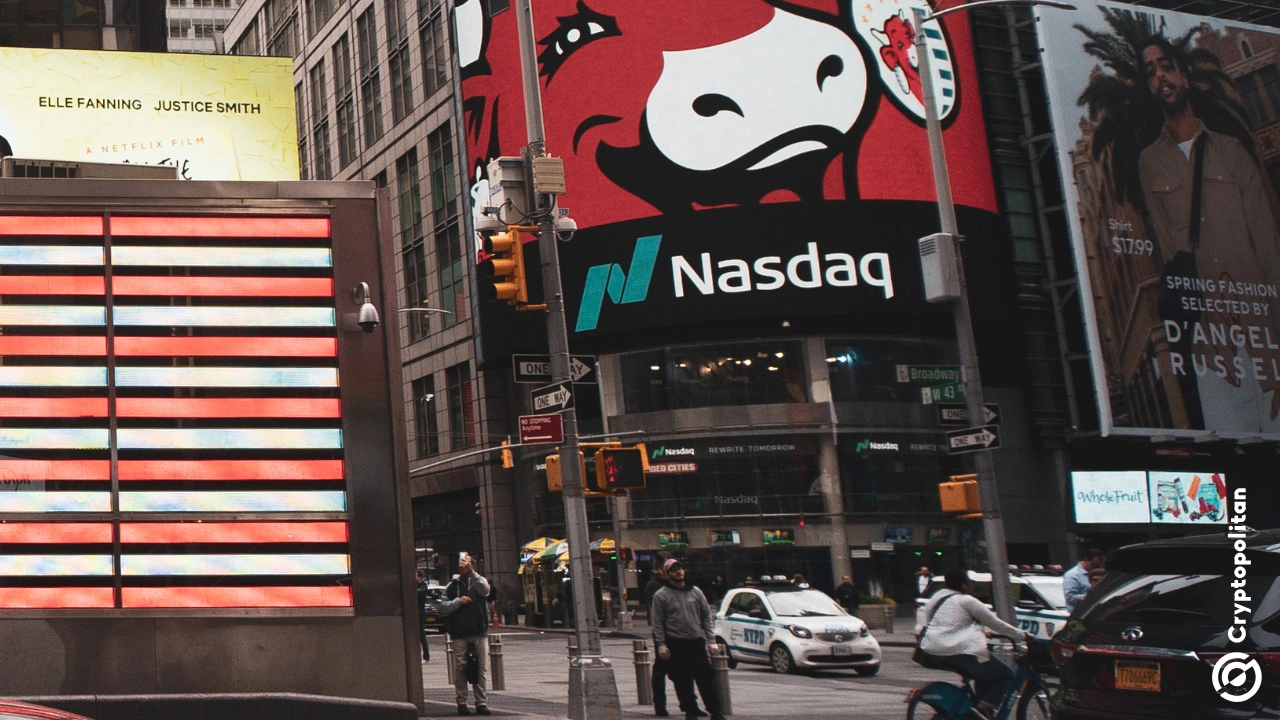
Nasdaq has formally requested the U.S. Securities and Exchange Commission (SEC) to permit the trading of tokenized stocks directly on its platform under full regulatory oversight. A recent filing details a proposal that aims to integrate blockchain technology into the core infrastructure of the American equity market.
If the SEC approves this request, it would mark the first instance of cryptocurrency technology powering the direct exchange of real, regulated stocks within the United States.
The request includes a proposed modification to existing regulations, specifically redefining the term “security.” Nasdaq seeks the SEC’s approval for this amendment, enabling tokenized shares, which are digital representations of actual stocks, to be treated equivalently to traditional securities.
However, the SEC must first solicit public feedback on the proposal before rendering a final decision.
Nasdaq Details Tokenized Stock Trading Plan
Nasdaq’s filing elaborates on the operational mechanics of these tokenized assets. A key aspect is clear labeling to prevent any ambiguity during clearing and settlement processes. The Depository Trust Company (DTC), responsible for these processes, would manage the execution of such trades.
These assets will not be considered inferior to traditional stocks. Nasdaq emphasizes that once a tokenized share is listed, it will possess the same execution priority, shareholder rights, and documentation requirements as the original security it mirrors.
This proposal is more than just a superficial adjustment; it addresses the foundational elements of market operation, including stock creation, trading, and settlement. It challenges the existing Wall Street infrastructure, which is characterized by slower batch processing and post-market reconciliation procedures.
Nasdaq also highlighted the growing concern regarding the unauthorized tokenization of shares by external entities. “The tokenization of securities should not deprive issuers of the ability to control where and how their shares are traded,” Nasdaq stated.
The exchange acknowledges that current regulations prevent it from granting issuers the authority to approve or deny tokenization, a situation that has already led to conflicts, such as when Robinhood began offering tokenized shares of OpenAI.
OpenAI promptly disavowed the tokenized shares, stating they were not officially sanctioned and did not represent actual equity.
Reactions from SEC Leadership, Wall Street, and Established Firms
This development comes as Paul Atkins, newly appointed SEC chair, advocates for the creation of new regulations concerning crypto assets and the clarification of their status as securities.
SEC Commissioner Hester Peirce remarked that the agency is “eager to collaborate with tokenization companies,” but cautioned them to ensure full transparency regarding the underlying nature of tokenized assets.
Currently, tokenized stocks are digital representations rather than the actual stock certificates. They have been promoted as a means of providing foreign investors with access to U.S. equities, facilitating fractional investing, and enabling continuous trading.
Unlike conventional markets that operate during fixed hours, tokenized shares have the potential to trade continuously due to near-instantaneous settlement and the elimination of intermediaries like brokers and clearinghouses.
Major asset managers, including BlackRock, Franklin Templeton, and KKR, have initiated experiments with tokenization but have adopted a conservative approach, still operating through broker-dealers rather than directly engaging with exchanges.
Nasdaq’s proposal seeks to bypass these intermediaries, signifying an effort to integrate crypto-native infrastructure into traditional Wall Street systems.
However, skepticism persists. JPMorgan stated in a recent analysis that tokenized assets have not yet achieved widespread adoption, with interest primarily originating from crypto-focused firms rather than mainstream financial institutions.
Want your project in front of crypto’s top minds? Feature it in our next industry report, where data meets impact.