
It began with the dogs. Their once-lush coats started thinning, replaced by pink, toughened skin.
Shenice Copenhaver’s vet initially attributed it to genetics. But soon, one of the now-hairless pups began seeking refuge, obsessively pulling blankets to create hidden dens under furniture.
Around that time, during the summer of 2022, she first noticed the sound: a resonant, almost manufactured drone that intensified as one neared the industrial site. Copenhaver didn’t know it then, but digital currency “miners” had arrived. Just a short distance from her residence in eastern Texas, a cryptocurrency processing center was powering up.
The constant drone has since become the daily backdrop for many residents in the small town of Granbury, population 12,600. It reverberates through farmland and woodlands, scaring away wildlife. It penetrates walls, vibrating homes during all hours. Copenhaver’s neighbor, Cheryl Shadden, likens it to standing at the edge of a massive waterfall. Copenhaver describes it as perpetually living next to a jet engine.
A video filmed on April 23rd from Shadden’s property shows lush green fields contrasted against visible emissions and a persistent, echoing din.
“It disrupts your sleep,” Copenhaver explains. “I’ll be resting comfortably, and then suddenly awaken, feeling the vibration in my chest.”
Large-scale cryptocurrency processing facilities started emerging across America a decade ago. However, China’s clampdown on the sector in 2021 led numerous operations to relocate to the US, solidifying the nation as a primary global hub for digital currency generation. With at least 137 commercial-scale installations nationwide, predominantly concentrated in Texas, the sector consumes up to 2.3% of the country’s electricity grid, according to the US Energy Information Administration (EIA), a federal agency that tracks and reports on energy usage. While former President Joe Biden had pledged to regulate the industry, Donald Trump advocates for digital currency to be “mined, minted, and made in the USA,” setting the stage for increased activity across rural America in the coming years.
“President Trump and his administration have done a lot to deliver on the promises that they made during the campaign, and we see this industry growing rapidly” Fred Thiel, the CEO of Mara, the world’s largest mining operation and owner of the 300-megawatt (MW) facility in Granbury, commented to Fox Business this past March. “Our goal is for the US to lead globally in digital currency extraction.” Just before the interview, his company purchased a 354-MW wind power source in Texas to power a future complex, and started extracting natural gas from oilfields for fuel in new developments.
Expansion Plans: Growth, Energy Demand, and Rising Noise Levels
Expansion strategies released by various extraction firms show an increasing trend towards more data hubs and processing equipment across the nation. These companies have acquired $3.7 billion through bond issuances since November to finance upcoming growth.
Data collected since November reveals plans to increase capacity by at least 2.42 GW by digital currency extraction companies nationwide. According to EIA estimates, that amount of power could supply close to 2 million US residences.
The “hash rate” of bitcoin – the combined computational capability securing the network, of which the United States maintains one-third – has risen by a quarter since Trump took office. According to filings with the Securities and Exchange Commission, between October and December of the previous year, the hash rates of Mara and TeraWulf, both mining firms, increased by over 40%.
Last month, Eric Trump even created his own mining operation, American Bitcoin, a division of the publicly listed mining organization Hut 8 Corp.
“The narrative is not just buying bitcoin. Mining it at strategic economics opens an even bigger opportunity,” as stated by the president regarding his son’s initiative. Trump has even unveiled his own digital currency.
Polaris Technology Inc is one of the many businesses currently expanding. The business is seeking to double their presence in Muskogee, Oklahoma, increasing their energy capacity to equal the consumption of roughly 400,000 residences, despite noise issues reported by citizens. Similarly, CleanSpark launched a new location in Cheyenne, Wyoming, at the beginning of this year.
“They assured us they would be considerate neighbors, but their noise is constant,” states Dave Simpson, a resident living a quarter mile away from the Wyoming facility. The complex is still working to reach its full capacity. Simpson is concerned about how the constant hum might affect property values. “I miss the peace and quiet,” he states.
In Granbury, Copenhaver claims the volume has grown more intense since November. She says her decibel measuring device – a common item for many residents – has been consistently registering higher readings, now frequently reaching between 80 and 100 decibels.
Why is the Extraction of Digital Currency Noisy?
The extraction of digital currency generates noise for a few key reasons.
Typically, rows upon rows of industrial-grade fans are used to keep the computers that perform mining tasks, known as application-specific integrated circuits, or ASICs, from overheating. This process can generate substantial noise. Also, digital currency extraction commonly utilizes mobile containers placed outside, unlike the closed-off structures being developed in the artificial intelligence (AI) field.
Mary Willis, an assistant professor of epidemiology at Boston University, has discovered a pattern in the location of these facilities. Due to their significant capital, artificial intelligence data centers are located on large plots of isolated land. Digital currency extraction, on the other hand, seeks the cheapest power rates and ease of grid access, which generally means older industrial areas.
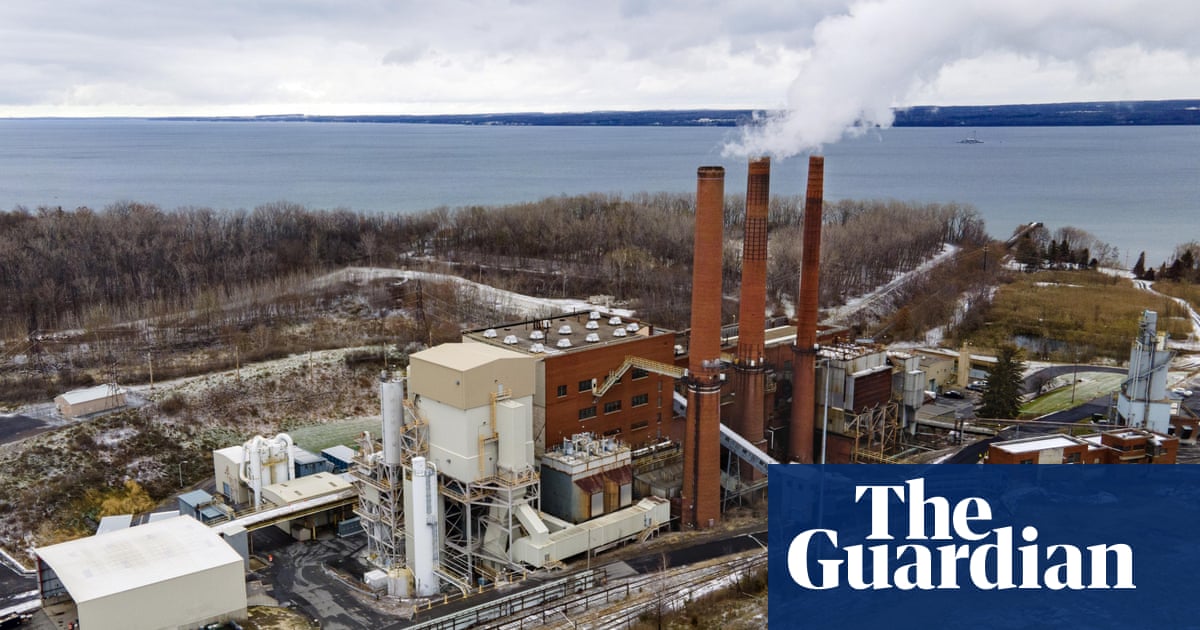
Extraction businesses are increasingly building close to existing power generation sites – known as co-locations – and making agreements with energy businesses to reactivate previously inactive plants. Mara’s Granbury complex is positioned next to a gas-fired power plant, owned by Constellation Energy, who have been in debates with locals in the previous year to construct another plant.
Based on a report by Earthjustice, report digital currency extraction businesses are paying a lower average rate for electricity than residents of Texas. In 2023, residential customers paid 22.25 cents for each kilowatt-hour of electricity, while certain cryptocurrency extraction activities paid just 2.5 per kWh, the group estimates. According to the consulting group Wood Mackenzie, digital currency extraction drives the cost of electricity up for others in Texas by $1.8 billion per year, roughly 4.7%.
Costly Puzzles
Trump has also given digital currency companies encouragement for growth because of his pledge to confirm bitcoin’s position in mainstream finance and to drive its long-term price increase. Its market price is currently around $97,000. In December 2024, it exceeded $100,000 for the first time.
The digital currency mining computers are attempting to solve difficult encryption puzzles. The correct solution is utilized to verify another set, or “block,” of bitcoin transactions. This block is entered into a blockchain, which functions as a public record for the transactions occurring on the network. The computer that solves the encryption the quickest is awarded 3.125 bitcoins.
So, when bitcoin becomes more valuable, mining companies generally increase their power usage. But because higher prices bring more competition to the network, the “hash rate” also increases. This makes the process of digital currency extraction more challenging, meaning it will take longer to solve the encrypted challenges required to confirm a block. Earning the mining reward requires a greater number of attempts, therefore consuming more power.
Therefore, to maintain profitability, mining businesses must upgrade their capacity each time the “hash rate” goes up, or the efficiency of their equipment must be increased.
According to a study released recently by Berkeley Lab, US extraction power usage goes up roughly 0.058 terawatt-hours each month for every $1,000 the price of bitcoin increases.
Bitcoin may have lost some gains since the recent election, where it quickly went up by 50% in three months, much of the digital currency community is expecting that the long-term price rise will start again once new policies come into action. Major financial organizations are beginning to trust bitcoin more, and Trump is seeking to make a reserve of digital currency owned by the US government.
after newsletter promotion
Recently Easier Regulation
Trump made an executive order on January 23rd, “Strengthening American Leadership in Digital Financial Technology,” promoting the right to extract digital currency, and he hosted digital currency extraction executives at Mar-a-Lago as well as the inaugural White House Crypto Summit. Meanwhile, his pledge to expand domestic oil and gas production is seen as positive by the industry, since profit is dependent on accessibility to low-cost energy.
Share.