
- Bitcoin’s value has decreased by 4% over the last month.
- Hopes for interest rate decreases from the Federal Reserve have not boosted the leading cryptocurrency.
- Market observers are closely watching the Federal Reserve’s upcoming meeting next week.
Now is the time for Bitcoin to demonstrate its value as a dependable investment.
Increased macroeconomic uncertainties, stemming from tariffs imposed by the United States, weaker-than-expected employment data, the ongoing conflict in Europe and the Middle East, and political instability in France, have all contributed to this week’s volatility.
While gold prices are achieving record highs, Bitcoin’s performance remains closely linked to the technology-heavy Nasdaq 100 index.
Analysts at Ecoinometrics, a cryptocurrency research firm, pointed out on X (formerly Twitter) on Monday that Bitcoin’s trading patterns continue to be influenced by assets considered to carry higher risk.
Essentially, Bitcoin is still being traded more like a technology stock instead of a type of digital gold. The idea of Bitcoin “breaking away” from traditional markets has not yet come to fruition.
Additionally, Bitcoin’s relationship with gold – the asset it’s supposed to substitute – remains almost non-existent.
According to Ecoinometrics, Bitcoin also displays very little correlation with Treasury bonds, which are usually considered safe assets during periods of market uncertainty.
Ethereum is showing a similar pattern, maintaining an even closer alignment with riskier assets than Bitcoin.
Jerome Powell’s Influence
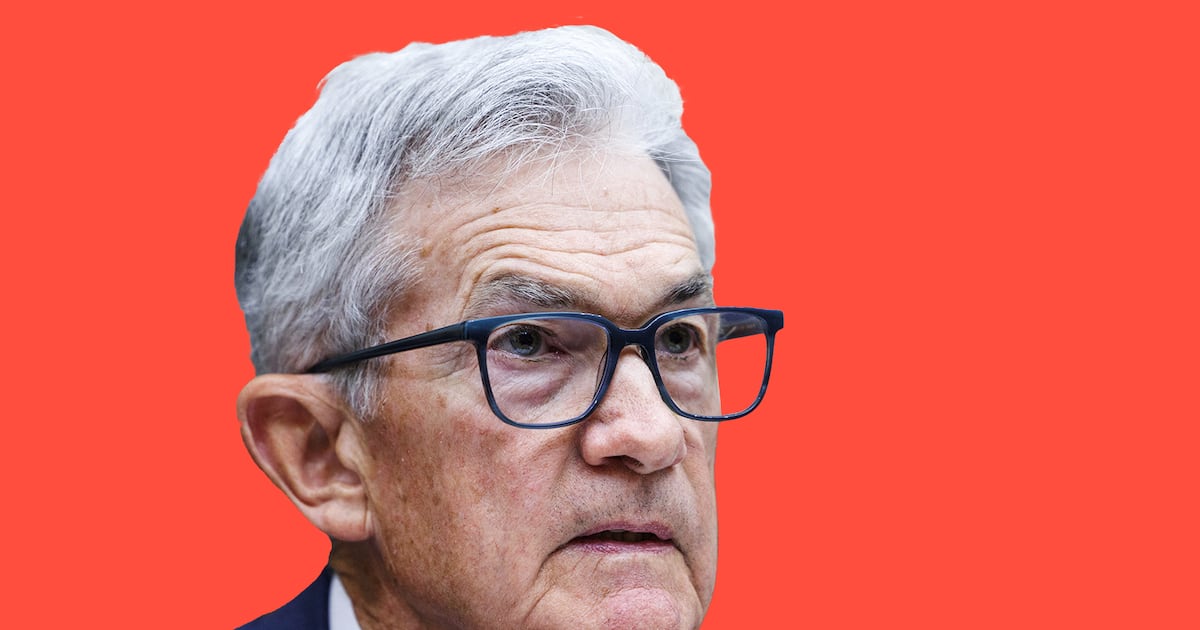
To sum it up, Bitcoin’s future is significantly dependent on the decisions of Federal Reserve Chair Jerome Powell, as the upcoming Federal Reserve meeting next week is increasingly seen as the key event for investors.
According to Ecoinometrics analysts, a reduction in overall economic uncertainty is needed for the bull market to regain its strength. “Ideally, there should be confirmation that the Federal Reserve will continue its path of lowering interest rates, or even accelerate the process.”
However, a more assertive approach by the Fed could negatively impact both Bitcoin and technology stocks, according to Ecoinometrics.
Voices from both within and outside the Federal Reserve have already suggested the possibility of cutting interest rates.
Fed Governor Chris Waller has been arguing for rate cuts, while last month, at the Fed’s annual gathering in Jackson Hole, Powell hinted that rate reductions were being considered.
Currently, the CME Group’s FedWatch tool indicates a 90% likelihood of a 0.25% cut and a 10% probability of a 0.50% cut.
Decline in Risk Tolerance
André Dragosch, the European head of research at Bitwise, believes the entire crypto market is responding to macroeconomic conditions.
Dragosch told DL News that the current poor performance of crypto assets is primarily due to the present economic environment rather than specific events within the crypto market itself, citing declines in both global growth expectations and investor risk tolerance.
Despite these short-term challenges, Dragosch points to a positive factor: global liquidity.
He stated, “Due to the ongoing increase in global liquidity, I am still very optimistic about the medium to long term. Further rate cuts by the Federal Reserve and continued easing of financial conditions will likely create a favorable market situation.”
However, he cautions that “There might still be some downside potential left in the short term.”
The Federal Reserve’s meeting next week represents a critical juncture for Bitcoin. Aggressive rate cuts could boost risk assets, while failing to meet expectations of looser monetary policy could drag Bitcoin down along with technology stocks.
Pedro Solimano is DL News’ Buenos Aires-based markets correspondent. Got at a tip? Email him at psolimano@dlnews.com.