
Key Points to Consider
Under demanding regulations, HSBC and ICBC aim for stablecoin licenses in Hong Kong. However, with the U.S. GENIUS Act strengthening its position, Hong Kong’s quest for worldwide influence faces an uphill struggle.
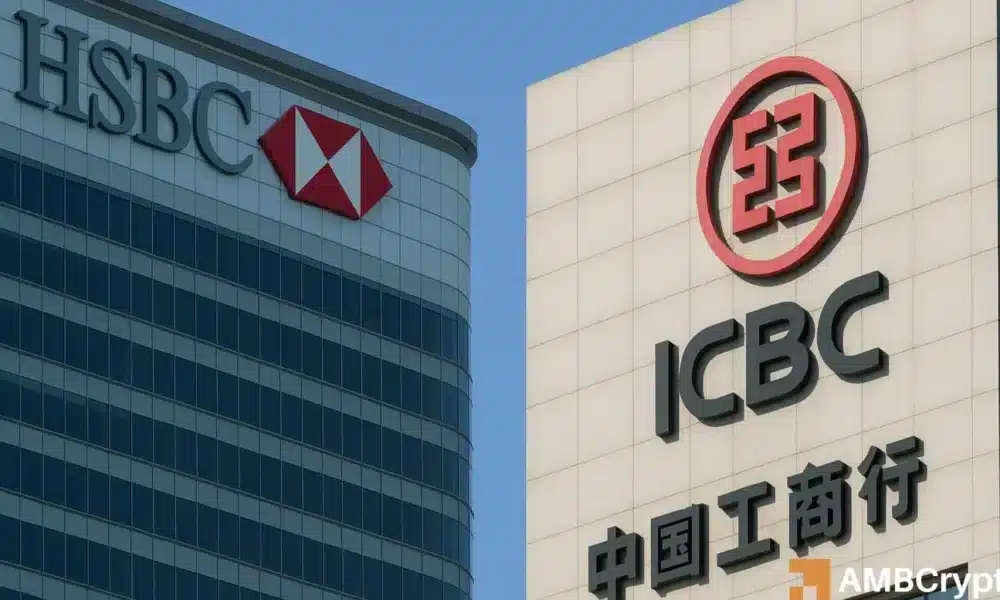
Two major international banks, HSBC and the Industrial and Commercial Bank of China (ICBC), are making moves to participate in Hong Kong’s rapidly developing stablecoin arena.
Following the implementation of Hong Kong’s new regulatory framework for stablecoins, HSBC and ICBC have indicated their intentions to apply for licenses from the Hong Kong Monetary Authority (HKMA). These new regulations have garnered global attention, while raising concerns about the stringent requirements for approval.
Initial Interest and Strict Regulations
Sources indicate that ICBC’s Hong Kong division has publicly stated its desire to join HSBC and Standard Chartered as early contenders in this space.
By the close of August, seventy-seven different institutions had expressed their interest in participating in this new market, although some expressed that the conditions were stricter than they had initially thought.
The HKMA is expected to initially grant only a small number of licenses during the initial application phase. However, the beginning of this process was not without some issues.
Here is the breakdown – Once the Stablecoin Ordinance went into effect on August 1st, the value of tokens issued in Hong Kong declined by as much as 20% in a single day.
In addition, the Hong Kong Securities and Futures Commission (SFC) reinforced the crypto custody rules in mid-August. Smart contracts used in cold wallets were prohibited, and speculation based on hype was discouraged.
Under these new regulations, offering or marketing stablecoins that are pegged to fiat currency without proper authorization is a criminal offense when directed toward retail investors. This clearly demonstrates the government’s commitment to enforcing strict compliance.
Can Hong Kong Compete with the U.S. Stablecoin Market?
The development of stablecoins on a global scale was boosted by the passage of the GENIUS Act in the United States in July of 2025, which established a standardized set of federal guidelines for tokens backed by fiat currency.
In conjunction with Europe’s MiCA regulations, this piece of legislation has created a worldwide benchmark which is anticipated to reshape the sector.
By implementing a uniform, nationwide standard for stablecoins backed by fiat currency, the United States has strengthened its leading position within the industry, and has also increased the pressure on other countries to keep up.
Nevertheless, Hong Kong is dealing with obstacles pertaining to its structure, geopolitics, and economic situation that are limiting its ability to wield considerable influence over stablecoins on a worldwide scale.
Therefore, as the competition for supremacy in the stablecoin market intensifies, Hong Kong’s cautious, Asia-centric strategy will need to adapt in order to effectively compete with the comprehensive regulatory clarity that is currently emerging from both the United States and Europe.