

Belarus is actively considering the expansion of its digital currency initiatives, spearheaded by President Alexander Lukashenko since early September. ForkLog asked experts to evaluate existing laws and Belarus’s chances of emerging as a key crypto center.
Background
President Lukashenko convened a meeting on cryptocurrencies on September 5th, according to state news agency BELTA. During the session, he emphasized the need for clear rules and oversight in the digital asset market, in response to economic challenges caused by European and U.S. sanctions.
“It’s crucial that we stay ahead of the curve and maintain our technological advantage. Those who lead in innovation reap the greatest rewards. Hopefully, we can lead the way in this area and do things in the right order,” the President stated.
Another meeting took place on September 9th, between the Belarusian President, officials from the National Bank, and heads of financial institutions. Lukashenko stressed the need for banks to increase their use of digital assets for international transactions.
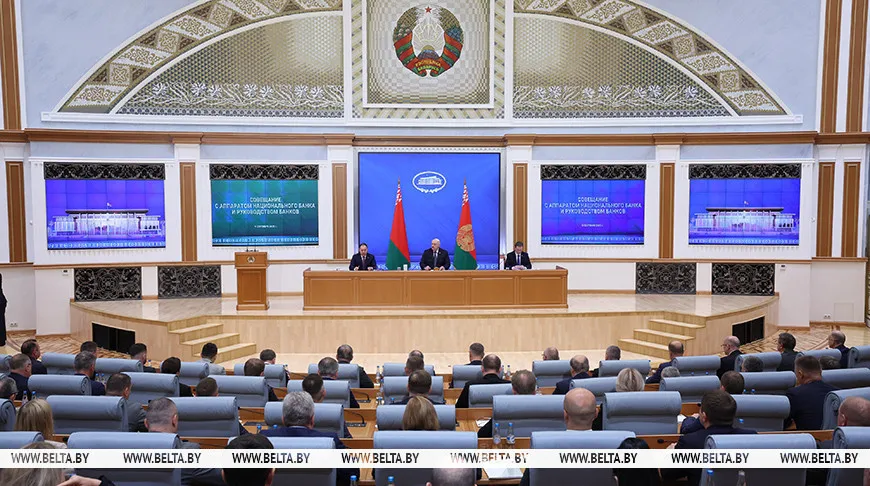
“The economy, along with Belarus’s banking sector, has faced unprecedented problems over the past five years. The government and the National Bank have received appropriate guidance. Now it’s time to implement it,” he commented.
President Lukashenko recognized the growing popularity of digital currencies. He reported that cryptocurrency exchange payments in the nation reached $1.7 billion in the first seven months of 2025. He predicts that this total could climb to $3 billion by year’s end.
The Belarusian president also instructed banks to speed up the introduction of virtual payment methods, starting with QR codes. He emphasized that credit organizations should prioritize using biometric technologies and AI solutions within their digital strategies.
Expert Perspectives
Andrey Tugarin, the founder of GMT Legal, stated that Belarus is at a key point in regulating digital assets. He noted that the current legal structure, which includes Decree No. 8 and regulations from the HTP, creates a legitimate environment for crypto businesses.
“The regulatory approach being used can’t be called impulsive or just a trend-following action; things are progressing in a consistent way. Many nations have started in a similar way, by learning from previous experiences,” he added.
According to his forecasts, future laws and rules in the country will encourage new companies and services to emerge, which will improve Belarus’s appeal for both investment and innovation.
“Technologies usually thrive in areas where there’s regulation, even in the early stages,” Tugarin stated.
Ignat Likhunov, founder of legal agency Cartesius, highlighted a core conflict: while the authorities aim to attract foreign investment with appealing regulations, the active use of digital assets could destabilize the macroeconomy.
“This effect is particularly strong when there’s an excess of money in circulation compared to the actual production output, to put it in a nutshell,” he explained.
When discussing Belarus’s potential as a regional crypto hub, Likhunov noted both opportunities and significant hurdles.
“Key advantages include the relatively early regulation of cryptocurrency trading (recognized as a commodity since 2018), special tax breaks for HTP members, like lower tax rates and no VAT until 2049, and support for mining through investment agreements with guaranteed electricity prices,” he said.
However, progress is hindered by restrictions on ordinary users. These include the ban on P2P transactions outside the HTP, bank card blocking, and mandatory wallet verification. According to the expert, these factors create an unfriendly environment for retail investors.
“Additionally, rising regional competition, and more significantly, the ongoing EU and US sanctions which have only intensified since 2020 and 2022, seriously limit the potential for integration into the global financial system and the ability to attract major international capital,” he added.
Likhunov also cited internal issues and bureaucratic challenges that might obstruct the strategy.
Belarus is scheduled to launch its digital ruble in the latter half of 2026.
Found a mistake in the text? Select it and press CTRL+ENTER
ForkLog Mailing Lists: Stay on top of the Bitcoin industry!