
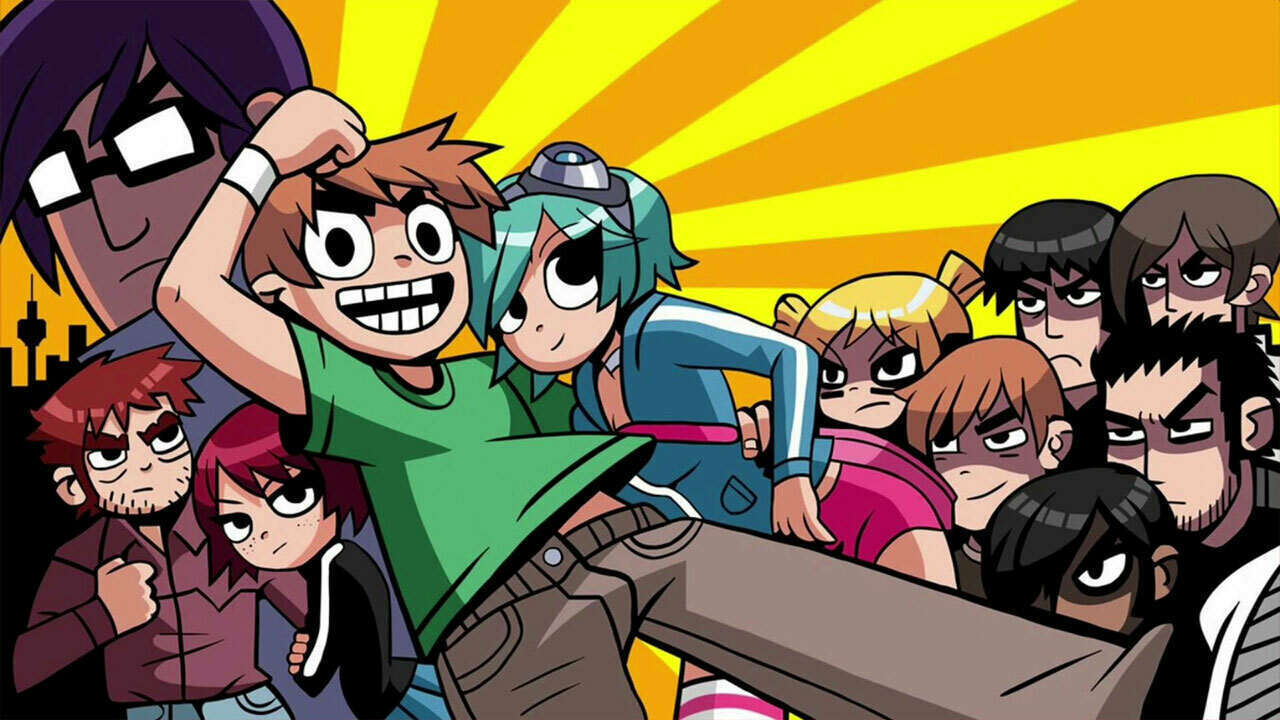
The iconic game, Scott Pilgrim vs The World: The Game, reached a milestone, celebrating its 15th anniversary on August 10th, 2025. We delve into the game’s creation and lasting appeal with the original development team.
As many who have lived through the late 20th century can attest, the media we grew up with often re-emerges in unexpected and often strange ways. Think of the classic Grandpa Simpson meme: a perfect example of this phenomenon. It originated from a show now largely known for its meme-generating capacity, from a scene targeting Generation X’s nostalgia for the 1970s, delivered by a character longing for the 1950s, with the joke actually aimed at nostalgia for the 1940s.
Scott Pilgrim has now also found itself in a similarly peculiar position within popular culture. In the mid-2000s, the graphic novels held video games, anime, and Canadian indie music in high regard, much like Kevin Smith’s reverence for Star Wars and Marvel comics did for Generation X. The storyline of Scott, a nerdy slacker, dating Ramona Flowers, a cooler girl with a complicated past, and his need to confront her “evil exes,” resonated with numerous readers. The emotional honesty infused into the narrative by creator Bryan Lee O’Malley broadened its appeal beyond gamers to those who simply appreciated a well-written, fantastical slice-of-life indie book. Scott still navigated the mundane realities of finding work, paying rent, and generally maturing, but he did so using the nostalgic language of nerds everywhere.
This inherent understanding of pop culture’s nuances made Edgar Wright the ideal choice to adapt the story into a film. Since the early 2000s, Wright’s work, including Spaced, Shaun of the Dead, and Hot Fuzz, demonstrated a similar sensibility. He portrayed a roommate argument as a Tekken 3 match in Spaced, used Queen’s “Don’t Stop Me Now” as background music for a zombie beatdown with pool cues, and used zombie film and action movie tropes to analyze how men evolve.

The art of using pop culture effectively is important. In Ready Player One, the references feel shallow, serving only to validate the obsession itself. But Wright, on the other hand, uses pop culture to highlight existing emotions in a charming and meaningful way.
Consequently, Scott Pilgrim vs. the World hit theaters in 2010. This movie remains an outstanding achievement. Not just as a faithful adaptation but as a visual and auditory masterpiece. The Wachowskis’ Speed Racer is a close visual relative. Sadly, the movie underperformed despite it’s filmmaking, timely humor, indie rock soundtrack, heartfelt storyline, positive reviews, and stellar cast. It opened with $10 million and ended with $30 million, recouping barely half of its $60 million budget. It was a commercial failure, sharing similarities with Speed Racer. Its hyperkinetic storytelling was unfamiliar to a wider audience. The marketing department tried portraying it as a musical with fight scenes. While not inaccurate, it wasn’t an easy pitch.
While the Scott Pilgrim movie struggled in theaters, in Canada, a different kind of battle unfolded in the video game realm.
Jean-Francois Major, co-founder of Tribute Games, known for retro pixel art titles like Mercenary Kings, Panzer Paladin, and Teenage Mutant Ninja Turtles: Shredder’s Revenge, was then part of a Ubisoft team that took a major gamble.
“We primarily concentrated on Game Boy Advance games: Teenage Mutant Ninja Turtles, Open Season, Star Wars, mostly licensed titles,” Major explained. “When we learned about the Scott Pilgrim movie, we proposed to Ubisoft that they should create a game based on the IP. We pitched it, got approval from Universal, and surprisingly, it became Ubisoft’s final pixel art game. We kept it retro to follow up with our GBA games.”
At the time, Ubisoft released larger games such as Splinter Cell: Conviction, Assassin’s Creed Brotherhood, Prince of Persia: The Forgotten Sands, and their first Avatar game. The closest title to a retro game in Ubisoft’s library was a forgettable TMNT: Turtles In Time remake. So how did Major’s team get a pixel art 2D game approved?
“I’m not sure how to say this politely,” Major said, laughing. “I don’t think Ubisoft fully understood the project. Fortunately, they let us do our thing without asking too many questions. They were more focused on their big titles. Ubisoft was moving away from pixel art games, and this was our last shot. Our whole team was reassigned to AAA games, which wasn’t our passion. That’s why we founded Tribute.” Bryan Lee O’Malley shared similar sentiments, mentioning that “they didn’t really give us the budget to do everything we wanted,” and that the game’s final touches were outsourced to Ubisoft’s Chinese studio.
Regardless, as the film was in production, Major and his team began developing Scott Pilgrim vs. the World: The Game, a rare sight in 2010: a side-scrolling 2D beat-’em-up reminiscent of River City Ransom or the original Turtles In Time. The art style drew inspiration from the graphic novels, with Bryan Lee O’Malley working on the film and creating original artwork enhanced by pixel artist Paul Robertson. The game also recreated specific scenes from the film, including Edgar Wright directing Lucas Lee’s movie. Pixel art Scott made a cameo in the film as Scott’s 1-Up icon and in a post-credit scene, surprising Major and his team.

The game also featured an amazing soundtrack from chiptune band Anamanaguchi.
“Our style was a natural fit for the general vibe,” lead songwriter Peter Berkman said in a PlayStation Blog interview in 2021, “but it was a lot of fun to flex and adapt for certain moments that a ‘band playing shows’ doesn’t normally get to do. Like a bossa nova shop theme, or boss songs.”
His co-writer, Ary Warnaar, agreed. “There were a handful of prompts that took us out of our comfort zones,” Warnaar said. “Some of those styles were definitely just for the game, but others started to shape sounds that became a bit more normal to us. Dance-tempo four to the floor tracks were a pretty new thing to us back then!”
The game was more successful than the film, selling nearly 150,000 copies in its first year, according to FADE. However, this success was short-lived. Due to licensing problems between Ubisoft, Universal Pictures, and ABKCO Music (who owned the rights to Anamanaguchi’s music), the game was delisted from the PlayStation Network and Xbox Live Arcade in 2014.
“We didn’t have Limited Run back then, or smaller physical publishers to ensure we had a physical copy that could be resold and kept alive,” Majors said. “There was also no release on Steam, that was also an issue.”
This could have been “game over” for Scott Pilgrim’s cultural influence, but there was a “continue” available.
Edgar Wright has a well-known story about discovering the film’s failure on its opening weekend: “On Monday morning, Michael Moses, Universal’s chief of marketing, sent an email with three words. It was one of the sweetest emails I’ve ever gotten from anybody in the industry. It said, ‘Years, not days.'”
That email should be a reminder to anyone creating art in the 21st century. Immediate success is good, especially for those who finance art, but lasting impact and legacy are more important.
Despite the film’s initial struggles, it became a cult classic through word of mouth, with numerous creators praising it. It became a midnight-movie staple at Quentin Tarantino’s New Beverly Cinema. The home release in 2011 was also a minor hit, topping Christopher Nolan’s Inception on the sales charts. Its visual language, which incorporated video game, comic, and manga elements, became common in media. Edgar Wright’s later work, like The World’s End and Baby Driver, featured similar effects and musical editing. Marvel embraced these aspects of comic book storytelling, influencing Hollywood. The visual style that nerds had enjoyed for years became mainstream.
The Scott Pilgrim game capitalized on nostalgia for 8- and 16-bit aesthetics, and its removal from stores further fueled its popularity. While old-school beat-’em-ups had occasional releases, Scott Pilgrim proved the genre still had potential. Titles like Double Dragon Neon, Dragon’s Crown, and Charlie Murder followed, leading to a beat-’em-up renaissance with River City Girls and Streets of Rage 4.
The story became one of “years, not days.” In 2020, the film’s popularity led to a celebration of its status as a modern classic. The original cast reunited during the pandemic to read the script, showcasing their star power. The stream’s popularity, with over 3 million views on Youtube, confirmed it. The film was re-released in theaters in 2021 before a 4K Blu-Ray release. In a remarkable turn, the game’s licensing issues were resolved, and it was re-released that January, with Limited Run selling 25,000 copies in three hours.

It would be simple to credit this to nostalgia, but Scott Pilgrim was undergoing something unique during the early pandemic days.
“I’d moved on to other things, but Scott Pilgrim keeps calling me back,” said O’Malley. “The fanbase just keeps growing. They’re getting younger. I feel like I owe them more and more each year.”
This sentiment inspired Scott Pilgrim Takes Off on Netflix. However, the nostalgia here is different. In 2010, Universal promoted the film with a 4-minute Adult Swim short, with Michael Cera, Mae Whitman, and Jason Schwartzman voicing a scene from the graphic novel. It aired once before the film’s release.
In 2023, Scott Pilgrim Takes Off became a 10-episode anime featured prominently on Netflix, alongside popular shows. By 2025, it remains a top recommendation. Scott Pilgrim has transcended nostalgia and become a cultural phenomenon.
“You’d expect the audience for Scott Pilgrim would be all 45-year-olds at this point,” O’Malley said, “but I have an influx of 15-year-olds coming to conventions these days, and they don’t see the references the same way… They’re more interested in the characters themselves, and they’re the flashpoint, the thing they connect to most.”
Scott Pilgrim Takes Off forges its own path. The first episode mirrors the graphic novel until Scott loses his fight with Matthew Patel.
The series shifts to Ramona Flowers’ perspective. Her guilt guides the series in a direction that reflects 15 years of growth. Unlike most nostalgia plays, Scott Pilgrim has matured with its audience and adapted to a changing world, ensuring an entry point for everyone, even those unfamiliar with the source material.
This entry point highlights Ramona’s complexity, Scott’s stagnation, and how unhealthy that can be. Scott Pilgrim now examines the past rather than reflecting it. As the show proves, growth and change are good.
This need for growth also influenced Jean Majors and Tribute Games’ Scott Pilgrim EX.
“[Bryan and I] have been friends ever since the original game, and when we started Tribute we always kept in contact,” Majors said. “Over the years, after Mercenary Kings, we would reach out and ask if we could have a second stab. Things didn’t pan out, but over the years, we kept harassing him. When the anime was announced, we gave it another go…and that’s when the discussions became more serious.”