

Several bills have been introduced in the Philippine House of Representatives aiming to leverage blockchain technology for the national budget. Proponents say this initiative would provide unprecedented real-time transparency into government spending.
Representative Javier Miguel “Javi” Benitez, representing the 3rd District of Negros Occidental, has proposed House Bill 4380, dubbed the “Blockchain the Budget Act.” This legislation seeks to record every single peso within the national budget on a blockchain ledger. This bill is similar to Senate Bill 1330, previously submitted by Senator Paolo Benigno “Bam” Aquino IV.
In a statement on Facebook, Benitez explained, “I’ve introduced House Bill 4380, the ‘Blockchain the Budget Act,’ to integrate the entire national budget into a blockchain ledger. This secure, digital record ensures every transaction is permanent and resistant to tampering. The intention is to make each peso publicly traceable and visible in real-time. This allows citizens, oversight bodies, and legislators to independently verify where funds are allocated, down to specific projects, agencies, and even the smallest unit of currency.”
“If this bill becomes law, the Philippines could become a leader in open-budget governance, demonstrating how modern technology can combat corruption, strengthen accountability, and give citizens clear insight into how public funds are being used,” Benitez added.
Benitez emphasized that his proposal complements Senator Aquino’s Senate Bill, thus coordinating efforts across both legislative chambers towards achieving what he describes as “open-budget governance.”
Blockchain Backed for Transparency by Poe
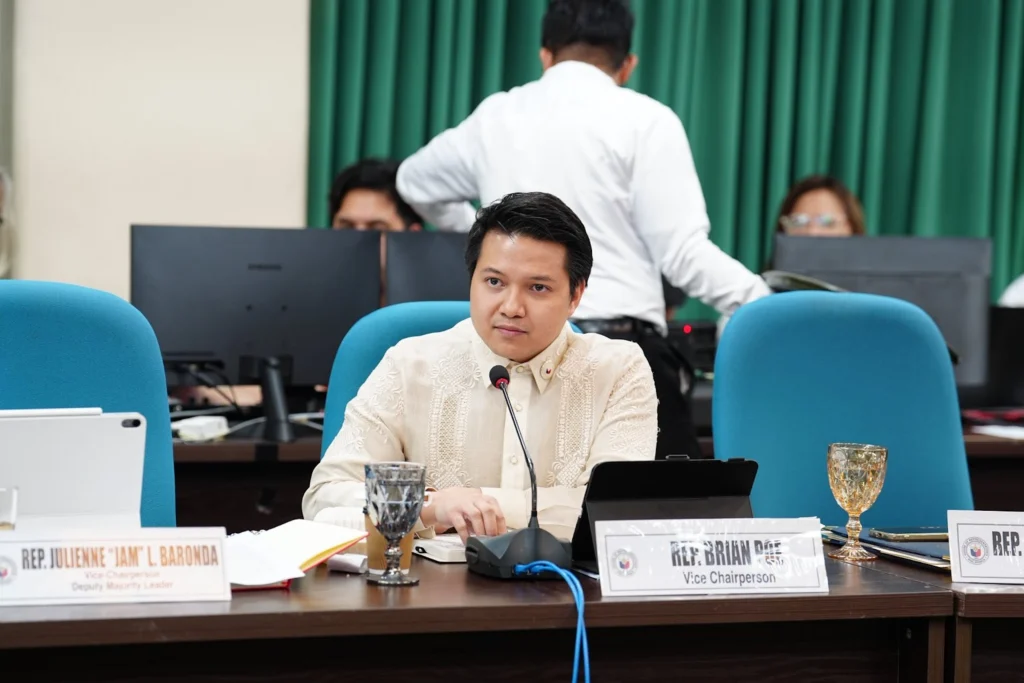
Representative Brian Poe Llamanzares, representing the FPJ Panday Bayanihan Partylist and serving as Assistant Majority Leader, also presented his own bill on September 9. House Bill 4489, officially titled “An Act Mandating the Establishment and Implementation of a National Budget Blockchain System to Enhance Transparency, Accountability, and Public Participation in the Philippine Budget Process,” proposes a blockchain platform for tracking the national budget.
Poe, who also holds a position as a trustee of the Blockchain Council of the Philippines (BCP), explained that the proposed system would ensure all budget allocations and expenditures are immutable and accessible to the public. His bill mandates the establishment of a National Budget Blockchain System, overseen by the Department of Information and Communications Technology (DICT), the Department of Budget and Management (DBM), and the Commission on Audit (COA).
According to Poe’s proposal, all budget-related transactions would be recorded as digital public assets on the blockchain, with a publicly available portal accessible to citizens, watchdog organizations, and regulatory bodies.
Government-Wide Adoption Advocated by Barba
Earlier, Representative Angelo Barba of Ilocos Norte filed House Bill 4075. This proposal is broader, aiming to establish blockchain technology across numerous government sectors, not just the national budget.
The proposed law calls for a phased implementation of blockchain for procurement processes, record maintenance, financial dealings, licensing, permits, and citizen databases. The DICT and other pertinent government bodies would be tasked with creating the necessary regulatory framework.
Barba contended that embracing blockchain technology would bring the Philippines in line with the practices of governments around the globe that are already experimenting with analogous systems. He highlighted that blockchain’s inherent security and verifiability could mitigate corruption opportunities, reduce delays, and improve the effectiveness of public service delivery.
Senate Version and Context
These efforts in the House are supported by Senator Aquino’s Senate Bill 1330, which is also designed to create a National Budget Blockchain System. Aquino previously indicated that his bill is intended to “modernize budget transparency and accountability” and make budget documents more easily accessible and understandable.
Aquino observed that while the national budget represents one of the government’s most critical tools, it has often been overly technical, inaccessible, and difficult to analyze. Blockchain, he argues, could ensure that “no more hidden projects unknown to local governments” escape scrutiny while simultaneously enabling price comparisons across different contracts.
The Senate version also envisions the creation of real-time, publicly accessible portals that would allow anyone, including ordinary citizens and civil society organizations, to track how government funds are being spent.
Legislative Reform on the Rise
With Benitez, Poe, and Barba each presenting distinct, yet interconnected proposals, the House now has at least three separate legislative measures advocating for the application of blockchain technology in governance. Although these bills remain under consideration in various committees, they reflect a growing trend within the Philippine Congress towards integrating emerging technologies into governmental processes.
Advocates of these proposals believe that recording the national budget on a secure, immutable digital ledger has the potential to reduce corruption risks, enhance accountability, and empower citizens to monitor projects and expenditures.
Benitez emphasized in his statement that blockchain’s potential lies in its capacity to make public funds traceable “down to the project, agency, and centavo.” Poe described his bill as an integral part of broader reforms aimed at improving transparency and public participation, while Barba presented his proposal as an effort to align the Philippines with global best practices.
Currently, these bills are undergoing committee reviews. If they gain approval, they will progress to plenary debates before a potential bicameral conference to reconcile them with Senator Aquino’s Senate proposal.
Watch: eGov super app opens the best opportunities for Philippines
title=”YouTube video player” frameborder=”0″ allow=”accelerometer; autoplay; clipboard-write; encrypted-media; gyroscope; picture-in-picture; web-share” referrerpolicy=”strict-origin-when-cross-origin” allowfullscreen=””>