
Key takeaways
- Acquiring Bitcoin is now easier than ever, with options like specialized apps, cryptocurrency exchanges, traditional brokerage platforms, and dedicated Bitcoin ATMs readily available.
- When deciding where to buy, carefully weigh factors like transaction fees, security protocols, and the degree of ownership you desire. For example, crypto exchanges often provide competitive pricing, brokers may emphasize robust security, and ETFs provide indirect Bitcoin access without direct ownership.
- Due to its high price volatility and unreliability as an inflation hedge, Bitcoin’s risk profile is not suitable for all investor types.
Since its inception in 2009, Bitcoin’s value has experienced dramatic ups and downs, resulting in significant financial gains for some and substantial losses for others. If you’re thinking about investing in Bitcoin, you have a range of choices, including Bitcoin ETFs. These allow you to participate in the Bitcoin market without directly owning the digital coins, and you typically don’t need a specialized account to get started unless you specifically choose that route. Each method comes with unique tradeoffs concerning cost, security, and potential profits and losses.
| Platform | Ideal For | Typical Fees |
|---|---|---|
| Finance Applications | New or infrequent investors | Around 2.2% on transactions below $75; rates decrease for larger amounts |
| Cryptocurrency Exchanges | Experienced or frequent cryptocurrency traders | Starting around 0.40% |
| Trading Apps | Novice to intermediate investors; those preferring a hands-off approach | No direct commission, but a spread markup is applied |
| Conventional Brokerages | Investors comfortable with trading Bitcoin futures contracts | $0 or nominal fee plus a portion of the transaction value |
| Bitcoin Teller Machines (ATMs) | Those valuing speed, physical cash transactions, or simple access | From 6% up to 20% |
Bitcoin (BTC), the leading digital currency, operates solely in the digital realm, boasting a market capitalization exceeding $2 trillion. Introduced in 2009, Bitcoin gained significant mainstream attention in 2017 due to its rapid surge in value. New coins are generated through a process called “mining,” where computers verify and process transactions within the Bitcoin network.
1. Financial apps
- Ideal for: Those new to investing or those already utilizing a finance-related application.
- Average Purchase Costs: Approximately 2.2% for trades valued below $75, with reduced fees for larger trades.
Many financial applications, including widely-used platforms such as PayPal and Venmo, now support cryptocurrency trading.
PayPal allows you to quickly and easily buy and sell Bitcoin directly within the platform you trust for online transactions. A 2.2% fee applies for trades under $75, decreasing with larger amounts. Transactions from $75 to $200 incur a 2% fee, from $200.01 to $1,000 incur 1.8%, and those above $1,000 are charged 1.5%.
While trades include a spread markup, there are no fees for holding cryptocurrency within your account, and you can begin trading with as little as $1. Ethereum (ETH), Litecoin (LTC), Bitcoin Cash (BCH), Solana (SOL) and Chainlink (LINK) are also available for trading, as is a PayPal-backed stablecoin (PYUSD).
Venmo, also a PayPal company, assesses identical transaction fees.
2. Crypto exchanges
- Best suited for: More seasoned or frequent crypto investors who want increased control or a wider variety of currencies.
- Typical Fees: Starting at 0.40 percent
For individuals seeking to purchase Bitcoin, cryptocurrency exchanges are a commonly chosen option. Exchanges offer several advantages for traders. First, the top crypto exchanges provide some of the lowest overall trading costs for cryptocurrency. Therefore, they may be preferable if minimizing cost is your top priority. Second, many exchanges forgo spread markups, which can be hidden fees that influence trading prices. Third, a wide range of exchanges also provide wallet services, enabling you to securely store your cryptocurrency.
Fees can differ significantly across various crypto exchanges. Therefore, it’s worthwhile to shop around to find which exchange offers the optimal combination of price, available cryptocurrencies, and service quality. Common choices include Binance and Coinbase.
3. Trading apps
- Ideal For: Entry-level to mid-level investors, along with passive investors who prefer a user-friendly interface.
- Average Purchase Cost: While there is no direct commission charged, traders do encounter a spread markup.
Using trading apps such as Webull or Robinhood enables you to purchase Bitcoin without direct commission fees. Keep in mind, however, that you will still encounter a spread markup. These platforms also provide the option to invest in Bitcoin ETFs.
Robinhood extends its signature no-commission model to cryptocurrency trading but implements a spread markup, the specific cost of which is not disclosed. You can directly purchase Bitcoin and gain exposure to other digital currencies. And of course, the user-friendly interface also gives you the option to buy stocks, ETFs, and options, inclusive of Bitcoin ETFs.
Webull facilitates the trading of a select number of cryptos, Bitcoin included. On each transaction, though, you’ll be charged a 1 percent spread markup. Stock, Bitcoin ETF, and options trading are also available through this platform.
4. Traditional brokers
- Ideal For: Investors more at ease trading Bitcoin futures, as opposed to the actual cryptocurrency.
- Typical Purchase Cost: A charge of $0 or a modest fee, plus a percentage of the transaction’s value.
A few conventional brokers, including Interactive Brokers and Charles Schwab, have recently moved into the cryptocurrency sector. And with the introduction of Bitcoin ETFs, major brokers now feature funds that allow you to trade the cryptocurrency as well.
Through Interactive Brokers, it’s possible to buy Bitcoin futures contracts and directly trade the coin. The broker charges $5 per futures contract, granting exposure to five bitcoins. Direct Bitcoin trading incurs a commission of 0.12 to 0.18 percent of the trade value, depending on monthly trading volume. Ethereum, Solana, Dogecoin, and other digital currencies are also offered. Interactive Brokers features a diverse selection of tradable securities, enabling worldwide access.
5. Bitcoin ATMs
- Most appropriate for: Investors who value immediate access or prefer making cash payments.
- Average purchase expenses: Typically between 6 and 20 percent.
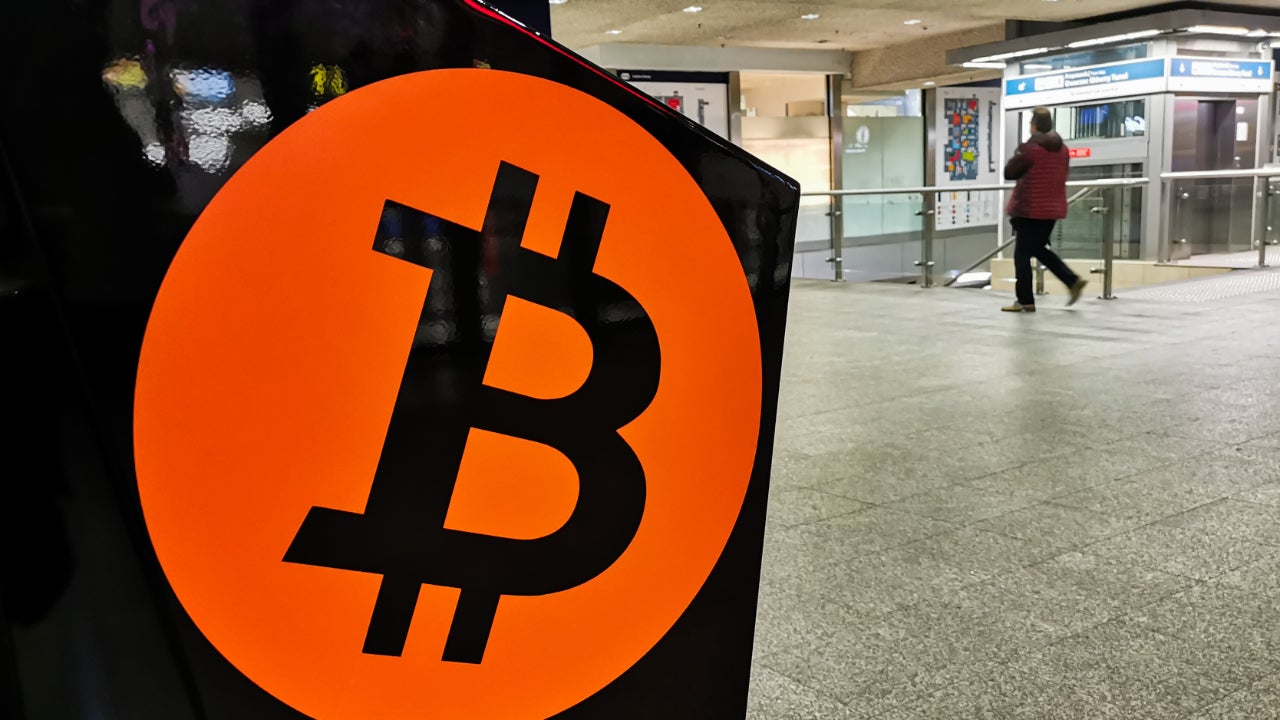
Purchasing bitcoins directly through a Bitcoin ATM is another option, though commission costs here tend to be much higher than elsewhere. Bitcoin ATMs offer both purchasing and selling options, usually via cash or debit card. To use a Bitcoin ATM, you’ll need a Bitcoin wallet. Fees can be high, with some machines charging around 20 percent per transaction.
Buying Bitcoin: Here’s what to watch for
When deciding how to acquire Bitcoin, carefully consider these factors, as they should significantly impact your decision about where to buy, or whether to invest at all.
- Ownership Style: What form of ownership do you desire? This could involve owning Bitcoin directly, owning it through an ETF, or acquiring a derivative like a futures contract that provides gains based on the currency’s movements.
- Potential Upside and Downside: The extent of possible gains or losses is strongly linked to whether you own the currency outright or through a futures contract. Direct Bitcoin ownership means a dollar-for-dollar profit increase. On the other hand, futures trading can lead to faster gains with lower initial capital, but the losses can be magnified compared to direct ownership.
- Expenses: Commission rates can fluctuate considerably based on the purchase method. Futures contracts often give substantial exposure at a lower price, while direct purchase from some brokers can mean paying several percentage points. Although a few percentage points may seem small, they can quickly diminish profits if you’re actively trading. In contrast, a Bitcoin ETF offers fast entry with no direct commission and a minimal annual expense ratio, simplifying the trading process.
- Security Considerations: One of the primary concerns with any investment is security. Some relatively new cryptocurrency platforms have experienced major security breaches. For instance, hackers managed to steal $1.5 billion in Ethereum from ByBit earlier this year. Because they’ve addressed security challenges for much longer, more established brokers may offer a more secure environment. In addition, Bitcoin ETFs provide an easier route to cryptocurrency ownership by delegating security management to the fund company.
Bitcoins may also be received in commercial transactions. Regardless of acquisition method, all cryptocurrency transactions must be reported to the IRS when filing taxes.
What’s required to purchase Bitcoin?
When establishing an account with a traditional brokerage or a cryptocurrency exchange, you’ll typically be asked to submit standard personal information.
- Your full name, residential address, and phone number
- Your Social Security number
- Your bank account details
- In some situations, you may be asked to furnish details about your trading experience and comfort level with trading, depending on the specific institution.
These details enable the firm to confirm your identity. Also, it’s vital for tax reporting. The broker or exchange will need this information to generate tax documents on your realized gains and losses, allowing you to accurately file your taxes.
FAQs about buying Bitcoin
Bottom line
To minimize costs when purchasing Bitcoin or other digital currencies as an investment, be vigilant in seeking the most economical options. In contrast to the zero-fee stock trading environment, many brokers are looking to maximize their commissions in the novel crypto market. Minimizing these frictional expenses will protect your gains. The introduction of Bitcoin ETFs is making crypto exposure easier, and cheaper.
Despite rapid price increases, Bitcoin still carries risks that make it unsuitable for all. Those in search of conservative investments, or those who can’t afford potential financial loss, may want to forgo Bitcoin trading altogether, or only use funds they can comfortably afford to lose.
— Kim Husband contributed to an update.
Editorial Disclaimer: Always conduct independent research of investment strategies before making decisions. Also, previous investment performance isn’t a predictor of future price increases.
Why we ask for feedback
Your feedback helps us improve our content and services. It takes less than a minute to
complete.
Your responses are anonymous and will only be used for improving our website.
Help us improve our content