

Key Points:
-
The amount of Bitcoin considered “illiquid,” meaning it’s being held for the long term, has reached a new peak of 14.3 million BTC.
-
Large Bitcoin holders, often referred to as “whales,” are accumulating Bitcoin at a rate almost three times higher than the amount of new Bitcoin being mined.
The supply of Bitcoin (BTC) that’s not readily available for trading – representing coins kept by investors who rarely spend them – has climbed to an all-time high.
According to data insights provided by Glassnode, a market analysis firm, the total “illiquid supply” of Bitcoin has surpassed 14.3 million BTC, setting a new record.
Bitcoin’s Locked-Up Supply Reaches Record Levels
The quantity of Bitcoin held in wallets untouched for over seven years has expanded by over 422,430 coins since the beginning of the year. This trend culminated in a new high of 14.3 million BTC on Friday.
Worth Reading: Analyst Predicts Bitcoin Price Could Surge to $150K, All-Time Highs Potentially Weeks Away
Considering the current circulating supply of Bitcoin, which is roughly 19.92 million coins, the illiquid portion now represents over 72% of all Bitcoin mined to date.
Essentially, more and more investors are choosing to hold onto their Bitcoin instead of actively trading it, thereby reducing the amount of Bitcoin available for sale on exchanges.
This trend underscores a continuous accumulation of Bitcoin among long-term holders and large investors, showing growing confidence in the cryptocurrency’s long-term potential.
Financial services company, Fidelity, predicts that long-term holders, along with corporations holding Bitcoin in their treasuries, could lock up more than 6 million BTC by 2025. This reduction in available supply could drive the price upward.
Fidelity’s research revealed a steady quarterly increase in the percentage of Bitcoin held by long-term investors since 2016. Simultaneously, the supply controlled by publicly listed companies with at least 1,000 BTC has also increased each quarter since 2020.
“Our estimates suggest that these two groups combined will possess over six million BTC by the close of 2025 – representing more than 28% of the 21 million Bitcoin that will ever be created.”
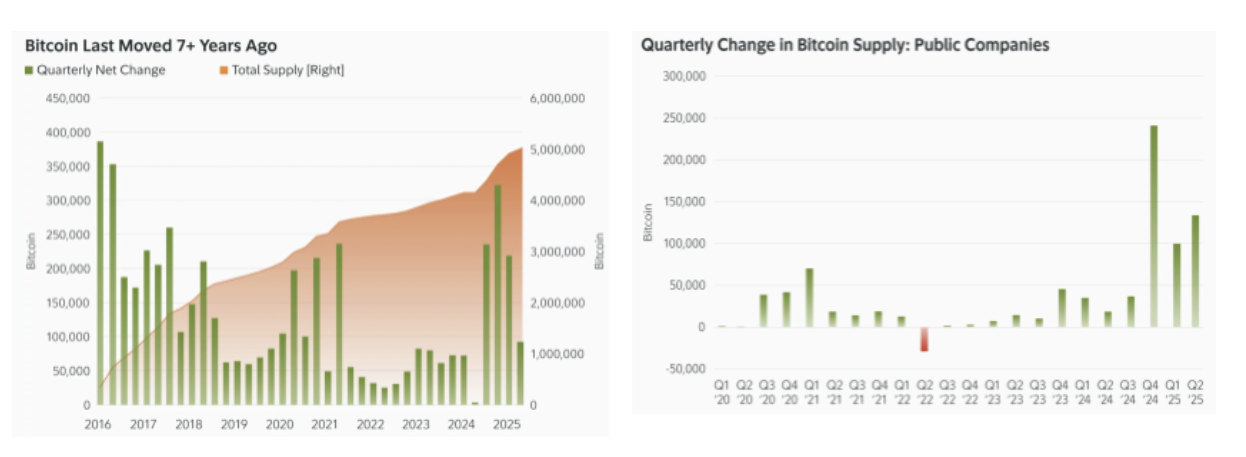
As previously reported, strategic Bitcoin reserves held by corporations and Bitcoin ETF providers have jumped by 30% in 2025, reaching 2.88 million BTC on Tuesday, up from 2.24 million on January 1st.
This growth highlights a trend of Bitcoin supply being consolidated into the hands of major institutions and corporate entities.
Bitcoin Demand: Whales Absorb Nearly 300% of Newly Mined Coins
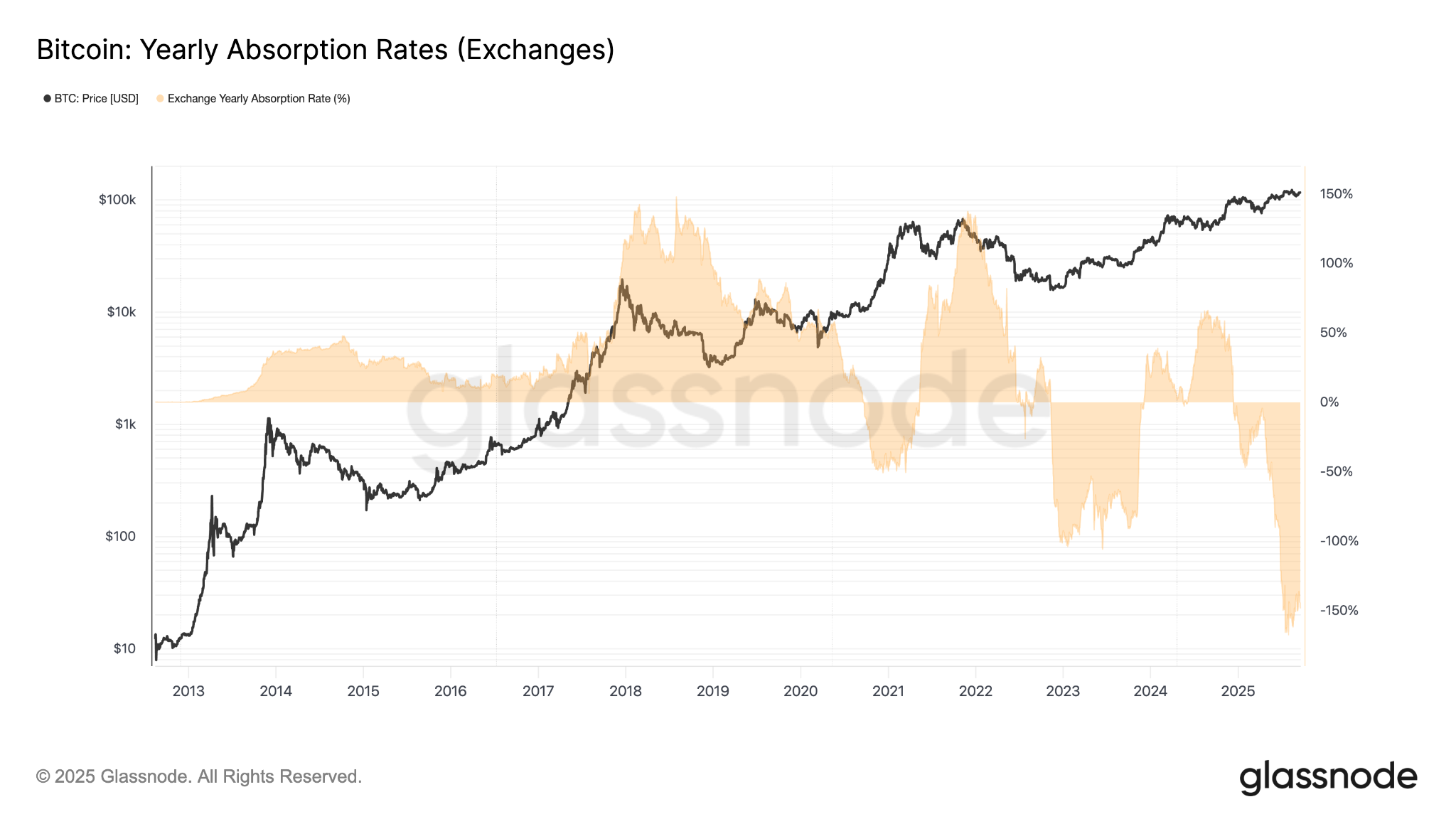
According to data from Glassnode, large Bitcoin holders (whales) are now acquiring Bitcoin at unprecedented rates – absorbing roughly 300% of the total Bitcoin released into circulation annually. Simultaneously, cryptocurrency exchanges are experiencing a significant decline in their Bitcoin reserves.
The yearly Bitcoin absorption rate by exchanges has dropped below -150% as more Bitcoin is being withdrawn than deposited. This suggests an increasing preference for self-custody or long-term holding strategies.
Meanwhile, larger holders (those with 100 to 1,000+ BTC) are accumulating nearly three times the amount of newly issued Bitcoin. This marks the most rapid rate of accumulation among this group in Bitcoin’s history.
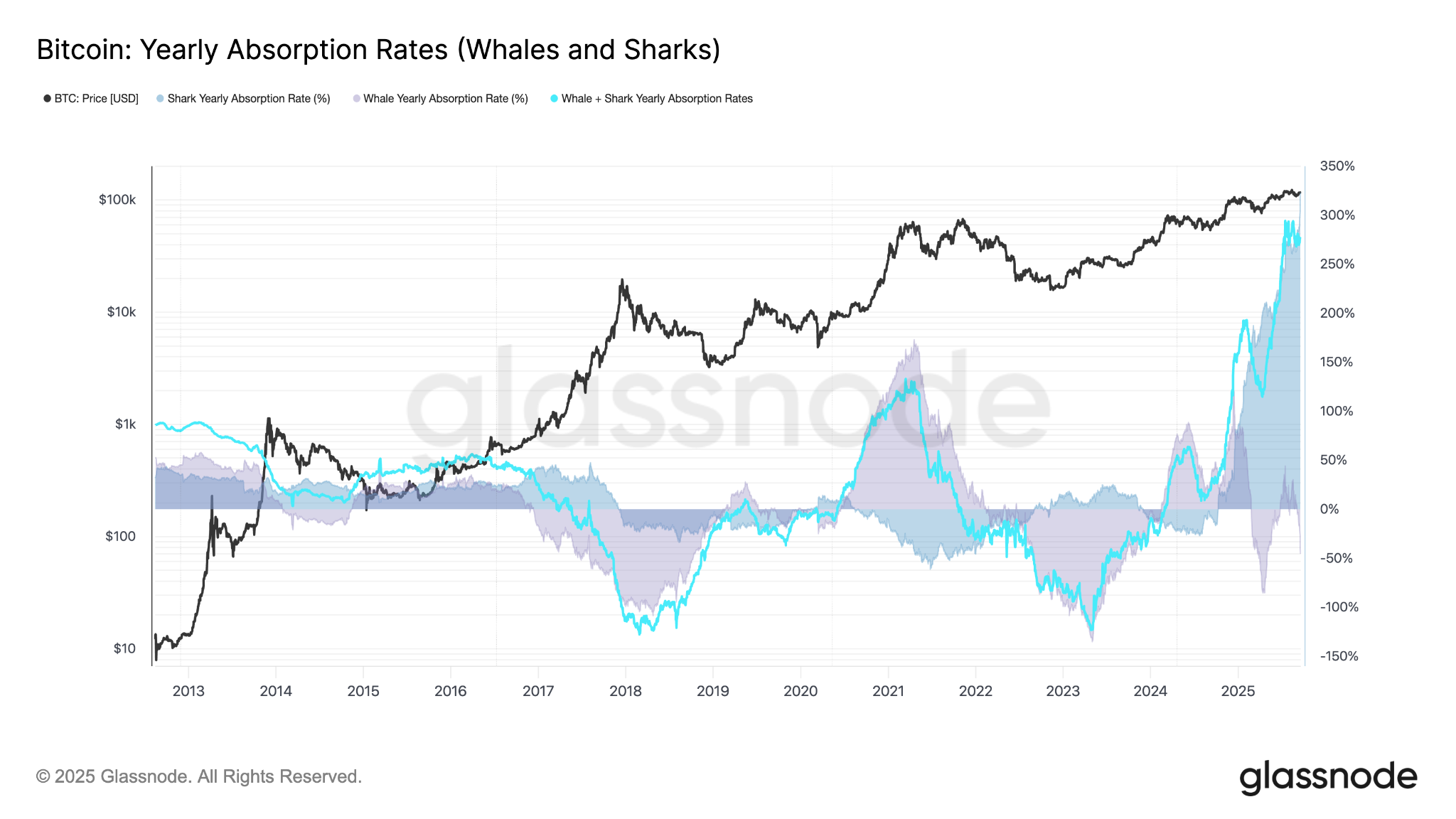
This signifies a structural change as traditional finance increasingly adopts BTC, fueled by the emergence of companies holding Bitcoin in their treasuries and the sustained demand for Bitcoin ETFs. The result is a dwindling Bitcoin supply on cryptocurrency exchanges and long-term bullish sentiment among major holders.
This article provides information for general knowledge and should not be interpreted as financial advice. Investing in cryptocurrencies involves risk, and readers should consult with a financial professional and conduct thorough research before making any investment decisions.