
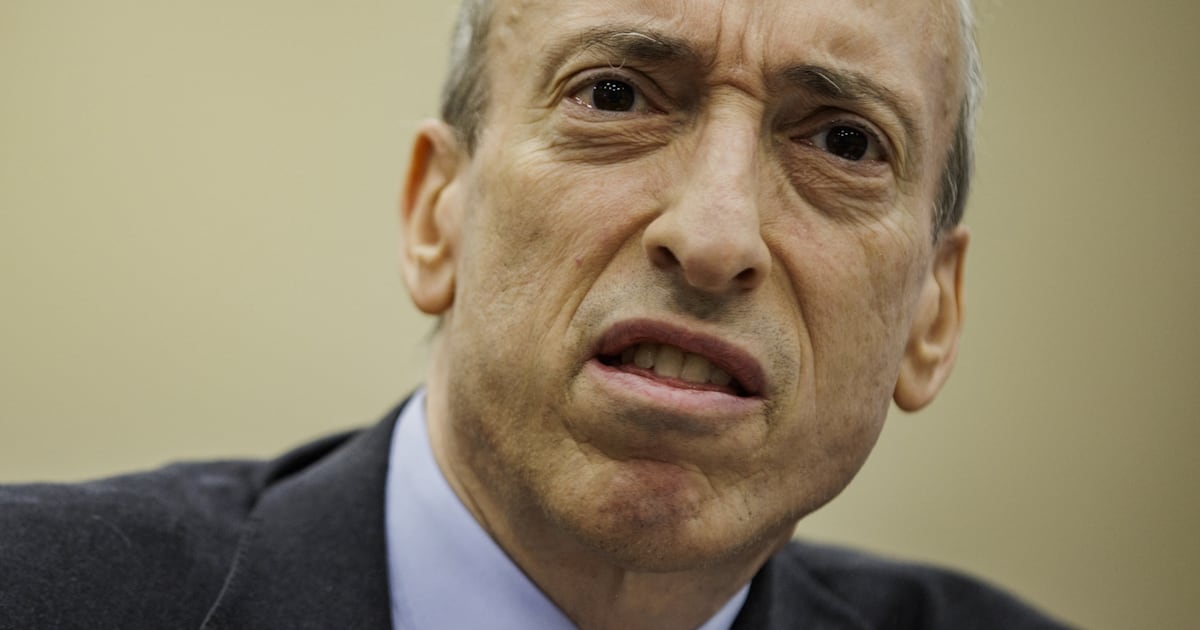
- Gary Gensler served as the SEC Chairman from 2021 to 2025.
- His leadership emphasized regulation through enforcement in the crypto space.
- Even now, Gensler remains critical of the cryptocurrency industry.
A Longtime Crypto Critic Stands by Past Actions.
During a recent appearance on CNBC’s Squawk Box on September 17th, former Securities and Exchange Commission (SEC) Chair Gary Gensler addressed his involvement in tightening regulations around the cryptocurrency sector, staunchly defending his administration’s policies. Watch the Interview
“Our primary focus was always on safeguarding investors. Unfortunately, we encountered numerous instances of fraud – consider the case of Sam Bankman-Fried,” Gensler stated. “And he was certainly not an isolated case.”
This sentiment has become a recurring theme in Gensler’s commentary over the years, both during and after his tenure.
From 2021 to 2025, under Gensler’s guidance, the SEC adopted a forceful approach toward the crypto world, a strategy frequently described as “regulation by enforcement” by many experts.
His actions encompassed legal actions against major crypto exchanges like Binance and Coinbase, the classification of numerous cryptocurrencies as securities, and allegations of collaborating with the banking sector to effectively stifle crypto businesses.
This strategy is often likened to Operation Chokepoint 2.0.
Essentially, Gensler aimed to subject the crypto industry to the same regulatory framework that has governed traditional securities markets since the Great Depression.
However, this approach largely disregarded the distinctive technological and structural features that differentiate digital assets from conventional financial products.
Paul Atkins
Much has evolved since December. The crypto industry now has a supporter within the SEC.
Paul Atkins, Donald Trump’s nominee to succeed Gensler, is determined to establish an environment conducive to crypto’s growth, not its suppression.
Atkins, a former SEC commissioner known for advocating a less restrictive approach, has advised cryptocurrency firms and has been critical of the agency’s previous stringent measures.
Under Atkins, the SEC has moved away from automatically classifying every token as a security. Recently, they approved broad exchange-traded fund (ETF) listing guidelines, which, according to Bitwise CIO Matt Hougan, could “revolutionize the market.”
The new guidelines stipulate that any crypto ETF meeting predetermined criteria will be approved within a maximum of 75 days.
Other figures in Washington D.C. are also leveraging the current regulatory climate to enact more favorable crypto regulations.
In July, Congress passed a significant stablecoin bill, known as the Genius Act, marking a first-of-its-kind legislative achievement.
The timing of this regulatory shift is noteworthy: Bitcoin is trading near its record high, and crypto treasury firms are flourishing. Even memecoins are now inspiring ETFs.
Gensler remains unimpressed by these developments.
Lacking fundamentals
When questioned about the potential risks of cryptocurrencies for investors, Gensler avoided a direct response but made his concerns clear.
“For the average investor, the 5% to 10% of Americans who invest in crypto, it represents a highly speculative and risky asset,” he commented, adding that the value of most tokens is driven by “momentum” and “pure hype.”
“With the exception of Bitcoin, the majority of these tokens lack underlying value.”
Pedro Solimano is DL News’ Buenos Aires-based markets correspondent. Got at a tip? Email him at psolimano@dlnews.com.