
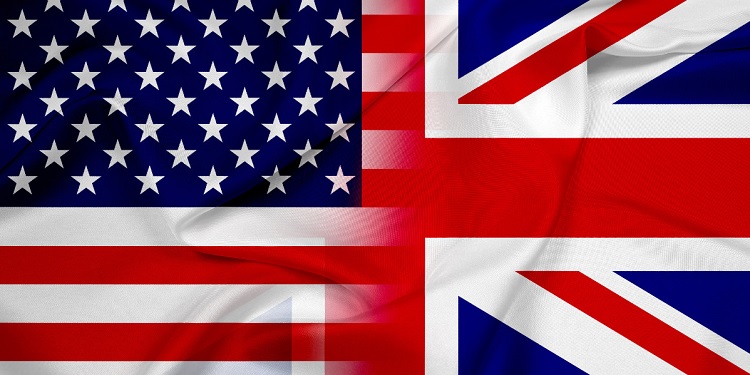
The United Kingdom and the United States are joining forces to explore blockchain technology’s potential in the financial sector. This collaboration involves establishing a shared regulatory sandbox, envisioned as a controlled space where businesses can test blockchain-based innovations under the watchful eyes of regulators.
This partnership aims to harmonize regulations across both countries while fostering innovation in areas like stablecoins and digital securities. By working together, the two nations hope to minimize duplicated efforts and establish consistent standards, enabling businesses to expand into both markets with fewer regulatory hurdles.
UK Aims to Catch Up with US
For the UK, this alliance presents a chance to bolster its standing in the digital asset arena. Many industry observers have noted that the US regulatory environment appears to be moving more rapidly, generating increased opportunities for growth. By teaming up with its transatlantic partner, the UK hopes to attract investment and facilitate easier access to American markets for domestic companies.
The sandbox is designed to bring together banks, emerging fintech firms, and established cryptocurrency organizations in direct collaboration with regulatory bodies. Major players like Coinbase, Ripple, and Circle are rumored to have been involved in preliminary discussions. Beyond the technical aspects of testing, the focus is on aligning regulatory strategies, reducing uncertainty, and providing clear guidance for businesses before launching new services to the broader public.
Building Upon Previous Models
While the sandbox concept itself isn’t new, this joint UK-US initiative marks a significant step forward from previous endeavors. The UK has previously experimented with national-level sandboxes, primarily concentrating on fintech applications. However, this collaboration with the US offers a route for businesses to test their products once and then deploy them across both markets without needing extensive modifications to comply with differing regulatory requirements.
In practical terms, the sandbox serves as a supervised testing environment. Companies will be able to investigate applications such as faster international payments and blockchain-driven securities, while regulators monitor compliance and consumer protection measures. Successful trials could lead to faster, more affordable, and more dependable services for consumers in both regions.
Reports from the Financial Times indicate that the UK and U.S. are poised to announce increased collaboration on digital assets, including stablecoins, following a meeting between Chancellor Rachel Reeves and Treasury Secretary Scott Bessent. Both governments are also working on a joint digital…
— Wu Blockchain (@WuBlockchain) September 16, 2025
Global Perspective and Future Prospects
Other countries have already shown the advantages of sandbox environments. For instance, Singapore has operated a fintech sandbox for several years, resulting in the development of blockchain payment systems that have since expanded globally. Some believe a UK-US sandbox could replicate this success on a considerably larger scale, given the prominence and influence of these two financial centers.
Challenges persist, notably in harmonizing approaches to stablecoin safety, anti-money laundering protocols, and standards for protecting consumers. Aligning these frameworks between two significant economies is a complex undertaking, and the regulators’ willingness to compromise on varying national priorities will be crucial.
Nevertheless, the governments’ decision to jointly experiment emphasizes their awareness of blockchain’s increasing importance in financial markets. Analysts suggest that if the sandbox proves effective, it could become a model for broader international collaboration in the area of digital assets. Currently, focus is on how quickly the initiative progresses from planning to active testing and the results derived from the initial group of participants.