
A leading figure at Binance, Kirill Khomyakov, who oversees regional markets across the CIS, Central and Eastern Europe, and Africa, recently provided insights into the evolving amendments proposed for Ukraine’s cryptocurrency regulatory framework.
Earlier in the month, Ukraine’s parliament, the Verkhovna Rada, took a significant step by approving the first reading of the “On Virtual Assets Markets” document. This legislation is designed to establish a clear legal framework for cryptocurrencies within the country, including their status and how they will be taxed.
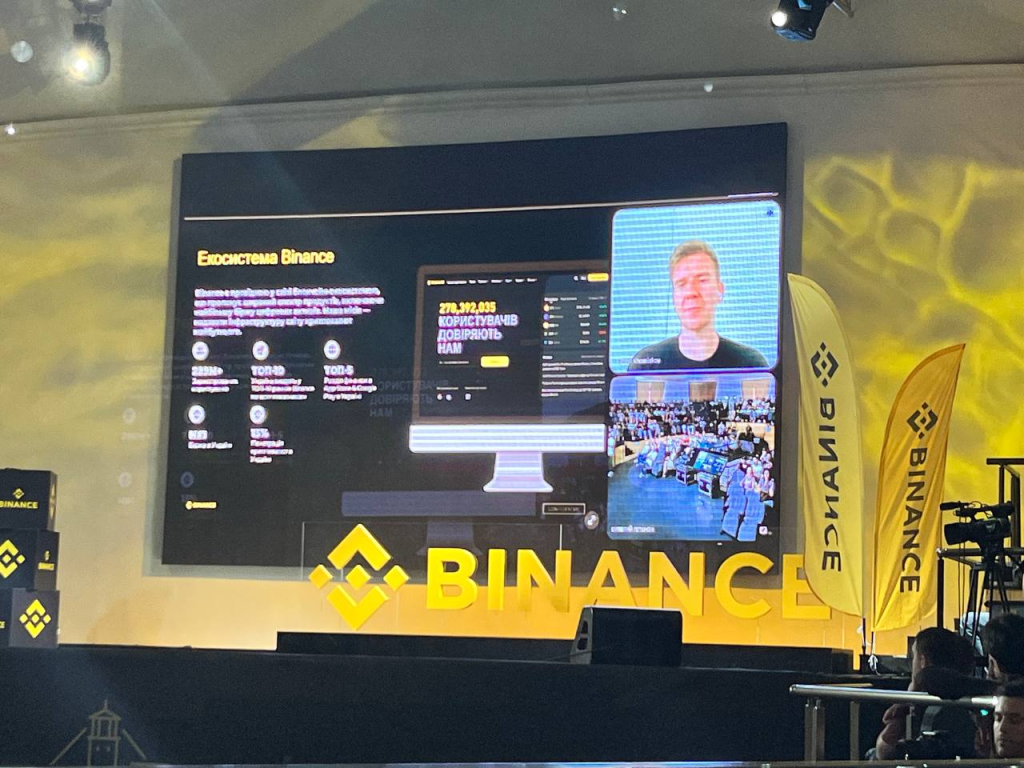
During a Binance Odesa Meetup, Khomyakov highlighted that the suggested revisions, with the aim of “simplifying user experiences,” were contributed by Binance, other prominent exchanges, and the Ministry of Digital Transformation. He anticipates substantial modifications to the bill as it progresses to its second reading.
Tax System Considerations
According to the Binance executive, the primary concern revolves around fiscal policy and tax implications.
“Currently, the taxation model operates on a capital gains basis, meaning taxes are only applicable when assets are sold and converted into the national currency. This is a positive step, eliminating taxes on transactions or portfolio fluctuations,” Khomyakov stated.
He anticipates a profit tax rate of approximately 23% when converting cryptocurrency to hryvnia, comprising the standard 18% rate plus a military levy. Binance has advocated for a more favorable tax structure, and the final decision now rests with the Ukrainian legislature, Khomyakov added.
Projected Timeline for Implementation
Khomyakov predicts that the second reading of the bill could occur before the year concludes. Following presidential approval, the law is projected to take effect on January 1st. Subsequently, the regulatory body will require an estimated 6-12 months to establish the necessary regulations and operational procedures.
“The encouraging aspect is that until this licensing framework is fully implemented, the existing conditions will remain unchanged. This implies that operations will continue as usual until at least the end of the current year and potentially for the first nine months of the following year,” the Binance representative pointed out.
He also mentioned that the Ukrainian Cabinet is yet to determine which specific agency will be entrusted with overseeing the cryptocurrency market, with the National Bank, the National Securities and Stock Market Commission, and the Ministry of Digital Transformation being considered.
User Data Protection
Khomyakov emphasized that Binance has proposed several amendments focused on safeguarding user data. If these amendments are accepted, crypto platforms will experience no alterations in their data handling practices.
He clarified that while law enforcement can request information in cases of suspected illegal activities, client data is not routinely shared with any government agencies.
“We consider this to be of utmost importance for maintaining user security and privacy. This is the core objective of these amendments, and we anticipate a significant number of them. We hope that once the law is enacted, compliance will be more convenient, effective, and straightforward for all participants in the industry,” the manager stressed.
Considerations for a National Crypto Reserve
Khomyakov mentioned that the Ukrainian government is exploring the possibility of establishing a national cryptocurrency reserve, although this is not currently a top priority.
“The National Bank is strongly opposed to this law, but it’s not about making cryptocurrency a means of payment on par with the Ukrainian hryvnia, but about some government body being able to purchase crypto assets and thereby increase the state’s wealth,” he clarified.
Banking Integration, Hryvnia Card, and Blockchain Grants Initiative
Khomyakov revealed that the implementation of these regulations will enable Binance to accept hryvnia deposits from all Ukrainian banks without incurring fees.
He further announced Binance’s plans to introduce a dollar-denominated card in Ukraine shortly, followed by a card denominated in hryvnia.
Another initiative in the pipeline is a project provisionally named “Resilience Lab,” which will offer grants to support Ukrainian blockchain developers.
“We will have a substantial sponsorship fund dedicated specifically to Ukraine. More details will be announced soon,” Khomyakov stated.
Regulation of P2P Transactions and MiCA Compliance
Khomyakov indicated that the future of Ukraine’s P2P market remains unclear, as these mechanisms are not explicitly addressed in the proposed legislation. The ultimate outcome will depend on the stance adopted by the regulator appointed by the Cabinet.
“I also don’t know if any separate licenses will be needed for this. In most jurisdictions where there is regulation and the possibility to work via P2P, professional traders do not need to obtain licenses, but there are examples where it is required. How it will be in Ukraine is still unknown.”
He affirmed Binance’s commitment to “doing everything possible” to safeguard its P2P platform, acknowledging its importance to users.
Khomyakov also shared that Binance has finalized its comprehensive application for a MiCA license in Europe, with the expectation of receiving it during the fourth quarter. He noted that the current MiCA regulations do not accommodate P2P operations.
As previously reported by ForkLog, Petro Bilyk, a Technology and Investment Practice Partner at Juscutum, has emphasized the need for substantial revisions to Ukraine’s cryptocurrency regulation bill.
Нашли ошибку в тексте? Выделите ее и нажмите CTRL+ENTER
Рассылки ForkLog: держите руку на пульсе биткоин-индустрии!