
A sense of unease is understandable when approaching a new Silent Hill title. A string of less-than-stellar entries (including examples like the Silent Hill HD Collection, Downpour, and Book of Memories), coupled with the unfortunate shelving of the ambitious Silent Hills project, left the franchise seemingly adrift. However, the release of last year’s well-received Silent Hill 2 remake rekindled a flicker of optimism.
Silent Hill f successfully keeps that hope burning. This new chapter in Konami’s renowned psychological horror saga is both impactful and visually striking, presenting a devastating narrative. Silent Hill f respects the core essence of Silent Hill while venturing into uncharted territory, igniting excitement for Konami’s future endeavors in the series.
A must-experience title for even the most casual fan of the Silent Hill games.
The most significant deviation in Silent Hill f lies in its setting. Departing from the familiar modern New England locations of past installments, Silent Hill f delves into the fictional Japanese village of Ebusigaoka. Once a thriving mining community, the village has fallen into disrepair and near abandonment, described by the protagonist as a “sad little town.”
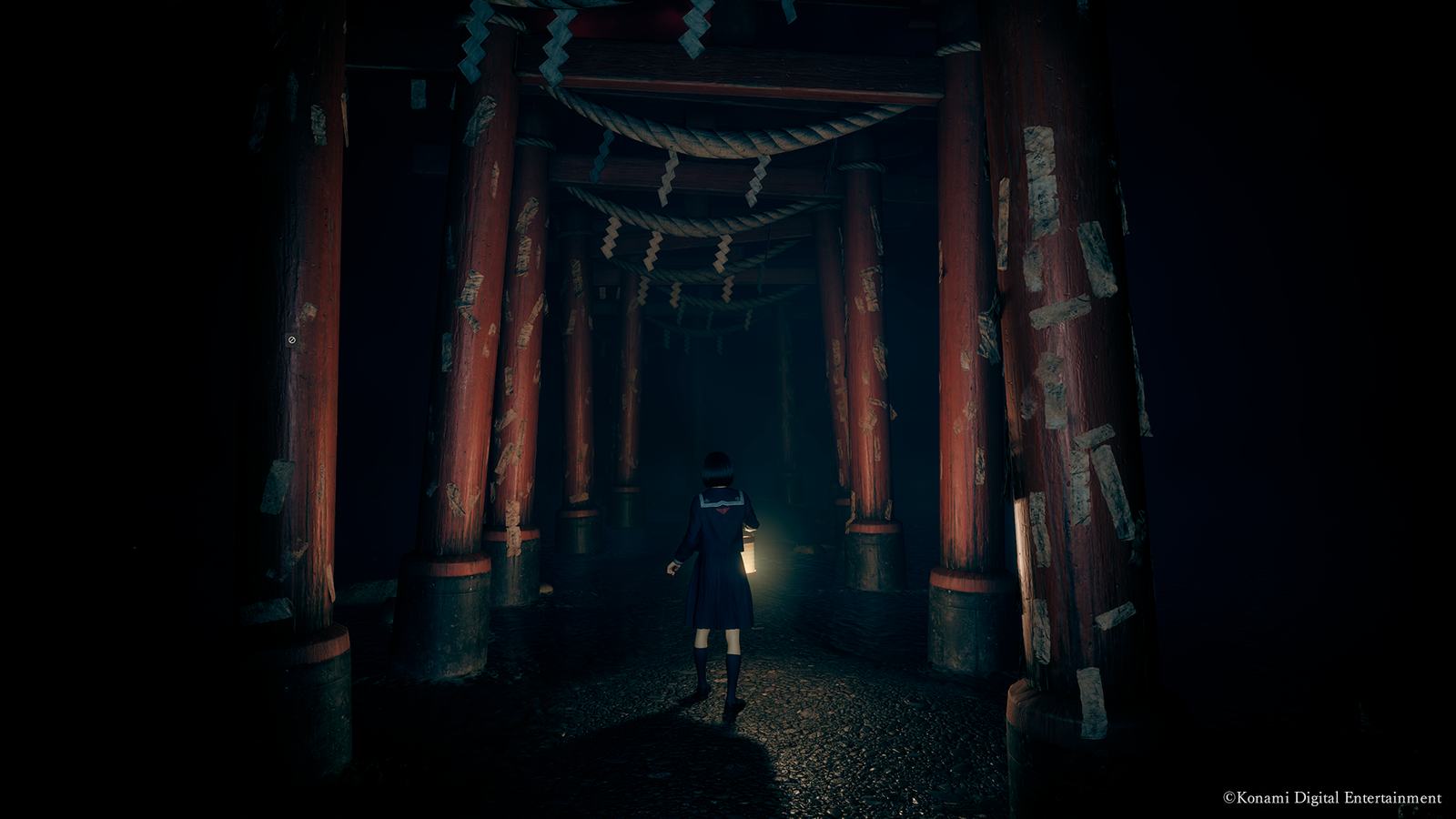
Ebusigaoka, in its untainted state, possesses a certain charm and occasional beauty. Beyond the closely-knit residences and shops at the town’s heart, winding pathways guide you toward tranquil natural enclaves and secluded shrines. Everything is vividly rendered with a delicate mist and lush green mosses. At moments, it feels like a virtual tour of a quaint and delightful rural village. But, fairly early in the gameplay, Ebusigaoka is overtaken with horror: An unsettling fog descends, scarlet flora spreads like a plague, and tumorous growths engulf the town, marking the beginning of a nightmare for Hinako Shimizu, the playable character.
Hinako is portrayed as a reserved, seemingly ordinary high school student. Previously, she was a vibrant and energetic child, but over time she was subdued by societal pressures and a domineering father. The game subtly explores her inner turmoil and confusion regarding her role within society and her relationships with friends through character interactions and her diary. However, much of Hinako’s personality, the motivations for her suffering through the game’s horrific events, remains obscured, even after completing a full playthrough of Silent Hill f.
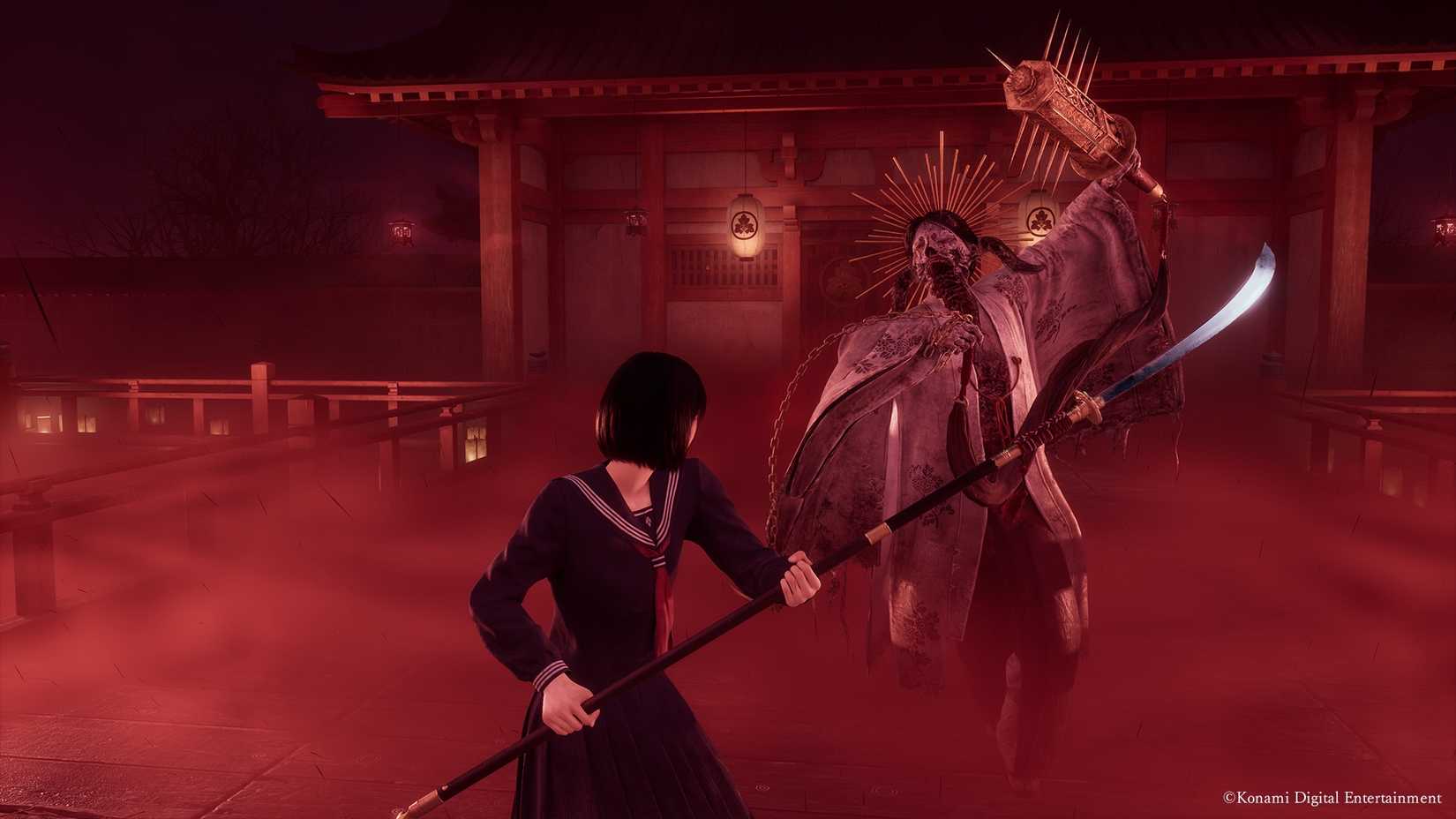
The story in Silent Hill f unfolds across two distinct realms: Ebusigaoka, and a spectral, in-between place known as the Dark Shrine. In Ebusigaoka, Hinako, accompanied by her friends, undertakes a search for answers, revisiting familiar landmarks such as her middle school and friends’ homes. During periods of extreme distress, she is often summoned to the Dark Shrine, there, guided by a mysterious entity known as Fox Mask, she is told the tests and rituals will alleviate her psychological anguish.
Unraveling the events that transpire between these two realms is one of the core enigmas within Silent Hill f. Clues are discreetly scattered throughout the game in the form of notes, etched carvings on wood and stone, and revelations within Hinako’s diary, which organically evolves over time. Eager to comprehend the game’s cryptic narrative, I meticulously sought out every scrap of information and narrative element, diligently reading each entry to gain insight into Hinako’s personal discoveries and her relationship with others. Even after completing the game, the narrative left me feeling incomplete, hinting that a second playthrough of Silent Hill f is not merely suggested but practically essential to understand the complexities of the story.
Hinako stands out as an unconventional protagonist within the Silent Hill universe, even when considering her combat abilities. While not a trained combatant, a trait shared by many characters in the franchise, she exhibits more prowess in battle than most other protagonists. Though she can wield a steel pipe to fend off grotesque creatures, effective combat necessitates focus, patience, and physical endurance. All combat encounters within Silent Hill f occur at close range, with melee weapons like baseball bats, kitchen knives, and ceremonial daggers. Many of Hinako’s melee weapons can break down and be damaged, creating tense moments where fleeing might be the best option when facing a monster.
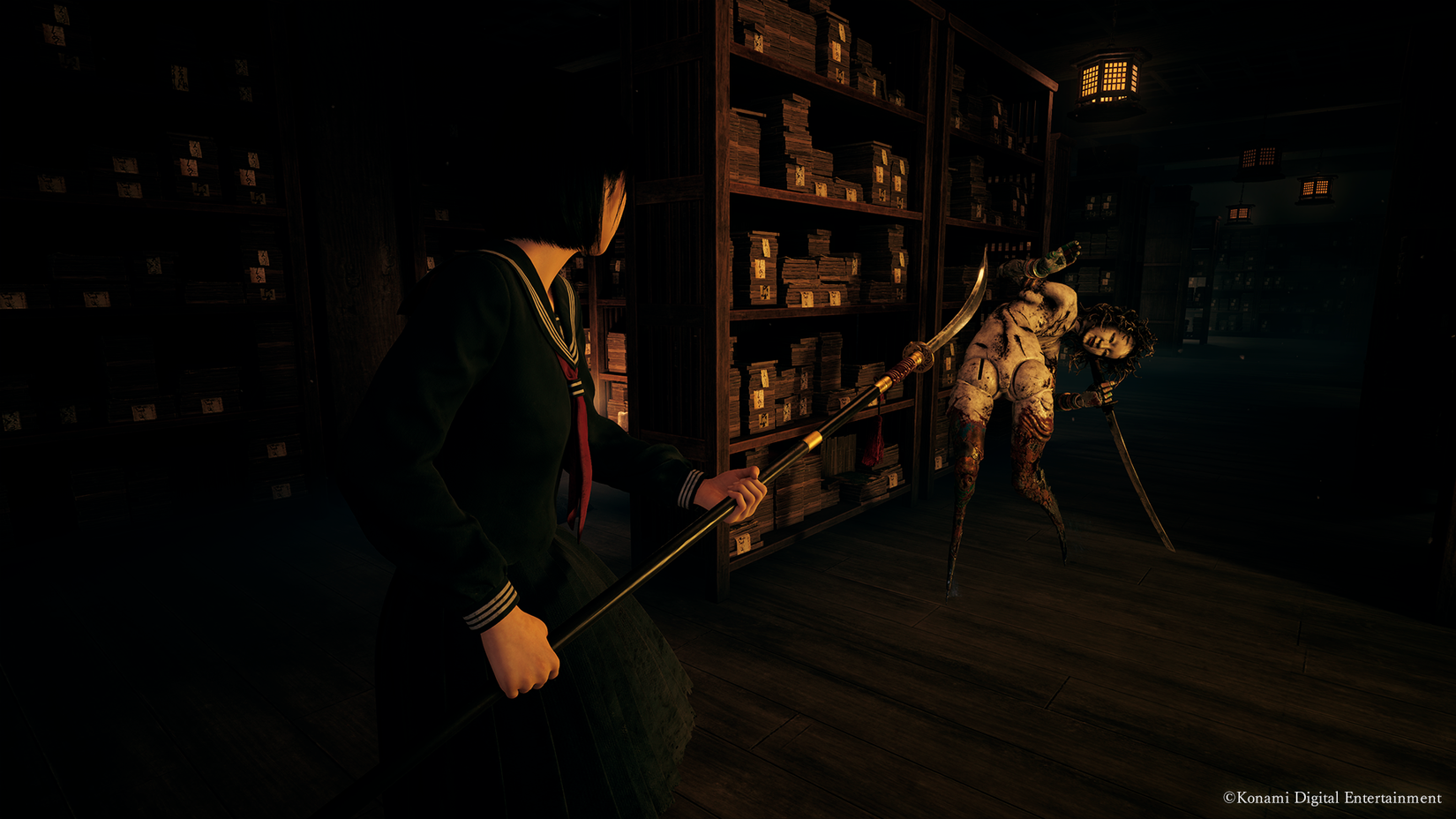
Some have previously expressed concern about Silent Hill f incorporating combat elements akin to “Soulslike” games. While the game does include dodging, counterattacks, and light/heavy attacks, controlled via shoulder buttons on a gamepad, it is an exaggeration to compare the game to Dark Souls or Elden Ring. Elements like a stamina bar and charged melee strikes have appeared in previous Silent Hill games; they’re just more prominent in f.
However, the combat mechanics in Silent Hill f can become repetitive after some time. Especially in the final stretch of the game, which often involves facing three or more enemies at once, combat becomes a chore. Approaching my breaking point, I began avoiding enemies, not out of fear, but more out of frustration. This is partly due to the limited variety of enemies; there are not very many enemy types, and (at least in “Story” difficulty) their tactics change very little over time.
Hinako’s capabilities evolve throughout the game, though. At shrines (which also serve as save points), Hinako can offer artifacts and food items in exchange for Faith, a resource used to acquire upgrades. These upgrades encompass improvements to health and stamina, as well as the ability to equip omamori, unique charms that grant special enhancements.
The omamori perks are very compelling and useful, and I constantly swapped them around to suit my changing needs. For example, one useful omamori reduces weapon damage, but only when performing light attacks. Another grants Hinako a minor health replenishment upon defeating an enemy. While some omamori can be discovered throughout Ebusigaoka and the Dark Shrine, others can only be obtained randomly by spending Faith, using a “gacha”-style mechanic. I found this system engaging, and invested heavily in it during my first playthrough.
Silent Hill f’s upgrade system asks you to make compelling choices as you advance through the game: Is it better to keep food in case of a health or stamina drain, or should it be saved to use at a shrine? There’s only so much space, after all. And is it more worthwhile to save up for better, more expensive omamori, or is it more useful to get what’s available now to be more survivable in the moment? Whatever path you pick, the upgrade system inspires exploration and resource management, while also leaving space for flexibility to fit your play style.
While none of those upgrades will directly aid you in solving Silent Hill f‘s intricate puzzles, many of them have a similar structure (find this item, use it in the correct slot), and they are often cleverly presented as scrolls, paintings, or cultural artifacts from Japan. Some of the best puzzles are structured like short narratives that require you to extract solutions, and fortunately the game features three levels of difficulty: Story (the simplest), Hard, and Lost in the Fog (a difficult, unlockable mode). Without shame, I admit that I enlisted my wife to help me understand several of the game’s puzzles, even in hard mode.
Some players may find the story of Silent Hill f unsatisfying, because it’s vague and disorienting, which is true to the series. By the time I finished the game after 13 hours of playing in Story mode, I felt more confused than fulfilled. But, I also realized that a New Game Plus playthrough would provide additional story details and encounters, including variations of enemies and quests. After starting my second playthrough with the cleared-game save, I quickly discovered more about Hinako’s life and what led to the first ending of the game. The game also features four additional unlockable endings, which means there’s certainly more to discover and experience. I’m currently exploring this content.
Despite my initial disappointment with elements of its story, there is much to love about Silent Hill f. This is a gorgeous game, with impressive art direction and character design, skillfully realized with realistic and dreamlike levels of detail. Konami, NeoBards, and writer Ryukishi07 made many bold and stylistic choices, and the new voices tackling the Silent Hill stories feel modern. The music of series regular Akira Yamaoka and new contributor Kensuke Inage is a blend of different styles; traditional Silent Hill sounds, both melodic and dissonant, are mixed in with traditional Japanese melodies.
The creators of Silent Hill f are bold with the subject matter. Although the franchise has never shied away from violence and mature subjects, f explores extreme themes of abuse, discrimination, torture, and self-harm. The violence is amped up beyond what the Silent Hill games have been known for, and the content warning before the game’s title screen should be taken seriously.
Perhaps the best and most important aspect of Silent Hill f is the way it’s stuck with me after just one playthrough. I can’t stop thinking about the game. While I can’t stop playing, I can’t wait to see how others react to its story, the gruesome moments, and the puzzles. When I replay the game, I have to look down every side street and hallway in hopes of finding a new story detail or something even stranger as I try to understand what truly happened to Hinako in Silent Hill f.
Silent Hill f will be available on September 25 for PlayStation 5, Windows PC, and Xbox Series X. A prerelease download code was provided by Konami for the PS5 review. More information about Polygon’s ethics policy is available here.