
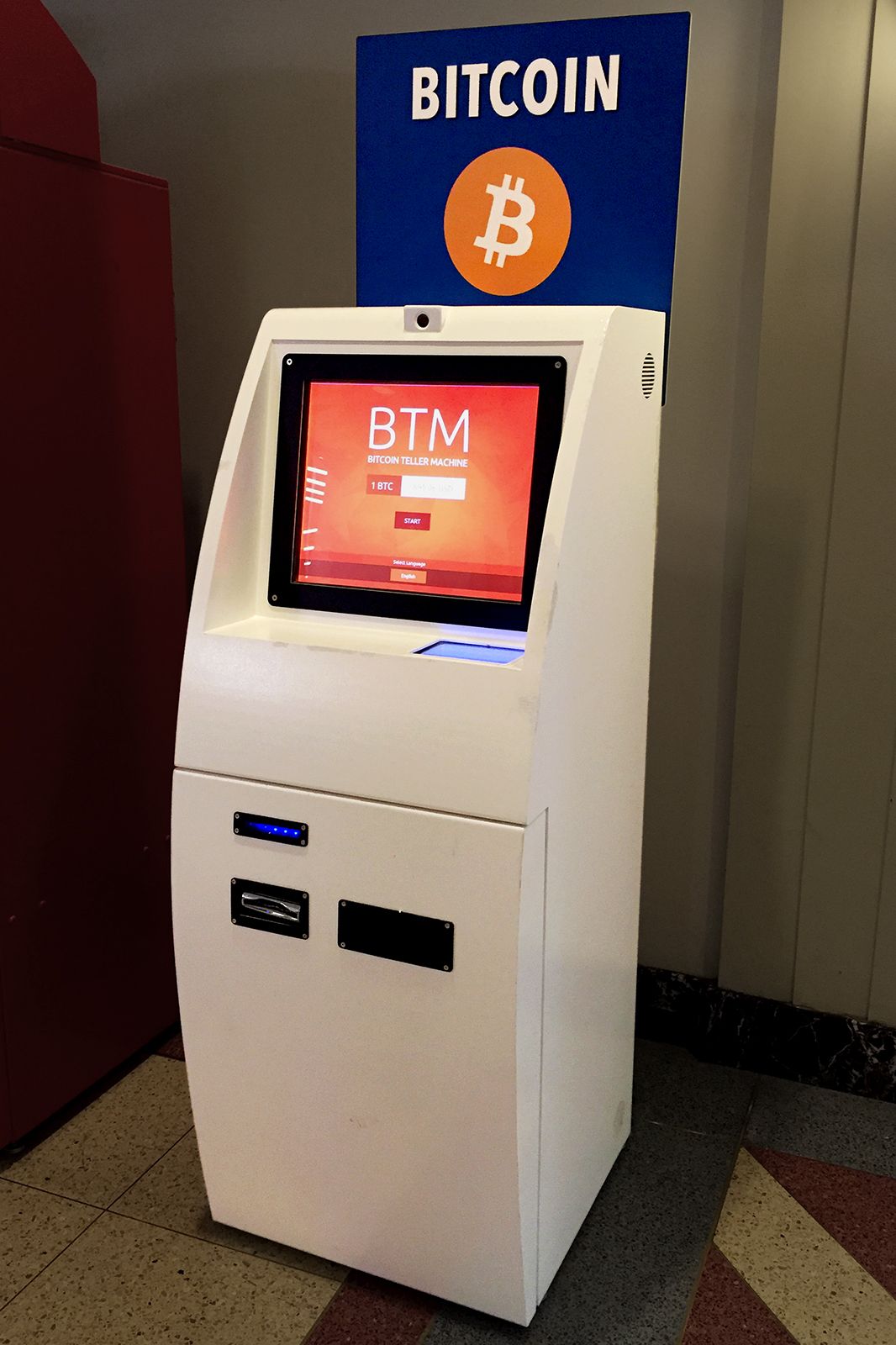
A Bitcoin ATM facilitates access to the cryptocurrency and user’s individual wallets.
Encyclopædia Britannica, Inc.
Bitcoin: Often considered the pioneering and most widely traded digital currency. This electronic currency emerged in 2009, the brainchild of an unknown entity dubbed Satoshi Nakamoto. Holders can exchange their Bitcoins through numerous online platforms for other digital currencies or conventional government-issued currencies like U.S. dollars or Euros. These digital tokens can also be used to acquire goods or services from a variety of merchants.
The genesis of Bitcoin stemmed from Nakamoto’s apprehension about the dependability of conventional currencies on financial institutions. He envisioned a digital form of currency, Bitcoin, that could function independently without the need for governmental or banking oversight. This concept was introduced in a document published on the Bitcoin website in October 2008; the website had launched the previous August.
Bitcoin’s functionality hinges on public-key cryptography. Each user possesses a public key, accessible to all, and a private key, known only to their personal computer. In a Bitcoin transaction, the receiver provides their public key to the sender. The sender then digitally signs the transaction using their private key, and the data is disseminated across the Bitcoin network. A shared ledger, present on every network node, records the time and quantity of each exchange, preventing double-spending. Although user identities are somewhat anonymized, the movement of Bitcoins is publicly visible. Transactions are bundled into blocks, which are then arranged chronologically to construct the blockchain. This blockchain is fortified with a mathematical protocol that makes it exceedingly challenging for any single user to manipulate. Despite some skepticism, the underlying blockchain technology has garnered significant interest for its potential in establishing reliable and decentralized record-keeping systems for various commercial applications.
New Bitcoins are generated through a process called “mining,” where users operate the Bitcoin client on their computers. The software “mines” Bitcoins by addressing a complex mathematical problem encoded within a “block,” a data file distributed across the network. The difficulty of the mathematical problem is regulated to ensure it’s solved, on average, around six times per hour, irrespective of the number of miners. The miner who successfully resolves the problem is awarded a specific amount of Bitcoins. This intricate mining process limits the Bitcoin supply and regulates its growth. Roughly every four years, the Bitcoin reward per block, initially set at 50, is halved, with the maximum number of Bitcoins capped at just under 21 million. By 2021, more than 18.6 million Bitcoins were in circulation, and projections indicate the maximum supply will be reached by approximately 2140.
Due to the predictable Bitcoin creation rate, early adopters benefited from a higher mining frequency because the network’s size was limited. This advantage and Satoshi Nakamoto’s silence following 2011 have led to accusations of Bitcoin resembling a Ponzi scheme, where Nakamoto may have gained significantly as one of the early participants. (Analysis of the initial 36,289 mined blocks suggests that one miner, possibly Nakamoto, amassed over 1 million Bitcoins. As of 2021, these Bitcoins, then worth around $50 billion, remained untouched.) Bitcoin advocates argue that early users deserve compensation for investing in an unproven and potentially risky technology.
The value of Bitcoin against traditional currencies has experienced considerable volatility since its inception. In August 2010, one Bitcoin was valued at $0.05 (USD). The value began to climb sharply in May 2011, reaching a peak of around $30 by June, but plummeted to under $3 by year’s end. Nevertheless, Bitcoin attracted attention from mainstream investors, and its value surged to over $1,100 in December 2013. Some businesses even started developing specialized computers solely for Bitcoin mining.
With its increased value, Bitcoin became a prime target for cybercriminals who could pilfer Bitcoins by gaining access to a user’s private key or stealing their digital “wallet” (a digital file storing Bitcoin balances). The most notable instance was in February 2014 when Mt. Gox, formerly the world’s third-largest Bitcoin exchange, declared bankruptcy after approximately 650,000 Bitcoins, valued at about $380 million at the time, were stolen.
Bitcoin’s value escalated dramatically in 2017, from approximately $1,200 in April to over $18,000 by December. This surge incentivized more intense mining activities. By late 2017, Bitcoin mining consumed an estimated 0.14 percent of global electricity production. Bitcoin’s value subsequently decreased and fluctuated between $3,500 and $12,000 from 2018 until late 2020, when institutional investors, including hedge funds, displayed interest in the currency. Another rally commenced, and in early 2021, Bitcoin reached a record high of almost $45,000 after Elon Musk announced Tesla’s $1.5 billion investment in the cryptocurrency.