

Investment firm Hashdex has broadened its Crypto Index US exchange-traded fund (ETF) to now encompass XRP (XRP), SOL (SOL), and Stellar (XLM). This expansion follows the recent implementation of generic listing rule changes by the Securities and Exchange Commission (SEC).
The ETF, publicly traded on the Nasdaq exchange, now boasts a 1:1 holding of five leading cryptocurrencies. Alongside Bitcoin (BTC) and Ether (ETH), the updated ETF trades under the ticker symbol NCIQ, as detailed in a press release issued on Thursday.
In September, the SEC gave the green light to generic listing standards for ETFs. This landmark decision streamlines the approval pathway for crypto ETFs that meet specific criteria.
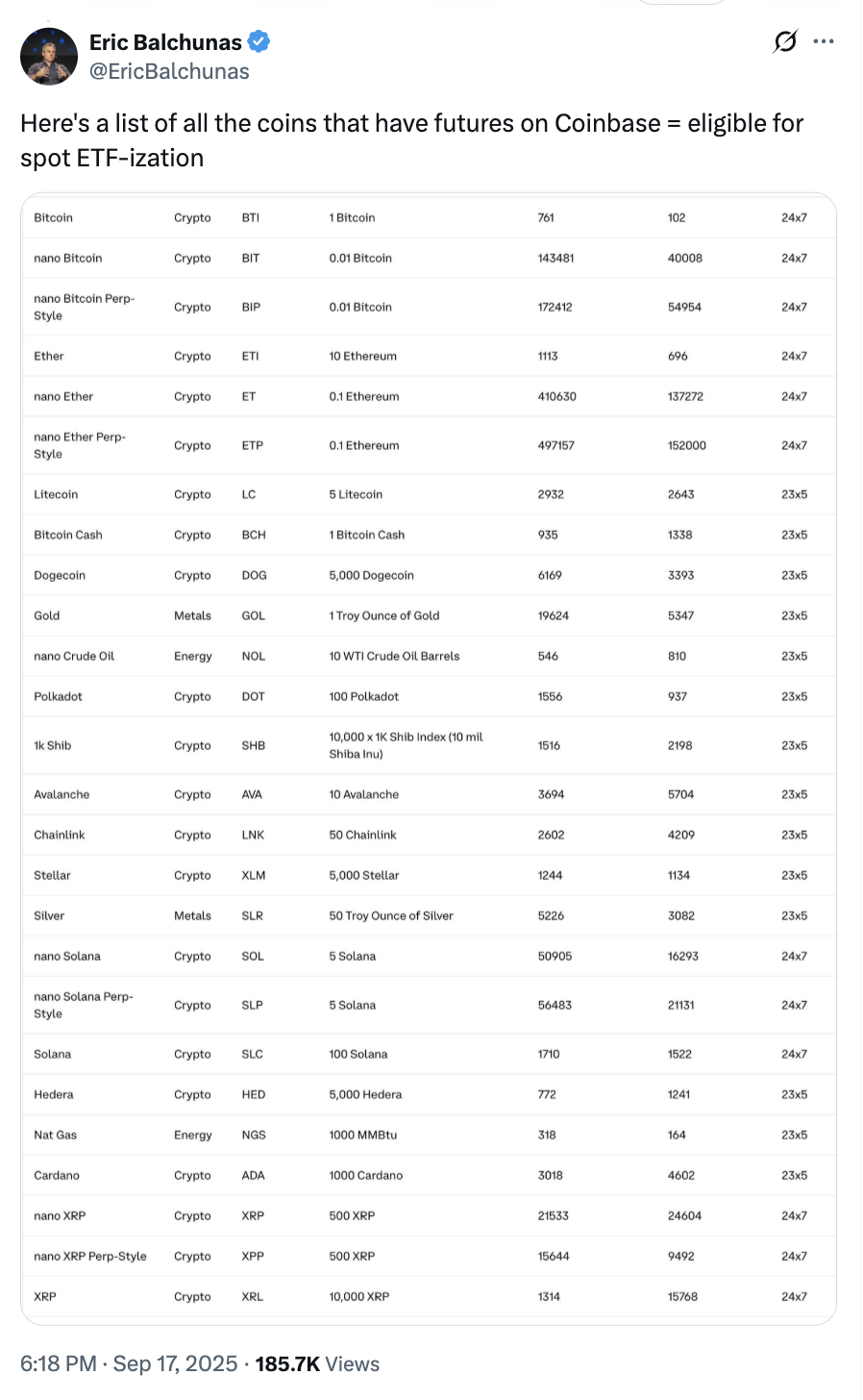
To be eligible for this expedited process, a cryptocurrency needs to be categorized as a commodity or have futures contracts available on established exchanges. Furthermore, these cryptocurrencies must be monitored by the US Intermarket Surveillance Group.
Industry experts and financial analysts foresee a surge in applications for crypto ETFs stemming from these newly implemented regulations. This development is expected to enhance access to the crypto markets for stock market participants and bridge the gap between traditional financial instruments and digital assets.
SEC Approves Multi-Asset Crypto ETFs, Encouraging Innovation
On September 17th, the SEC approved the Grayscale Digital Large Cap Fund, marking the first multi-asset crypto ETF in the United States. Grayscale’s offering encompasses BTC, ETH, XRP, SOL, and Cardano (ADA).
SEC Commissioner Paul Atkins is leading the charge in simplifying the crypto ETF approval procedures. This initiative is part of a wider effort to modernize the existing financial system and accommodate the burgeoning world of digital finance.
Atkins recently put forth a proposed “innovation exemption” for crypto-related businesses. This regulatory “sandbox” concept would enable such ventures to explore novel technologies without the constant worry of punitive action from governmental bodies.
Under the direction of the US President’s administration, the SEC has revealed a number of announcements and policy proposals in 2025. These seek to ease the regulatory burden experienced by crypto organizations — a major shift away from the policies enacted by the SEC under the former Chairman Gary Gensler.
These updated policies are focused on ending regulation-by-enforcement (filing lawsuits without clear prior warning), building comprehensive market structure rules for digital assets, and designating the majority of cryptocurrencies as commodities.
Magazine: SEC’s Change of Heart on Crypto Leaves Significant Questions Unanswered